
The humble stabilizer bar, often referred to as an anti-roll bar or sway bar, is a critical yet frequently overlooked component of a vehicle’s suspension system. While its name suggests a singular function, its impact on a car’s handling, safety, and overall driving experience is profound. In the realm of automotive technology, understanding the stabilizer bar’s role is akin to appreciating the intricate circuitry of a complex electronic device; its discreet presence enables a symphony of controlled movements, translating into predictable and enjoyable performance on the road. This article will delve into the technological principles behind stabilizer bars, exploring their design, function, and the sophisticated engineering that underpins their effectiveness.

The Fundamental Engineering of the Stabilizer Bar
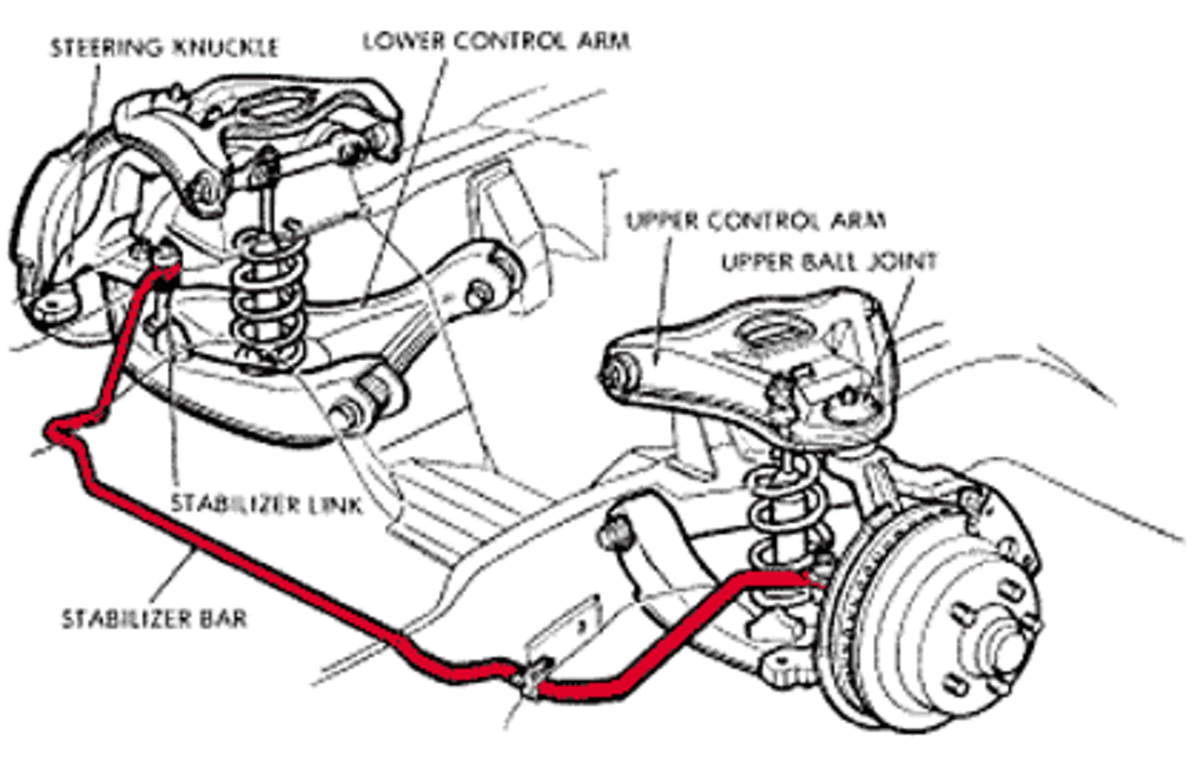
At its core, the stabilizer bar is a piece of bent metal, typically made from forged steel or high-strength spring steel. Its U-shaped design, with arms extending outwards, is not arbitrary. This specific geometry is the key to its ability to resist body roll.
Torsion and Force Transfer
The primary function of a stabilizer bar is to counteract the forces that cause a vehicle’s body to lean or “roll” during cornering. When a car takes a turn, centrifugal force pushes the vehicle outward. This force, acting on the car’s chassis, attempts to lift the inside wheels and compress the outside wheels. Without intervention, this would lead to excessive body lean, reduced tire contact with the road, and compromised handling.
The stabilizer bar connects the left and right sides of the suspension. When one side of the suspension compresses (e.g., the outside wheel in a turn), the stabilizer bar is forced to twist. This twisting action, known as torsion, is the bar’s fundamental operational principle. The bar resists this twisting, and through its connection to both sides of the suspension, it transfers the forces. Specifically, the compression on the outside suspension is partially resisted, and the upward movement of the inside suspension is also counteracted. In essence, the stabilizer bar creates a resistance to differential wheel movement, keeping the chassis more level.
Material Science and Design Optimization
The effectiveness of a stabilizer bar is directly linked to the material it’s made from and its physical dimensions. The choice of steel alloys is crucial for achieving the desired balance between strength and flexibility. A bar that is too stiff will transmit too much road shock, leading to a harsh ride. Conversely, a bar that is too flexible will not adequately control body roll. Engineers meticulously select materials and employ advanced simulations to determine the optimal material properties for different vehicle types and intended driving dynamics.
The diameter and length of the stabilizer bar also play significant roles. A thicker bar will have a higher torsional stiffness, offering greater resistance to roll. Longer arms allow for greater leverage, also increasing stiffness. The shape and placement of the mounting points to the chassis and suspension components are also critical design considerations, ensuring efficient force transfer and minimizing unwanted flex or stress.
The Impact of Stabilizer Bars on Vehicle Dynamics
The technological integration of a stabilizer bar has a direct and measurable impact on how a vehicle behaves dynamically, influencing everything from cornering stability to tire wear.
Controlled Body Roll and Enhanced Cornering
The most visible benefit of a stabilizer bar is the reduction of body roll. When a car corners, the centrifugal force attempts to rotate the car’s body around its longitudinal axis. The stabilizer bar acts as a torsional spring, resisting this rotation. By keeping the chassis more level, the stabilizer bar ensures that the tires maintain a more consistent and optimal contact patch with the road surface, even during aggressive maneuvers. This improved tire-to-road contact is fundamental to maintaining grip and control.
Furthermore, by reducing body roll, stabilizer bars allow for higher cornering speeds before the tires begin to lose traction. This translates to a more confidence-inspiring driving experience, particularly in situations where quick directional changes are necessary. The car feels more planted, predictable, and responsive to driver inputs.
Tire Wear and Longevity
Excessive body roll can lead to uneven tire wear. When a car leans significantly in corners, the weight distribution shifts heavily onto the outside tires. This concentrated pressure can cause the outer edges of the tires to wear down prematurely, reducing their lifespan and potentially compromising their performance. By stabilizing the chassis, stabilizer bars help distribute the vehicle’s weight more evenly across all four tires during cornering. This even weight distribution promotes more uniform tire wear, extending the life of the tires and ensuring consistent performance over time.
Ride Comfort and NVH (Noise, Vibration, and Harshness)
While the primary function is to control body roll, the design of a stabilizer bar also has implications for ride comfort and NVH. A stabilizer bar connects the suspension components. If it is excessively stiff or poorly mounted, it can transmit more road imperfections directly into the cabin, leading to a harsher ride. However, modern automotive engineering involves a delicate balancing act. The goal is to achieve effective roll control without unduly sacrificing ride comfort. This often involves using specialized bushings and carefully tuning the stiffness of the bar to absorb some of the smaller road shocks while still providing robust lateral stability. The goal is to optimize the overall NVH profile of the vehicle, ensuring a smooth and quiet ride.
Advanced Stabilizer Bar Technologies and Applications
The fundamental design of the stabilizer bar has remained consistent, but advancements in materials, manufacturing, and control systems have led to more sophisticated iterations and applications.
Hollow Stabilizer Bars and Material Composites
To achieve a desired level of stiffness while reducing weight, manufacturers increasingly employ hollow stabilizer bars. By removing material from the center of the bar, engineers can create a lighter component that maintains its torsional strength. This weight reduction is a key aspect of modern vehicle design, contributing to improved fuel efficiency and performance.
Furthermore, the exploration of composite materials, such as carbon fiber, for stabilizer bars is an ongoing area of research and development. Carbon fiber offers an exceptional strength-to-weight ratio, potentially leading to even more efficient and lighter suspension components. While currently more prevalent in high-performance and racing applications, the cost-effectiveness of these materials is expected to improve, making them more accessible for mass-produced vehicles in the future.
Active and Adaptive Stabilizer Bars
The most significant technological leap in stabilizer bar systems comes in the form of active and adaptive stabilizer bars. Unlike traditional passive bars that offer a fixed level of resistance, these advanced systems can dynamically adjust their stiffness in real-time.
Active stabilizer bars utilize electric motors or hydraulic actuators to alter the torsional resistance of the bar. This allows the vehicle’s computer system to precisely control body roll based on driving conditions. For instance, the system can stiffen the bar during aggressive cornering for maximum stability and then soften it on straight roads to improve ride comfort.
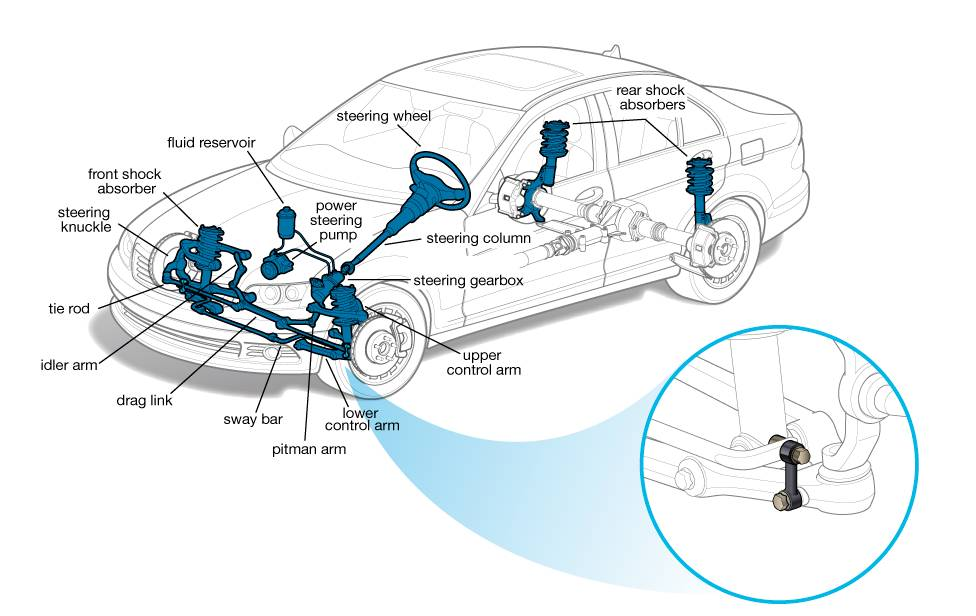
Adaptive stabilizer bars, a subset of active systems, often involve split designs where each half of the bar can be independently controlled. This allows for even more nuanced adjustments, enabling the system to counteract not only body roll but also pitch and heave, further enhancing the vehicle’s handling and comfort. These systems represent the cutting edge of automotive suspension technology, offering a level of control and adaptability previously unattainable.
Integration with Electronic Stability Control (ESC)
The functionality of stabilizer bars, especially active and adaptive variants, is often deeply integrated with other electronic vehicle control systems, most notably Electronic Stability Control (ESC). ESC uses sensors to detect when a vehicle is losing traction and automatically intervenes by applying individual brakes and reducing engine power.
Stabilizer bars work in concert with ESC to maintain vehicle control. By actively managing body roll, stabilizer bars contribute to the overall stability that ESC relies upon. In some advanced systems, the stabilizer bar’s adjustments can even provide proactive input to ESC, anticipating potential loss of traction and making subtle corrections before the ESC system needs to engage aggressively. This synergistic relationship between mechanical components like stabilizer bars and sophisticated electronic control units exemplifies the complex technological ecosystem of modern automobiles.
aViewFromTheCave is a participant in the Amazon Services LLC Associates Program, an affiliate advertising program designed to provide a means for sites to earn advertising fees by advertising and linking to Amazon.com. Amazon, the Amazon logo, AmazonSupply, and the AmazonSupply logo are trademarks of Amazon.com, Inc. or its affiliates. As an Amazon Associate we earn affiliate commissions from qualifying purchases.