
In the realm of legal proceedings and even in many business and financial contexts, the phrase “preponderance of evidence” is a cornerstone concept. It represents a standard of proof, a yardstick against which claims are measured to determine their validity. While often associated with courtrooms, understanding this principle is crucial for anyone navigating complex decisions, particularly in areas where definitive proof is elusive but a reasoned conclusion must be reached. This article delves into the meaning of preponderance of evidence, its practical applications, and how it influences outcomes, particularly within the financial and business spheres.
Understanding the Legal Standard: More Likely Than Not
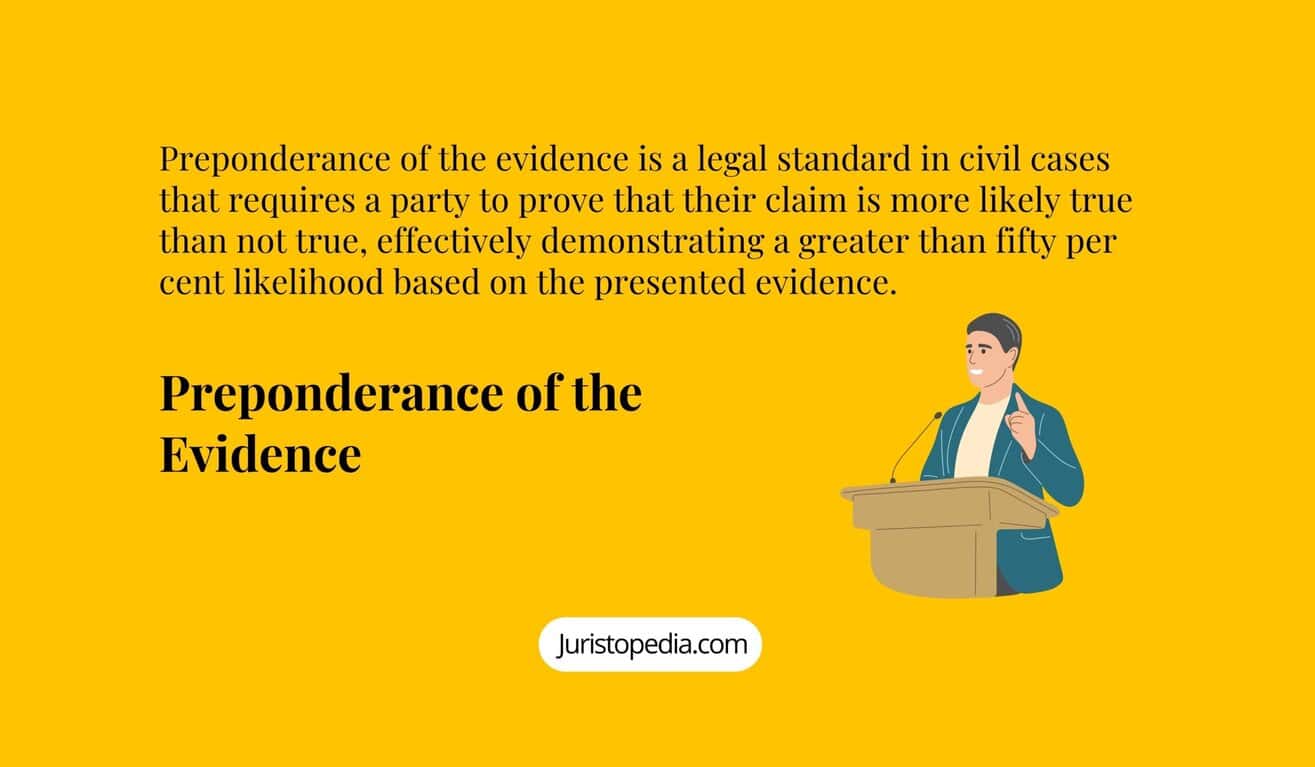
At its core, “preponderance of evidence” signifies that a claim or fact is more likely true than not true. It doesn’t demand absolute certainty, nor does it require proof beyond a reasonable doubt, which is a higher standard typically reserved for criminal cases. Instead, it asks whether the evidence presented tips the scales of probability in favor of one side over the other.
The Weighing Scale Analogy
A common and effective way to visualize preponderance of evidence is through the image of a balanced scale. On one side, you place all the evidence supporting a particular claim. On the other side, you place all the evidence contradicting that claim. If the scale tips even slightly in favor of the claim – if the evidence supporting it is just a hair heavier than the evidence against it – then the preponderance of evidence standard has been met. This means that the greater weight and credibility of the evidence support the proposition.
Distinguishing from Other Standards of Proof
It’s vital to differentiate preponderance of evidence from other legal standards of proof to fully grasp its significance:
-
Beyond a Reasonable Doubt: This is the highest standard of proof, used in criminal cases. It requires the prosecution to convince the jury that there is no other logical explanation, based on the facts, except that the defendant committed the crime. Any lingering reasonable doubt means an acquittal. Preponderance of evidence is far less stringent.
-
Clear and Convincing Evidence: This standard sits between preponderance of evidence and beyond a reasonable doubt. It requires a high probability that the asserted fact is true. This standard is often used in civil cases involving more serious matters, such as fraud or termination of parental rights, where a greater degree of certainty is desired than in a typical civil dispute.
In essence, preponderance of evidence is the most common standard in civil litigation. It reflects a societal consensus that in disputes between private parties, a decision based on the greater likelihood of truth is sufficient for resolution.
Applications in Business and Financial Contexts
While originating in the legal system, the principle of preponderance of evidence permeates numerous aspects of the business and financial world, often implicitly. Whenever a business makes a decision based on available data, assesses risk, or settles a dispute without formal litigation, the underlying logic frequently aligns with this standard.
Investment Decisions and Due Diligence
When investors evaluate a potential investment, they are, in effect, assessing the preponderance of evidence regarding the company’s prospects. They examine financial statements, market trends, management’s track record, competitive landscape, and economic forecasts. If the collective evidence points to a higher probability of the investment yielding a positive return than a negative one, the investment is likely to proceed. Similarly, during due diligence, financial analysts and lawyers gather information to determine if the likelihood of hidden liabilities or risks outweighs the perceived benefits of a deal. The decision to proceed or walk away is often based on a preponderance of evidence.
Analyzing Financial Reports
Financial reports – balance sheets, income statements, and cash flow statements – are critical documents. When analyzing these, investors and creditors look for patterns and indicators. For instance, consistent revenue growth, healthy profit margins, and manageable debt levels would constitute evidence in favor of a company’s financial stability. Conversely, declining revenues, mounting losses, or a rapidly increasing debt-to-equity ratio would be evidence against it. The overall picture painted by these reports, weighted by their credibility and consistency, helps determine if the preponderance of evidence supports the company’s financial health.
Market Research and Competitive Analysis
Before launching a new product or entering a new market, businesses conduct extensive research. This involves gathering data on consumer demand, competitor strategies, pricing, and potential barriers to entry. If market research indicates a strong demand and a relatively weak competitive response, the preponderance of evidence might suggest a successful launch. Conversely, if the research highlights intense competition, low consumer interest, or high production costs, the evidence would lean against the venture’s success.
Risk Management and Insurance Claims
In risk management, the concept of preponderance of evidence is integral to assessing and mitigating potential losses. Insurers, for example, rely on actuarial data and historical trends to determine the likelihood of claims. When an insurance claim is filed, the insurer investigates to ascertain whether the evidence supports the claim’s validity according to the policy’s terms. If the evidence suggests that the loss occurred as described and is covered, the claim is paid. If the evidence is ambiguous or points to circumstances excluded by the policy, the claim may be denied. The decision hinges on whether the evidence, on balance, supports the claim.
Underwriting and Policy Development
The very act of underwriting insurance policies involves a probabilistic assessment. Insurers analyze vast amounts of data on individuals or businesses to estimate the likelihood of future claims. This data forms the “evidence” used to determine premiums and policy terms. The higher the preponderance of evidence suggesting a greater risk, the higher the premium will be, or the policy might be declined altogether.
Claims Investigation
When a claim is made, investigators gather information, interview witnesses, review documentation, and consult experts. This process is essentially about accumulating evidence to determine if the claim is legitimate. For instance, in an auto accident claim, evidence might include police reports, witness statements, repair estimates, and medical records. The insurer will weigh this evidence to decide if the preponderance points towards coverage.
Contract Disputes and Negotiations
In business dealings, contracts are paramount. When disputes arise, parties often refer to the contract’s terms and the surrounding circumstances to resolve the issue. If litigation is avoided, negotiations often proceed with each side presenting its interpretation of the evidence and how it aligns with the contract. The party whose interpretation is supported by the greater weight of credible evidence is in a stronger negotiating position, often leading to a settlement that reflects the likely outcome if the matter were to go to court under a preponderance of evidence standard.
Interpreting Contractual Clauses
Ambiguous clauses in contracts are a frequent source of disputes. Parties will present evidence such as prior dealings, industry customs, or correspondence to support their interpretation. The party with evidence that more strongly suggests their interpretation is correct will have an advantage. This is a direct application of weighing evidence to determine the more probable meaning.
Settlement Negotiations
Many business disputes are resolved through negotiation rather than litigation. In these scenarios, each party assesses the strength of their case and the likely outcome if it were to be decided by a court applying the preponderance of evidence standard. This assessment informs their negotiating strategy, pushing them towards a settlement that reflects this probable outcome.
The Importance of Credibility and Weight
It’s not simply about the quantity of evidence, but its quality – its credibility and weight. Evidence can be strong or weak, direct or circumstantial, corroborated or contradictory.
Direct vs. Circumstantial Evidence
-
Direct Evidence: This is evidence that directly proves a fact without requiring any inference. For example, a video recording of a transaction or a signed document.
-
Circumstantial Evidence: This is evidence that proves a fact indirectly, by inference. For example, finding fingerprints at a crime scene is circumstantial evidence that the person was there.
In a preponderance of evidence analysis, both direct and circumstantial evidence are considered. Sometimes, a preponderance of strong circumstantial evidence can be more persuasive than weak direct evidence.
Evaluating Witness Testimony
The credibility of witnesses plays a significant role. Factors such as their demeanor, consistency, potential bias, and any prior inconsistent statements are evaluated. Expert testimony, which provides specialized knowledge, also carries significant weight but must be based on sound methodology and reliable data.
Documentary Evidence and Objective Data
Financial reports, emails, contracts, and statistical data are forms of documentary and objective evidence. Their reliability depends on their source, authenticity, and accuracy. Well-maintained financial records, for instance, carry substantial weight in financial disputes.
Practical Implications and Decision-Making
Understanding the preponderance of evidence standard has practical implications beyond the courtroom, influencing how we approach risk, make decisions, and assess information in the financial and business world.
Making Informed Business Decisions
In a business context, decisions are rarely made with 100% certainty. Whether it’s launching a new product, acquiring another company, or investing in new technology, there’s always an element of risk. By consciously or unconsciously weighing the evidence, business leaders can make more informed choices. If the evidence strongly suggests a high probability of success, the investment is justified. If the evidence leans towards failure, caution or abandonment might be the more prudent course.
Strategic Planning
The process of strategic planning inherently involves assessing probabilities. A company might consider entering a new market. Evidence might include market size, growth potential, competitive intensity, regulatory environment, and potential return on investment. If the preponderance of evidence suggests a favorable market entry with a strong likelihood of profitability, the company is more likely to proceed with its strategic plan.
Budgeting and Forecasting
Financial forecasts are predictions about future financial performance. These forecasts are built on historical data, current economic conditions, and anticipated market changes. The weight given to different pieces of data – such as past sales trends, projected consumer spending, or competitor pricing strategies – forms the basis for the forecast. If the evidence suggests a strong likelihood of increased sales and profits, the budget will reflect that.
Assessing the Likelihood of Success or Failure
In any endeavor, understanding the probabilities of different outcomes is crucial. Whether evaluating a startup’s pitch, a proposed merger, or an internal project, the ability to assess the preponderance of evidence helps determine the most likely scenario. This allows for better resource allocation and risk mitigation strategies.
Venture Capital and Startup Funding
Venture capitalists (VCs) constantly evaluate startups. They review business plans, financial projections, team experience, market demand, and competitive landscape. The VC’s decision to invest is based on their assessment of the preponderance of evidence that the startup has a high probability of success and will generate a significant return on their investment.
Mergers and Acquisitions (M&A)
When considering an M&A, both parties engage in extensive due diligence. This process gathers evidence about the target company’s financial health, operational efficiency, legal standing, and market position. The ultimate decision to proceed with the merger or acquisition hinges on whether the preponderance of evidence supports the strategic rationale and financial viability of the deal.
Conclusion
The concept of preponderance of evidence, though rooted in legal proceedings, is a fundamental principle that underpins rational decision-making across various professional disciplines, especially within the financial and business sectors. It represents a standard of proof that requires one side to demonstrate that their claim is more likely true than not. By understanding how evidence is weighed, how credibility is assessed, and how this standard applies to investment decisions, risk management, and contractual disputes, professionals can navigate complex situations with greater clarity and confidence, ultimately leading to more robust and informed outcomes. In a world where certainty is often elusive, the ability to discern the greater weight of evidence is an invaluable asset.
aViewFromTheCave is a participant in the Amazon Services LLC Associates Program, an affiliate advertising program designed to provide a means for sites to earn advertising fees by advertising and linking to Amazon.com. Amazon, the Amazon logo, AmazonSupply, and the AmazonSupply logo are trademarks of Amazon.com, Inc. or its affiliates. As an Amazon Associate we earn affiliate commissions from qualifying purchases.