
The intake manifold is a critical component in internal combustion engines, often overlooked by casual observers but indispensable for the engine’s very operation. It’s the conduit responsible for delivering the air-fuel mixture, or in modern direct-injection systems, just air, to each cylinder. Its design and function directly impact engine performance, efficiency, and emissions. Understanding the intake manifold’s role is key to appreciating the intricate engineering that powers our vehicles.
The Fundamental Role: Air and Fuel Delivery
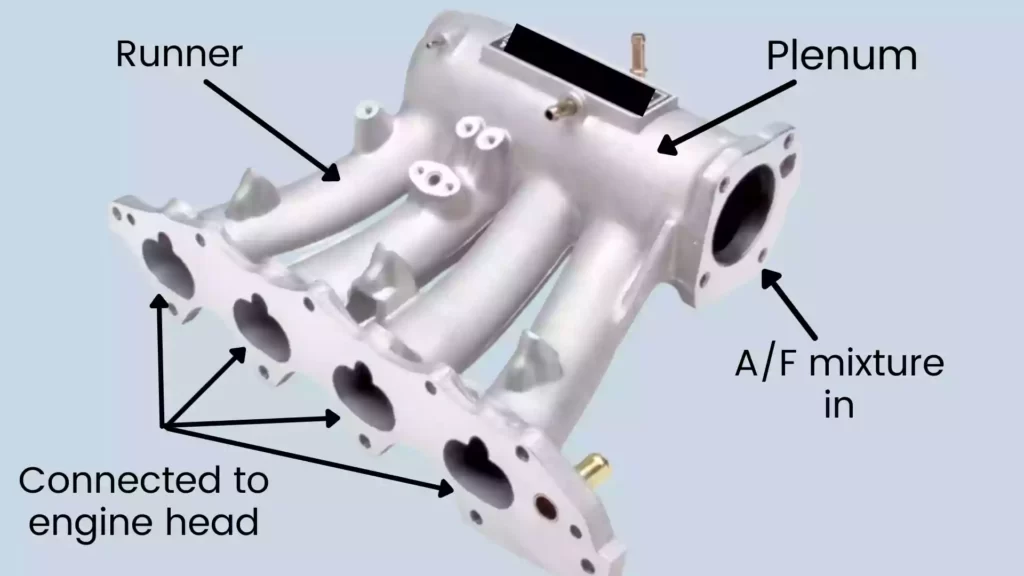
At its core, the intake manifold is a distribution network. It takes a single incoming stream of air (or air-fuel mixture) and divides it among the engine’s individual cylinders. This distribution must be as uniform and consistent as possible to ensure each cylinder receives the correct quantity for optimal combustion.
The Air Pathway
In gasoline engines, air is drawn into the intake manifold from the throttle body. The throttle body, controlled by the accelerator pedal, regulates the amount of air entering the engine. From the throttle body, the air travels through the manifold’s runners – individual passages that lead to each cylinder’s intake port. The length, diameter, and shape of these runners are meticulously engineered to influence the engine’s volumetric efficiency (how well it fills its cylinders with air) and torque characteristics.
Fuel Introduction
The point at which fuel is introduced depends on the engine type. In older port-injected engines, fuel injectors are strategically placed within the intake manifold runners, spraying fuel onto the back of the intake valve. This allows the fuel to mix with the air as it enters the cylinder. In modern direct-injection engines, fuel is injected directly into the combustion chamber itself, and the intake manifold’s primary role is solely air delivery. However, even in direct-injection systems, the intake manifold plays a vital role in ensuring consistent airflow to each cylinder.
Design Considerations and Their Impact on Performance
The design of an intake manifold is far from arbitrary. Engineers consider a multitude of factors to optimize engine performance across its operating range. These considerations often lead to different types of intake manifolds, each with its own advantages and disadvantages.
Runner Length and Diameter
The length and diameter of the intake manifold runners are crucial for tuning the engine’s power delivery. This is based on the principle of inertial ram effect. At different engine speeds, the incoming air charge creates pressure waves. Longer runners can help to build up positive pressure at lower RPMs, increasing torque. Shorter runners, conversely, tend to favor higher RPM power.
- Longer Runners: Tend to create a stronger low-end torque by optimizing the inertial ram effect at lower engine speeds. The air column within the runner has more time to build momentum, effectively “pushing” more air into the cylinder.
- Shorter Runners: Are generally preferred for high-RPM power. They offer less resistance to airflow at higher speeds, allowing the engine to breathe more freely and achieve peak horsepower.
The diameter of the runners also plays a role, affecting the velocity of the air charge. A smaller diameter can increase air velocity, which can improve throttle response and low-end torque. A larger diameter, on the other hand, reduces air velocity but can allow for a greater overall volume of air to enter the cylinder at higher RPMs.
Manifold Volume
The overall volume of the intake manifold also influences engine characteristics. A larger plenum (the central chamber where the runners originate) can act as an air reservoir, providing a more consistent supply of air, especially during rapid throttle openings. This can lead to smoother power delivery. Smaller plenums can offer quicker throttle response.
Material Choice
Intake manifolds are typically made from either cast aluminum or plastic (high-strength polymer). Each material has its own set of pros and cons:
- Cast Aluminum: Offers excellent durability, heat dissipation, and a premium feel. It is also highly resistant to deformation under heat and pressure. However, aluminum is heavier and can be more expensive to manufacture.
- Plastic: Is lighter, less expensive to produce, and provides better thermal insulation, which can be beneficial for emissions control and fuel efficiency by keeping the intake air cooler. However, plastic manifolds can be less durable than aluminum and are more susceptible to damage from extreme heat or impact.
Advanced Intake Manifold Technologies
Modern engine design has led to increasingly sophisticated intake manifold technologies aimed at optimizing performance and efficiency across a wider range of operating conditions. These innovations allow manufacturers to achieve a balance between low-end torque and high-end horsepower, something that was historically difficult with fixed-geometry intake systems.

Variable Intake Manifolds (VIM)
One of the most significant advancements is the variable intake manifold (VIM), also known as variable intake geometry (VIG) or variable intake runner length (VIRL). VIM systems utilize actuators and control valves to alter the effective length of the intake runners dynamically. This allows the engine control unit (ECU) to optimize airflow for different engine speeds and loads.
How Variable Intake Manifolds Work
VIM systems typically operate by using a butterfly valve or a set of flaps to either:
- Shorten the effective runner length: At higher RPMs, the system opens up pathways or bypasses, effectively shortening the runners. This promotes higher airflow and peak horsepower.
- Lengthen the effective runner length: At lower RPMs, the system forces air through longer pathways, increasing the inertial ram effect and boosting low-end torque.
This dynamic adjustment allows engines to have strong pulling power at low speeds and readily accessible power at high speeds, effectively combining the benefits of both long and short runners within a single manifold.
Benefits of VIM
- Improved Torque Curve: VIM systems significantly broaden the engine’s usable torque band, making the vehicle feel more responsive and powerful across a wider range of driving conditions.
- Enhanced Fuel Efficiency: By optimizing airflow, VIM can lead to more complete combustion, which in turn can improve fuel economy.
- Reduced Emissions: More efficient combustion can also contribute to lower exhaust emissions.
- Optimized Power Delivery: Drivers experience a more seamless and powerful acceleration without the distinct “lull” often found in engines with fixed intake geometries.
Other Technologies
Beyond VIM, manufacturers also employ other technologies to enhance intake manifold function:
- Tumbling and Swirling: Some intake manifold designs incorporate specific contours and shapes to induce a swirling or tumbling motion in the incoming air. This turbulence can improve atomization of fuel (in port-injected engines) and promote more thorough mixing of air and fuel in the combustion chamber, leading to more efficient and complete combustion.
- Resonators: Intake manifolds can also incorporate Helmholtz resonators or other acoustic tuning devices. These are essentially carefully designed chambers that can absorb or reflect specific sound frequencies. Their primary purpose is often noise reduction, contributing to a quieter and more refined engine operation. However, they can also play a subtle role in pressure wave dynamics within the manifold.
The Intake Manifold’s Role in Engine Tuning and Diagnosis
Given its critical role in airflow management, the intake manifold is a significant consideration for automotive enthusiasts and mechanics alike, whether for performance tuning or troubleshooting.
Performance Tuning
For those seeking to extract more power from an engine, the intake manifold is a prime candidate for modification. Aftermarket intake manifolds are widely available, offering different designs and materials that can significantly alter an engine’s performance characteristics.
- Cold Air Intakes (CAI): While not strictly an intake manifold, CAI systems often work in conjunction with the manifold to deliver cooler, denser air. Cooler air contains more oxygen, allowing for more fuel to be burned and thus generating more power.
- Performance Manifolds: Aftermarket performance intake manifolds are designed with optimized runner lengths and volumes to target specific power bands. For example, a manifold designed for drag racing might prioritize high-RPM power with short, large-diameter runners, while one for off-roading might focus on low-end torque with longer, more restrictive runners.
- Porting and Polishing: For naturally aspirated engines, enthusiasts often “port” and “polish” the intake manifold’s runners and ports. Porting involves smoothing and reshaping the internal passages to reduce airflow restrictions. Polishing creates a smoother surface, further reducing friction and improving airflow.
However, it’s crucial to note that significant modifications to the intake manifold can require corresponding adjustments to other engine systems, such as fuel injection and ignition timing, to achieve optimal results and avoid damaging the engine.

Diagnostic Challenges
A malfunctioning intake manifold can manifest in various performance issues, making diagnosis sometimes complex.
- Vacuum Leaks: The most common issue associated with intake manifolds is vacuum leaks. These occur when air enters the intake system downstream of the throttle body but before it enters the combustion chamber. Leaks can be caused by cracked manifolds, worn gaskets, or loose connections. Symptoms of a vacuum leak include rough idling, stalling, poor acceleration, and increased fuel consumption.
- Clogged Runners: Over time, the intake manifold can accumulate carbon deposits, especially in port-injected engines. These deposits can restrict airflow, leading to a loss of power and reduced engine efficiency.
- Faulty Actuators (VIM): In vehicles equipped with variable intake manifolds, a malfunctioning actuator or control valve can prevent the system from adjusting the runner length correctly. This can result in the engine operating sub-optimally, exhibiting poor performance across the rev range.
Diagnosing intake manifold issues often involves listening for hissing sounds (indicative of vacuum leaks), checking for DTC (Diagnostic Trouble Codes) related to airflow or misfires, and performing pressure tests on the intake system. Understanding the specific design and components of the intake manifold in question is crucial for accurate diagnosis and effective repair.
aViewFromTheCave is a participant in the Amazon Services LLC Associates Program, an affiliate advertising program designed to provide a means for sites to earn advertising fees by advertising and linking to Amazon.com. Amazon, the Amazon logo, AmazonSupply, and the AmazonSupply logo are trademarks of Amazon.com, Inc. or its affiliates. As an Amazon Associate we earn affiliate commissions from qualifying purchases.