
The question “what is a sociology major?” often sparks curiosity, especially among students navigating the complex landscape of academic disciplines. While it might not immediately conjure images of cutting-edge gadgets or lucrative investment strategies, a sociology major offers a unique and increasingly valuable lens through which to understand the modern world, particularly in its technological evolution. This field of study delves into the intricate social structures, human behaviors, and cultural dynamics that shape our societies. Far from being an abstract or irrelevant pursuit, sociology provides critical insights that are directly applicable to understanding and navigating the tech industry, influencing everything from product development and user experience to the ethical implications of artificial intelligence and the very fabric of online communities.

The Sociological Lens on Technology
Sociology, at its core, is the scientific study of society, social relationships, social interaction, and culture. It examines how societies are organized, how they change, and the factors that influence individual and collective behavior within them. When applied to the realm of technology, this perspective allows us to move beyond simply appreciating the functionality of a new app or gadget. Instead, it encourages us to critically analyze the social forces that drive technological innovation, the ways in which technology is adopted and integrated into our lives, and the profound social consequences, both intended and unintended, that emerge from our increasing reliance on digital tools.
Understanding User Behavior and Adoption
One of the most direct applications of sociological principles in the tech world lies in understanding user behavior. Sociologists employ theories and methodologies to study how individuals interact with their social environment, and this is directly transferable to understanding how people engage with technology. Concepts like diffusion of innovations, which explains how, why, and at what rate new ideas and technology spread through cultures, are fundamental to understanding the success or failure of any new tech product. Sociologists can analyze the social networks through which information about new technologies travels, identify early adopters and laggards, and predict adoption patterns based on social influence, perceived usefulness, and ease of use.
This understanding is crucial for tech companies. By employing sociologists or individuals with sociological training, companies can gain deeper insights into their target audience. They can move beyond simplistic demographic segmentation to understand the cultural norms, values, and social contexts that shape how people perceive and utilize technology. For example, understanding the social dynamics of family communication can inform the design of new communication apps, while insights into community structures can guide the development of social networking platforms. This leads to more intuitive, user-friendly, and ultimately, more successful products.
The Social Construction of Technology
A key concept in sociology of technology is the “social construction of technology” (SCOT). This perspective argues that technology does not develop in a vacuum, dictated by its inherent logic or scientific inevitability. Instead, it is shaped by social, cultural, and economic factors. The choices made by designers, engineers, policymakers, and users all contribute to the form and function that technology ultimately takes. A sociologist can analyze the various “interpretive communities” involved in technology development and use, understanding how their different perspectives and interests influence technological trajectories.
For instance, the development of the internet was not a predetermined path. It was influenced by military needs, academic research, and eventually, the desire for widespread communication and commerce. Similarly, the design of a smartphone is not solely about its technical specifications. It is also about how it fits into social practices, how it is used for social signaling, and how it mediates relationships. A sociology major can help tech companies understand these nuances, leading to products that are not only technologically advanced but also socially relevant and desirable.
Sociological Insights into AI and Digital Ethics
As artificial intelligence (AI) becomes increasingly integrated into our lives, the ethical considerations surrounding its development and deployment are paramount. Sociology provides a robust framework for analyzing these complex ethical challenges. AI systems are not neutral tools; they are designed by humans within existing social structures, and they inevitably reflect and perpetuate societal biases.
Unpacking Algorithmic Bias
Sociologists are well-equipped to identify and analyze algorithmic bias. They understand how historical and systemic inequalities can be embedded in the data used to train AI models, leading to discriminatory outcomes in areas such as hiring, loan applications, and even criminal justice. By examining the social context of data collection and algorithm design, sociologists can illuminate how seemingly objective technological systems can reinforce social stratification.
This is not merely an academic exercise. Tech companies that want to develop and deploy AI responsibly need to understand these social dimensions. A sociology major can contribute by:
- Critiquing data sources: Identifying potential biases in datasets and recommending strategies for mitigation.
- Analyzing algorithm design: Examining how algorithms might inadvertently encode social prejudices.
- Studying the impact of AI on social groups: Assessing how AI affects different communities and advocating for equitable outcomes.
- Developing ethical guidelines: Contributing to the creation of frameworks that promote fairness, accountability, and transparency in AI development and use.
The ability to critically assess the social implications of AI is becoming an indispensable skill in the tech industry, and sociology majors are uniquely positioned to provide this expertise.
The Social Impact of Automation and Surveillance

The increasing automation of tasks, powered by AI and robotics, has profound social implications, including potential job displacement and the need for workforce retraining. Sociologists study the impact of technological change on labor markets, social mobility, and the distribution of wealth. They can help tech companies and policymakers anticipate these shifts and develop strategies to mitigate negative consequences.
Furthermore, the rise of big data and advanced analytics has fueled unprecedented levels of digital surveillance, both by corporations and governments. Sociologists examine the erosion of privacy, the creation of social credit systems, and the potential for these technologies to shape and control human behavior. Understanding the sociological dynamics of power, control, and resistance is crucial for navigating the ethical minefield of digital surveillance and for advocating for responsible data practices. A sociology major can bring a critical perspective to discussions about data privacy, algorithmic transparency, and the balance between technological advancement and individual liberties.
Career Pathways in the Tech Industry for Sociology Majors
The idea that a sociology major leads to limited career options is a misconception, especially in the contemporary tech landscape. The analytical, research, and critical thinking skills honed through a sociology education are highly transferable and sought after by technology companies.
User Experience (UX) Research and Design
User experience (UX) is at the forefront of successful technology products. UX researchers and designers aim to create products that are not only functional but also intuitive, enjoyable, and meet the needs of their users. Sociologists are naturally adept at this. Their training in qualitative and quantitative research methods, understanding of human behavior, cultural context, and social interaction, makes them ideal candidates for UX roles.
A sociology major can contribute to UX by:
- Conducting user interviews and ethnographic studies: Observing how people naturally interact with technology in their daily lives.
- Analyzing user feedback: Identifying patterns and insights from surveys, focus groups, and app reviews.
- Developing user personas: Creating detailed representations of target users based on sociological research.
- Understanding cultural nuances: Ensuring that products are culturally sensitive and appealing to diverse user groups.
- Evaluating the social impact of design choices: Considering how design decisions might influence user behavior and social interaction.
This focus on understanding the “why” behind user actions, rather than just the “what,” is a hallmark of sociological inquiry and a critical asset in UX.
Product Management and Market Analysis
Product managers are responsible for guiding the development of new products from conception to launch. This role requires a deep understanding of market needs, consumer behavior, and the competitive landscape. Sociology majors can excel in product management by leveraging their ability to analyze social trends, understand consumer motivations, and anticipate market shifts.
Similarly, in market analysis roles, sociologists can provide a more nuanced understanding of consumer demographics, cultural influences on purchasing decisions, and the social dynamics that drive brand loyalty. They can move beyond basic statistical analysis to interpret the qualitative factors that shape consumer behavior, offering a richer and more actionable understanding for tech companies seeking to position their products effectively.
Data Analysis and Insights
While often associated with STEM fields, data analysis is increasingly being recognized as a critical area where sociological expertise is invaluable. Sociologists are trained in research methodologies that can extract meaningful insights from complex datasets. They can analyze trends in user engagement, identify patterns in online behavior, and understand the social factors that correlate with certain technological adoption rates.
Beyond quantitative analysis, sociologists bring a crucial qualitative dimension. They can interpret the social meaning behind the numbers, providing context and depth to data-driven decisions. This is particularly important in understanding the ethical implications of data usage and in ensuring that data analysis serves social good. Roles in data science, business intelligence, and market research can be effectively filled by individuals with a strong sociological background, especially when combined with an understanding of statistical software and analytical tools.
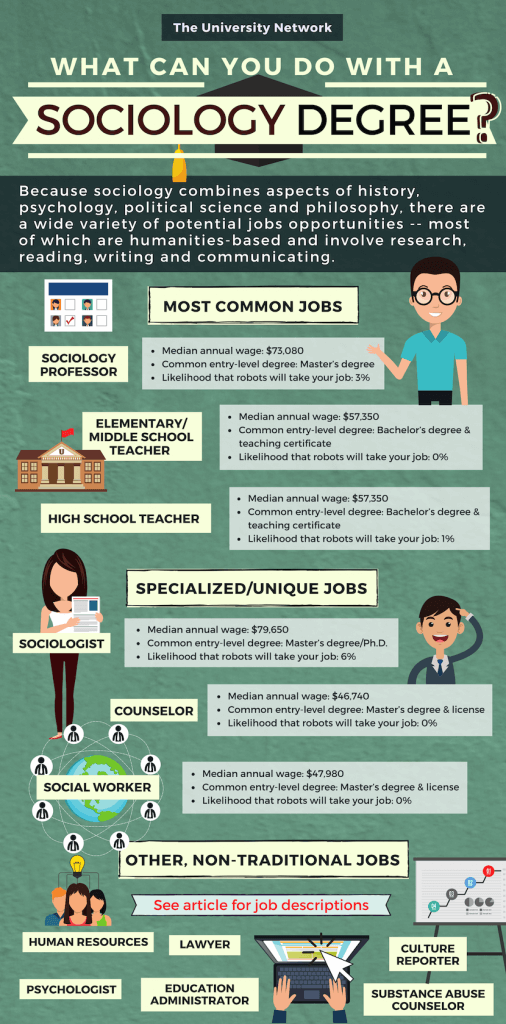
Social Impact and Corporate Social Responsibility (CSR)
As technology companies face increasing scrutiny regarding their societal impact, roles focused on social responsibility, ethics, and public relations are becoming more prominent. Sociology majors are inherently equipped to address these challenges. They can analyze the social consequences of a company’s products and practices, contribute to the development of ethical frameworks, and help build trust with stakeholders.
This includes understanding issues like digital inclusion, the impact of technology on mental health, and the responsible deployment of AI. Sociology majors can advocate for user well-being, promote equitable access to technology, and help companies navigate the complex social landscape in which they operate. Their ability to think critically about social systems and human interaction makes them invaluable in shaping a more responsible and socially conscious tech industry.
In conclusion, a sociology major offers a powerful toolkit for understanding and shaping the technological world. Far from being a niche academic pursuit, it provides a foundational understanding of human behavior, social structures, and cultural dynamics that are directly applicable and increasingly essential in the fast-paced and ever-evolving tech industry.
aViewFromTheCave is a participant in the Amazon Services LLC Associates Program, an affiliate advertising program designed to provide a means for sites to earn advertising fees by advertising and linking to Amazon.com. Amazon, the Amazon logo, AmazonSupply, and the AmazonSupply logo are trademarks of Amazon.com, Inc. or its affiliates. As an Amazon Associate we earn affiliate commissions from qualifying purchases.