
The dermal papilla, a term that might sound arcane to the uninitiated, is a fascinating and critically important biological structure nestled within the skin. While its fundamental role is deeply rooted in biology and physiology, its significance is increasingly being illuminated and leveraged through the relentless march of technological innovation. From the intricate machinery of hair follicle regeneration to the cutting-edge development of personalized skincare solutions, understanding the dermal papilla has become a focal point for researchers and developers across various tech-driven fields. This article delves into the dermal papilla, not merely as a cellular aggregation, but as a key player in a technological narrative that spans bio-engineering, advanced diagnostics, and the future of human augmentation.
The Dermal Papilla: A Biological Blueprint for Technological Intervention
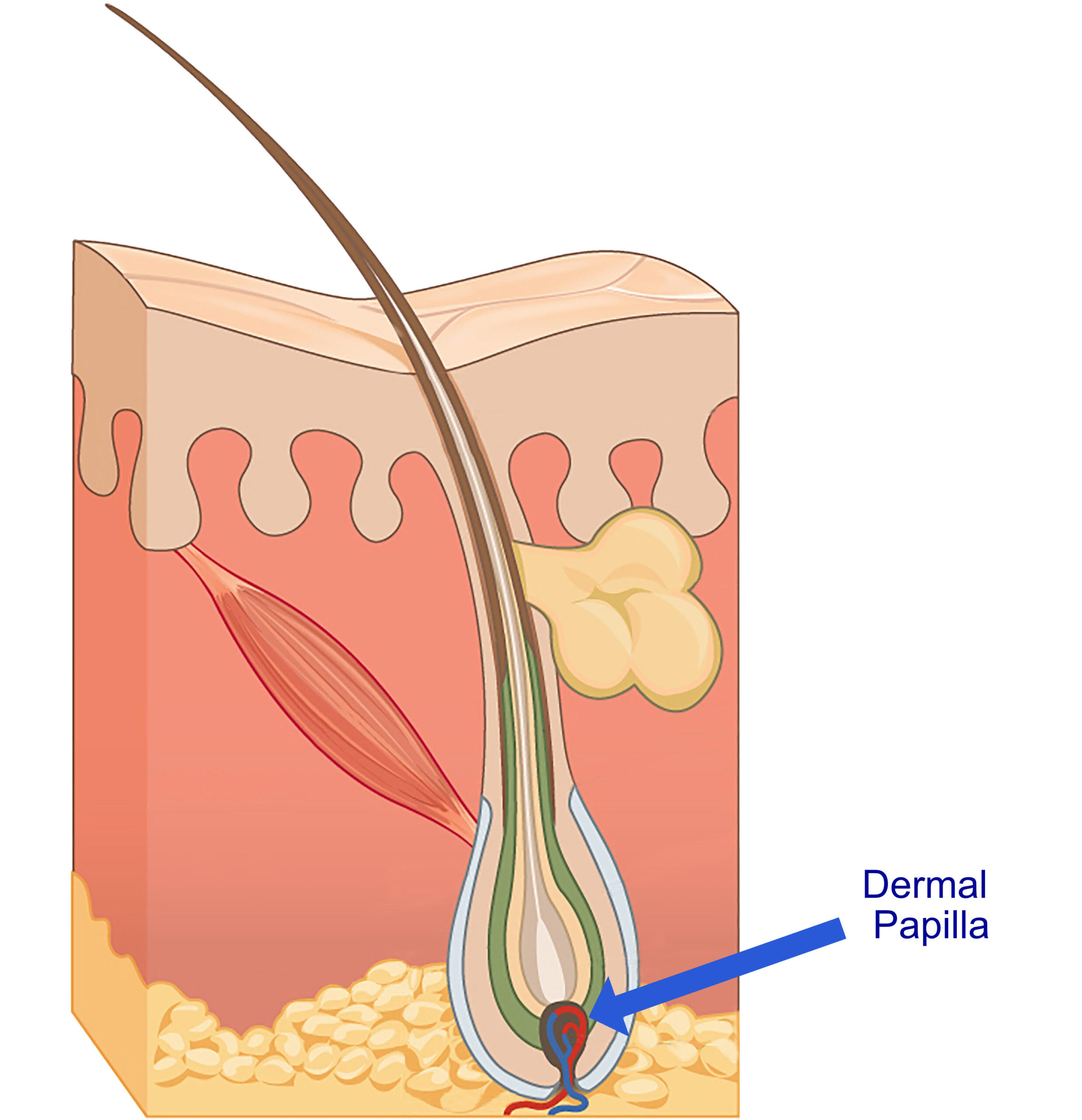
At its core, the dermal papilla is a small, cone-shaped invagination of dermal connective tissue that projects into the base of a hair follicle. It is a highly specialized cellular cluster, primarily composed of fibroblasts, and richly supplied with capillaries and nerve endings. Its primary biological function is to act as the signaling center for hair growth. It provides essential nutrients and growth factors that stimulate the surrounding matrix cells to proliferate and differentiate, ultimately forming the hair shaft. Without a healthy and functional dermal papilla, hair growth ceases. This fundamental biological truth has sparked immense interest within the technological spheres, particularly in developing solutions for hair loss and enhancing hair health.
Signaling Pathways and Molecular Mechanisms: The Code for Hair Growth
The dermal papilla is a master conductor of complex molecular signaling. It secretes a variety of growth factors and morphogens, such as Bone Morphogenetic Proteins (BMPs), Wnt proteins, and Fibroblast Growth Factors (FGFs). These molecules engage in intricate paracrine signaling with the epithelial cells of the hair follicle bulb. Understanding these pathways is not just an academic exercise; it’s the foundation for developing targeted therapeutic interventions.
Technological Leverage in Decoding Signaling:
- High-Throughput Screening (HTS) and Omics Technologies: Advances in HTS allow researchers to rapidly test thousands of compounds for their ability to modulate dermal papilla signaling. ‘Omics’ technologies, including genomics, transcriptomics, proteomics, and metabolomics, provide an unprecedented depth of understanding of the molecular landscape of the dermal papilla. This data is then analyzed using sophisticated bioinformatics software and machine learning algorithms to identify key regulatory genes and proteins.
- CRISPR-Cas9 and Gene Editing: This revolutionary gene-editing technology offers the potential to directly modify the genetic pathways within dermal papilla cells or the cells that influence them. While still largely in research phases for therapeutic applications, CRISPR holds promise for correcting genetic predispositions to hair loss or enhancing the regenerative capacity of dermal papilla cells.
- Organoid and 3D Bioprinting: The creation of hair follicle organoids, which mimic the in vivo structure and function of a hair follicle, often incorporates cultured dermal papilla cells. These organoids serve as invaluable platforms for drug discovery and studying disease mechanisms. Furthermore, 3D bioprinting technologies are being explored to construct functional hair follicles from scratch, with the dermal papilla being a crucial component to seed and guide the process.
The Hair Follicle Cycle: A Technological Dance of Anagen, Catagen, and Telogen
The hair follicle cycle is a dynamic, cyclical process involving phases of growth (anagen), regression (catagen), and rest (telogen). The dermal papilla plays a pivotal role in dictating the length and activity of the anagen phase. Disruptions in this cycle, often triggered by genetic factors, hormonal changes, or environmental stressors, lead to hair thinning and loss. Technological interventions aim to prolong the anagen phase and improve the overall health of the hair follicle.
Technological Applications in Hair Follicle Cycle Modulation:
- Low-Level Laser Therapy (LLLT) Devices: Devices emitting specific wavelengths of light are used to stimulate cellular activity, including in the dermal papilla. These gadgets, often marketed as home-use hair growth devices, aim to increase blood flow and metabolic activity within the follicle, thereby potentially extending the anagen phase. The efficacy of these devices is a subject of ongoing research and technological refinement.
- Minoxidil and Finasteride Analogues: While these are pharmacological agents, their development and delivery have been significantly influenced by technological advancements. Pharmaceutical companies utilize advanced computational modeling and screening technologies to discover and optimize new molecules that can interact with the signaling pathways of the dermal papilla, aiming for more targeted and effective treatments for hair loss.
- Platelet-Rich Plasma (PRP) and Exosome Therapy: These regenerative therapies involve injecting concentrated platelets or exosomes (tiny vesicles released by cells) into the scalp. These components contain a cocktail of growth factors and signaling molecules that can positively influence the dermal papilla, promoting hair growth. The precise formulation and delivery mechanisms are areas where technological innovation continues to play a significant role.
Technological Frontiers in Dermal Papilla Research and Application
The study of the dermal papilla has moved beyond the microscope and into the realm of advanced technological research. The ability to isolate, culture, and analyze these specialized cells has opened up a plethora of possibilities for both understanding and intervening in biological processes related to skin and hair.
Advanced Imaging and Computational Modeling: Visualizing the Invisible
Visualizing the intricate architecture and dynamic behavior of the dermal papilla at a cellular and molecular level requires cutting-edge imaging techniques. Furthermore, computational models are essential for understanding the complex interactions occurring within and around this structure.

Key Technological Innovations:
- Confocal Microscopy and Super-Resolution Microscopy: These techniques allow for detailed, three-dimensional imaging of dermal papilla cells and their components, providing insights into cellular organization and molecular localization.
- AI-Powered Image Analysis: Machine learning algorithms are being trained to analyze vast amounts of microscopic imagery, identifying subtle changes in dermal papilla morphology or cellular activity that might be indicative of disease or response to treatment. This can significantly accelerate diagnostic processes and research.
- Computational Fluid Dynamics (CFD) and Finite Element Analysis (FEA): These simulation tools can model blood flow to the dermal papilla, nutrient transport, and mechanical stresses on the hair follicle. This is crucial for designing devices or treatments that optimize the microenvironment for hair growth.
Bio-engineering and Regenerative Medicine: Rebuilding the Dermal Papilla
The ultimate goal for many technological pursuits involving the dermal papilla is to engineer new hair follicles or to regenerate existing ones that have atrophied. This is where the fields of bio-engineering and regenerative medicine are making significant strides.
Emerging Technological Solutions:
- Stem Cell Therapy: Researchers are investigating the use of mesenchymal stem cells or induced pluripotent stem cells (iPSCs) to generate or replenish dermal papilla cells. These stem cells can be differentiated into specific cell types, offering a potential source for restoring hair follicle function.
- Scaffold-Based Tissue Engineering: Bio-compatible scaffolds are being developed to provide a structural framework for dermal papilla cells to grow on and organize into functional units. These scaffolds can be designed to mimic the extracellular matrix of the dermis, guiding cell behavior and promoting follicle formation.
- Exosome-Based Therapeutics: As mentioned earlier, exosomes released by various cell types are rich in signaling molecules. Technological advancements are enabling the isolation, purification, and even modification of exosomes to deliver specific growth factors or microRNAs to dermal papilla cells, thereby promoting hair regeneration.
The Future of Dermal Papilla Technology: Personalized, Predictive, and Proactive
The trajectory of technological engagement with the dermal papilla points towards a future where interventions are not only more effective but also highly personalized and predictive. The convergence of various tech disciplines is paving the way for a new era in understanding and managing skin and hair health.
Personalized Skincare and Haircare Tech: Tailoring Treatments to the Individual
The one-size-fits-all approach to skincare and haircare is rapidly becoming obsolete, thanks to technological advancements that allow for hyper-personalization. The dermal papilla is a key target in this personalization.
Technological Manifestations:
- Genetic and Biomarker Testing: Companies are developing at-home kits that analyze an individual’s genetic predispositions for hair loss or specific scalp conditions. This information can then be used to recommend personalized topical formulations or treatment regimens designed to optimize dermal papilla function based on individual biological profiles.
- AI-Powered Diagnostic Apps: Mobile applications leveraging AI are emerging that can analyze images of the scalp and hair to identify signs of thinning or underlying issues. These apps can track progress over time and provide personalized advice, often integrating data from wearable sensors or other diagnostic tools.
- Smart Devices for Scalp Health: Wearable devices or scalp massagers equipped with sensors are being developed to monitor scalp conditions, deliver targeted treatments (e.g., micro-current stimulation, light therapy), and provide data for personalized AI analysis, all aimed at supporting the dermal papilla.

Predictive Analytics and Early Intervention Technologies
Beyond treating existing issues, technology is increasingly focused on predicting potential problems and enabling early intervention. This proactive approach can significantly impact long-term hair and skin health.
Technological Advancements:
- AI-Driven Risk Assessment: By analyzing large datasets of demographic information, lifestyle factors, and biological markers, AI algorithms can predict an individual’s risk of developing conditions like androgenetic alopecia or other hair-related issues, allowing for early preventative strategies targeting the dermal papilla.
- Wearable Biosensors for Scalp Monitoring: Future wearable technologies may incorporate sophisticated biosensors capable of detecting subtle changes in the scalp’s microenvironment or cellular activity, providing early warnings about compromised dermal papilla function. This data can then be fed into predictive AI models.
- Digital Twins of Skin and Hair Follicles: The concept of “digital twins” – virtual replicas of biological systems – is gaining traction. Creating a digital twin of a person’s hair follicle system, informed by their unique dermal papilla characteristics, could allow for virtual testing of various treatments and interventions before they are applied in reality, optimizing outcomes and minimizing risks.
In conclusion, the dermal papilla, a seemingly simple biological structure, is at the nexus of profound technological advancement. Its intricate role in hair growth and regeneration has made it a prime target for innovation across diverse technological domains. From the microscopic analysis of its signaling pathways to the macroscopic application of AI-driven personalized treatments, technology is transforming our ability to understand, protect, and even rebuild the dermal papilla. As research continues and new technological tools emerge, our capacity to address hair loss and enhance hair health is set to reach unprecedented levels, all powered by our deepening insights into this vital component of our skin.
aViewFromTheCave is a participant in the Amazon Services LLC Associates Program, an affiliate advertising program designed to provide a means for sites to earn advertising fees by advertising and linking to Amazon.com. Amazon, the Amazon logo, AmazonSupply, and the AmazonSupply logo are trademarks of Amazon.com, Inc. or its affiliates. As an Amazon Associate we earn affiliate commissions from qualifying purchases.