
The phrase “out of sight, out of mind” often dictates our relationship with waste. Once we deposit our rubbish into a bin, it embarks on a journey that, for many, ends abruptly in our collective imagination. However, the reality of what happens to rubbish in landfill is far more complex, involving intricate biogeochemical processes, significant environmental challenges, and, increasingly, innovative technological interventions. This article delves into the technical underpinnings of landfill decomposition, the environmental impacts, and the burgeoning technological solutions aimed at mitigating these issues.
The Complex Decomposition Processes Within a Landfill Environment
Landfills are not inert repositories of discarded materials. They are dynamic ecosystems where organic and inorganic waste undergoes a series of complex decomposition processes, driven by microbial activity, chemical reactions, and physical forces. Understanding these processes is crucial for designing effective waste management systems and developing advanced technologies to monitor and manage landfill environments.

Anaerobic Decomposition: The Dominant Microbial Force
The majority of organic waste in landfills decomposes under anaerobic conditions, meaning in the absence of oxygen. This process is largely driven by a consortium of microorganisms, including bacteria and archaea, that break down complex organic molecules into simpler compounds. This anaerobic digestion occurs in distinct phases, each characterized by specific microbial populations and the production of particular byproducts.
Phase 1: Hydrolysis and Acidogenesis
The initial stages involve the breakdown of complex polymers like carbohydrates, proteins, and lipids into simpler sugars, amino acids, and fatty acids. This is facilitated by hydrolytic enzymes secreted by microorganisms. Following hydrolysis, acidogenic bacteria convert these intermediate products into volatile fatty acids (VFAs), such as acetic acid, propionic acid, and butyric acid, along with alcohols and ammonia. The pH of the landfill environment typically drops during this phase, creating conditions favorable for the subsequent stages.
Phase 2: Acetogenesis
In this phase, acetogenic bacteria further break down the VFAs and alcohols produced during acidogenesis into acetic acid, hydrogen gas (H2), and carbon dioxide (CO2). This step is vital as it prepares the compounds for the final methanogenesis stage.
Phase 3: Methanogenesis
This is the final and often slowest phase of anaerobic decomposition, where methanogenic archaea convert acetic acid and hydrogen/CO2 into methane (CH4) and additional CO2. This process is responsible for the significant production of landfill gas (LFG), a mixture primarily composed of methane and carbon dioxide, with trace amounts of other gases like hydrogen sulfide. The ratio of methane to carbon dioxide in LFG is typically around 50:50, though it can vary depending on the composition of the waste and the specific landfill conditions.
Aerobic Decomposition: The Initial Surface Layer
While the bulk of a landfill operates under anaerobic conditions, the uppermost layers, where oxygen is still present, can undergo aerobic decomposition. This process is faster than anaerobic decomposition and occurs in the presence of oxygen-consuming microorganisms. It breaks down organic matter into CO2, water, and inorganic compounds. However, as waste is buried and compacted, oxygen is rapidly depleted, and the environment transitions to anaerobic conditions.
Other Contributing Factors: Physical and Chemical Transformations
Beyond microbial activity, physical and chemical factors also play a significant role in landfill decomposition. Compaction, a standard landfill operation, influences the density of the waste, affecting moisture content, gas diffusion, and the accessibility of microorganisms to organic materials. Chemical reactions, such as oxidation, reduction, and hydrolysis, can also occur, particularly with inorganic materials and certain types of plastics. The slow degradation of plastics, for instance, is a major concern, as they can persist in landfills for hundreds or even thousands of years, leaching harmful chemicals into the environment. Moisture content is another critical factor, acting as a solvent and transport medium for nutrients and microbial waste products, and influencing the rate of decomposition.
Environmental Challenges and Technological Monitoring of Landfill Leachate and Gas
The decomposition processes within landfills, while a natural phenomenon, generate byproducts that pose significant environmental risks. Leachate, a noxious liquid formed as rainwater percolates through decomposing waste, and landfill gas (LFG), a potent greenhouse gas, are the primary concerns. Advanced technologies are now being employed to monitor, capture, and even utilize these problematic outputs.
Leachate Formation and Its Toxic Composition
Leachate is formed when rainwater and other liquids (such as moisture present in the waste itself or liquids from industrial processes) seep through the mass of decomposing refuse. As this liquid travels through the waste, it dissolves and suspends a cocktail of organic and inorganic compounds. The composition of leachate is highly variable and depends on the age of the landfill, the type of waste present, and the operational practices employed.
Key Components of Landfill Leachate
Typical leachate contains high concentrations of:
- Organic Matter: Including dissolved organic carbon (DOC), which can contribute to high biochemical oxygen demand (BOD) and chemical oxygen demand (COD) in receiving waters.
- Inorganic Compounds: Such as heavy metals (lead, cadmium, mercury, chromium), ammonium, chlorides, sulfates, and various salts.
- Pathogens: Including bacteria, viruses, and protozoa, which can pose serious health risks if they contaminate water sources.
- Recalcitrant Compounds: These are complex organic molecules that resist rapid decomposition, such as humic and fulvic acids, and can persist in the environment for extended periods.
Environmental Impact of Leachate Migration
If not properly contained, leachate can escape from landfills and contaminate surrounding soil and groundwater. This contamination can render groundwater unusable for drinking, irrigation, and industrial purposes, and can severely damage aquatic ecosystems. The long-term effects of chronic leachate exposure on ecosystems are a major concern, leading to biodiversity loss and ecosystem degradation.
Landfill Gas (LFG) Emissions: A Greenhouse Gas Hazard
As discussed, anaerobic decomposition produces significant quantities of landfill gas (LFG), a mixture dominated by methane (CH4) and carbon dioxide (CO2). Methane is a particularly potent greenhouse gas, with a global warming potential approximately 25 times greater than that of carbon dioxide over a 100-year period. Uncontrolled LFG emissions contribute significantly to climate change.
Methane Oxidation and Other Trace Gases
While the primary components are methane and carbon dioxide, LFG also contains trace amounts of other gases, including nitrogen, oxygen, volatile organic compounds (VOCs) such as benzene, toluene, and xylene, and sulfur compounds like hydrogen sulfide (H2S), which is responsible for the characteristic odor of landfills. In some aerobic layers or within the cap of a landfill, methane can be oxidized to CO2 by methanotrophic bacteria, a process that can mitigate some of the methane emissions.
Health and Safety Risks Associated with LFG
Beyond its climate impact, LFG also poses safety risks. Accumulations of LFG in confined spaces can create explosive atmospheres, posing a significant fire and explosion hazard. Inhalation of trace gases, particularly VOCs and hydrogen sulfide, can also lead to various health problems, including respiratory irritation, headaches, and nausea.
Technological Solutions for Monitoring and Management
The environmental challenges posed by leachate and LFG have spurred the development and implementation of sophisticated technological solutions. These technologies aim to detect, contain, treat, and in some cases, even harness these problematic byproducts.
Advanced Leachate Collection and Treatment Systems

Modern landfills are equipped with robust leachate collection systems, typically comprising perforated pipes laid within a granular drainage layer beneath the waste mass, all contained within a liner system (often a composite of clay and geomembranes). Geomembranes are synthetic liners that prevent the migration of leachate into the surrounding environment. Once collected, leachate is treated through various methods, including:
- Physical-Chemical Treatment: Processes like sedimentation, coagulation, flocculation, and filtration remove suspended solids and some dissolved pollutants.
- Biological Treatment: Aerobic and anaerobic treatment systems can break down organic components.
- Advanced Oxidation Processes (AOPs): Techniques like ozonation and UV irradiation can degrade recalcitrant organic compounds.
- Membrane Filtration: Reverse osmosis (RO) and nanofiltration can remove dissolved salts and heavy metals.
Landfill Gas Capture and Utilization Technologies
Effective LFG capture systems are crucial for mitigating greenhouse gas emissions and enhancing safety. These systems typically involve a network of vertical and horizontal wells drilled into the landfill waste to extract the gas. The captured LFG can then be:
- Flared: The gas is combusted in a flare, converting methane into less potent CO2 and water. This is a common method for simply mitigating methane emissions.
- Utilized for Energy Recovery: This is the most sustainable approach. LFG can be used to generate electricity, heat buildings, or even purified to biomethane, which can be injected into natural gas grids or used as vehicle fuel. Technologies for purification include membrane separation, PSA (Pressure Swing Adsorption), and chemical scrubbing.
- Monitored with Advanced Sensors: Real-time monitoring of LFG composition and flow rates is often achieved using advanced sensors and data acquisition systems, allowing for precise control of the capture system and early detection of potential issues.
Remote Sensing and Data Analytics
The advent of remote sensing technologies, such as infrared cameras and drone-based sensors, is revolutionizing the monitoring of LFG emissions. These technologies can identify fugitive emissions that might be missed by traditional monitoring methods. Furthermore, the vast amounts of data generated by these monitoring systems are being increasingly analyzed using artificial intelligence (AI) and machine learning algorithms. This allows for predictive maintenance of LFG capture systems, optimization of gas extraction, and better forecasting of LFG production rates, leading to more efficient and environmentally sound landfill management.
The Future of Landfills: Towards Circular Economy and Technological Integration
The traditional landfill, once viewed as the ultimate destination for our waste, is gradually being reimagined. Driven by a growing understanding of its environmental impact and the accelerating pace of technological innovation, the future of waste management is shifting towards a more circular economy, where landfills serve as a last resort and are integrated with advanced technological solutions.
Moving Beyond the “Dump”: Waste Reduction and Resource Recovery
The core principle of a circular economy is to minimize waste generation and maximize the value extracted from materials. This involves a multi-pronged approach:
Source Reduction and Reuse Initiatives
The most effective strategy is to reduce the amount of waste produced in the first place. This includes:
- Product Design for Longevity and Repairability: Encouraging manufacturers to design products that are durable, easily repaired, and can be disassembled for material recovery at the end of their life.
- Promoting Reusable Packaging and Products: Shifting away from single-use items towards reusable alternatives in both consumer and industrial sectors.
- Digital Platforms for Sharing and Rental: The rise of online platforms facilitating the sharing and rental of goods (e.g., tools, equipment, clothing) reduces the need for individual ownership and thus, waste generation.
Advanced Recycling and Upcycling Technologies
While recycling has been a cornerstone of waste management for decades, new technologies are expanding its capabilities and increasing its efficiency:
- Chemical Recycling: Technologies like pyrolysis and gasification can break down complex plastic polymers into their basic chemical components, which can then be used to create new virgin-quality plastics or other valuable chemicals. This offers a solution for mixed or contaminated plastic waste that is difficult to recycle mechanically.
- AI-Powered Sorting: Advanced optical sorters, equipped with AI algorithms and spectral analysis, can identify and separate different types of materials with unprecedented accuracy, improving the quality and quantity of recycled output.
- 3D Printing with Recycled Materials: The integration of 3D printing technology with recycled feedstocks is creating new avenues for upcycling waste materials into valuable products, fostering localized manufacturing and reducing the need for virgin resources.
The Role of Smart Landfills and Data-Driven Management
Even with the most robust waste reduction and resource recovery strategies, some residual waste will inevitably reach landfills. However, the “smart landfill” concept promises to transform these sites into sophisticated, technologically managed facilities.
Integrated Sensing and IoT Networks
Smart landfills are characterized by extensive networks of sensors, often connected via the Internet of Things (IoT), which provide real-time data on various parameters within the landfill. This includes:
- Environmental Monitoring: Sensors can track temperature, moisture levels, gas composition (methane, CO2, VOCs), and leachate levels with high precision.
- Structural Integrity: Sensors can monitor the settlement of waste, the stability of slopes, and the performance of containment systems, providing early warnings of potential structural issues.
- Waste Characterization: Emerging technologies are exploring ways to characterize waste composition within the landfill using non-invasive methods, aiding in the optimization of gas extraction and decomposition processes.
Predictive Analytics and AI-Driven Optimization
The data collected from IoT sensors is fed into sophisticated analytics platforms powered by AI and machine learning. This enables:
- Predictive Modeling: Forecasting LFG production rates, leachate generation, and potential environmental risks.
- Optimized Operations: Fine-tuning gas collection systems for maximum efficiency, managing leachate treatment processes, and optimizing waste placement to accelerate decomposition.
- Early Anomaly Detection: Identifying deviations from normal operating conditions that could indicate leaks, equipment malfunctions, or potential environmental hazards, allowing for prompt intervention.
Landfill Mining and Bioreactor Landfills: Harvesting Past Resources and Accelerating Decomposition
Two innovative approaches are also contributing to the evolving landscape of landfill management: landfill mining and bioreactor landfills.
Landfill Mining: Unearthing Hidden Resources
Landfill mining involves the excavation and processing of old landfill sites. The aim is to recover valuable materials that were once discarded but are now economically viable or environmentally necessary to retrieve. This can include:
- Metals: Ferrous and non-ferrous metals can be extracted through magnetic separation and other metallurgical processes.
- Aggregates: Recovered inert materials can be processed into aggregates for construction purposes.
- Energy Recovery: Some organic components can be treated to generate energy.
While technically challenging and often costly, landfill mining offers a way to reclaim land and extract valuable resources from historical waste disposal sites, effectively turning old landfills into a source of secondary raw materials.
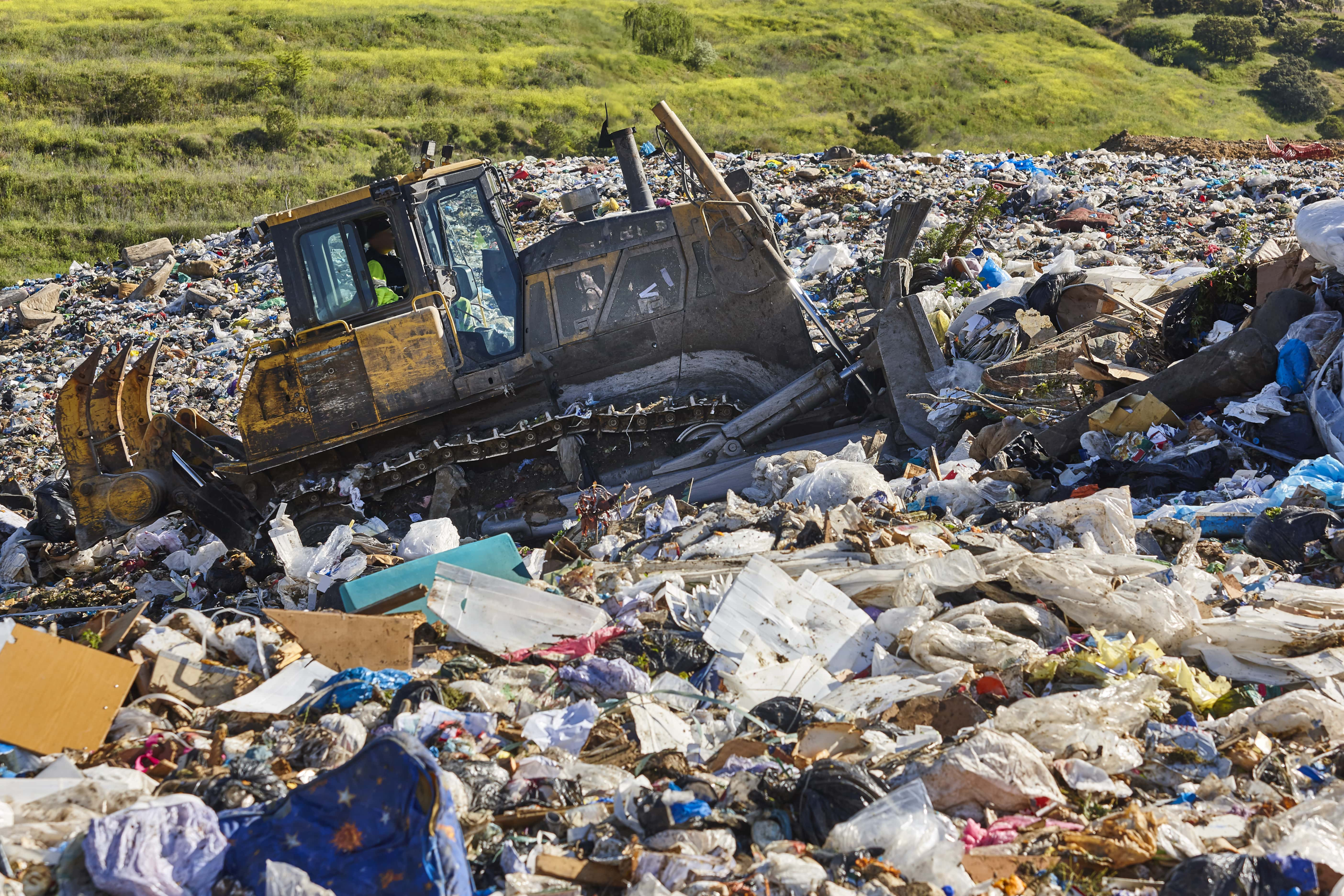
Bioreactor Landfills: Accelerating Decomposition for Energy and Land Reclamation
Bioreactor landfills are designed to accelerate the decomposition of organic waste through the controlled addition of liquids (such as leachate recirculation or other wastewater) and aeration. This enhanced decomposition leads to:
- Increased LFG Production: A faster rate of decomposition results in a more rapid and consistent production of LFG, which can be captured and utilized for energy generation over a shorter period.
- Faster Waste Stabilization: The waste mass stabilizes more quickly, allowing for earlier closure and reclamation of the landfill site.
- Reduced Long-Term Liability: By accelerating decomposition, the potential for long-term environmental risks associated with uncapped landfills is reduced.
These advanced techniques, coupled with ongoing research into new materials science and biochemical processes, are paving the way for a future where landfills are not just waste disposal sites but managed, technologically integrated facilities that contribute to resource recovery and a more sustainable approach to waste management.
aViewFromTheCave is a participant in the Amazon Services LLC Associates Program, an affiliate advertising program designed to provide a means for sites to earn advertising fees by advertising and linking to Amazon.com. Amazon, the Amazon logo, AmazonSupply, and the AmazonSupply logo are trademarks of Amazon.com, Inc. or its affiliates. As an Amazon Associate we earn affiliate commissions from qualifying purchases.