
The seemingly simple question of “what happens to landfills” unveils a complex financial ecosystem, from the initial costs of creation and operation to the long-term liabilities and emerging economic opportunities. Landfills are not merely holes in the ground where waste disappears; they are significant infrastructure projects with substantial financial implications, influencing municipal budgets, private sector investments, and the broader economy. Understanding the financial lifecycle of a landfill is crucial for policymakers, investors, and citizens alike, as it directly impacts resource management, environmental protection, and economic sustainability.
The Capital Outlay and Operational Expenses of Landfill Development
Establishing a modern landfill is a capital-intensive endeavor. The initial investment encompasses land acquisition, site preparation, and the construction of critical infrastructure designed to contain waste and mitigate environmental risks. This is followed by ongoing operational expenses that are substantial and multifaceted, contributing significantly to the overall cost of waste management.

Land Acquisition and Site Preparation
The process begins with identifying and acquiring suitable land. Factors influencing site selection include geological stability, proximity to waste generation centers, buffer zones for residential areas, and accessibility for waste haulers. The cost of land itself can be a significant variable, often higher in densely populated regions. Once acquired, the site undergoes rigorous preparation. This involves extensive earthmoving to create the engineered cells where waste will be deposited. Impermeable liners, typically made of high-density polyethylene (HDPE) or clay, are installed to prevent leachate – the liquid that forms when rainwater percolates through waste – from contaminating groundwater. This liner system is a crucial, albeit expensive, component of modern landfill design, representing a substantial upfront capital investment.
Infrastructure Development and Engineering
Beyond the liner system, landfills require sophisticated infrastructure. This includes a network of leachate collection and removal systems, often involving perforated pipes and sump pumps. Gas collection systems are also vital for capturing methane and other volatile organic compounds (VOCs) produced by the anaerobic decomposition of organic waste. These gases can be a safety hazard and a significant source of greenhouse gas emissions. The engineering and installation of these systems, designed to meet stringent environmental regulations, contribute significantly to the initial capital expenditure. Furthermore, leachate treatment facilities, which may be on-site or connected to municipal wastewater treatment plants, represent another substantial cost. The design and construction of these facilities ensure that contaminated liquids are treated to acceptable standards before discharge, incurring both capital and operational expenses.
Permitting and Regulatory Compliance Costs
Obtaining the necessary permits from local, state, and federal environmental agencies is a lengthy and often costly process. This involves extensive environmental impact assessments, public hearings, and the development of detailed operational plans. Ongoing compliance with these regulations necessitates continuous monitoring, reporting, and adherence to evolving standards, all of which incur direct financial costs and require specialized expertise.
The Revenue Streams and Economic Viability of Landfills
While the establishment and operation of landfills incur significant costs, they are also designed to generate revenue, primarily through tipping fees. The economic viability of a landfill depends on a delicate balance between these revenue streams and the extensive expenses associated with waste disposal and environmental stewardship.
Tipping Fees: The Primary Revenue Source
The most direct revenue stream for a landfill comes from tipping fees, also known as gate fees. These are charges levied on waste haulers for each ton of waste deposited. The fee structure can vary based on the type of waste, the volume, and the contractual agreements with waste management companies. Municipal landfills often operate as cost-recovery entities, aiming to cover operational expenses and capital investments through these fees. Private landfill operators, on the other hand, aim to generate a profit. The volume of waste received directly impacts revenue, making successful waste diversion initiatives a double-edged sword from a purely revenue-generating perspective for landfill operators, though often beneficial for the broader financial health of a municipality.
Gate Fees and Market Dynamics
The level of tipping fees is influenced by several market dynamics. The availability of alternative disposal methods, such as incineration or recycling facilities, can create competitive pressure on landfill pricing. Conversely, in areas with limited disposal options, landfill operators may command higher fees. Local and regional economic conditions also play a role; a booming economy can lead to increased waste generation and, consequently, higher landfill revenues. Contractual agreements with municipalities and private waste haulers are crucial in stabilizing revenue streams, often involving long-term contracts that can provide predictable income, but also locking in prices that may become unfavorable if market conditions shift significantly.
Ancillary Revenue Streams and By-products
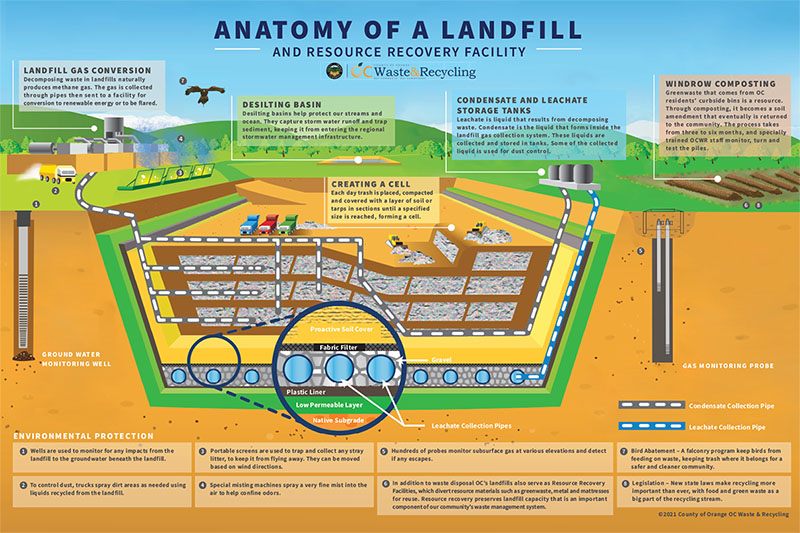
Beyond tipping fees, some landfills can generate ancillary revenue streams. The most significant of these is landfill gas-to-energy projects. Methane captured from decomposing waste can be used to generate electricity through turbines or internal combustion engines, which can then be sold to the grid. This not only provides a revenue stream but also mitigates the environmental impact of methane emissions. Other potential, though less common, revenue opportunities might include the sale of recovered materials from pre-processing waste or the utilization of treated leachate for specific industrial purposes, subject to strict regulatory approval.
The Long-Term Financial Liabilities and Post-Closure Costs
The financial obligations of a landfill do not cease when it reaches its operational capacity and is closed. A significant and often underestimated aspect of landfill economics involves the long-term financial liabilities and post-closure costs that can extend for decades, necessitating ongoing financial planning and management.
Post-Closure Care and Environmental Monitoring
Once a landfill is closed, it requires ongoing care and monitoring for a period stipulated by regulatory bodies, often 30 years or more. This involves maintaining the final cover system – the engineered cap designed to prevent water infiltration and control gas emissions – to ensure its integrity. Regular inspections, maintenance of the leachate collection and gas management systems, and extensive environmental monitoring of groundwater and air quality are essential. The cost of these activities, while perhaps less immediate than operational expenses, represents a substantial and long-term financial commitment.
Financial Assurance and Escrow Accounts
To ensure that these post-closure obligations are met, regulatory agencies typically require landfill operators to establish financial assurance mechanisms. This can include setting aside funds in escrow accounts, obtaining surety bonds, or establishing trust funds. These mechanisms guarantee that sufficient funds will be available for post-closure care, even if the operating company faces financial difficulties or bankruptcy. The amount of financial assurance required is often based on detailed cost estimates for post-closure activities, which are periodically reviewed and updated. This represents a significant allocation of capital that is effectively tied up for many years.
The Risk of Unforeseen Contamination and Remediation Costs
Despite stringent engineering and regulatory oversight, there is always a residual risk of unforeseen environmental issues arising from historical or contemporary landfill operations. Contamination of groundwater or soil, or the release of hazardous gases, can necessitate costly remediation efforts. The financial burden of such remediation can be immense, potentially exceeding the initial capital investment and operational revenues of the landfill. This risk underscores the importance of robust environmental management practices throughout the landfill’s lifecycle and the need for adequate insurance and contingency planning. The long-term financial legacy of a poorly managed landfill can be a significant burden on taxpayers or future generations if remediation is required after the responsible parties are no longer able to cover the costs.
Emerging Economic Models and the Future of Landfill Finance
The traditional model of landfilling is facing increasing scrutiny due to environmental concerns and the recognition of the economic value of waste as a resource. This has spurred innovation and the development of new economic models aimed at reducing reliance on landfills and extracting greater financial and environmental value from waste.
The Circular Economy and Waste Diversion Incentives
The concept of a circular economy, which emphasizes reducing waste and maximizing the reuse and recycling of resources, is fundamentally reshaping waste management finance. Municipalities and private entities are increasingly investing in waste diversion programs, such as enhanced recycling, composting, and waste-to-energy technologies. While these initiatives may reduce the volume of waste sent to landfills, potentially impacting tipping fee revenues, they can also unlock new revenue streams through the sale of recycled materials and energy. Furthermore, by reducing the need for new landfill construction and minimizing long-term environmental liabilities, these diversion strategies can offer significant long-term financial benefits. The financial incentives can be structured to encourage waste reduction at the source, such as pay-as-you-throw programs.
Landfill Mining and Resource Recovery
A more radical approach gaining traction is landfill mining, which involves excavating and processing old landfills to recover valuable materials. These materials can include metals, aggregates, and even combustible waste that can be used for energy generation. While technically challenging and capital-intensive, successful landfill mining operations can generate significant revenue from the sale of recovered resources and reduce the environmental footprint of existing landfill sites. This represents a shift from viewing landfills as endpoints of waste disposal to potential resource repositories, albeit with significant upfront investment and complex operational hurdles.

Carbon Credits and Environmental Markets
The generation of methane from landfills presents an opportunity to participate in carbon credit markets. Projects that capture and utilize landfill gas, thereby reducing greenhouse gas emissions, can generate saleable carbon credits. This provides an additional revenue stream and incentivizes the development of gas-to-energy infrastructure. As global efforts to combat climate change intensify, the financial value of such environmental offsets is likely to increase, making landfill gas capture and utilization an increasingly attractive economic proposition. The financial mechanisms associated with carbon markets are complex but offer a pathway for landfills to contribute to environmental goals while simultaneously improving their financial sustainability. The transition from a linear “take-make-dispose” model to a more circular and resource-efficient economy is fundamentally altering the financial considerations associated with landfills, moving them from solely cost centers to potential hubs for resource recovery and environmental innovation.
aViewFromTheCave is a participant in the Amazon Services LLC Associates Program, an affiliate advertising program designed to provide a means for sites to earn advertising fees by advertising and linking to Amazon.com. Amazon, the Amazon logo, AmazonSupply, and the AmazonSupply logo are trademarks of Amazon.com, Inc. or its affiliates. As an Amazon Associate we earn affiliate commissions from qualifying purchases.