
A Technological Marvel of its Era
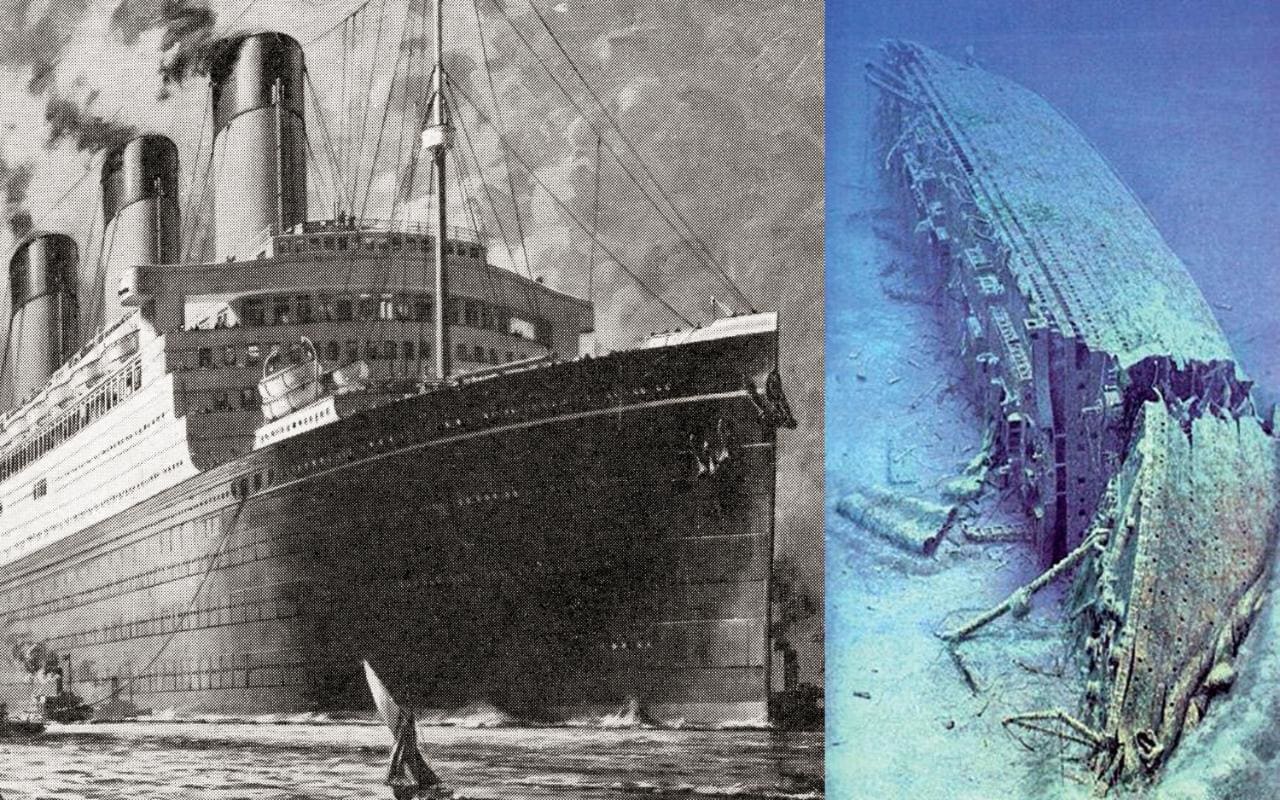
The HMHS (His Majesty’s Hospital Ship) Britannic, launched in 1914, represented the zenith of early 20th-century maritime engineering and design. Conceived as the third and largest vessel of the White Star Line’s Olympic-class ocean liners, alongside the Olympic and the ill-fated Titanic, Britannic was intended to push the boundaries of luxury, speed, and, crucially, safety. While often overshadowed by its sister ships, the Britannic incorporated significant technological advancements that aimed to rectify the shortcomings exposed by the Titanic disaster just two years prior.
From an engineering perspective, the Britannic was a monumental undertaking. Spanning over 900 feet in length with a gross tonnage exceeding 48,000 tons, it was designed for immense passenger capacity and transatlantic voyages. Its propulsion system was a marvel of its time: a triple-screw configuration driven by two powerful four-cylinder, triple-expansion reciprocating steam engines for the wing propellers, and a low-pressure steam turbine for the central propeller. This hybrid system, generating approximately 50,000 indicated horsepower, allowed for efficient cruising speeds, translating to a powerful and relatively smooth ride across the Atlantic. The ship’s vast boiler rooms, fed by a massive coal consumption, were a testament to the industrial scale of its operation.

Beyond propulsion, the internal architecture and systems were complex networks of mechanical, hydraulic, and electrical engineering. Advanced ventilation systems, intricate piping for water and steam, and early electrical grids powered everything from navigation lights to state-of-the-art wireless telegraphy equipment. The ship’s sheer scale necessitated sophisticated communication systems onboard, including pneumatic tubes and internal telephones, to manage its vast crew and facilitate operations. The construction itself utilized the most advanced shipbuilding techniques and materials available, primarily steel, meticulously riveted to withstand the immense pressures of the open ocean.
The Britannic was not merely a vessel; it was a floating city, a testament to the era’s ambition and technological capability. Its design and construction reflected a period where human ingenuity was rapidly expanding the possibilities of travel and engineering, with each successive ship aiming to surpass its predecessors in every measurable aspect.
Engineering for Safety: The “Unsinkable” Myth Revisited
Following the catastrophic loss of the Titanic in 1912, the international maritime community, and particularly the White Star Line, faced immense pressure to dramatically improve ship safety. The Britannic, still under construction during the inquiries, became the proving ground for these new safety mandates, effectively transforming it into an advanced prototype for future ocean liner safety technology. These enhancements were so extensive that many believed the Britannic to be truly “unsinkable.”
Redundant Watertight Compartments and Bulkheads
One of the primary technological upgrades involved the watertight subdivision of the hull. While the Titanic had 16 main watertight compartments, the Britannic improved upon this by extending the height of six of its forward boiler room bulkheads all the way up to the B-deck, significantly higher than on its sister ships. This meant that the ship could potentially withstand damage to a greater number of compartments without succumbing to flooding. Theoretical calculations suggested the Britannic could remain afloat even with six compartments breached, a substantial improvement over the Titanic’s four-compartment limit. The bulkheads themselves were robust steel structures, designed to contain water effectively.
Double Hull Protection
A more fundamental design enhancement was the introduction of an inner skin, creating a true double hull along much of the ship’s length, particularly around the critical boiler and engine rooms. This double hull provided an extra layer of protection against puncture, acting as a buffer zone. Any breach of the outer hull would ideally only flood the space between the two skins, leaving the vital machinery and internal compartments intact. This technology aimed to mitigate the impact of external forces, such as collisions with icebergs or other vessels, significantly increasing the ship’s resilience.
Advanced Lifeboat Launching Systems
Perhaps the most visible and practical safety upgrade concerned the lifeboat provision and launching mechanisms. The Titanic incident tragically highlighted the inadequacy of its davit systems, which could only launch one lifeboat at a time per set, and the insufficient number of boats. The Britannic was fitted with an innovative and powerful new gantry davit system, designed by the Welin MacLachlan Davit Company. These colossal davits, capable of carrying multiple lifeboats at once, could pivot outwards to retrieve boats from both sides of the ship, even if the vessel developed a severe list. Each davit could handle six lifeboats, allowing for the rapid deployment of a larger number of boats and significantly increasing the speed at which passengers could be evacuated. The ship carried 48 lifeboats, enough for all 3,603 people on board (its full capacity as a hospital ship), far exceeding the regulatory requirements of the time.
Despite these pioneering technological safeguards, the “unsinkable” moniker proved to be a tragic overstatement. The Britannic’s fate would demonstrate that even the most advanced engineering of the era could be overcome by unforeseen circumstances and vulnerabilities.
The Fatal Blow: External Technology and Internal Vulnerabilities
The ultimate downfall of the Britannic on November 21, 1916, was a complex interplay of external technological warfare and inherent design vulnerabilities, exposing the limits of early 20th-century maritime safety engineering.

The Impact of a Submerged Mine
The immediate cause of the sinking was a violent explosion on the starboard side forward. While initially debated, it is now widely accepted that the ship struck a naval mine laid by the German submarine U-73 in the Kea Channel of the Aegean Sea. This external technology of warfare, designed specifically to cause maximum damage to large vessels, proved devastating. The mine detonated near the forward part of the ship, causing a massive rupture that breached both the outer and inner hulls. This was precisely the kind of external force the double hull was designed to mitigate, yet the sheer power and direct impact point of the explosion overwhelmed this protective layer. The blast damaged at least six watertight compartments, including four boiler rooms, a forward hold, and a fireman’s tunnel. Crucially, the explosion also compromised the integrity of the crucial bulkhead separating boiler room 6 from boiler room 5, exacerbating the flooding.
Compounded Vulnerabilities: Open Portholes and Internal Systems
Beyond the immediate damage, several factors, some technological, others procedural, accelerated the Britannic’s demise. A critical vulnerability was the state of the ship’s portholes. Despite being equipped with mechanisms to seal them, many portholes on the lower decks, particularly those used by medical staff and patients for ventilation, were found open during the sinking. As the ship listed to starboard and began to settle, these open portholes, particularly those designed to be above the waterline, were submerged, allowing water to flood additional compartments that were not directly breached by the mine. This bypass of the watertight subdivision system significantly increased the rate of flooding and compromised the ship’s stability.
Furthermore, the damage to the watertight bulkheads extended to the critical cross-passageways known as “fireman’s tunnels,” which allowed crew access along the bottom of the ship. These tunnels, vital for operational access, were not completely watertight in their design, and their breach allowed water to flow further aft, circumventing the very bulkheads intended to contain flooding. The ship’s internal piping systems, designed for normal operation, also became conduits for water ingress as the integrity of the hull was compromised. The rapid ingress of water into multiple boiler rooms, coupled with the inability to contain it due to breached bulkheads and open portholes, quickly overwhelmed the ship’s pumps, rendering them ineffective against the sheer volume of flooding.
The Britannic’s advanced safety features were engineered for specific types of damage – generally, localized breaches from collisions. The widespread, simultaneous damage from the mine, combined with human procedural errors (open portholes) and inherent design limitations (fireman’s tunnels), created a scenario that even its pioneering technology could not withstand. The vessel, designed to float with six compartments flooded, rapidly succumbed to flooding across at least seven, sinking in a mere 55 minutes.
Modern Exploration and Digital Forensics
Understanding “what happened” to the Britannic has been significantly advanced by modern technological innovation, transforming underwater exploration into a sophisticated form of digital forensics. The wreck, lying on its starboard side at a depth of approximately 400 feet (122 meters) in the Aegean Sea, presents a challenging but incredibly rewarding site for investigation.
Remote Operated Vehicles (ROVs) and Submersibles
Early explorations of the Britannic, notably by Jacques Cousteau in 1975, relied on manned submersibles and rudimentary photographic equipment. While groundbreaking for their time, these methods provided limited, fragmented views. Today, the bulk of underwater exploration is conducted by highly advanced Remote Operated Vehicles (ROVs) and Autonomous Underwater Vehicles (AUVs). These uncrewed submersibles, equipped with high-definition cameras, powerful lighting arrays, sonar, and manipulator arms, can withstand immense pressures and operate for extended periods. They transmit real-time video and data to surface vessels, allowing researchers to meticulously survey the wreck without human risk. ROVs have been instrumental in documenting the extent of the mine damage, mapping the structural deformation, and observing the state of the ship’s interior.
Sonar and Acoustic Mapping
Side-scan sonar and multi-beam sonar systems are critical tools for creating detailed topographic maps of the wreck site. By emitting sound waves and measuring their echoes, these technologies can generate incredibly precise 3D models of the Britannic, even through murky water or sediment. These acoustic maps reveal the ship’s overall orientation, the spread of debris on the seabed, and subtle changes in its structure over time. This data is invaluable for understanding the dynamics of the sinking and the subsequent impact with the seafloor.
Laser Scanning and Photogrammetry
More recent expeditions have employed advanced laser scanning (LiDAR) and photogrammetry techniques. Laser scanners use pulsating laser beams to measure distances, creating highly accurate point clouds that can be stitched together to form intricate 3D models of specific sections or even the entire wreck. Photogrammetry involves taking thousands of overlapping high-resolution photographs from various angles, which are then processed by specialized software to create incredibly detailed, textured 3D models. These digital models allow researchers to virtually “fly through” the wreck, examine corrosion patterns, identify specific components, and analyze the damage with unprecedented precision. This “digital twin” of the Britannic serves as a permanent record, allowing for ongoing study and analysis without disturbing the physical wreck.
Digital Reconstruction and Simulation
The data gathered by these technologies feeds into powerful simulation and visualization software. Engineers and historians can use these tools to reconstruct the events of the sinking, animating the flood progression, modeling stress points, and testing various hypotheses about the ship’s failure mechanisms. This digital forensics approach allows for a deeper, more scientific understanding of the forces at play during the Britannic’s final moments and how its advanced, yet ultimately vulnerable, technology performed under extreme duress.
The technological advancements in underwater exploration have transformed the Britannic from a sunken mystery into an open-air museum and a subject of continuous scientific and historical study. They underscore how modern technology can shed light on the triumphs and tragedies of past engineering feats.
aViewFromTheCave is a participant in the Amazon Services LLC Associates Program, an affiliate advertising program designed to provide a means for sites to earn advertising fees by advertising and linking to Amazon.com. Amazon, the Amazon logo, AmazonSupply, and the AmazonSupply logo are trademarks of Amazon.com, Inc. or its affiliates. As an Amazon Associate we earn affiliate commissions from qualifying purchases.