
The ambitious Starship program, spearheaded by SpaceX, has captivated the world with its audacious goals and groundbreaking technological leaps. Far from being a static project, “what happened to Starship” is a question that evolves with each test flight, each iterative design change, and each strategic announcement from Elon Musk’s aerospace giant. This isn’t merely a story about a rocket; it’s a narrative woven from threads of technological innovation, engineering prowess, and a relentless pursuit of pushing the boundaries of what’s possible in space exploration. To understand “what happened,” we must delve into the recent developments, the underlying engineering challenges, and the future implications of this monumental endeavor.
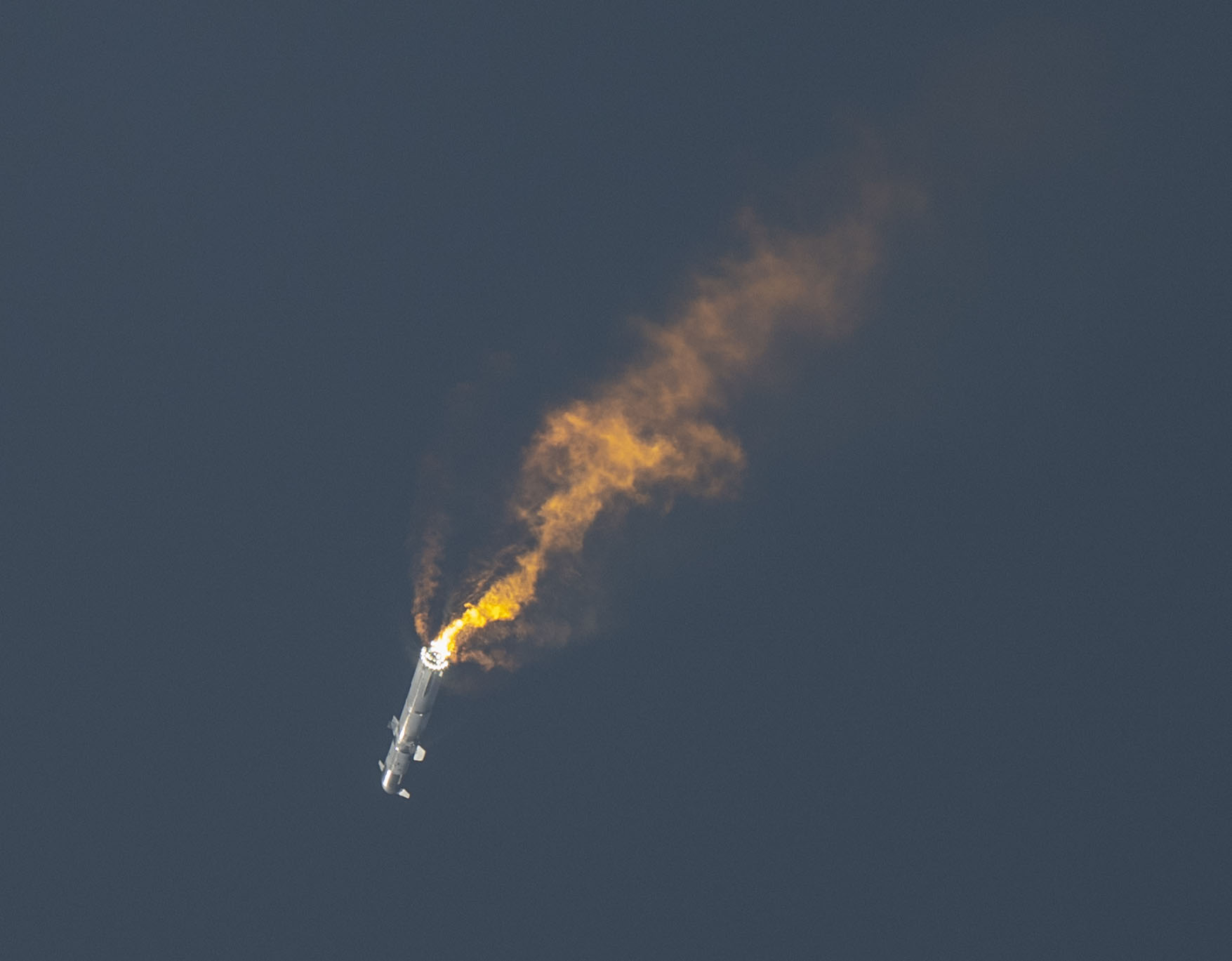
The Unfolding Narrative of Starship’s Development
Starship’s journey has been characterized by rapid prototyping, iterative testing, and a public-facing development cycle that is as transparent as it is exhilarating. The initial concept of a fully reusable super heavy-lift launch vehicle, capable of transporting humans and cargo to the Moon, Mars, and beyond, has been meticulously refined through a series of flight tests from SpaceX’s Starbase facility in Boca Chica, Texas. These tests, often conducted with a degree of public spectacle, are not simply about reaching orbit; they are crucial stepping stones in validating complex engineering systems, from the Raptor engines that power the vehicle to the sophisticated control systems that govern its ascent and descent.
From Early Prototypes to Integrated Systems
The early iterations of Starship, such as the SN (Serial Number) series of prototypes, were instrumental in learning about the vehicle’s structural integrity, thermal protection systems, and aerodynamic behavior during atmospheric flight. These were not designed for orbital success but as essential learning tools. Each launch, whether it ended in a controlled ascent or a dramatic RUD (Rapid Unscheduled Disassembly), provided invaluable data that directly informed the design of subsequent vehicles. This iterative process is a cornerstone of SpaceX’s engineering philosophy, allowing for rapid identification and resolution of issues that would typically take years to uncover in more traditional aerospace development cycles.
The progression from these early prototypes to the more integrated Starship and Super Heavy booster configurations represents a significant leap. The successful integration of the orbital-class Starship upper stage with the Super Heavy booster, the first stage responsible for providing the immense thrust needed to escape Earth’s gravity, has been a primary focus. These integrated tests are designed to mimic the full launch sequence, including stage separation, boostback burns, and landing burns, even if only for a few minutes during the initial flights. The data gathered from these complex maneuvers, particularly concerning the performance of the Raptor engines under various thrust levels and the aerodynamic forces at play, is critical for ensuring the safety and reliability of future crewed missions.
Mastering Reusability: The Ultimate Goal
The ultimate promise of Starship lies in its full reusability. Unlike previous launch systems that were either expendable or partially reusable, Starship is engineered from the ground up to be completely recoverable and rapidly reflyable. This means not only the successful landing of the Starship upper stage but also the return and recovery of the colossal Super Heavy booster. This ambitious goal is central to making space travel economically viable for deep space missions and for establishing a sustainable presence on other celestial bodies.
The recent flight tests have increasingly focused on demonstrating the capabilities required for this reusability. This includes successful ascent, controlled ascent profiles, and crucially, the controlled descent and potential landing attempts of both the Starship and Super Heavy. While the ultimate objective is to land both vehicles propulsively, the interim steps involve controlled descents that gather crucial aerodynamic data. The sheer scale of the Super Heavy booster, with its dozens of Raptor engines, presents unique challenges in achieving stable atmospheric re-entry and controlled landing. Similarly, Starship’s belly-flop maneuver, a radical aerodynamic design choice to increase drag during re-entry, requires precise control and rapid transition to its landing burn phase. The “what happened” in any given test flight directly relates to the progress made in mastering these complex sequences.
Navigating the Engineering Frontiers
The development of Starship is not just about building a bigger rocket; it is about pushing the absolute frontiers of engineering and materials science. The challenges are manifold, spanning from the immense power generation required for liftoff to the extreme thermal loads experienced during atmospheric re-entry. SpaceX’s approach of tackling these challenges head-on through rapid iteration is a defining characteristic of the program.
The Raptor Engine: A Symphony of Power and Efficiency

At the heart of Starship and Super Heavy lies the Raptor engine, a state-of-the-art, full-flow staged combustion rocket engine. This engine is a marvel of engineering, designed to be highly efficient and capable of deep throttling, allowing for precise control during ascent and landing. The development of Raptor has been a significant undertaking in itself, requiring the creation of advanced turbopumps, combustion chambers, and nozzle designs capable of withstanding extreme temperatures and pressures.
The “what happened” in many Starship tests is directly tied to the performance of these Raptor engines. Early tests involved a limited number of engines, gradually increasing to the full complement for both Starship and Super Heavy. Successes in igniting all engines, maintaining stable thrust, and shutting them down reliably are critical milestones. Failures, while disappointing, provide invaluable data for refining engine components, fuel delivery systems, and control algorithms. The continuous evolution of the Raptor engine, with iterative improvements to its reliability and performance, is a testament to SpaceX’s commitment to technological advancement.
Materials Science and Structural Integrity
Building a vehicle capable of withstanding the rigors of spaceflight, including immense launch forces and the harsh vacuum of space, requires cutting-edge materials. Starship is constructed primarily from stainless steel, a departure from the more commonly used aluminum or carbon composites in aerospace. This choice was driven by several factors, including stainless steel’s robustness at cryogenic temperatures, its resilience to heat during re-entry, and its relative cost-effectiveness for large-scale production.
The “what happened” to Starship in terms of structural integrity is constantly being tested and refined. Each flight provides data on how the vehicle’s structure responds to the immense stresses of launch, ascent, and re-entry. Understanding the thermal expansion and contraction of the stainless steel, the integrity of the welds, and the performance of the thermal protection system (TPS) – the tiles that shield the vehicle from the heat of re-entry – are all critical aspects of the development process. The iterative design and testing of these materials and structural elements are essential for building a vehicle that can reliably perform its intended missions.
The Future Trajectory of Starship
The “what happened to Starship” is not an endpoint, but a continuous unfolding story with profound implications for the future of space exploration and humanity’s presence beyond Earth. The progress made so far has laid the groundwork for a future where space travel is more accessible, more sustainable, and ultimately, more ambitious.
Mars and Beyond: The Long-Term Vision
The ultimate purpose of Starship is to facilitate human colonization of Mars. This ambitious goal, articulated by Elon Musk, requires a vehicle capable of transporting large payloads and significant numbers of people to the Red Planet. Starship’s design, with its massive payload capacity and full reusability, is specifically tailored to meet these requirements. The successful development and deployment of Starship will fundamentally alter our ability to undertake such monumental missions.
Beyond Mars, Starship is envisioned as a versatile platform for a wide range of space endeavors. This includes lunar missions, servicing space telescopes, establishing orbital refueling depots, and potentially even point-to-point travel on Earth. The “what happened” in the context of these future aspirations is measured by the steady progress made in achieving orbital capability, in-orbit refueling, and robust recovery of both Starship and Super Heavy. Each successful test flight brings humanity closer to realizing these grand visions.

The Commercial and Scientific Impact
The development of Starship has significant implications for the commercial space industry and scientific research. Its ability to deliver large payloads at a potentially lower cost than existing launch vehicles could open up new markets for satellite deployment, space tourism, and even asteroid mining. For scientific endeavors, Starship offers the possibility of launching larger and more sophisticated instruments into orbit or directly to other celestial bodies, enabling entirely new avenues of research.
The “what happened” in the development of Starship directly influences the pace at which these commercial and scientific opportunities can be realized. As the vehicle matures and its capabilities are proven, businesses and research institutions can begin to plan missions with greater confidence. The ongoing advancements in Starship’s reliability and cost-effectiveness are critical for fostering innovation across the entire space ecosystem. The story of Starship is not just one of technological achievement; it is a narrative of expanding human potential and forging a new era of space exploration.
aViewFromTheCave is a participant in the Amazon Services LLC Associates Program, an affiliate advertising program designed to provide a means for sites to earn advertising fees by advertising and linking to Amazon.com. Amazon, the Amazon logo, AmazonSupply, and the AmazonSupply logo are trademarks of Amazon.com, Inc. or its affiliates. As an Amazon Associate we earn affiliate commissions from qualifying purchases.