
The name Ask Jeeves, and later Ask.com, conjures a distinct memory for many who navigated the early days of the internet. It was a search engine with a persona, a friendly butler eager to answer your every query. But as the digital landscape evolved at breakneck speed, the familiar face of Jeeves faded, leaving many to wonder about its ultimate fate. This isn’t a story of a single technological failure, but rather a fascinating case study in how a once-prominent brand struggled to adapt to shifting market dynamics, user expectations, and the relentless march of innovation.

The journey of Ask Jeeves is a compelling narrative within the Brand category, illustrating the challenges of maintaining relevance in a competitive market, the impact of strategic missteps, and the enduring power of a recognizable, albeit outdated, identity. While technology was the medium through which Ask Jeeves operated, its story is fundamentally about brand evolution, marketing strategies, and corporate identity in the face of disruptive forces.
The Rise of the Digital Butler: Building a Unique Brand Identity
In the late 1990s, the internet was still a Wild West, and search engines were nascent tools. While Google was just a twinkle in Larry Page and Sergey Brin’s eyes, other players like Yahoo! and AltaVista dominated the search landscape. It was in this environment that Ask Jeeves emerged in 1996, offering a fundamentally different approach to information retrieval.
A Human Touch in a Digital World
The genius of Ask Jeeves lay in its branding and user experience. Instead of presenting users with a sterile search bar, they introduced a character: Jeeves, the quintessential British butler. This persona was more than just a mascot; it was integrated into the user interface. Users were encouraged to ask questions in natural language, as they would pose a question to a knowledgeable assistant. The tagline, “Ask Jeeves, and you shall receive,” perfectly encapsulated this promise of intuitive, personalized assistance.
This approach was a significant differentiator. At a time when most search engines relied on keyword matching, Ask Jeeves aimed to understand the intent behind a query. This was achieved through a combination of human editors who categorized and tagged websites, and a developing natural language processing engine. The goal was to provide more direct answers rather than a list of links, making the search process feel more conversational and less technical.
Early Success and Market Perception
The novelty and user-friendliness of Ask Jeeves contributed to its initial success. It garnered attention and a loyal following among those who found traditional keyword searches cumbersome. The brand cultivated an image of intelligence, politeness, and helpfulness. This made it a comfortable and approachable option for a broad range of users, including those who were less tech-savvy.
This strategic branding allowed Ask Jeeves to carve out a niche in a competitive market. While it never reached the sheer volume of users that Google would eventually command, it established itself as a viable and distinct alternative. The brand’s identity was its strongest asset, setting it apart from the more utilitarian offerings of its rivals and creating an emotional connection with its user base.
The Shifting Sands of Search: Competition and Evolving User Behavior
The internet, however, is a dynamic environment. The early success of Ask Jeeves was built on a foundation that would soon be challenged by seismic shifts in technology and user behavior. The relentless pace of innovation meant that what was once groundbreaking could quickly become obsolete.
The Google Revolution: Algorithmic Superiority
The most significant challenge to Ask Jeeves’s dominance came from a relatively new contender: Google. Launched in 1998, Google’s PageRank algorithm revolutionized search by evaluating the importance of web pages based on the number and quality of inbound links. This algorithmic innovation proved to be incredibly effective, delivering more relevant search results with remarkable speed and accuracy.
While Ask Jeeves focused on natural language processing and human curation, Google’s approach was fundamentally more scalable and, ultimately, more accurate for a wider range of queries. As Google’s algorithm matured and its search results improved, users began to migrate in droves. The perceived superiority of Google’s technology started to eclipse the charm and conversational interface of Ask Jeeves.
User Expectations and the Embrace of Simplicity
Another critical factor was the evolution of user expectations. As more people became accustomed to the internet, they also became more adept at formulating effective keyword searches. The novelty of natural language queries began to wane as users learned to optimize their searches for existing engines. Furthermore, the simplicity and speed of Google’s minimalist interface became the industry standard. The era of the conversational butler began to feel quaint compared to the stark, efficient design that users increasingly favored.
Ask Jeeves’s initial strength – its unique, persona-driven approach – inadvertently became a potential weakness. Its reliance on human editors, while effective for certain types of queries, struggled to keep pace with the sheer volume and ever-changing nature of web content that a purely algorithmic approach could manage.
Strategic Pivots and Identity Crises: The Rebranding and Downward Spiral
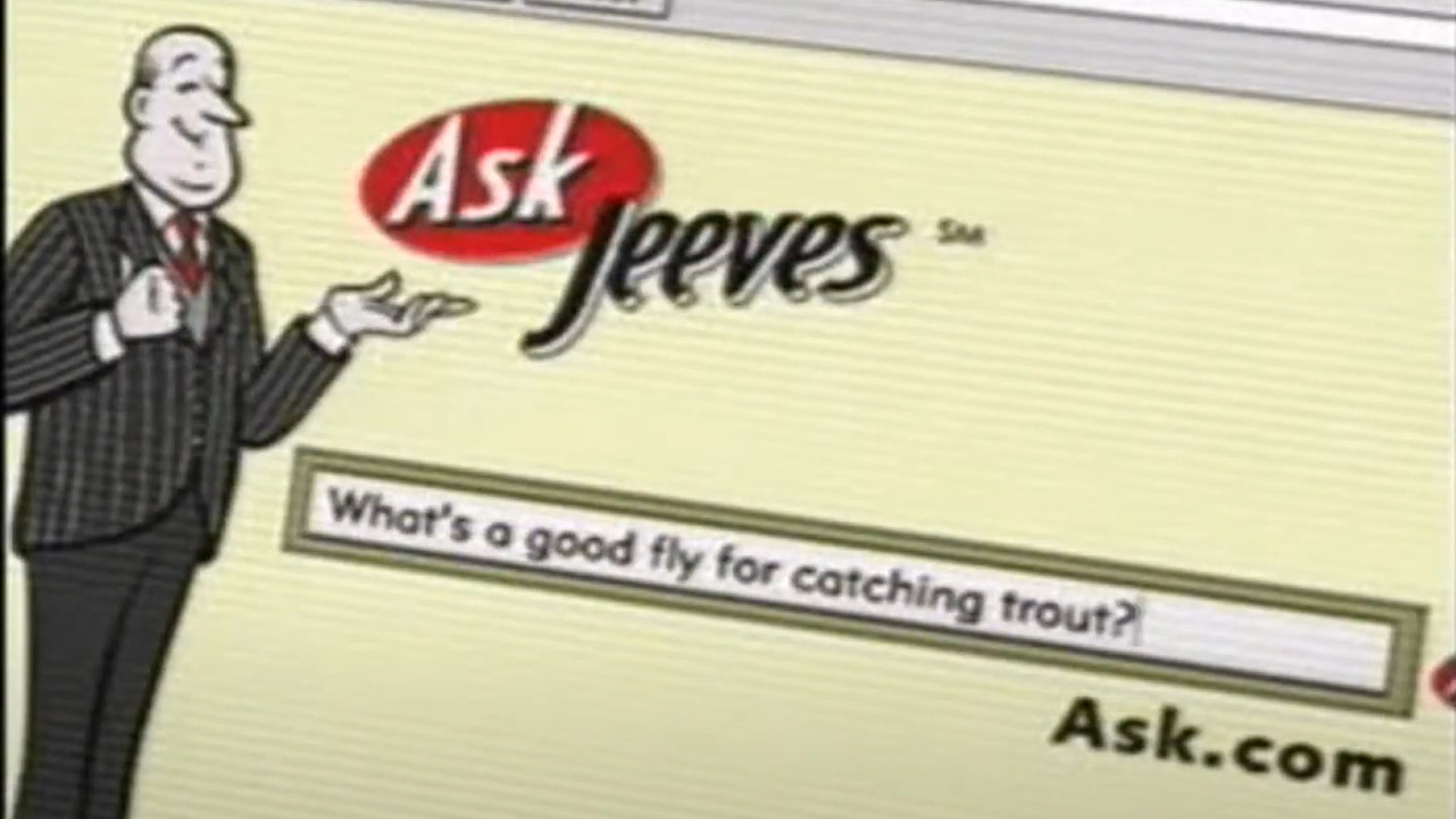
Recognizing the mounting pressure, Ask Jeeves embarked on a series of strategic maneuvers, including a significant rebranding, in an attempt to recapture lost market share and redefine its identity. These attempts, however, often proved too little, too late, and sometimes even counterproductive.
The Rebranding to Ask.com: Shedding the Butler
In 2006, in a move that surprised many and alienated some of its loyal user base, Ask Jeeves rebranded to simply “Ask.com.” The reasoning behind this decision was multifaceted. The company felt that the “Jeeves” persona, while charming, was perhaps seen as dated or even condescending by some users. They believed that a more modern, streamlined brand name would better reflect the evolving nature of their services and appeal to a broader audience.
This rebranding was a significant strategic gamble. It signaled a departure from the core identity that had defined the company for a decade. While the intention was to modernize and broaden appeal, it also risked alienating the existing user base who had grown fond of the Jeeves character. The name change coincided with a period where the internet was increasingly dominated by a few key players, and a drastic identity shift needed to be executed with extreme precision to be successful.
Attempts at Diversification and Content Focus
Following the rebranding, Ask.com attempted to diversify its offerings beyond a traditional search engine. They invested in areas like online encyclopedias, Q&A platforms, and even a social networking site. The idea was to become a more comprehensive destination for information and interaction.
However, these ventures often lacked the focus and execution needed to compete with established players in those respective fields. The Q&A platform, for example, faced stiff competition from sites like Quora, which had a more dedicated community and a stronger brand identity in that niche. The attempts to be a jack-of-all-trades diluted their core search offering and failed to create compelling new avenues of growth.
The Struggle for Relevance in a Google-Dominant World
Despite these efforts, Ask.com continued to struggle to gain traction against Google’s overwhelming dominance. The search market had become incredibly concentrated, with Google, Bing, and a few others holding the lion’s share. Ask.com’s share of the search market dwindled, making it increasingly difficult to attract advertisers and invest in the necessary technological advancements to compete.
The brand’s identity became muddled. It was no longer the friendly butler, but not yet a clear leader in any new domain. This identity crisis further hampered its ability to connect with users and differentiate itself in a crowded marketplace. The legacy of Jeeves remained, but the brand itself was in a state of perpetual transition, failing to forge a new, compelling identity.
The Legacy of Ask Jeeves: A Cautionary Tale in Brand Management and Adaptation
While Ask Jeeves is no longer a significant player in the search engine market, its story offers invaluable lessons for businesses, particularly in the realm of brand strategy and adaptation in the digital age. Its trajectory serves as a potent reminder of the challenges of staying relevant when faced with rapid technological change and evolving consumer behavior.
The Power and Peril of a Strong Brand Persona
The initial success of Ask Jeeves underscores the power of a strong, differentiated brand identity. The Jeeves persona created an emotional connection and a unique selling proposition that allowed it to stand out. However, it also highlights the peril of a brand persona becoming too narrowly defined or perceived as dated. The decision to shed the butler was a response to this, but the execution and timing were not enough to overcome the market shifts.
This case study emphasizes the need for brands to continuously assess their identity and its resonance with their target audience. While a strong persona can be a powerful asset, it must be managed and evolved in sync with market trends and technological advancements. A brand needs to be adaptable, not just in its products or services, but in its very essence.
The Importance of Strategic Foresight and Execution
The story of Ask Jeeves also serves as a cautionary tale regarding strategic foresight and execution. While the company made attempts to pivot and innovate, these efforts often lacked the scale, focus, or timing to be truly impactful. In a market dominated by giants, incremental changes are rarely sufficient. Bold, decisive actions are often required, but these must be grounded in a deep understanding of market dynamics and a clear vision for the future.
The failure to anticipate the full scope of Google’s algorithmic superiority and the rapid shift in user preference for simpler, keyword-driven search is a key takeaway. The brand’s inability to effectively compete in the core search market meant that its diversification efforts, while perhaps well-intentioned, were built on a weakening foundation.
The Enduring Memory: A Glimpse into Internet History
Even though Ask.com has largely faded from public consciousness as a search engine, the memory of Ask Jeeves persists for many. It represents a distinct era of the internet, a time when experimentation and charming interfaces were more prevalent. The brand’s legacy isn’t one of outright failure, but rather a complex narrative of a once-innovative company that struggled to navigate the unprecedented forces of digital evolution.
Ultimately, what happened to Ask Jeeves is a story about the relentless evolution of the digital landscape and the critical importance of strategic agility and brand reinvention. It’s a reminder that even the most beloved brands must adapt or risk becoming a nostalgic footnote in the ever-accelerating history of technology and the internet.
aViewFromTheCave is a participant in the Amazon Services LLC Associates Program, an affiliate advertising program designed to provide a means for sites to earn advertising fees by advertising and linking to Amazon.com. Amazon, the Amazon logo, AmazonSupply, and the AmazonSupply logo are trademarks of Amazon.com, Inc. or its affiliates. As an Amazon Associate we earn affiliate commissions from qualifying purchases.