
The dramatic demise of King Joffrey Baratheon in HBO’s “Game of Thrones” remains one of the most talked-about and satisfying moments in television history. This pivotal scene, occurring at the Purple Wedding during his own betrothal feast, was a culmination of months, even years, of character development and narrative build-up. For viewers invested in the intricate political machinations and the sheer villainy of Joffrey, pinpointing the exact episode of his death became a common point of reference and discussion. This question, seemingly simple, delves into the heart of narrative structure, character arcs, and the impact of key plot points on audience engagement. Understanding “what episode did Joffrey die” is not just about a number; it’s about appreciating the meticulous craftsmanship that led to such a potent and memorable conclusion for one of Westeros’ most reviled figures.

The execution of Joffrey’s death was a masterclass in television storytelling. It wasn’t a sudden, arbitrary event, but rather a carefully orchestrated climax that served multiple narrative functions. It provided a cathartic release for the audience, who had been subjected to Joffrey’s cruelty, sadism, and tyrannical reign for seasons. His death also had profound ripple effects on the political landscape of Westeros, triggering a complex web of accusations, alliances, and further conflict. This particular plot development, more than many others, highlighted the show’s ability to deliver on its promise of high-stakes drama and shocking twists, all while staying true to the thematic core of power, corruption, and consequence.
The Unveiling of a Villain: Joffrey’s Reign of Terror
Before his ultimate downfall, Joffrey Baratheon’s character was meticulously crafted to elicit widespread hatred. From his early appearances, it was clear that he was not a hero in the making. His upbringing, shielded from hardship and instilled with a sense of absolute entitlement, fostered a deeply twisted personality. This section will explore the foundational elements of his villainy and how they were portrayed.
The Seeds of Cruelty: Early Displays of Tyranny
From his very first moments on screen, Joffrey established himself as a spoiled, arrogant, and cruel individual. His insistence on his royal lineage, even when his paternity was questionable, underscored his entitlement. His treatment of Sansa Stark, whom he was betrothed to, became an early and horrifying indicator of his capacity for abuse. The public humiliation and physical abuse he inflicted upon her, particularly after the events at the Trident, demonstrated a callous disregard for human dignity and a disturbing enjoyment of causing suffering.
His actions weren’t confined to Sansa. He frequently ordered his Kingsguard to inflict brutal punishments on those he deemed beneath him, often with little to no provocation. The execution of Ned Stark, while a political necessity in the eyes of some, was carried out by Joffrey with a theatrical flourish and a gleeful malice that solidified his image as a monstrous ruler. This public execution, ordered by a boy king, was a clear signal to the audience that Joffrey was not to be underestimated in his capacity for cruelty, and that his reign would be one marked by fear and oppression. These early displays were crucial in laying the groundwork for the audience’s deep-seated animosity towards him, making his eventual demise all the more anticipated.
The Psychological Landscape of a Sociopath
Joffrey’s villainy was not merely a product of his position but seemed to stem from a deep-seated psychological disturbance. He exhibited traits consistent with a sociopathic personality, including a lack of empathy, a disregard for the feelings and rights of others, and a propensity for manipulative and deceitful behavior. His enjoyment of the suffering of others was a recurring theme. The torture of prisoners, the public mockery of the defeated, and his general demeanor all pointed towards a profound lack of conscience.
His relationship with his mother, Cersei Lannister, played a significant role in shaping his pathology. While Cersei often attempted to control him, her own ambition and ruthless nature inadvertently fostered his tyrannical tendencies. She rarely, if ever, disciplined him for his cruel acts, instead often enabling or even encouraging his worst impulses, seeing them as signs of strength and a necessary component of rule. This dynamic created a feedback loop of cruelty, with Joffrey learning that his aggressive and sadistic behavior was not only tolerated but often praised by those closest to him. This psychological examination of Joffrey’s character is vital to understanding the depth of his depravity and the satisfaction viewers felt at his ultimate comeuppance.
The Purple Wedding: A Masterclass in Poetic Justice
The infamous Purple Wedding, the event that finally saw Joffrey’s reign of terror brought to an abrupt and violent end, was a pivotal moment in “Game of Thrones.” It was a meticulously planned execution of narrative justice, leaving the audience with a sense of profound satisfaction. This section will delve into the events leading up to and during this iconic scene.
The Buildup to Betrayal: Unraveling the Conspiracy
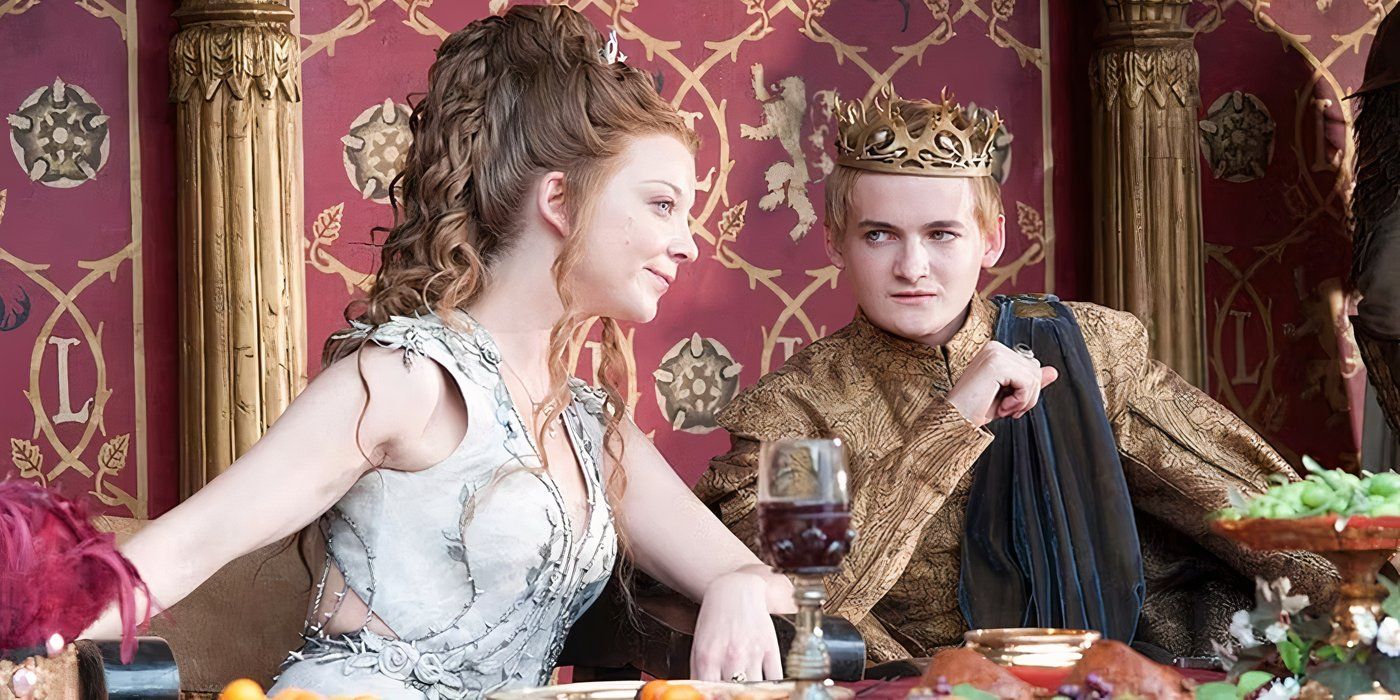
The Purple Wedding, ostensibly a celebration of Joffrey’s marriage to Margaery Tyrell, was rife with underlying tensions and unspoken conspiracies. The Tyrells, particularly Lady Olenna, had grown increasingly concerned about Joffrey’s erratic and cruel nature and the potential instability it brought to the realm. Margaery, while outwardly charming and compliant, was a shrewd political player who recognized the danger Joffrey posed to her own ambitions and the stability of the Seven Kingdoms.
The groundwork for Joffrey’s demise was laid through subtle manipulations and strategic alliances. Olenna Tyrell, in particular, emerged as a key figure in orchestrating the plot. Her motive was clear: to protect her granddaughter Margaery from the unpredictable and volatile king. The audience was privy to the growing unease surrounding Joffrey’s behavior, his taunting of Tyrion Lannister, and his increasingly erratic demands. This built-up tension created an atmosphere of dread and anticipation, making the audience acutely aware that something significant was about to happen.
The Fatal Feast: A Poisoned Chalice
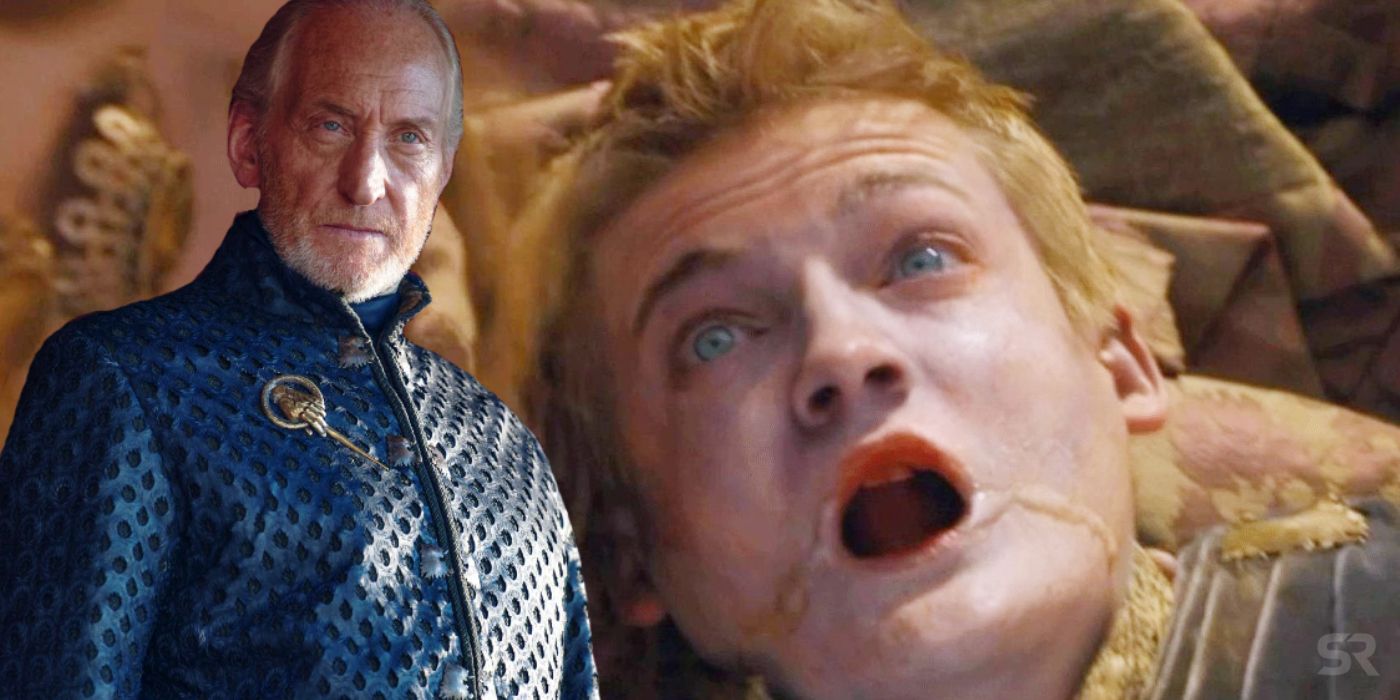
The climax of Joffrey’s arc occurred during his wedding feast. In a scene now etched into television history, Joffrey, after a lengthy and increasingly unpleasant display of his character – including forcing Tyrion to be his cupbearer and tormenting the dwarves performing for the court – suddenly collapses. He chokes, his face turning a deep purple, gasping for air. In his final moments, he points accusingly at his uncle, Tyrion Lannister, cementing Tyrion’s wrongful implication in his death.
The poison used was known as the “strangler,” a potent and fast-acting agent. The act itself was carried out with a chilling subtlety, blending seamlessly into the festivities. This juxtaposition of a celebratory event with a sudden, violent death amplified the shock and the impact of the moment. The visual of Joffrey, the boy king who wielded such immense power with such casual cruelty, reduced to a gasping, dying child, was a powerful image of cosmic retribution. The immediate aftermath saw widespread confusion and accusations, with Cersei Lannister’s immediate and fervent belief that Tyrion was responsible setting the stage for further conflict, demonstrating the far-reaching consequences of Joffrey’s death.
The Episode’s Place in the Narrative Arc
Pinpointing the exact episode of Joffrey’s death, “The Purple Wedding,” is crucial for understanding its placement within the overarching narrative of “Game of Thrones.” This singular event served as a significant turning point, reshaping character dynamics and propelling the plot forward in profound ways. This section examines its placement and immediate ramifications.
Season and Episode: The Context of Death
Joffrey Baratheon’s death occurred in Season 4, Episode 2, titled “The Lion and the Rose.” This placement was deliberate and impactful. By the start of Season 4, Joffrey’s reign of terror had been a persistent source of conflict and suffering for many characters, particularly the Starks. His survival to this point had tested the patience of both the characters within the story and the audience watching.
The episode’s title, “The Lion and the Rose,” itself alludes to the Lannister and Tyrell houses, whose union through marriage was meant to solidify power but instead became the stage for this pivotal act. The episode masterfully balanced the opulent and seemingly joyful facade of the wedding with the dark undercurrents of political intrigue and simmering resentment. The reveal of the episode number provides a concrete anchor for fans who wish to revisit this iconic moment, allowing for a deeper appreciation of the build-up and the execution of Joffrey’s demise. It is within this specific narrative framework that the full weight of Joffrey’s death as a narrative device can be truly understood.
The Aftermath: Shifting Alliances and New Conflicts
Joffrey’s death was far from the end of the story; it was a catalyst for a new era of turmoil. The immediate consequence was the wrongful accusation and subsequent imprisonment of Tyrion Lannister, a direct result of Cersei’s grief and fury. This event irrevocably fractured the Lannister family and removed one of the most intelligent and capable political players from the board, at least temporarily.
The death also significantly altered the political landscape. With Joffrey gone, the throne passed to his younger brother, Tommen Baratheon, a child who was far more malleable than his elder sibling. This opened up new avenues for manipulation by figures like Cersei, Olenna Tyrell, and eventually, Littlefinger and others. The Tyrells, who had successfully eliminated the immediate threat Joffrey posed to Margaery, found themselves in a precarious position, needing to navigate the new power dynamics of the court. The elimination of such a universally despised character, while providing immediate satisfaction, paradoxically created a vacuum that led to even more complex and dangerous political maneuvering, demonstrating the intricate cause and effect that defined “Game of Thrones.”
aViewFromTheCave is a participant in the Amazon Services LLC Associates Program, an affiliate advertising program designed to provide a means for sites to earn advertising fees by advertising and linking to Amazon.com. Amazon, the Amazon logo, AmazonSupply, and the AmazonSupply logo are trademarks of Amazon.com, Inc. or its affiliates. As an Amazon Associate we earn affiliate commissions from qualifying purchases.