
The internet has birthed a language all its own, a vibrant, ever-evolving tapestry of acronyms, abbreviations, and repurposed words. Among these, “OP” stands out as a particularly versatile and frequently encountered term. While its meaning can shift subtly depending on the context, understanding “OP” is crucial for navigating online discussions, particularly within the realms of gaming, social media, and tech forums. This article will explore the multifaceted nature of “OP” as slang, dissecting its origins, common interpretations, and its impact on digital communication, exclusively through the lens of Tech.

The Genesis of “OP”: From Gaming to the Wider Digital Sphere
The ubiquity of “OP” in modern internet slang owes a significant debt to the burgeoning world of online gaming. Within this competitive and fast-paced environment, efficiency and conciseness are paramount, leading to the widespread adoption of abbreviations.
“Overpowered” in Gaming: The Original Intent
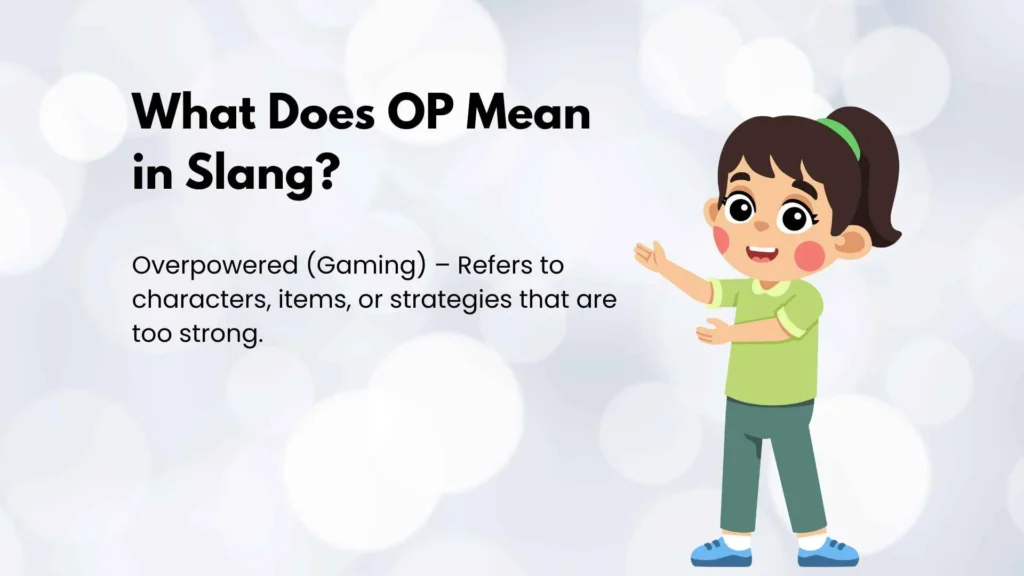
The most prevalent and foundational meaning of “OP” in slang stems directly from video games, where it stands for “overpowered.” In gaming parlance, “overpowered” refers to a character, weapon, ability, or strategy that is perceived to be too strong or unbalanced compared to others in the game. This imbalance can disrupt the competitive integrity of the game, leading to a less enjoyable experience for players who feel they are at a significant disadvantage.
Identifying Overpowered Elements
Game developers constantly strive to maintain a balanced playing field. When a particular element is deemed “OP,” it means players using it have a disproportionately high chance of winning or succeeding, often without requiring significant skill or strategy. This can manifest in several ways:
- Unfair Advantages: An OP weapon might have exceptionally high damage output, rapid fire rate, or perfect accuracy, making it difficult for opponents to counter.
- Dominant Characters: An OP character could possess abilities that are too difficult to evade, heal too quickly, or deal excessive damage, making them the go-to choice for most players.
- Exploitable Strategies: Certain tactical approaches or team compositions might be so effective that they become the only viable way to win, rendering other strategies obsolete.
The Impact of OP on Game Design and Community
The concept of “OP” has a profound impact on the evolution of video games. Developers actively monitor player feedback and gameplay data to identify and address “OP” elements. This often leads to “nerfs,” which are adjustments made to reduce the power of an element, or “buffs,” which are enhancements to weaker elements to create a more balanced ecosystem.
The discussion around what constitutes “OP” is a constant feature of gaming communities. Players debate endlessly on forums, Reddit, and Discord servers about the current meta (most effective tactics available) and which elements are dominating. This discourse is vital for the health of the game, as it informs developers about areas needing adjustment and helps players strategize effectively. The term “OP” is not just a descriptor; it’s a critical component of the ongoing dialogue and evolution within the gaming world.
Expanding Beyond Gaming: “Original Poster” and Beyond
While “overpowered” remains a cornerstone meaning, the adaptability of internet slang has seen “OP” extend its reach into other digital domains, often with entirely new interpretations. The context becomes the primary determinant of meaning.
“Original Poster” on Forums and Social Media
In the context of online forums, message boards, and social media platforms, “OP” commonly refers to the “Original Poster.” This is the individual who initiated a thread, post, or discussion. When users refer to “OP” in this context, they are typically addressing the person who started the conversation or asking them for clarification.
- Direct Address: A common scenario is when a user replies to a post and says, “What do you think, OP?” or “Can you clarify what you meant, OP?” This directly engages the originator of the discussion.
- Referring to the Source: It can also be used when discussing the initial post itself. For example, “OP made a good point about the software update,” or “I disagree with OP’s assessment of the new gadget.”
- Contextual Clues: The presence of usernames and the structure of online discussions usually make it clear when “OP” refers to the original poster, as opposed to the gaming definition. For instance, if a thread is about a news article or a personal experience, “OP” is almost certainly the person who shared it.
“Out of Print” in Niche Tech Communities
In specific, more niche tech communities, particularly those related to vintage electronics, rare software, or discontinued hardware, “OP” can occasionally be used to signify “out of print.” This meaning is less common than the previous two but is vital for those involved in acquiring or discussing hard-to-find tech items.
- Scarcity and Collectibility: When a piece of hardware, a software manual, or a specialized component is described as “OP,” it implies that it is no longer manufactured or readily available. This immediately signals its scarcity and potential collectibility.
- Discussions on Preservation: In communities focused on preserving older technologies, “OP” might be used to lament the unavailability of essential parts or documentation. For example, a user might be seeking a specific circuit board for a retro computer and note that it is “OP and very difficult to find.”
- Distinguishing from Other Meanings: It’s crucial to note that this usage is highly context-dependent and would typically only arise in discussions where the subject matter directly relates to the availability and manufacturing status of physical tech items. The surrounding conversation would quickly clarify this specific meaning.
The Impact of “OP” on Digital Communication and User Experience
The multifaceted nature of “OP” highlights the dynamic and evolving landscape of internet slang. Its adoption across different platforms and contexts has a tangible impact on how users communicate and interact online.
Enhancing Efficiency and Conciseness
In the fast-paced digital world, the ability to convey information quickly and efficiently is highly valued. “OP” excels in this regard.
- Reducing Typing Load: In gaming, typing “overpowered” repeatedly during a heated match would be impractical. “OP” provides a shorthand that allows for rapid communication of a critical assessment.
- Streamlining Discussions: On forums and social media, referring to the “Original Poster” as “OP” saves characters and time, especially in long threads with many participants. This allows for more fluid and focused conversations.
- Technical Jargon: In specialized tech communities, using “OP” for “out of print” quickly communicates a specific piece of information about an item’s availability, which is invaluable for collectors and enthusiasts.
The Role of Context in Interpretation
The effectiveness of “OP” as slang is heavily reliant on context. Misinterpretation can lead to confusion and miscommunication.
- Platform Specificity: If you’re on a gaming forum discussing balance patches, “OP” almost certainly means “overpowered.” If you’re on a tech support forum asking for help with a new router, and someone refers to the “OP’s” initial post, they mean “Original Poster.”
- Visual Cues: The visual layout of online platforms, such as thread structures and user interfaces, often provides clues. Seeing a list of replies directly under an initial post makes it clear who the “OP” is in that context.
- Community Norms: Over time, specific online communities develop their own accepted meanings and uses for slang. Understanding these unwritten rules is key to effective participation. For example, a new user might need to observe how existing members use “OP” before confidently employing it themselves.
“OP” as a Gateway to Understanding Tech Culture
Learning the nuances of slang like “OP” can be seen as a form of digital acculturation. It allows individuals to more deeply engage with and understand specific online communities.
- Deconstructing Online Discourse: For anyone interested in understanding the culture of online gaming, tech forums, or social media discussions, recognizing and correctly interpreting terms like “OP” is a fundamental step. It unlocks the ability to grasp the sentiment, criticisms, and praise being exchanged.
- Facilitating Collaboration and Information Sharing: In tech development, design, or troubleshooting, clear communication is paramount. When users can quickly and accurately describe an issue or a feature as “OP” (in its various meanings), it facilitates faster problem-solving and more effective collaboration. For instance, a bug report highlighting an “OP” function needs immediate attention.
- Navigating the Digital Landscape: As more of our professional and personal lives migrate online, a firm grasp of internet slang, including terms like “OP,” becomes an essential skill for effective communication and participation in the digital world. It’s not just about understanding the words; it’s about understanding the culture and the subtext that surrounds them.

Conclusion: Mastering the Art of “OP” in the Tech Sphere
The term “OP” is a prime example of the dynamic and adaptive nature of internet slang. Its journey from the competitive arenas of online gaming to broader applications across tech-related discussions underscores the power of linguistic innovation in the digital age. Whether referring to an unbalanced game mechanic, the initiator of a crucial technical discussion, or the scarcity of a sought-after piece of hardware, “OP” serves as a concise and potent descriptor.
For those deeply immersed in or aspiring to understand the intricacies of the tech world, mastering the various meanings of “OP” is not merely about knowing a slang term; it’s about gaining a deeper fluency in the language of online communities. By paying close attention to context, recognizing the origins of these evolving terms, and understanding their impact on communication, individuals can enhance their engagement, contribute more effectively, and truly navigate the ever-expanding digital landscape. The continued evolution of “OP” serves as a constant reminder that the language of technology is as fluid and innovative as the technologies it describes.
aViewFromTheCave is a participant in the Amazon Services LLC Associates Program, an affiliate advertising program designed to provide a means for sites to earn advertising fees by advertising and linking to Amazon.com. Amazon, the Amazon logo, AmazonSupply, and the AmazonSupply logo are trademarks of Amazon.com, Inc. or its affiliates. As an Amazon Associate we earn affiliate commissions from qualifying purchases.