
The world of business is a complex ecosystem, a finely tuned machine where every cog and lever plays a crucial role in driving success. Within this intricate machinery, the operations analyst stands as a vital diagnostician and engineer, meticulously examining processes, identifying inefficiencies, and architecting solutions that optimize performance. Far from being a niche, behind-the-scenes role, operations analysis is a cornerstone of modern business strategy, particularly in the realm of technology. These professionals are the silent architects of efficiency, the data-driven strategists who ensure that technological advancements are not just implemented, but are truly leveraged to achieve peak operational excellence.
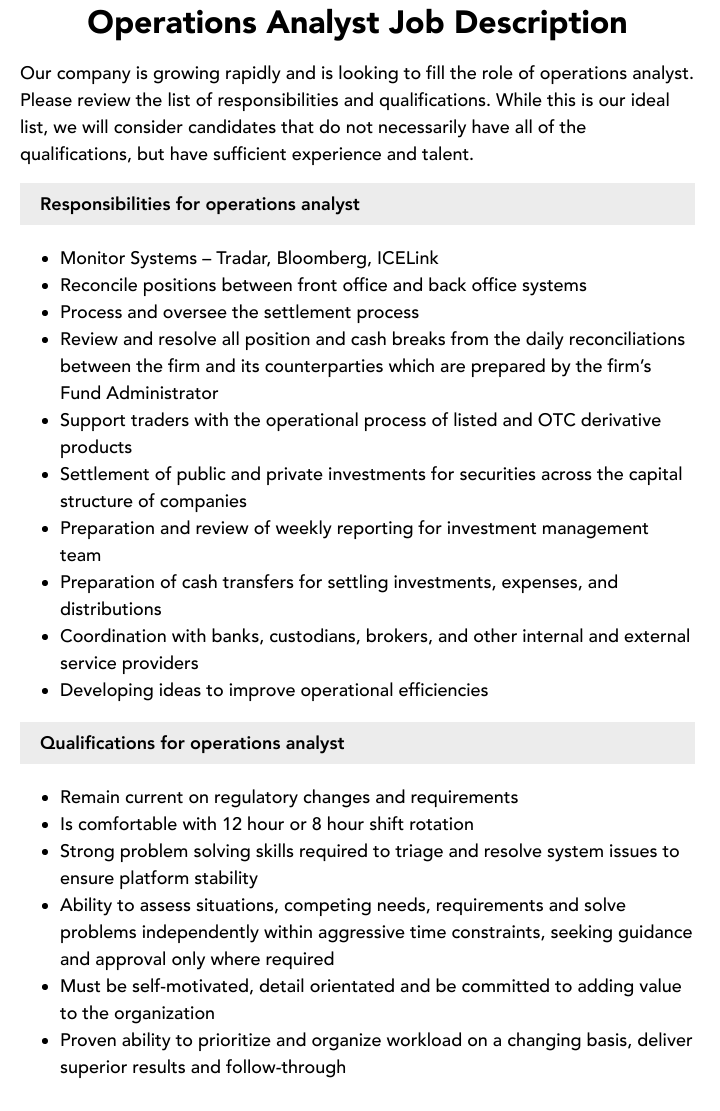
The modern business landscape is intrinsically linked to technology. From cloud infrastructure and sophisticated software suites to cutting-edge AI tools and interconnected IoT devices, technology permeates every facet of how businesses function. An operations analyst within this context is not merely observing existing processes; they are actively shaping how technology is integrated, utilized, and optimized to create a more streamlined, cost-effective, and ultimately, more competitive operation. Their work directly impacts the ability of a tech company, or a company leveraging significant technology, to scale, innovate, and deliver exceptional value to its customers.
The Core Functions of an Operations Analyst in a Tech Environment
At its heart, the role of an operations analyst is to enhance the efficiency and effectiveness of business operations. In a tech-centric environment, this translates into a multifaceted approach that involves deep dives into data, process mapping, and the strategic application of technology-based solutions. They are the bridge between raw data and actionable insights, transforming complex operational metrics into clear recommendations that drive tangible improvements.
Data Analysis and Performance Measurement
The foundation of any operations analyst’s work lies in data. In the tech sector, this data can be vast and varied, ranging from user engagement metrics and system uptime to supply chain logistics and customer support ticket volumes. The operations analyst is responsible for collecting, cleaning, and analyzing this data to identify trends, pinpoint bottlenecks, and measure performance against key objectives.
Key Performance Indicators (KPIs) and Metrics
Establishing and tracking relevant KPIs is paramount. For instance, in a software-as-a-service (SaaS) company, an operations analyst might focus on metrics like customer acquisition cost (CAC), customer lifetime value (CLTV), churn rate, and net promoter score (NPS). For a hardware manufacturer, KPIs could include production yield, inventory turnover, and order fulfillment times. The analyst must not only understand what these metrics represent but also how they interrelate and influence overall business health. This involves utilizing sophisticated analytics tools to segment data, identify outliers, and forecast future performance.
Diagnostic Reporting and Trend Identification
Beyond simple reporting, the operations analyst’s role is diagnostic. They delve into the ‘why’ behind the numbers, identifying patterns and anomalies that signal underlying issues or opportunities. This might involve recognizing a consistent dip in system performance during peak hours, an unexpected increase in customer support escalations related to a new feature, or a slowdown in a particular stage of the product development lifecycle. Their ability to translate these observations into clear, concise reports and presentations is critical for communicating findings to stakeholders across different departments.
Process Improvement and Optimization
Once areas for improvement are identified, the operations analyst moves into the realm of process redesign. This involves a systematic examination of existing workflows, seeking to eliminate redundancy, reduce waste, and streamline operations. In a tech context, this often means looking at how software development pipelines, customer onboarding processes, or internal IT support systems can be made more efficient.
Workflow Mapping and Analysis
A fundamental tool for operations analysts is workflow mapping. This involves visually documenting the steps involved in a particular process, identifying all the actors, inputs, and outputs. By breaking down complex processes into digestible components, analysts can clearly see where delays, errors, or inefficiencies occur. This visual representation is invaluable for collaborative discussions with teams responsible for the process, fostering a shared understanding of the challenges and potential solutions. Techniques like Lean and Six Sigma methodologies are often employed to systematically analyze and improve these workflows, aiming to reduce variation and defects.
Re-engineering and Automation Strategies
Based on process mapping and analysis, operations analysts propose and, often, help implement improvements. This could involve re-engineering a process to eliminate unnecessary steps, introducing new technologies to automate manual tasks, or redesigning workflows to better align with system capabilities. For example, an analyst might identify that customer service agents are spending excessive time manually inputting data into multiple systems. They could then propose an integration solution or an automated data entry tool that significantly reduces this workload, freeing up agents to focus on more complex customer issues.
Technology Integration and Utilization
The tech industry is characterized by rapid innovation, and an operations analyst plays a key role in ensuring that new technologies are effectively integrated and leveraged to achieve strategic goals. This isn’t just about adopting new software; it’s about understanding how these tools can be used to solve specific operational challenges and drive greater efficiency.
Software and Tool Evaluation
Operations analysts are often tasked with evaluating new software and technology solutions. This involves assessing whether a particular tool aligns with the company’s existing tech stack, whether it can integrate seamlessly, and whether it offers a demonstrable return on investment. They consider factors like usability, scalability, security, and vendor support. This due diligence ensures that the company invests in technologies that truly enhance its operational capabilities, rather than becoming shelfware.
System Implementation and Support
Once a decision is made to implement new technology, operations analysts are instrumental in the implementation process. They work with IT departments and external vendors to ensure smooth integration, often developing training materials and providing initial support to end-users. Their understanding of both the business processes and the technical capabilities of the system is crucial for a successful rollout. They also play a role in ongoing system support, monitoring performance, troubleshooting issues, and identifying opportunities for further optimization or upgrades.
The Strategic Impact of Operations Analysis in Technology
The work of an operations analyst extends far beyond mere operational tweaks; it has a profound strategic impact on a technology company’s ability to compete and thrive. By ensuring efficient processes and effective technology utilization, they directly contribute to improved profitability, enhanced customer satisfaction, and a stronger competitive position.
Enhancing Scalability and Growth
As technology companies aim for rapid growth, their operational infrastructure must be able to keep pace. Operations analysts are crucial in designing and refining processes that can scale seamlessly. This involves anticipating future demand, identifying potential bottlenecks before they arise, and implementing flexible systems that can adapt to changing needs. Without robust operational frameworks, even the most innovative products can be hampered by an inability to meet demand or provide consistent service.
Capacity Planning and Resource Allocation
A core aspect of scalability is effective capacity planning. Operations analysts forecast future resource needs – whether it’s server capacity, customer support staff, or production lines – and ensure that the necessary resources are available to meet demand without overspending. This involves analyzing historical data, market trends, and planned product launches to make informed predictions. Efficient resource allocation ensures that investments are directed where they will have the greatest impact, optimizing cost-effectiveness.
Designing for Future Growth
The proactive nature of operations analysis means that analysts are not just solving current problems but are also designing processes and systems with future growth in mind. This might involve building modular systems that can be easily expanded, implementing flexible software architectures, or establishing supply chain strategies that can accommodate increased volume. Their foresight helps prevent operational “choke points” that can stifle innovation and limit market expansion.
Driving Cost Efficiency and Profitability

Efficiency is directly linked to profitability. By identifying and eliminating waste, reducing redundancies, and optimizing resource utilization, operations analysts contribute significantly to a company’s bottom line. In the competitive tech landscape, even small improvements in efficiency can translate into substantial cost savings and increased profit margins.
Cost Reduction and Waste Elimination
Operations analysts employ various techniques to identify areas of unnecessary expenditure. This could involve scrutinizing procurement processes, optimizing inventory management to reduce carrying costs, or streamlining production workflows to minimize material waste. The focus is on identifying non-value-adding activities and finding ways to either eliminate them or reduce their associated costs.
Optimizing Resource Utilization
Beyond simply reducing costs, analysts focus on ensuring that existing resources are used to their fullest potential. This applies to everything from computing power and employee time to physical assets and marketing spend. By understanding how resources are currently utilized and identifying opportunities for more efficient deployment, they can maximize the return on investment for every aspect of the business. For example, optimizing server load balancing or streamlining call routing in a customer service center can lead to significant efficiency gains.
Improving Customer Experience and Satisfaction
Ultimately, the goal of efficient operations is to deliver a superior customer experience. When processes are smooth, systems are reliable, and products are delivered on time and as expected, customer satisfaction naturally increases. Operations analysts play a critical role in identifying and resolving the operational issues that can negatively impact customer perception.
Streamlining Customer Journeys
From the initial point of contact to post-purchase support, the customer journey is comprised of numerous operational touchpoints. Operations analysts examine these journeys, looking for opportunities to make them more intuitive, responsive, and hassle-free. This could involve optimizing website navigation, simplifying the checkout process, or improving the speed and effectiveness of customer support interactions.
Ensuring Service Reliability and Quality
In the tech sector, reliability is paramount. Downtime, bugs, or slow response times can severely damage customer trust and loyalty. Operations analysts work closely with development and IT teams to ensure the stability and performance of systems and services. This includes setting up monitoring systems, establishing incident response protocols, and implementing quality assurance measures throughout the operational lifecycle. Their efforts directly contribute to a reputation for dependable service, a key differentiator in the competitive tech market.
The Skillset of a Modern Operations Analyst in Tech
The multifaceted nature of the role demands a diverse and evolving skillset. While a strong analytical foundation is essential, modern operations analysts also need to possess a blend of technical acumen, problem-solving prowess, and effective communication abilities.
Analytical and Problem-Solving Skills
The core of the operations analyst’s role is their ability to dissect complex problems and derive actionable insights from data. This requires a strong foundation in statistical analysis, critical thinking, and a methodical approach to problem-solving.
Quantitative Analysis and Statistical Modeling
A deep understanding of statistical concepts is crucial. Operations analysts use regression analysis, hypothesis testing, and other statistical techniques to identify relationships between variables, test assumptions, and predict outcomes. The ability to build and interpret statistical models is essential for making data-driven decisions.
Root Cause Analysis and Critical Thinking
When issues arise, the analyst’s job is to go beyond the symptoms and identify the root cause. This requires a systematic approach to investigation, utilizing techniques like the “5 Whys” or fishbone diagrams, coupled with sharp critical thinking skills to question assumptions and explore alternative explanations.
Technical Proficiency and Digital Literacy
In a tech-focused role, a certain level of technical understanding is non-negotiable. This doesn’t necessarily mean being a coder, but rather having a strong grasp of the technologies that underpin business operations.
Data Visualization and Business Intelligence Tools
The ability to present complex data in an easily understandable format is vital. Operations analysts are proficient in using data visualization tools like Tableau, Power BI, or even advanced Excel charting to create dashboards, reports, and infographics that clearly communicate findings to both technical and non-technical audiences.
Familiarity with Business Software and Systems
Understanding the landscape of business software is key. This includes proficiency in enterprise resource planning (ERP) systems, customer relationship management (CRM) software, project management tools, and potentially cloud-based platforms like AWS or Azure, depending on the specific industry focus. The analyst must understand how these systems interact and how they can be leveraged for operational gain.
Communication and Collaboration Skills
Even the most brilliant analysis is useless if it cannot be effectively communicated and acted upon. Operations analysts must be adept at bridging the gap between technical insights and business stakeholders.
Stakeholder Management and Presentation Skills
Working with diverse teams – from engineers and product managers to sales and finance – requires strong interpersonal and communication skills. Operations analysts must be able to articulate their findings clearly, persuasively, and concisely, tailoring their message to different audiences. This includes the ability to present data, recommendations, and project updates effectively in meetings and formal presentations.

Cross-Functional Teamwork
Operations analysis is inherently a collaborative effort. Analysts rarely work in isolation; they are part of larger teams and must be able to work effectively with colleagues from various departments. This involves understanding different departmental goals, fostering trust, and facilitating collaborative problem-solving to achieve shared objectives.
In conclusion, the operations analyst is a critical linchpin in the modern technological enterprise. Their role is dynamic, data-driven, and fundamentally focused on optimizing how businesses function, particularly in leveraging technology for peak performance. By mastering the art of data analysis, process improvement, and strategic technology integration, these professionals drive efficiency, foster scalability, and ultimately contribute to the sustained success and innovation of the businesses they serve.
aViewFromTheCave is a participant in the Amazon Services LLC Associates Program, an affiliate advertising program designed to provide a means for sites to earn advertising fees by advertising and linking to Amazon.com. Amazon, the Amazon logo, AmazonSupply, and the AmazonSupply logo are trademarks of Amazon.com, Inc. or its affiliates. As an Amazon Associate we earn affiliate commissions from qualifying purchases.