
The universe, in its unfathomable vastness, presents phenomena that push the boundaries of our comprehension and ignite the imagination. Among the most enigmatic of these are white holes, the theoretical antithesis of black holes. While black holes are renowned for their insatiable gravitational pull, drawing everything into their singularity, white holes are hypothesized to do the exact opposite: to expel matter and energy outwards. This concept, born from the elegant mathematics of Einstein’s theory of general relativity, offers a tantalizing glimpse into exotic cosmic processes and has profound, albeit speculative, implications for fields within technology, from information processing to energy generation and even the very nature of computation. Understanding what a white hole does is not merely an academic exercise in astrophysics; it is an intellectual exploration that can inspire novel technological paradigms.

The Theoretical Underpinnings: Black Holes and Their Cosmic Counterparts
The genesis of the white hole concept is inextricably linked to our understanding of black holes, which have moved from theoretical curiosities to objects confirmed by observation. Black holes represent points in spacetime where gravity is so intense that nothing, not even light, can escape. Their event horizon acts as a one-way boundary, a cosmic trapdoor. The mathematical framework of general relativity, however, allows for solutions that describe phenomena behaving in the diametrically opposite manner.
The Mathematical Framework: Reversing Time and Causality
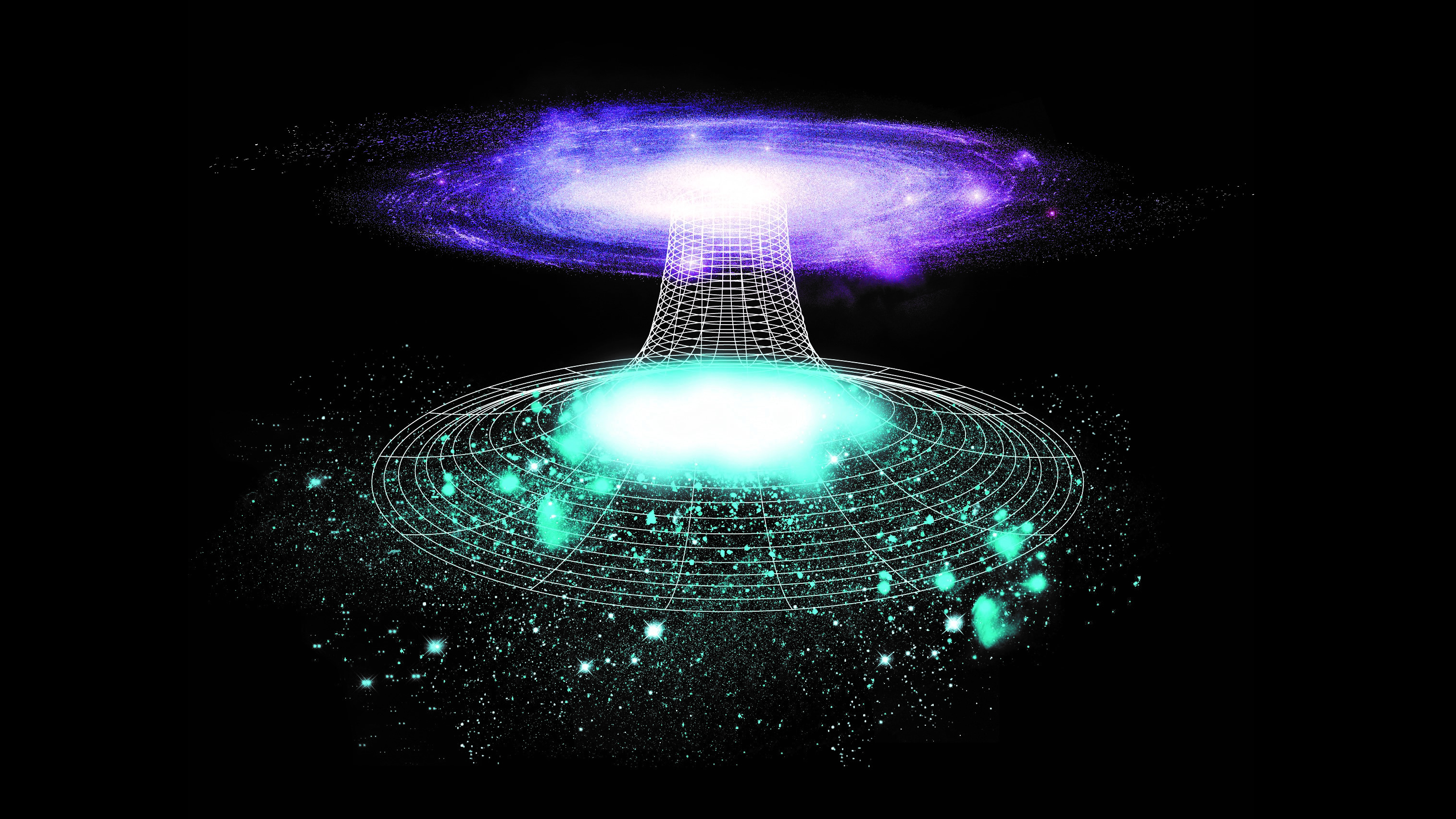
The equations of general relativity, when applied to spacetime, can yield solutions that represent either collapsing objects (black holes) or expanding ones. A white hole is essentially a time-reversed black hole. If one were to observe a black hole, it would appear as a region from which nothing emerges. Conversely, a white hole would be a region from which matter and energy are continuously ejected, and into which nothing can enter.
The key distinction lies in the direction of causality. For a black hole, causality is directed inwards towards the singularity. For a white hole, causality is directed outwards from the singularity. This implies that a white hole cannot be formed by the gravitational collapse of a star, as is believed to be the case for black holes. Instead, they are often envisioned as existing from the very beginning of the universe, or as a potential endpoint of the evaporation of black holes through Hawking radiation, though this latter scenario is highly speculative and not widely accepted.
The Event Horizon: A Boundary of Expulsion
Just as a black hole has an event horizon, a white hole is also defined by an event horizon. However, this horizon operates in reverse. For a black hole, the event horizon is the point of no return, beyond which escape is impossible. For a white hole, the event horizon marks the boundary from which matter and energy are inevitably expelled, and into which entry is impossible. Any attempt to cross the event horizon of a white hole from the outside would be met with an insurmountable outward flow, pushing any approaching object away.
This fundamental difference in the nature of their event horizons is what defines the unique “actions” of these theoretical objects. While a black hole “does” by consuming, a white hole “does” by expelling. This outward expulsion is not necessarily explosive in a chaotic sense, but rather a continuous outpouring of energy and matter.
Potential Technological Implications: Beyond the Astronomical
While the existence of white holes remains purely theoretical, their conceptual properties offer a fertile ground for speculation regarding their potential technological applications. The ability to eject matter and energy with such defined characteristics could, if harnessable, revolutionize various technological domains.
Information and Data Ejection: The Ultimate Data Unloader
One of the most intriguing, albeit speculative, implications of white hole physics for technology lies in the realm of information. In theoretical computer science, the concept of information destruction and retrieval is paramount. Black holes, by their nature, are often considered “information sinks,” raising the paradox of whether information that falls into a black hole is truly lost forever. White holes, as theoretical ejectors of matter and energy, could be conceptualized as the opposite: ultimate data unloaders.
Imagine a scenario where information could be encoded into the outgoing flux of a white hole. This could potentially lead to novel forms of high-density data storage and retrieval, or even a mechanism for the universe to “broadcast” information. While this is firmly in the realm of science fiction, the underlying principle of a controlled, outward expulsion of encoded phenomena is a powerful one. Researchers in theoretical physics and information theory might explore models where quantum information could, under specific conditions, be emitted from a controlled singularity, mimicking the outward flow of a white hole. This could inspire new approaches to error correction in quantum computing or entirely new paradigms for data transfer.
Energy Generation: Harnessing Cosmic Outflows
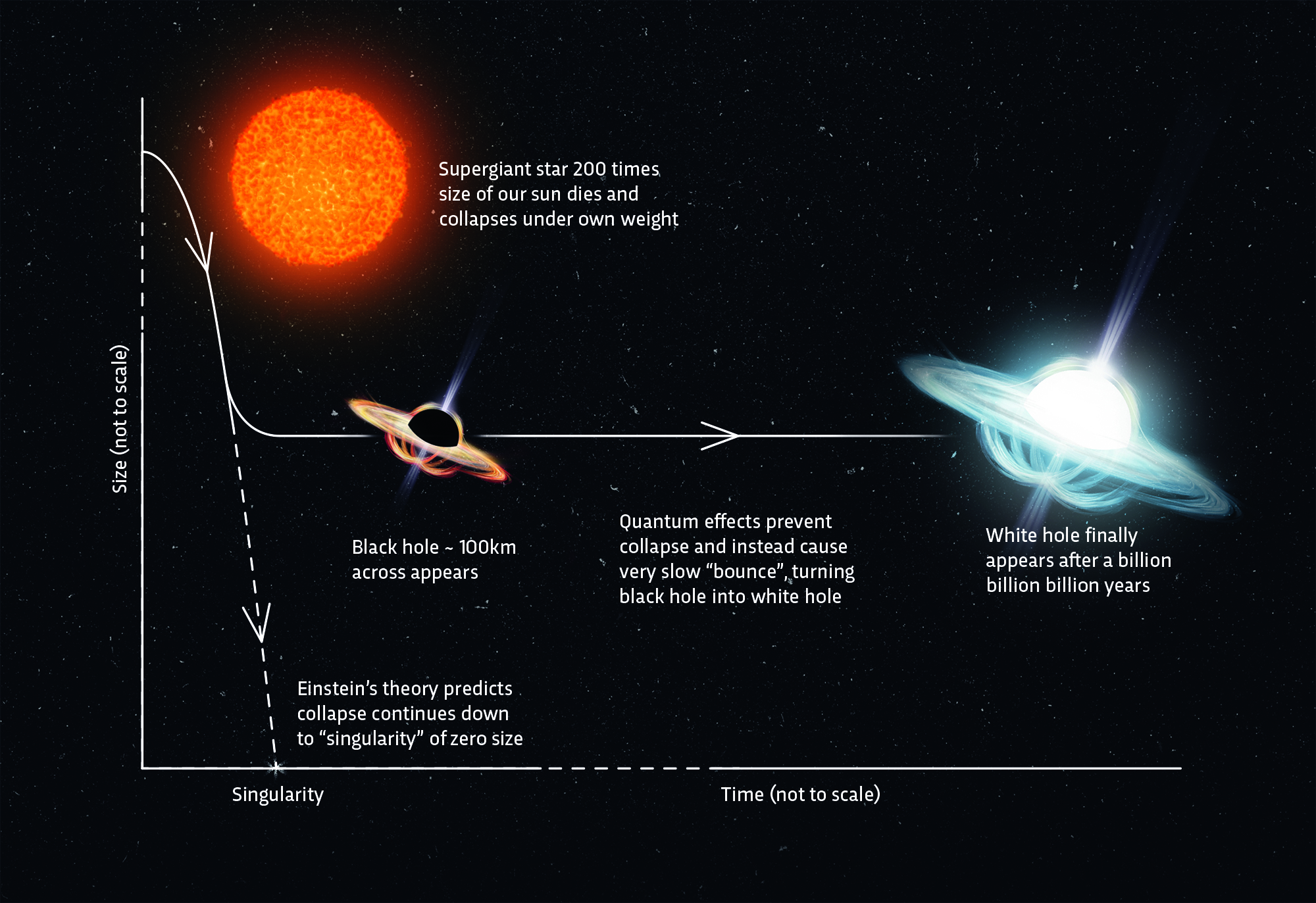
The continuous expulsion of matter and energy from a white hole presents a hypothetical source of immense power. If we could somehow interact with or manipulate a white hole, it might be possible to tap into this outflow for energy generation. This concept, while far beyond our current capabilities, aligns with the ongoing quest for advanced and sustainable energy solutions.
The energy density within the outgoing flux of a white hole, assuming it is significant, could be orders of magnitude greater than anything we can currently produce. Imagine capturing this outward stream of particles and radiation and converting it into usable energy. This would require a profound understanding of fundamental physics and the development of technologies that can withstand and interact with such extreme conditions. It’s a far cry from solar panels or nuclear fusion, but it taps into the same fundamental desire to harness the universe’s power. This could lead to theoretical investigations into exotic propulsion systems or power sources that rely on controlled singularity interactions, pushing the boundaries of engineering and materials science.
Advanced Propulsion and Spacetime Manipulation: Sci-Fi Dreams and Future Realities
The idea of a white hole’s outward expulsion also sparks imagination in the realm of advanced propulsion. If a white hole continuously ejects mass and energy, could this ejection be directed and controlled to generate thrust? This is reminiscent of concepts explored in science fiction for faster-than-light travel or for creating warp drives.
While such ideas are highly speculative, the study of white holes encourages us to think about how spacetime itself might be manipulated. If white holes represent a fundamental outflow from a singularity, understanding their mechanics could, in the very distant future, lead to technologies that leverage spacetime curvature for propulsion. This might involve creating localized “outflow” regions to push a spacecraft, or perhaps even using the principles of white hole dynamics to create artificial wormholes, which could then be used for interstellar travel. The fundamental physics involved in understanding how a white hole “acts” – by pushing things away – is the core inspiration here.
White Holes and the Edge of Computation
The theoretical properties of white holes, particularly their role as ejectors, can also be viewed through the lens of computational processes. In the realm of theoretical computer science, understanding the limits and possibilities of computation is a constant pursuit.
Towards a New Understanding of Computational Limits
Black holes are sometimes discussed in the context of computational limits, particularly with regards to information loss. White holes, by contrast, represent an outflow. This outward flow of information, if it could be controlled and directed, could offer novel approaches to understanding and perhaps even overcoming certain computational limitations.
Consider the idea of a “computational ejector.” Instead of a system that processes information and then discards it, imagine a system that continuously outputs the results of complex computations in a highly structured and energetic form. This could be particularly relevant for theoretical models of computation that go beyond the classical Turing machine, exploring exotic forms of computing that might arise from harnessing extreme physical phenomena. The very act of “doing” by expelling is a computational action in itself, and understanding this action could lead to new computational metaphors and architectures.
The Role in Cosmic Information Processing
Some fringe theories suggest that the universe itself might be a form of computation, and that phenomena like white holes could play a role in this grand cosmic processing. While this is highly speculative, it highlights how abstract concepts in physics can inspire new ways of thinking about complex systems, including technological ones.
If white holes are indeed expelling material and energy, they are inherently interacting with spacetime and the fundamental constituents of the universe. This interaction, if understood in terms of information transfer, could offer insights into how information is processed and disseminated throughout the cosmos. This could, in turn, inspire the design of more resilient and efficient information processing systems on Earth, by drawing parallels with hypothetical cosmic-scale processes. The “what does it do” question, when applied to white holes, forces us to consider a universe where fundamental processes are not just about attraction and absorption, but also about powerful, outward directed actions.
Conclusion: The Enduring Allure of the Theoretical
White holes remain firmly in the realm of theoretical physics, a fascinating byproduct of our mathematical models of gravity. Their hypothetical function as cosmic ejectors, expelling matter and energy, stands in stark contrast to the more familiar black holes. While direct observation and manipulation of white holes are far beyond our current technological grasp, the conceptual exploration of “what a white hole does” is not without its value to the technological landscape.
From inspiring new approaches to data management and information processing to providing theoretical frameworks for novel energy generation and advanced propulsion systems, the idea of a white hole acts as a powerful intellectual catalyst. It pushes us to question the fundamental nature of reality, to explore the edges of what is mathematically possible, and to imagine technologies that, while seemingly fantastical today, might one day emerge from a deeper understanding of the universe’s most profound secrets. The allure of the white hole lies not just in its enigmatic nature, but in its potential to illuminate new pathways for technological innovation.
aViewFromTheCave is a participant in the Amazon Services LLC Associates Program, an affiliate advertising program designed to provide a means for sites to earn advertising fees by advertising and linking to Amazon.com. Amazon, the Amazon logo, AmazonSupply, and the AmazonSupply logo are trademarks of Amazon.com, Inc. or its affiliates. As an Amazon Associate we earn affiliate commissions from qualifying purchases.