
In the realm of home automation and internet-of-things (IoT) hardware, few devices are as ubiquitous yet overlooked as the smoke detector. For decades, these devices were viewed as utilitarian eyesores—beige plastic discs glued to the ceiling that only gained attention when their batteries chirped in the middle of the night. However, as we move further into an era of sophisticated smart home ecosystems, the “look” and internal tech of smoke detectors have undergone a radical transformation.
Understanding what a smoke detector looks like today involves looking past the plastic shell and into the sophisticated sensors, circuitry, and wireless modules that define modern fire safety technology.

Anatomy and Aesthetic: The Visual Evolution of Safety Hardware
To the untrained eye, a smoke detector is a simple, circular device. But from a technical design perspective, every curve, vent, and LED indicator serves a specific engineering purpose. The visual profile of these gadgets has evolved from bulky industrial units to sleek, minimalist devices that blend into contemporary digital homes.
The Classic Disc: Form Follows Function
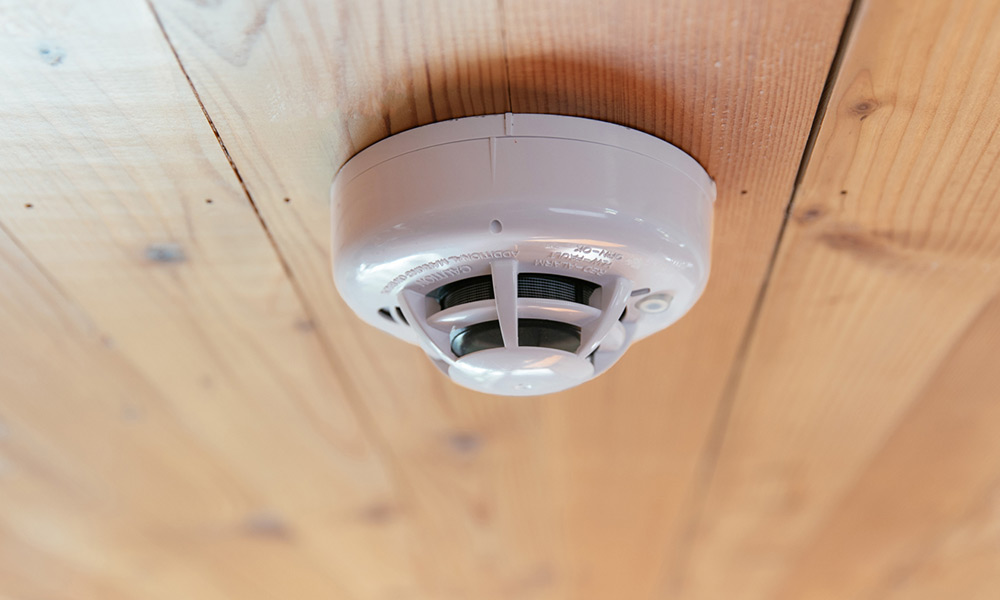
The traditional smoke detector typically features a circular housing, usually three to six inches in diameter and about one to two inches thick. This shape isn’t accidental; a circular design allows smoke to enter the internal sensing chamber from any direction (360-degree coverage).
Most classic models are made of high-impact ABS plastic, featuring a series of “slats” or vents along the perimeter. These vents are the gateway to the sensor. When identifying a smoke detector, look for the “test” button—usually a prominent tactile switch in the center or slightly off-set—and a small LED light that blinks periodically to indicate the device is receiving power.
Modern Minimalist Design: Integration into the Smart Home
With the rise of tech-forward companies like Google (Nest), Ring, and Bosch, the aesthetic of the smoke detector has shifted. Modern high-tech detectors often feature a “soft-square” or rounded-rectangular profile. Instead of industrial-looking vents, these gadgets use fine metallic or fabric meshes to allow airflow while keeping out dust and small insects, which are notorious for causing false positives in older hardware.
Furthermore, the simple “red blink” has been replaced by sophisticated light rings. For example, modern smart detectors utilize multi-colored RGB LED rings that glow blue during setup, green for a “heads-up,” and pulsing red during an emergency. This visual feedback is a hallmark of modern gadgetry, providing a user interface that communicates status without the need for a screen.
Beyond the Plastic Shell: The Sensors Powering the Gadget
When we ask what a smoke detector looks like, the most important “view” is what lies beneath the casing. The internal hardware determines how the device perceives its environment and how quickly it can alert a user to danger.
Ionization vs. Photoelectric Technology
Technically, smoke detectors fall into two primary categories based on their internal sensor “look” and logic.
- Ionization Detectors: Inside these units, you will find a tiny amount of Americium-241. This radioactive source ionizes the air, creating a constant electric current. Visually, the ionization chamber looks like a small metal tin with holes. If smoke particles enter this chamber, they disrupt the current, triggering the alarm. These are “fast-tech” for flaming fires but are increasingly being phased out in favor of more stable technology.
- Photoelectric Detectors: If you were to open a photoelectric unit, you would see a “light-sensing” chamber. It contains a light source (usually an infrared LED) and a light sensor (photodiode) positioned at an angle to each other. When smoke enters, it scatters the light, reflecting it onto the sensor. This technology is the gold standard for detecting smoldering fires and is the backbone of most high-end smart home gadgets.
Dual-Sensor Systems and Multi-Criteria Sensing
The latest generation of fire safety tech doesn’t rely on a single sensor. High-end gadgets now utilize “multi-criteria” sensing. This means the device looks at several data points simultaneously: smoke density, heat levels (via thermistors), and even Carbon Monoxide (CO) levels.

From a technical standpoint, this requires a more robust PCB (Printed Circuit Board) and a micro-processor capable of running algorithms to distinguish between “toast is burning” and “the sofa is on fire.” This digital filtering is what separates a $15 hardware-store special from a $130 smart safety hub.
The Smart Revolution: How IoT is Redefining Smoke Detection
The most significant change in what a smoke detector “looks like” isn’t physical—it’s digital. In the modern tech ecosystem, a smoke detector is no longer a standalone island; it is a node in a wireless mesh network.
Real-Time Alerts and Mobile App Integration
A modern smoke detector looks like an icon on your smartphone. Through Wi-Fi or Bluetooth connectivity, these devices communicate their status to a centralized app. This shift in the “user interface” of fire safety allows for features that were previously impossible.
For instance, if a detector in the garage senses heat, it doesn’t just scream locally; it sends a push notification to your phone, identifying exactly which room is affected. The “look” of the interface is professional and data-rich, often providing battery health percentages, sensor logs, and “hush” buttons that allow you to silence a false alarm from your screen rather than climbing a ladder.
Interconnectivity: The Mesh Network Approach
In a smart home, smoke detectors “talk” to one another. If one unit detects a threat, it triggers every unit in the house. This is achieved through wireless protocols like Zigbee, Z-Wave, or proprietary Thread networks.
When you look at the technical specifications of these gadgets, you’ll see mention of “interconnect” capabilities. Physically, this might look like an extra wire on a hardwired unit, but in the tech world, it’s a sophisticated software handshake that ensures total home coverage. This networking capability is a crucial component of modern digital security, turning individual gadgets into a comprehensive safety system.
Installation and Digital Maintenance: A Tech-Forward Approach
The way we interact with smoke detector hardware during installation and maintenance has also shifted toward a more tech-centric model. Gone are the days of the 9-volt battery being the only power option.
Power Sources: Hardwired vs. Long-Life Lithium
If you look at the back of a modern smoke detector, you will likely see one of two things: a wiring harness for AC power or a sealed compartment. The tech industry has moved toward “10-year sealed battery” units. These gadgets use high-density lithium-ion cells designed to last the entire functional life of the sensor.
For hardwired units, the “look” includes a mounting bracket with electrical connectors. These units often feature a battery backup, ensuring that even during a power outage or a localized digital failure, the core safety functions remain operational. This redundancy is a key principle in high-reliability hardware engineering.
Self-Diagnostic Features and Predictive Maintenance
Perhaps the most “intelligent” aspect of modern smoke detector tech is the self-diagnostic suite. In the past, the only way to know if a detector worked was to press the physical button. Today’s high-end gadgets perform “Sound Checks” and “Sensor Checks” automatically.
Internally, the software monitors for “sensor drift”—the gradual degradation of the photoelectric eye due to dust buildup. When the device reaches a point where it can no longer guarantee accuracy, it doesn’t just fail; it communicates. It may glow a specific color or send a diagnostic report to the cloud, notifying the user that the hardware needs cleaning or replacement. This transition from reactive safety to predictive maintenance is the hallmark of modern technology.
Conclusion: The New Identity of Fire Safety
What does a smoke detector look like? It looks like the pinnacle of unobtrusive engineering. It is a device that manages to house radioactive isotopes or precision optical chambers, microprocessors, Wi-Fi radios, and multi-colored LED interfaces within a palm-sized footprint.
As we continue to integrate AI and more advanced sensors into our living spaces, the smoke detector will likely become even more invisible, perhaps eventually being integrated into lighting fixtures or HVAC sensors. For now, it remains a critical piece of tech hardware—a silent guardian on the ceiling that represents the perfect intersection of physical design and digital intelligence. Understanding its “look” is the first step in appreciating the complex technology that keeps the modern home safe.
aViewFromTheCave is a participant in the Amazon Services LLC Associates Program, an affiliate advertising program designed to provide a means for sites to earn advertising fees by advertising and linking to Amazon.com. Amazon, the Amazon logo, AmazonSupply, and the AmazonSupply logo are trademarks of Amazon.com, Inc. or its affiliates. As an Amazon Associate we earn affiliate commissions from qualifying purchases.