
In the rapidly evolving landscape of digital communication, where emojis often convey emotion and abbreviations are a lingua franca, the humble period (.) has taken on a surprising new significance. Once a steadfast marker of sentence completion in formal writing, its use in texting has become a complex dance of nuance, intent, and interpretation. Far from being a simple grammatical punctuation, the period in a text message can subtly alter tone, signal formality, convey sarcasm, or even express displeasure. Understanding these evolving meanings is crucial for navigating the subtle yet powerful currents of modern digital interaction, particularly within the realm of technology and its impact on communication.

This exploration delves into the multifaceted role of the period in texting, examining its traditional linguistic function versus its modern digital adaptations. We will dissect how context, sender, and receiver perception contribute to its interpretation, and explore the implications for effective and nuanced digital communication.
The Traditional Role of the Period: A Foundation of Clarity
Before the advent of digital communication, the period served a singular, unambiguous purpose: to mark the end of a declarative sentence. Its presence signaled a completed thought, a statement of fact, or a definitive assertion. This foundational understanding, ingrained through years of formal education and written communication, still forms the bedrock of our linguistic expectations.
Sentence Completion and Grammatical Correctness
The primary function of the period in formal writing is to provide structural clarity. It separates distinct ideas, allowing readers to process information in manageable chunks. This grammatical correctness ensures that written arguments are logical, sentences are self-contained, and the overall flow of text is coherent. In academic papers, professional reports, and even personal letters, the period’s adherence to its established rules facilitated clear and unambiguous communication.
Establishing a Formal Tone
Beyond mere grammatical structure, the period also contributed to the perceived formality of written communication. Its consistent use in official documents, business correspondence, and scholarly works imbued them with an air of seriousness and gravity. Conversely, the absence of periods, or their infrequent use, often signaled a more casual or informal register. This distinction was a subtle but effective way for writers to calibrate their message to their intended audience and purpose.
The Digital Metamorphosis: The Period’s Reimagined Meanings in Texting
The rapid adoption of text messaging, driven by the proliferation of mobile devices and the desire for instant communication, has profoundly reshaped the way we use punctuation. In this fast-paced, character-limited environment, the period has undergone a significant transformation, acquiring new layers of meaning that often deviate from its traditional grammatical role.
The “Abrupt” or “Passive-Aggressive” Period
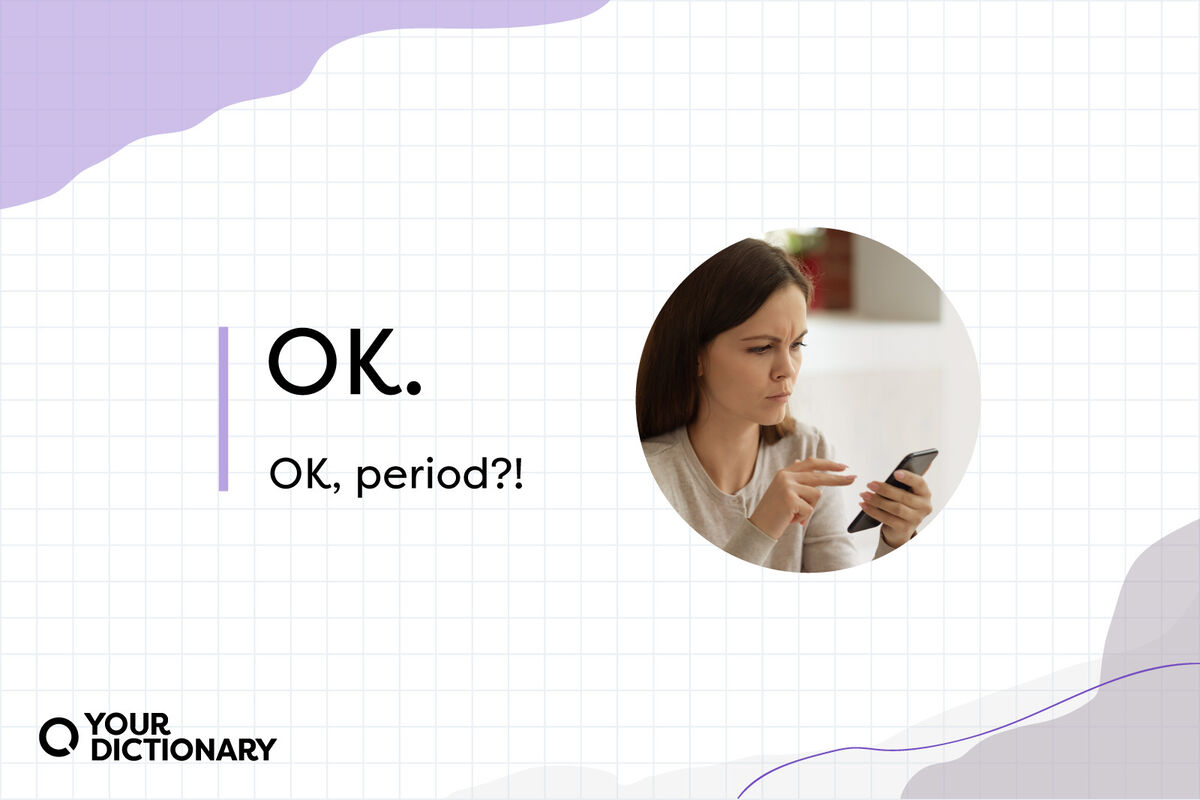
One of the most frequently discussed and debated interpretations of the period in texting is its perceived abruptness or passive-aggression. When a message that might otherwise be punctuated with an exclamation mark or left without punctuation is concluded with a period, it can sometimes be interpreted as a sign of displeasure, annoyance, or a curt dismissal. For example, a simple “Okay.” can feel colder and more final than a simple “Okay” or “Okay!”. This is particularly true when the period follows a statement that might typically warrant a more enthusiastic or conversational closing.
This interpretation is deeply rooted in the contrast between the expected informality of texting and the perceived formality the period can introduce. The abruptness arises from the sudden shift in tone that the period can create, signaling a potential underlying emotion that is not explicitly stated.
The “Enthusiastic” or “Emphatic” Period
Counterintuitively, the period can also be employed to convey enthusiasm or emphasis, though this usage is more niche and often depends on a specific sender’s established texting style. In certain contexts, a period can act as a powerful exclamation point, particularly when used after a statement that the sender wants to be taken as definitively true or strongly felt. For instance, “This is the best pizza ever.” might be intended to convey a higher degree of satisfaction than “This is the best pizza ever!”. The period, in this instance, serves to ground the statement with a sense of finality and conviction.
This interpretation often relies on a shared understanding between the sender and receiver. If a particular individual consistently uses periods for emphasis, their recipients are more likely to interpret them in that manner. It highlights how digital communication fosters personalized linguistic norms within close-knit groups.
The “Sarcastic” Period
Sarcasm is a notoriously difficult emotion to convey effectively in text, and the period has emerged as a subtle tool in this endeavor. When a statement is clearly exaggerated or contrary to known facts, appending a period can heighten the sarcastic effect. For example, if someone has just made a clumsy mistake, a text like “Smooth move.” with a period can be dripping with irony. The period adds a layer of detached observation that underscores the perceived foolishness of the action.
This usage leverages the period’s inherent formality to create a dissonance with the informal, often self-deprecating nature of sarcasm. The contrast between the expected casualness of a joking remark and the formal closing of a period can create a subtle but potent ironic effect.
Context is King: Decoding the Period’s True Intent
Given the myriad potential interpretations, it becomes clear that the meaning of a period in texting is rarely determined by the punctuation mark in isolation. Instead, it is a complex interplay of various contextual factors that guide the receiver’s understanding.
Sender-Receiver Relationship and Past Communication Patterns
The most influential factor in deciphering a period’s intent is the established communication pattern between the sender and receiver. If you have a friend who always uses periods to end their sentences, regardless of tone, then a period from them is unlikely to carry any special emotional weight. Conversely, if a usually enthusiastic texter suddenly starts ending their messages with periods, it might signal a shift in their mood. Understanding the sender’s typical linguistic habits is paramount.
The history of your interactions provides a rich dataset for interpreting their current messages. A period used after a friendly greeting from someone who normally omits them might be a subtle indicator of concern or a need for more information. This reliance on shared history underscores the personal nature of digital communication.
The Content of the Message
The words themselves play a critical role in shaping the interpretation of the period. A period following a straightforward factual statement might simply indicate sentence completion. However, when appended to a question that might usually invite further discussion, or a comment that could be perceived as critical, the period can imbue the message with a different tone.
Consider the difference between:
- “Did you finish the report?” (Open-ended, inviting a response)
- “Did you finish the report.” (More definitive, potentially implying impatience or a question of competence)
The content provides the semantic foundation, and the period then colors that foundation with a subtle emotional or tonal hue.
The Presence or Absence of Other Punctuation and Emojis
The period often works in tandem with, or in contrast to, other elements of digital communication. Its meaning can be amplified or mitigated by the presence of emojis, exclamation points, or even the complete absence of other punctuation.
For instance, a message like “Great job!” clearly conveys enthusiasm. However, “Great job.” can be ambiguous. If the sender then follows up with a smiling emoji , it mitigates the potential negativity of the period. Conversely, if the period is used after a sentence that is clearly meant to be lighthearted, but no emoji is present, it might lean towards a more critical interpretation.
The absence of other punctuation can also make the period stand out. In a string of messages that are otherwise devoid of punctuation, a lone period can feel particularly emphatic or even jarring, signaling a deliberate choice by the sender.
The Technological Underpinnings: How Platforms Influence Punctuation Use
The very platforms through which we communicate digitally also play a role in shaping our punctuation habits. The constraints and features of different texting apps and social media interfaces can subtly influence how and why we use periods.
Character Limits and the Efficiency of Punctuation
Early text messaging, constrained by strict character limits, fostered an environment where brevity was paramount. In such scenarios, periods were often omitted to save characters, leading to a general trend towards less formal punctuation. However, as character limits have expanded on many platforms, and as users have become more accustomed to longer messages, the period has seen a resurgence, albeit with its new, nuanced meanings.
The efficiency argument also extends to the “abrupt” period. In situations where a quick confirmation is needed, a simple “Yes.” can be faster to type and convey sufficient information without requiring further elaboration. This efficiency, however, comes at the risk of misinterpretation.
Autocorrect and Predictive Text: An Unseen Influence
The ubiquitous presence of autocorrect and predictive text functions on our smartphones can also, perhaps unintentionally, influence punctuation usage. Autocorrect might sometimes insert a period at the end of a sentence, even when the user intended to leave it open-ended or use another form of punctuation. Similarly, predictive text can suggest complete sentences that end with a period, reinforcing its presence.
While these features aim to streamline the typing process, they can also contribute to the normalization of the period in contexts where it might not have been intentionally placed, further blurring the lines of its intended meaning. This highlights how even seemingly minor technological features can have a ripple effect on our communication styles.
Navigating the Period’s Nuances: Strategies for Effective Digital Communication
In the age of the nuanced period, effective digital communication requires a heightened awareness of context and intent. Moving beyond a purely grammatical understanding is essential for avoiding misunderstandings and fostering clearer connections.
Cultivating Empathy and Assuming Good Intent
The most crucial strategy is to approach digital communication with empathy. Before jumping to negative conclusions about a perceived “abrupt” or “passive-aggressive” period, consider that the sender might simply be typing quickly, adhering to their established texting style, or not fully considering the potential impact of their punctuation. Assuming good intent can prevent unnecessary conflict and open the door for clarification.
This requires a conscious effort to move away from our own ingrained interpretations and to consider the sender’s perspective. It’s a reminder that digital communication lacks the non-verbal cues of face-to-face interaction, making deliberate understanding even more important.
Seeking Clarification When Necessary
When in doubt, don’t hesitate to seek clarification. A simple follow-up question can often resolve ambiguity. For example, if you receive a text ending with a period that feels dismissive, you could reply with: “Just wanted to make sure I understood correctly – are you okay with this?” or “Is there anything else you’d like to add?” This demonstrates your willingness to engage and ensures you’re not misinterpreting their message.
This proactive approach to clarification is a hallmark of effective digital communicators. It saves time and emotional energy in the long run by preventing the escalation of misunderstandings.

Developing Your Own Digital Punctuation Style
While understanding the general trends is important, developing your own consistent and authentic digital punctuation style is also key. Be mindful of how you use periods and other punctuation marks, and consider what message you want to convey. If you tend to use periods to signal a more formal or definitive stance, be aware that this might be interpreted differently by various recipients.
Ultimately, the meaning of a period in texting is a fluid and evolving phenomenon. By understanding its historical roots, its modern adaptations, and the crucial role of context, we can become more adept at navigating the subtle complexities of digital conversation and fostering more meaningful connections in our increasingly text-driven world. The period, once a simple grammatical signpost, has become a powerful, albeit often unintentional, tool for conveying a spectrum of human emotion and intent in the digital age.
aViewFromTheCave is a participant in the Amazon Services LLC Associates Program, an affiliate advertising program designed to provide a means for sites to earn advertising fees by advertising and linking to Amazon.com. Amazon, the Amazon logo, AmazonSupply, and the AmazonSupply logo are trademarks of Amazon.com, Inc. or its affiliates. As an Amazon Associate we earn affiliate commissions from qualifying purchases.