
The term “4×4” is a ubiquitous descriptor in the automotive world, particularly when discussing trucks and SUVs. For many, it conjures images of rugged capability, off-road prowess, and the ability to conquer challenging terrains. However, the meaning behind those four digits extends beyond mere perception, representing a fundamental aspect of a vehicle’s mechanical design and its impact on performance. Understanding what 4×4 truly signifies is crucial for anyone considering a truck purchase, looking to optimize their vehicle’s utility, or simply seeking to deepen their appreciation for automotive engineering. This article will delve into the technical intricacies of 4×4 systems, exploring their operational principles, the advantages they offer, and the various configurations available in today’s truck market.

The Mechanics of Four-Wheel Drive: Beyond Simple Traction
At its core, “4×4” refers to a drivetrain system where power is transmitted to all four wheels of a vehicle. This contrasts with traditional two-wheel drive (2WD) systems, which distribute power to either the front two wheels (often designated as 2WD or RWD for rear-wheel drive) or the rear two wheels. The fundamental advantage of a 4×4 system lies in its ability to distribute torque across all available wheels, significantly enhancing traction, especially in conditions where a single axle might lose grip.
Understanding the Terminology: 4×4 vs. AWD
While often used interchangeably in casual conversation, it’s important to distinguish between “4×4” and “All-Wheel Drive” (AWD). Historically, “4×4” has been more closely associated with traditional part-time four-wheel drive systems found in trucks and rugged SUVs. These systems typically allow the driver to manually engage and disengage the front axle. AWD systems, on the other hand, are often full-time or automatically engaged, and are more common in passenger cars and crossovers.
-
Part-Time 4×4: This is the classic configuration. The vehicle operates in 2WD mode under normal driving conditions, saving fuel and reducing wear on the drivetrain. When increased traction is needed (e.g., on snow, ice, mud, or gravel), the driver can manually engage the 4×4 mode, typically via a lever or button. In this mode, the front and rear driveshafts are locked together, ensuring that both axles receive power at the same speed. This is excellent for off-road situations but can cause binding and excessive tire wear if used on high-traction surfaces like dry pavement.
-
Full-Time 4×4: In this setup, all four wheels are driven at all times. These systems often incorporate a center differential that allows the front and rear axles to rotate at different speeds, preventing drivetrain binding when turning on pavement. This offers continuous enhanced traction without driver intervention, making it ideal for regions with unpredictable weather conditions.
-
Automatic 4×4: This system acts as a hybrid, often operating in 2WD by default but automatically engaging the front axle when it detects a loss of traction at the rear wheels. This provides the convenience of automatic engagement without the potential fuel economy penalty of full-time 4×4.
The Role of Transfer Cases
Central to the operation of most 4×4 systems is the transfer case. This gear-driven component is located behind the transmission and is responsible for distributing power from the engine to both the front and rear axles. It also provides different gear ratios for various driving conditions.
-
Low Range Gearing (4-Low): Many traditional 4×4 systems include a “4-Low” setting within the transfer case. This engages a lower gear ratio, significantly multiplying torque to the wheels. This is crucial for crawling over obstacles at low speeds, providing immense pulling power, or descending steep inclines without excessive braking. Engaging 4-Low essentially transforms the truck into a low-speed, high-torque machine, perfect for extreme off-road excursions.
-
High Range Gearing (4-High): In “4-High” mode, the transfer case engages a gear ratio closer to that of the standard 2WD transmission. This allows for higher speeds while still maintaining power to all four wheels, making it suitable for driving on slippery surfaces like snow-covered roads or wet gravel at moderate speeds.
Differentials: The Unsung Heroes of Traction
While the transfer case dictates how power is distributed between the front and rear axles, differentials play a vital role in allowing those axles to rotate at different speeds, which is essential for turning.
-
Open Differentials: These are the most common type. They allow wheels on the same axle to spin at different speeds, which is necessary when turning. However, in a 4×4 system with open differentials on both axles and an open center differential (if applicable), if one wheel loses traction, it can spin freely, and the vehicle may not move.
-
Limited-Slip Differentials (LSDs): An LSD is designed to mitigate the open differential’s tendency to send all power to the wheel with the least traction. It can automatically apply a portion of the torque to the wheel with more grip, helping to keep the vehicle moving.
-
Locking Differentials: These are the most advanced and offer the greatest traction advantage. When a locking differential is engaged, it mechanically locks both wheels on an axle (or both differentials and the center differential in some advanced systems) to rotate at the same speed. This ensures that if one wheel is off the ground or has no traction, the other wheel will still receive power. Locking differentials are typically engaged manually and are a hallmark of serious off-road vehicles.
The Advantages of 4×4: Why It Matters
The technical capabilities of a 4×4 system translate directly into tangible benefits for truck owners, impacting everything from daily driving to adventurous pursuits.
Enhanced Traction and Stability
The most obvious advantage of a 4×4 system is its superior traction. By distributing power to all four wheels, a 4×4 truck can put more rubber on the ground and achieve grip in situations where a 2WD vehicle would struggle or become immobilized.
-
On-Road Performance: Even on paved surfaces, 4×4 can be beneficial. During rain, snow, or icy conditions, the ability to engage four-wheel drive provides a significant safety margin, improving acceleration and braking stability. This can be particularly reassuring for drivers who live in regions with harsh winter climates.
-
Off-Road Capability: This is where 4×4 truly shines. Whether navigating muddy trails, sandy dunes, rocky ascents, or deep snow, the consistent power delivery to all wheels allows the truck to maintain momentum and overcome obstacles that would be impassable for 2WD vehicles. The ability to utilize low-range gearing further amplifies this capability, providing the torque needed for slow, deliberate maneuvering over challenging terrain.
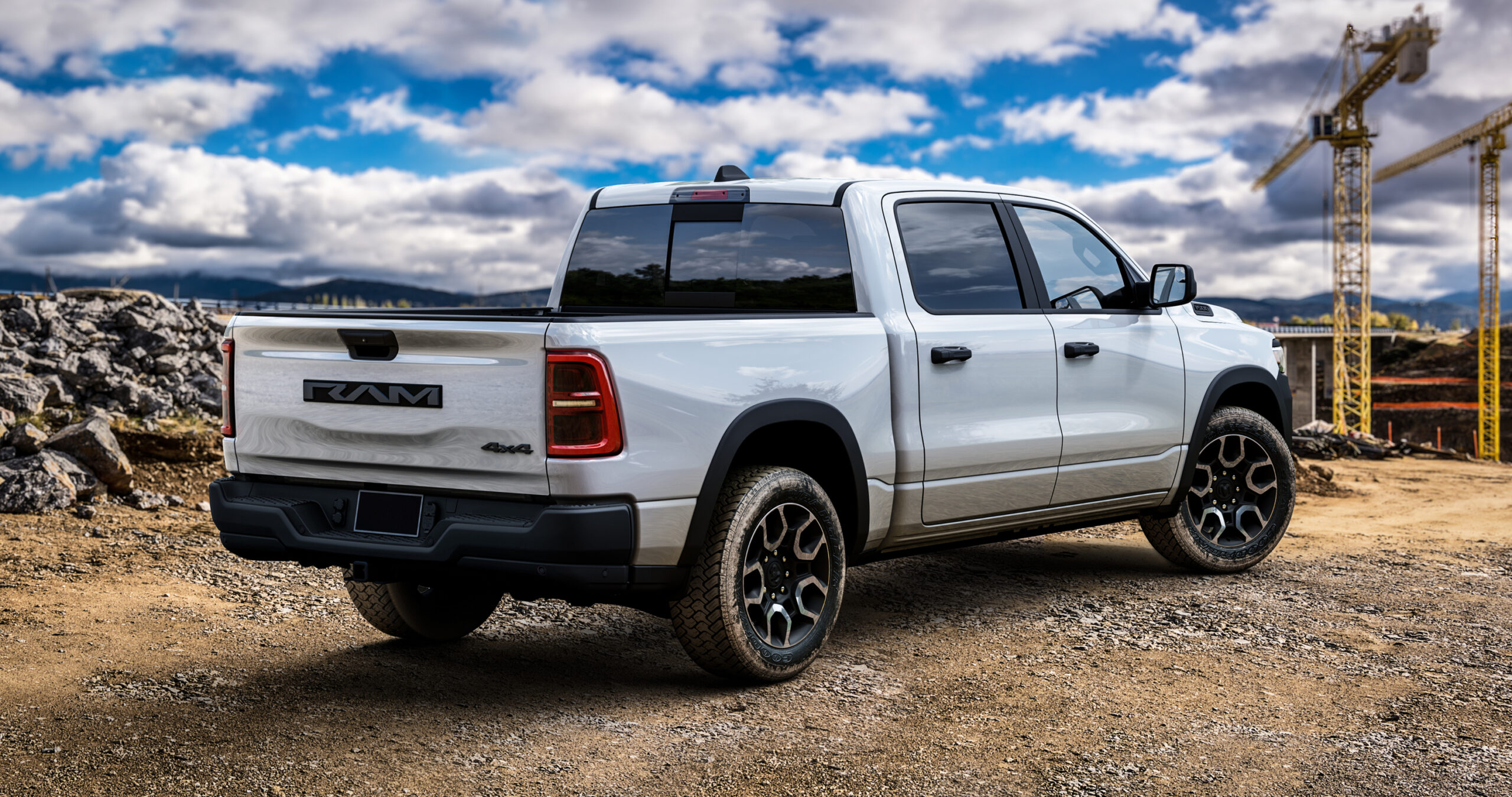
Improved Towing and Hauling in Difficult Conditions
The increased traction offered by 4×4 systems extends to towing and hauling. While a truck’s payload and towing capacities are primarily determined by its chassis and suspension, the ability to maintain grip when starting from a stop with a heavy load is crucial, especially on inclines or slippery surfaces.
-
Boat Ramps and Launching: Launching a boat or retrieving a trailer from a slippery ramp is a classic scenario where 4×4 proves invaluable. The extra grip prevents wheels from spinning and digging into the soft ground, allowing for a smooth and safe operation.
-
Construction Sites and Work Sites: For professionals who frequently navigate unpaved or uneven work sites, 4×4 provides the confidence and capability to access remote locations and maneuver heavy loads with greater ease, even in adverse weather.
Resale Value and Market Demand
From a consumer perspective, 4×4 configurations generally command a higher resale value and enjoy stronger market demand compared to their 2WD counterparts. This is driven by the perception of enhanced capability and versatility that the 4×4 badge represents.
-
Appealing to a Broader Audience: Trucks equipped with 4×4 systems appeal to a wider range of buyers, including outdoor enthusiasts, adventurers, rural residents, and those who simply prefer the added security of all-wheel traction.
-
Investment in Capability: For many buyers, the additional cost of a 4×4 system is seen as an investment in the vehicle’s overall utility and its ability to handle a variety of situations, making it a desirable feature that retains its value over time.
4×4 Configurations and Options in Modern Trucks
The automotive industry continually innovates, and the 4×4 systems found in modern trucks reflect this evolution. While the fundamental principles remain, manufacturers offer a variety of configurations and technological advancements designed to optimize performance, efficiency, and driver experience.
Part-Time vs. Full-Time and Automatic Systems
As discussed earlier, the choice between part-time, full-time, and automatic 4×4 systems depends on intended use.
-
Traditional Part-Time: Still prevalent in many work-focused trucks, this system offers simplicity and durability. It’s a reliable choice for those who primarily need 4×4 for occasional off-road excursions or severe weather.
-
Full-Time 4×4: Increasingly found in higher-trim models and luxury trucks, this system provides constant all-wheel traction, enhancing on-road stability and reducing the need for driver intervention.
-
Automatic 4×4: This is becoming a popular middle ground, offering the benefits of 4×4 without the driver needing to constantly monitor conditions or manually engage the system. It provides a balance of convenience and capability.
Electronic vs. Mechanical Engagement
The way the 4×4 system is engaged has also seen technological advancements.
-
Electronic Shift-On-The-Fly: Most modern trucks with part-time 4×4 systems utilize electronic controls, allowing drivers to switch between 2WD and 4×4 modes (and often 4-Low) via buttons or a rotary dial on the dashboard. This is faster and more convenient than older manual lever systems.
-
Advanced Electronic Systems: Some manufacturers integrate sophisticated electronic control units that manage torque distribution, optimize traction based on sensor data (e.g., wheel speed, throttle position, steering angle), and even allow for customized driving modes for different terrains (e.g., snow, mud, sand, rock).

Drivetrain Enhancements: Locking Differentials and Terrain Management
Beyond the basic 4×4 system, modern trucks can be equipped with additional features that further enhance their off-road and all-weather capabilities.
-
Electronic Locking Differentials: While mechanical lockers are robust, electronic versions offer ease of use and integration with vehicle electronics. These can often be engaged with the push of a button and provide true 50/50 torque split to both wheels on an axle.
-
Terrain Management Systems: These sophisticated systems allow the driver to select pre-programmed driving modes that optimize engine, transmission, throttle, and 4×4 system responses for specific surfaces. This simplifies the process of adapting the vehicle to challenging conditions, making off-roading more accessible to a wider audience.
-
Off-Road Suspension and Underbody Protection: Many trucks designed with 4×4 in mind also come with enhanced suspension systems offering greater articulation and ground clearance, along with skid plates and protective shields for vital drivetrain components, preparing them for the rigors of off-road use.
In conclusion, understanding what 4×4 means in a truck is about appreciating a sophisticated drivetrain that prioritizes traction and capability. It’s a system that has evolved significantly, offering drivers a spectrum of choices from rugged, mechanical simplicity to advanced electronic controls. Whether for daily commutes in unpredictable weather or for embarking on challenging off-road adventures, the 4×4 system remains a defining feature that elevates the utility and desirability of modern trucks.
aViewFromTheCave is a participant in the Amazon Services LLC Associates Program, an affiliate advertising program designed to provide a means for sites to earn advertising fees by advertising and linking to Amazon.com. Amazon, the Amazon logo, AmazonSupply, and the AmazonSupply logo are trademarks of Amazon.com, Inc. or its affiliates. As an Amazon Associate we earn affiliate commissions from qualifying purchases.