
The seemingly simple question of which direction a fan should spin in the summer is often met with a shrug or a guess. However, for those seeking to optimize their home environment, maximize comfort, and even enhance energy efficiency, understanding this fundamental aspect of airflow can be a surprisingly impactful technical detail. This article delves into the technological principles behind fan operation in warmer months, exploring how modern advancements and a deeper understanding of thermodynamics can transform your approach to cooling. We will move beyond anecdotal advice to examine the science, the available technologies, and the strategic implementation of fans for a cooler, more comfortable summer.
The Science of Summer Airflow: Understanding Convection and Air Movement
The primary goal in the summer is to create a cooling effect. This is achieved not by magically lowering the ambient temperature, but by facilitating the removal of heat from our bodies and the surrounding environment. Fans, in their basic form, are tools that move air. The direction of this air movement directly influences how effectively they can contribute to a feeling of coolness.
The Role of Convection in Heat Dissipation
Our bodies generate heat. In warm weather, this heat can build up, making us feel uncomfortable. The principle of convection is crucial here. Convection is the transfer of heat through the movement of fluids (in this case, air). When air comes into contact with a warmer surface (like our skin), it absorbs heat. If this warmed air is then moved away and replaced by cooler air, the process of heat dissipation accelerates.
A fan blowing air directly onto our skin enhances this convective heat transfer. The moving air strips away the layer of warm, humid air that naturally surrounds our bodies, allowing for more efficient evaporation of sweat. Evaporation is a cooling process; as sweat turns into vapor, it draws heat away from the skin. Therefore, the primary function of a fan in the summer is to increase the rate of convective heat loss and enhance evaporative cooling.
Ceiling Fans: The Dominant Player in Summer Airflow
Ceiling fans are ubiquitous in many homes and offices and play a significant role in summer cooling strategies. Their effectiveness hinges on their rotational direction.
Summer Mode: Counter-Clockwise Rotation for Downward Airflow
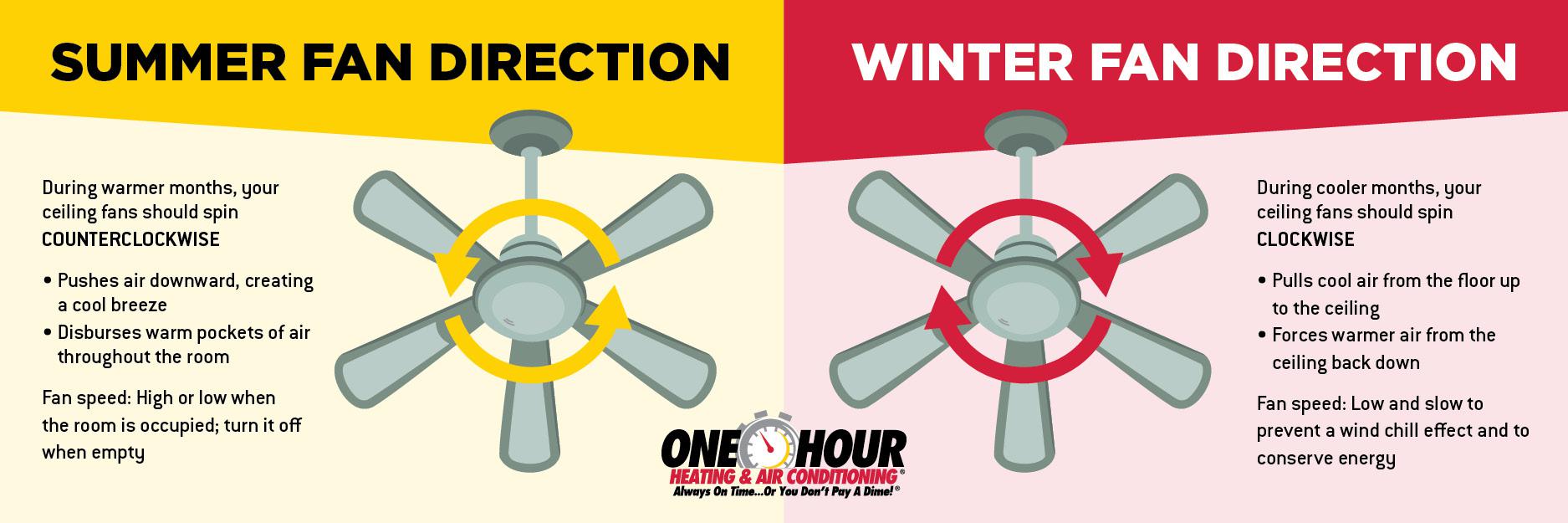
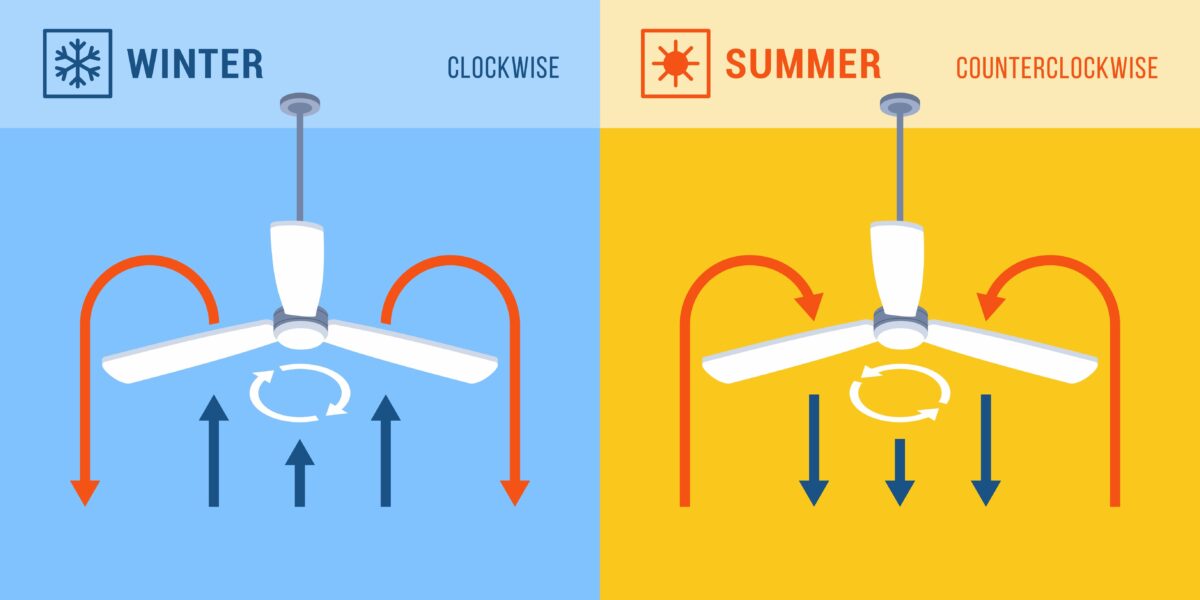
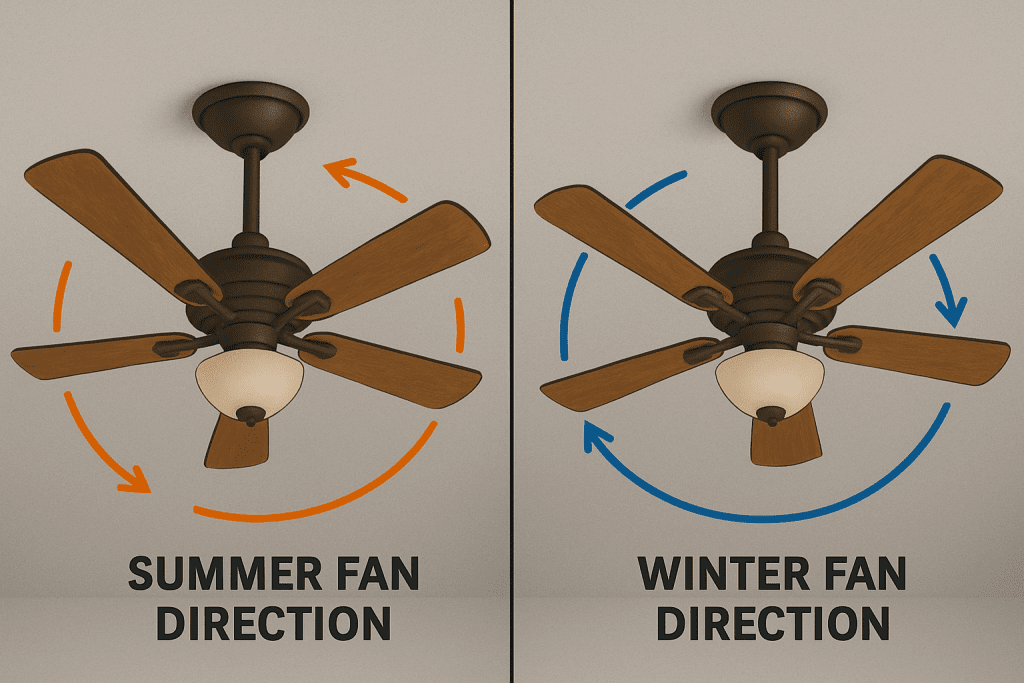
In the summer, the objective is to create a cooling breeze directly felt by occupants. This is achieved when a ceiling fan rotates counter-clockwise (when viewed from below). This direction of rotation pushes air downwards, creating a direct downdraft. This downdraft simulates a natural breeze, providing direct cooling to anyone in its path. The increased air velocity on the skin enhances both convective heat loss and evaporative cooling, making the room feel significantly cooler, even if the actual ambient temperature hasn’t changed. It’s important to note that this direct airflow is most effective when you are present in the room. When unoccupied, the fan’s cooling effect is diminished.
Winter Mode: Clockwise Rotation for Upward Airflow
While not directly relevant to the summer question, understanding the fan’s opposite function solidifies the concept. In winter, ceiling fans rotate clockwise. This upward rotation draws cooler air from the floor up towards the ceiling and then gently pushes it outwards along the ceiling. This circulation helps to redistribute warmer air that has risen to the ceiling, mixing it with cooler air and preventing stratification. This can lead to a slight increase in perceived warmth without significant energy expenditure.
Oscillating Fans and Personal Cooling Devices
Beyond ceiling fans, oscillating fans (pedestal, box, desk) and personal cooling devices also operate on the same fundamental principle. Their primary function in summer is to direct a stream of air onto occupants. Whether it’s a gentle waft from a distant oscillating fan or a targeted blast from a desk fan, the goal is to create localized airflow that facilitates heat dissipation from the body. The directionality and intensity of this airflow are key to their effectiveness.
Technological Advancements Enhancing Fan Efficiency and Control
The basic principles of fan operation have remained consistent, but technology has significantly evolved to make fans smarter, more efficient, and more integrated into our home environments. This evolution goes beyond simply changing the direction of rotation; it involves sophisticated control systems and energy-saving features.
Smart Fans: Connectivity and Automation
The advent of smart home technology has brought significant advancements to fans. Smart fans, often controlled via Wi-Fi or Bluetooth, offer a level of convenience and customization previously unavailable.
App-Based Control and Scheduling
Smart fan apps allow users to control fan speed, direction, and even set schedules from their smartphones or tablets. This means you can program your ceiling fan to automatically switch to its summer mode before you arrive home from work, ensuring immediate comfort. You can also create custom schedules based on the time of day, humidity levels, or even your presence in a room, maximizing energy efficiency by only operating the fan when needed.
Integration with Smart Home Ecosystems
Many smart fans seamlessly integrate with popular smart home ecosystems like Amazon Alexa, Google Assistant, and Apple HomeKit. This allows for voice control, enabling you to adjust your fan settings without lifting a finger. For example, you can simply say, “Hey Google, set the living room fan to high,” or “Alexa, turn off the bedroom fan.” This level of integration enhances convenience and accessibility.
Advanced Sensors for Intelligent Operation
Some of the most sophisticated smart fans incorporate advanced sensors. These can include temperature sensors, humidity sensors, and even motion sensors.
- Temperature and Humidity Sensing: By monitoring ambient temperature and humidity, smart fans can automatically adjust their speed and direction to maintain optimal comfort levels. For instance, if the humidity rises, the fan might increase its speed to improve evaporative cooling. If the temperature drops, it might reduce its speed or even turn off.
- Occupancy Sensing: Motion sensors can detect if a room is occupied. This technology allows the fan to automatically turn off when a room is empty, saving energy. Conversely, it can turn on when someone enters, anticipating their comfort needs. This is a significant leap forward in energy management, ensuring you’re not wasting electricity cooling an empty space.
Energy-Efficient Motor Technologies
The efficiency of a fan’s motor is a critical technological aspect. Older fans often used less efficient AC motors. Modern fans, particularly those marketed as energy-efficient or smart, frequently employ DC (Direct Current) motors.
The Advantages of DC Motors
DC motors are inherently more energy-efficient than their AC counterparts. They consume significantly less electricity to produce the same amount of airflow. This translates to lower energy bills, especially for fans that are used for extended periods during the summer. Furthermore, DC motors tend to run quieter and offer a wider range of speed settings, allowing for more granular control over airflow. This technological shift in motor design is a quiet but impactful upgrade for any fan.
Variable Speed Control and Airflow Customization
Beyond simple “low,” “medium,” and “high” settings, many modern fans offer variable speed control. This allows for incredibly precise adjustments to airflow.
Tailoring the Breeze
This feature is particularly beneficial for achieving personalized comfort. Instead of being limited to pre-set speeds, users can fine-tune the fan’s output to create the exact level of breeze they desire. This is especially useful in situations where a very gentle airflow is preferred, or when a more robust breeze is needed. The ability to customize the airflow ensures that the fan is not just moving air, but moving it in a way that precisely meets the user’s comfort needs, contributing to a more pleasant and efficient cooling experience.
Strategic Fan Deployment for Optimal Summer Comfort
Understanding the technical aspects of fan direction and control is only half the battle. The strategic deployment of fans within a home or office is crucial for maximizing their cooling benefits and enhancing overall comfort. This involves considering room layout, the presence of other cooling systems, and individual preferences.
Leveraging Ceiling Fans for Whole-Room Cooling
Ceiling fans are ideal for providing general air circulation throughout a room. Their primary role in summer is to create that consistent downward airflow that enhances personal comfort.
Creating a Wind Chill Effect
The “wind chill” effect produced by a fan doesn’t actually lower the air temperature, but it makes us feel cooler. By increasing the speed of air moving across our skin, the fan accelerates the evaporation of sweat, which is the body’s natural cooling mechanism. A well-placed ceiling fan can effectively create a continuous gentle breeze that circulates throughout the entire living space, making it feel several degrees cooler. For optimal effect, ensure the fan blades are clean and the motor is functioning efficiently.
Coordinating with Air Conditioning for Energy Savings
While a fan might seem to compete with air conditioning, they can actually work in synergy to improve energy efficiency. By using a ceiling fan to circulate cooled air from your air conditioner, you can often set your thermostat a few degrees higher than you normally would. The increased air movement from the fan makes the cooler air feel more effective, allowing you to reduce the workload on your air conditioner. This can lead to significant energy savings over the summer months. A general guideline is that for every degree you raise your thermostat (while using a fan), you can save about 3% on your cooling costs.
Utilizing Portable Fans for Targeted Cooling
Portable fans offer flexibility and the ability to direct cooling precisely where it’s needed. Their role is often supplementary to ceiling fans or in situations where ceiling fans are not present.
Personal Cooling Zones
Portable fans, such as oscillating tower fans or desk fans, are excellent for creating personalized cooling zones. If a particular area of a room tends to be warmer, or if you’re spending a lot of time in one spot, a portable fan can provide direct relief. By positioning an oscillating fan to sweep across your seating area, you can enjoy a consistent breeze without affecting the entire room. This is particularly useful in larger rooms or open-plan living spaces where a single ceiling fan might not provide adequate coverage for everyone.
Enhancing Airflow in Specific Areas
Portable fans can also be used to strategically improve airflow in areas that might otherwise be stagnant. For example, placing a fan near an open window can help draw in cooler outside air during the evening or early morning hours. Conversely, if you have a particularly warm spot in your home, a strategically placed portable fan can help to move that warm air towards an air return vent or away from your primary living areas.
Smart Fan Integration for Automated Comfort and Efficiency
The true potential of modern fan technology is realized when these devices are integrated into smart home systems. This moves beyond manual adjustments to proactive and automated comfort management.
Dynamic Comfort Settings
Imagine a summer evening where the temperature dips slightly, and the humidity increases. A smart fan, integrated with weather data or local sensors, can automatically adjust its settings. It might reduce its speed to avoid creating a chill but maintain enough airflow to manage the humidity through evaporative cooling. This “set it and forget it” approach to comfort ensures optimal conditions without constant manual intervention.
Proactive Energy Management
The energy-saving capabilities of smart fans are significant. By learning your habits or by using occupancy sensors, they can ensure that fans are only running when and where they are needed. This intelligent energy management contributes to reduced electricity consumption and a lower carbon footprint, aligning technological convenience with environmental responsibility.
Conclusion: Embracing Technological Solutions for a Cooler Summer
The question of fan direction in the summer, while seemingly simple, opens the door to a sophisticated understanding of airflow, heat transfer, and the intelligent application of technology. By understanding the scientific principles of convection and the specific function of counter-clockwise rotation for downward airflow, we can effectively utilize even the most basic fans.
However, the true revolution lies in the advancements of smart fan technology. From app-controlled scheduling and voice commands to integrated sensors and energy-efficient DC motors, these innovations offer unprecedented levels of control, comfort, and efficiency. By strategically deploying both traditional and smart fans, and by leveraging their ability to work in tandem with other cooling systems like air conditioning, we can create homes that are not only cooler but also more energy-efficient and environmentally conscious. Embracing these technological solutions allows us to move beyond simply tolerating the summer heat to actively managing our home environments for optimal comfort and well-being.
aViewFromTheCave is a participant in the Amazon Services LLC Associates Program, an affiliate advertising program designed to provide a means for sites to earn advertising fees by advertising and linking to Amazon.com. Amazon, the Amazon logo, AmazonSupply, and the AmazonSupply logo are trademarks of Amazon.com, Inc. or its affiliates. As an Amazon Associate we earn affiliate commissions from qualifying purchases.