
Otis Boykin, an often-overlooked figure in the annals of technological innovation, was a prolific inventor whose contributions profoundly impacted the development of electronics and computing. While his name might not be as instantly recognizable as some of his contemporaries, his inventions were foundational, enabling advancements that have shaped the modern technological landscape. This exploration delves into the specific inventions attributed to Otis Boykin, highlighting their significance and the enduring legacy they represent within the realm of technology. His work primarily focused on improving the efficiency, reliability, and functionality of electronic components, laying crucial groundwork for the digital age.

The Crucial Role of the Control Resistor
One of Otis Boykin’s most significant and far-reaching inventions was the control resistor. This seemingly simple component was, in fact, a revolutionary advancement in the field of electronics. Before Boykin’s innovation, resistors were prone to inconsistencies and often failed under varying temperature conditions, leading to unreliable circuits. His development addressed these critical shortcomings, ushering in an era of more robust and dependable electronic devices.
Enhancing Precision and Reliability in Electronic Circuits
The control resistor, as developed by Boykin, was designed with a unique composition that allowed it to maintain its resistance value with remarkable stability across a wide range of temperatures. This was a monumental achievement. Electronic systems, from early computing machines to complex guidance systems, rely on precise electrical resistance to function correctly. Fluctuations in temperature could cause standard resistors to change their resistance, leading to inaccurate calculations, malfunctions, and even complete system failures. Boykin’s control resistor minimized these variations, making electronic systems far more reliable and accurate.
This enhanced reliability was particularly critical for applications that demanded extreme precision and dependability. Think of early missile guidance systems, complex industrial control mechanisms, or the burgeoning field of computing. In these contexts, even minor deviations in electrical performance could have catastrophic consequences. Boykin’s invention provided the stability and predictability that these systems desperately needed to operate effectively and safely. The ability to create electronic circuits that could withstand diverse environmental conditions without compromising performance was a major leap forward, directly attributable to his insight in resistor design.
Impact on Early Computing and Aerospace
The ripple effect of Boykin’s control resistor extended directly into the burgeoning fields of computing and aerospace. Early computers were massive, intricate machines that were sensitive to even the slightest environmental changes. The reliability offered by Boykin’s resistors meant that these early digital behemoths could operate for longer periods with fewer errors, accelerating the pace of computational development. This was instrumental in the scientific and military research that characterized the mid-20th century.
In aerospace, the stakes were even higher. The development of sophisticated guidance and control systems for aircraft and missiles demanded components that were not only precise but also exceptionally resilient. Boykin’s control resistor provided the foundational stability required for these critical systems. The ability to ensure that a missile’s trajectory remained accurate despite atmospheric temperature variations, or that an aircraft’s navigation system continued to function flawlessly, owes a significant debt to the principles embodied in his invention. It was a key enabler for the technological advancements that defined the Cold War era and laid the groundwork for future space exploration.
Innovations in Electronic Components and Systems
Beyond the control resistor, Otis Boykin’s inventive spirit extended to numerous other areas of electronic component development. His work consistently aimed at improving performance, reducing costs, and enhancing the overall functionality of electronic devices, making technology more accessible and practical.
Advancements in Positional Sensing and Control

Boykin’s contributions also touched upon advancements in positional sensing and control mechanisms. He recognized the growing need for accurate and responsive ways to detect and manage physical positions within electronic systems. This led to inventions that improved the precision of devices used for measurement and control, which are integral to a vast array of technologies.
Consider the need for accurate positioning in early automated manufacturing processes or in the control surfaces of aircraft. Boykin’s work in this domain contributed to the development of components that could translate physical movements into electrical signals with greater fidelity. These innovations were essential for creating more sophisticated automated systems and for enhancing the responsiveness and control of complex machinery. His inventions in this area were not just about creating new parts; they were about enabling entirely new capabilities in how machines interacted with the physical world.
Contributions to Electronic Displays and Switching Mechanisms
Another area where Otis Boykin left his mark was in the development of components related to electronic displays and switching mechanisms. While the specifics might be less broadly known than his resistor invention, these contributions were nonetheless important for the evolution of user interfaces and the efficient operation of electronic devices.
His work on switching mechanisms, for instance, would have focused on creating more reliable and efficient ways for electrical circuits to be opened and closed, a fundamental operation in all electronic devices. This could have included improvements in contact materials, mechanical designs, or the integration of switching functions within broader circuitry. Similarly, his involvement with electronic displays, however nascent at the time, would have contributed to the foundational understanding and development of ways to visually represent information using electrical signals. These areas, while perhaps appearing less groundbreaking in isolation, represent a steady, incremental progress that is vital for the overall advancement of technology.
The Lasting Impact of Otis Boykin’s Technological Foresight
Otis Boykin’s legacy is a testament to the power of focused innovation and the profound impact that well-designed electronic components can have on technological progress. His inventions, though often unsung, provided the essential building blocks for many of the technologies we rely on today. His work exemplifies a form of technological leadership that prioritizes practical solutions and tangible improvements, leading to widespread adoption and lasting influence.
A Foundation for Modern Electronics
The advancements made by Otis Boykin are deeply embedded in the fabric of modern electronics. The reliability and precision that his inventions brought to electronic circuits are now taken for granted. Without his foundational work on resistors, the development of complex microprocessors, advanced telecommunications, and sophisticated medical devices would have been significantly more challenging, if not impossible. His contributions represent a crucial step in the miniaturization and increased complexity of electronic systems.
Modern integrated circuits, the heart of all digital devices, rely on incredibly precise control of electrical properties. The very principles that Boykin established in his control resistor research continue to inform the design and manufacturing of these intricate components. His foresight in understanding the critical role of stable resistance in electronic systems has had a continuous and evolving impact, proving to be a fundamental constant in the relentless march of technological innovation.
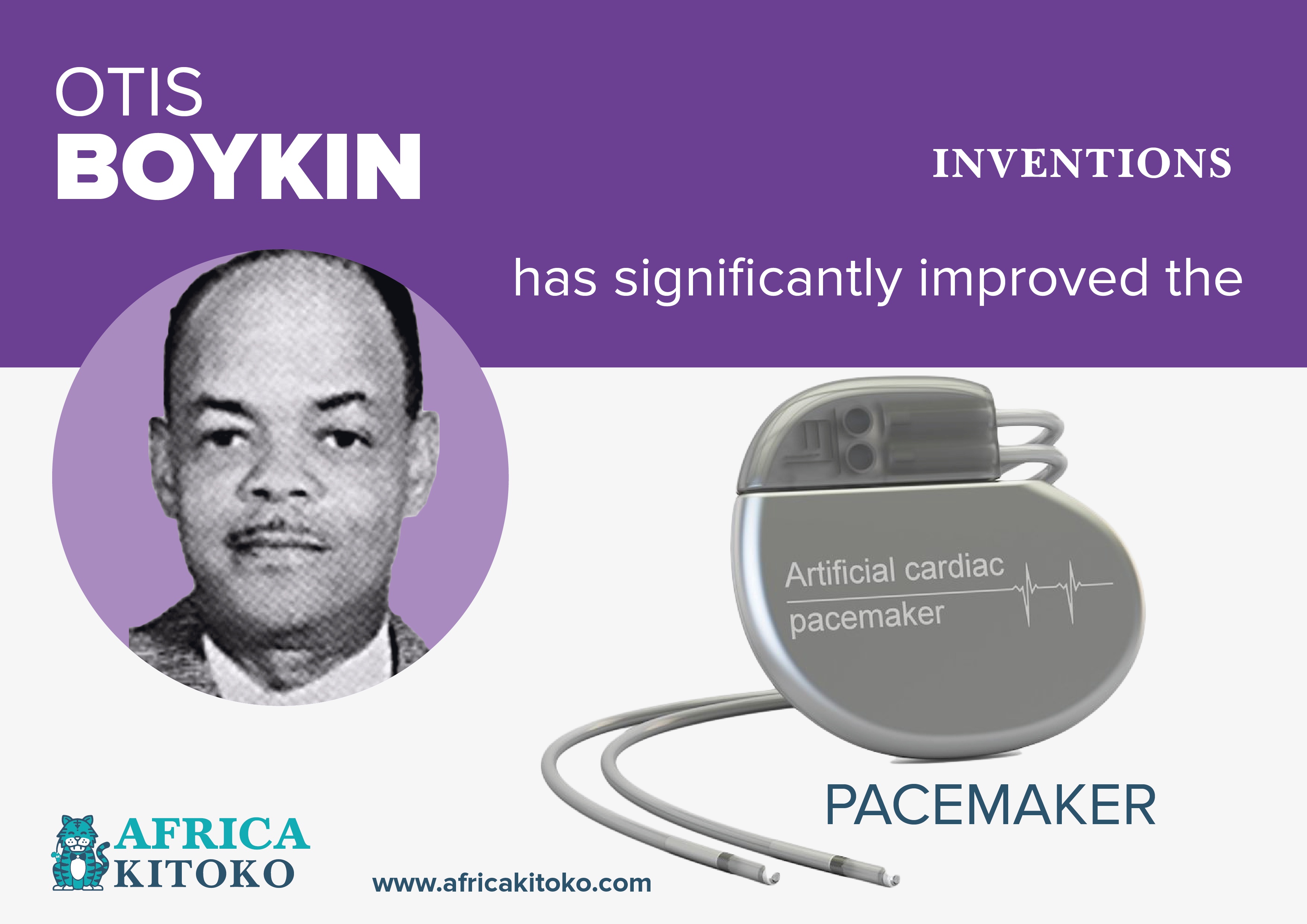
Inspiring Future Generations of Inventors
Otis Boykin’s story is also a source of inspiration. As an African American inventor in an era with significant societal barriers, his achievements highlight the importance of perseverance, ingenuity, and dedication. His success serves as a powerful reminder that innovation can emerge from diverse backgrounds and that talent knows no limitations.
His work underscores the idea that significant technological leaps can come from solving fundamental problems in seemingly straightforward components. Boykin’s focus on improving the core elements of electronic systems demonstrates a deep understanding of engineering principles and a commitment to making technology more robust and accessible. This approach continues to be a valuable lesson for aspiring inventors and engineers today, encouraging them to look for opportunities to innovate at every level of technological development. His legacy is not just in the patents he held, but in the enduring spirit of problem-solving and the relentless pursuit of technological advancement that he embodied.
aViewFromTheCave is a participant in the Amazon Services LLC Associates Program, an affiliate advertising program designed to provide a means for sites to earn advertising fees by advertising and linking to Amazon.com. Amazon, the Amazon logo, AmazonSupply, and the AmazonSupply logo are trademarks of Amazon.com, Inc. or its affiliates. As an Amazon Associate we earn affiliate commissions from qualifying purchases.