
In the realm of finance, percentages are more than just mathematical symbols; they are the fundamental language of value, growth, and risk. Whether you are a small business owner calculating profit margins, an investor analyzing stock market returns, or an individual trying to optimize a household budget, understanding how to work with percentages is a non-negotiable skill.
Percentage calculations allow us to standardize information, making it possible to compare a small savings account’s interest to the performance of a multi-billion-dollar index fund. To master your money, you must first master the “how-to” of percentages. This guide breaks down the essential calculations through the lens of business and personal finance.
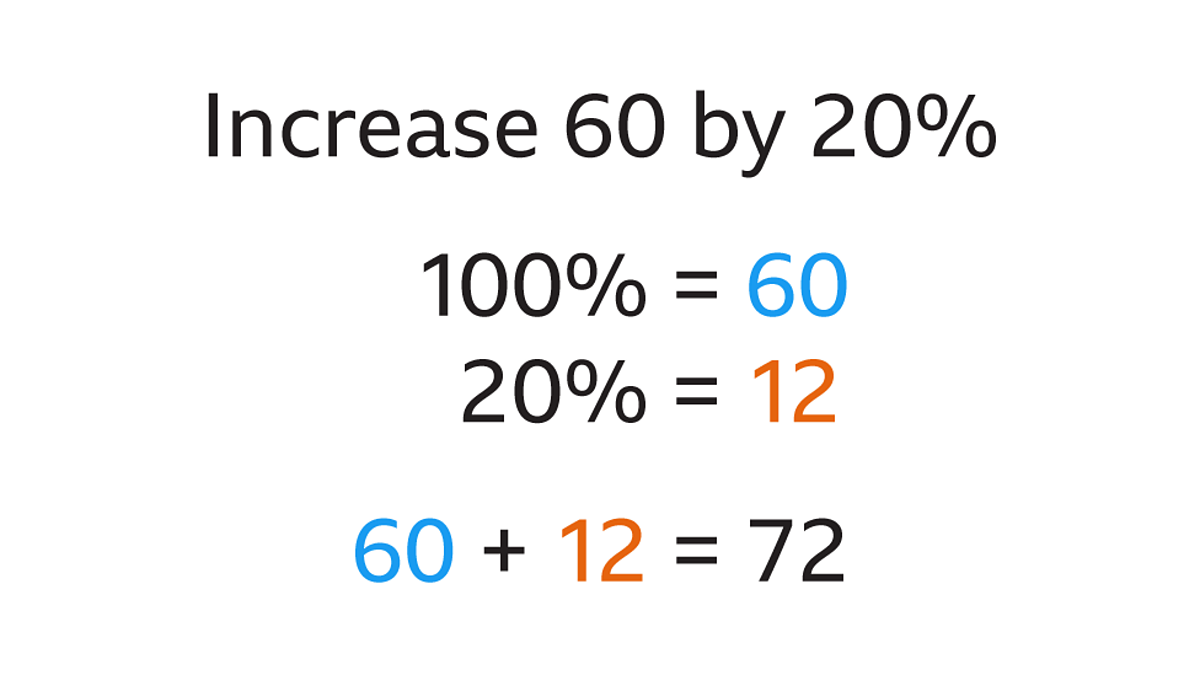
1. The Foundations of Financial Percentages
Before diving into complex investment yields, one must grasp the basic mechanics of how percentages function within a financial context. At its core, a percentage represents a “part of a hundred.” In money management, this usually translates to “how much of my total capital is being used or earned.”
The Basic Percentage Formula for Budgeting
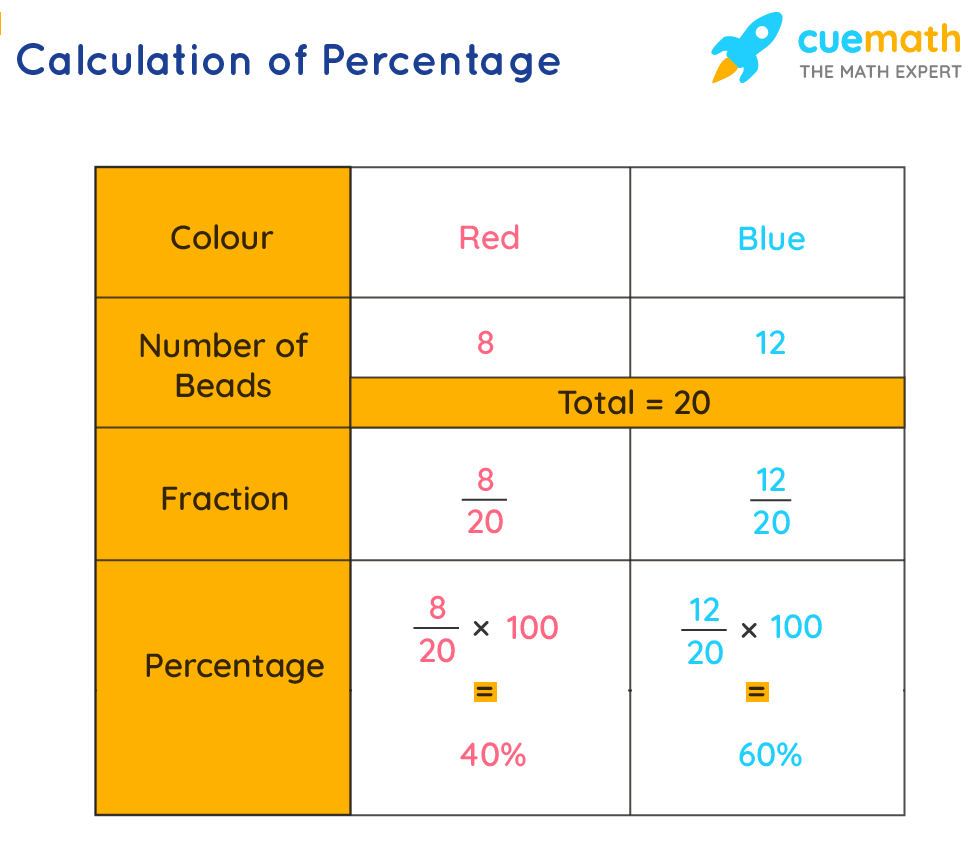
The most common calculation you will perform involves finding what percentage a specific expense takes up in your total budget. The formula is:
(Part / Whole) × 100 = Percentage
For example, if your monthly take-home pay is $5,000 and your rent is $1,500, you calculate the percentage of your income spent on housing as ($1,500 / $5,000) × 100. The result is 30%. In personal finance, keeping this figure below 30% is a standard benchmark for financial health.
Calculating Percentage Increases (Income and Inflation)
Understanding how much your wealth is growing—or how much more things cost due to inflation—requires the percentage increase formula:
[(New Value – Old Value) / Old Value] × 100
If you received a raise from $60,000 to $65,000, your percentage increase is [($5,000) / $60,000] × 100, which equals an 8.33% raise. Comparing this to the annual inflation rate (a percentage increase in the Consumer Price Index) tells you whether your purchasing power is actually growing or shrinking.
Calculating Percentage Decreases (Debt and Discounts)
Conversely, tracking debt reduction or evaluating a “sale” price involves percentage decreases. If you owe $10,000 and pay off $2,000, you have decreased your debt by 20%. Understanding these shifts helps in visualizing progress toward financial freedom.
2. Percentages in Business Finance: Margins and Markups
For entrepreneurs and business professionals, percentages are the pulse of the company. Miscalculating a margin by even a few percentage points can mean the difference between a thriving enterprise and bankruptcy.
Gross Margin vs. Net Profit Margin
Business owners often track “margins” to understand efficiency. The Gross Margin percentage reveals how much money is left after the Direct Costs of Goods Sold (COGS).
[(Revenue – COGS) / Revenue] × 100 = Gross Margin %
However, the more critical figure is the Net Profit Margin, which accounts for all expenses, including taxes and interest. If a business generates $1,000,000 in revenue but only keeps $100,000 after all bills are paid, it has a 10% Net Profit Margin. Analyzing these percentages allows a business to determine if it needs to scale its operations or cut administrative overhead.
The Nuance of Markup
While “margin” is based on the selling price, “markup” is based on the cost price. This is a common area of confusion in business finance. If an item costs $100 to make and you sell it for $150, your markup is 50% ($50 is 50% of the $100 cost). However, your profit margin is only 33.3% ($50 is 33.3% of the $150 selling price). Knowing how to do these specific percentage calculations ensures that your pricing strategy aligns with your required profit goals.

Sales Tax and Value Added Tax (VAT)
In a commercial environment, you must often add a percentage to a base price to account for taxes. To add a percentage to a total, you multiply the base amount by (1 + decimal percentage). For instance, to add a 7% sales tax to a $200 invoice, you multiply $200 by 1.07, resulting in $214. Mastering this quick calculation is essential for accurate invoicing and cash flow management.
3. The Power of Percentages in Investing and Wealth Building
In the world of investing, percentages are the ultimate yardstick. They allow investors to strip away the “noise” of dollar amounts and look at the actual efficiency of their capital.
Return on Investment (ROI)
ROI is the holy grail of investment percentages. It tells you how much profit you’ve made relative to the amount you invested.
[(Current Value – Initial Cost) / Initial Cost] × 100 = ROI
If you invested $10,000 in a stock and it is now worth $12,500, your ROI is 25%. This percentage allows you to compare the performance of that stock against other assets, such as real estate or a high-yield savings account, regardless of the different dollar amounts involved.
Compound Interest: The Percentage that Builds Wealth
Compound interest is the process where the value of an investment grows by a certain percentage, and then the next period’s growth is calculated on the new, larger total. The formula for annual compounding is:
A = P(1 + r)^n
(Where A is the final amount, P is the principal, r is the annual interest rate as a decimal, and n is the number of years.)
If you have $10,000 earning 7% annually, you don’t just earn $700 every year. In the second year, you earn 7% of $10,700 ($749). Over decades, this “percentage on top of a percentage” is what creates significant wealth. Understanding the math behind these percentages encourages early and consistent saving.
Dividend Yields and Expense Ratios
For passive income seekers, the “Dividend Yield” is a vital percentage. It is calculated by dividing the annual dividend payment by the current stock price. A 4% yield means for every $100 you invest, you receive $4 in annual income. Simultaneously, savvy investors look at “Expense Ratios” on Mutual Funds or ETFs. A 1% fee might sound small, but when calculated as a percentage of your total portfolio over 30 years, it can eat away nearly a third of your potential gains.
4. Advanced Financial Tools and Shortcuts
While manual calculations are vital for understanding the “why,” modern financial management relies on tools and mental shortcuts to process percentages quickly.
Leveraging Spreadsheet Formulas
In Excel or Google Sheets, calculating percentages is automated, but you must input the logic correctly.
- To find a percentage of a total:
=B2/C2(then format the cell as a percentage). - To calculate a percentage change:
=(NewValue - OldValue) / OldValue. - To calculate compound interest growth:
=P * (1+r)^n.
Using these formulas allows for “what-if” modeling—changing a single percentage (like a mortgage interest rate) to see how it affects your lifetime interest payments.
The Rule of 72
The “Rule of 72” is a famous mental shortcut used by financial advisors to estimate how long it will take for an investment to double at a fixed annual percentage rate. You simply divide 72 by the annual interest rate.
- At a 6% return, your money doubles in 12 years (72/6).
- At a 10% return, your money doubles in 7.2 years (72/10).
This quick percentage-based math helps in making rapid decisions about whether an investment’s potential growth aligns with your retirement timeline.
Allocation and Rebalancing
Portfolio theory suggests that you should hold percentages of different asset classes (e.g., 60% stocks, 40% bonds). Over time, as stocks grow faster than bonds, your portfolio might shift to 70% stocks. Rebalancing is the act of calculating these new percentages and selling/buying assets to return to your original percentage target. This disciplined use of percentages is the cornerstone of risk management in professional wealth management.
Conclusion
Mastering how to do percentages is perhaps the most practical mathematical skill an individual can possess in the modern economy. From the micro-level of daily budgeting and sales tax to the macro-level of corporate margins and compound interest in retirement accounts, percentages provide the clarity needed to make informed financial decisions.
By moving beyond simple “part over whole” math and applying these formulas to ROI, profit margins, and growth rates, you transition from a passive observer of your finances to an active manager of your wealth. In money, as in life, it is the small percentages that, when compounded over time, create the greatest impact.
aViewFromTheCave is a participant in the Amazon Services LLC Associates Program, an affiliate advertising program designed to provide a means for sites to earn advertising fees by advertising and linking to Amazon.com. Amazon, the Amazon logo, AmazonSupply, and the AmazonSupply logo are trademarks of Amazon.com, Inc. or its affiliates. As an Amazon Associate we earn affiliate commissions from qualifying purchases.