
In the world of finance, numbers are the language of progress. Whether you are tracking the growth of a retirement portfolio, evaluating the success of a marketing campaign’s ROI, or negotiating a salary increase, the ability to calculate and interpret percentage increase is a fundamental skill. While the mathematical formula itself is relatively simple, its implications in personal finance, investing, and business strategy are profound. Understanding how to work out a percentage increase allows you to move beyond raw data and see the true trajectory of your financial health.
The Core Formula and Its Significance in Financial Analysis
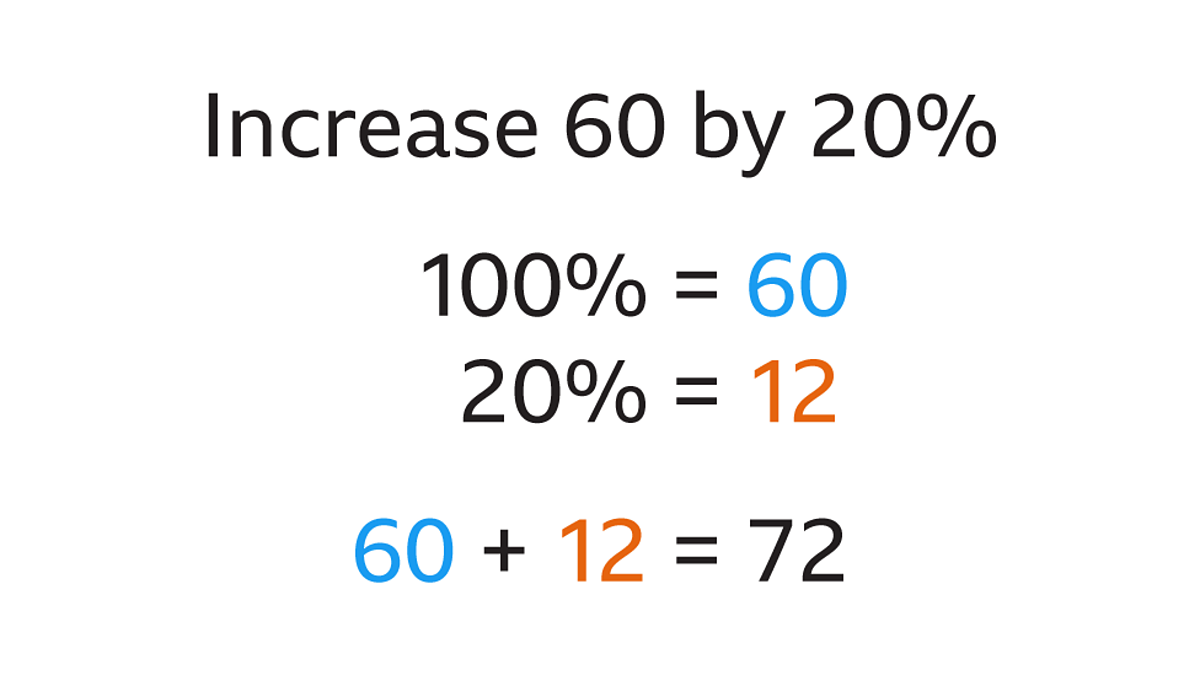
To navigate the complexities of the financial markets or manage a corporate budget, one must first master the basic arithmetic of growth. A percentage increase represents the relative change between an initial value and a final value, expressed as a fraction of 100. It provides a standardized way to compare growth across different assets, regardless of their absolute price.
The Step-by-Step Calculation for Financial Clarity
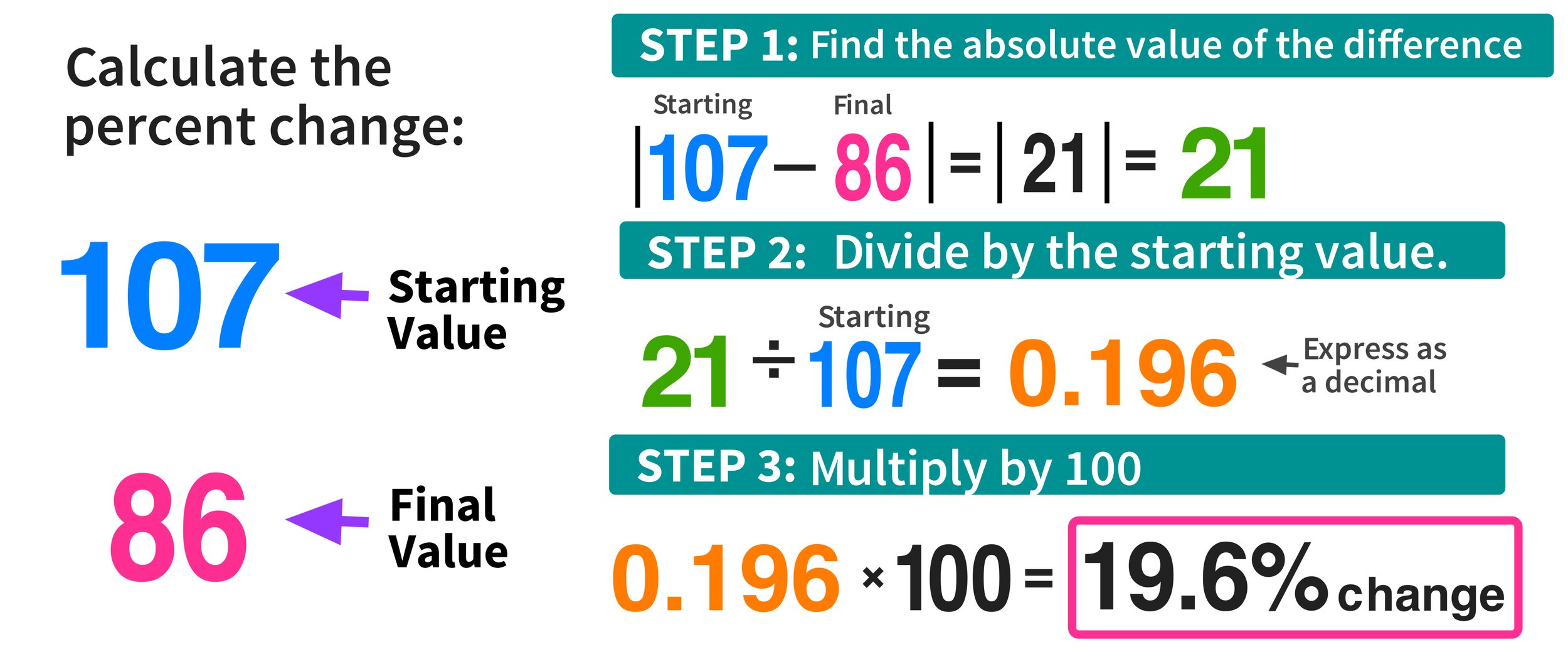
The mathematical process for determining a percentage increase involves three primary steps. First, subtract the original value (the starting amount) from the new value (the current amount) to find the “increase.” Second, divide that increase by the original value. Finally, multiply the resulting decimal by 100 to convert it into a percentage.
The formula is expressed as:
((New Value – Original Value) / Original Value) × 100 = Percentage Increase
For example, if you purchased a share of a technology company for $150 and its current market price is $195, the calculation would be:
- $195 – $150 = $45 (The absolute increase)
- $45 / $150 = 0.3
- 0.3 × 100 = 30%
In this scenario, your investment has seen a 30% increase. This percentage is far more informative than the $45 figure alone, as it allows you to compare this gain against other investment opportunities or the performance of the broader market indices like the S&P 500.
Why Small Percentages Compound into Large Gains
In the realm of money, the concept of percentage increase is inextricably linked to the power of compounding. When you earn a percentage increase on an investment, and that gain is reinvested, the subsequent percentage increase is calculated on a larger base. Over time, even a modest annual percentage increase—such as 7% or 8%—can lead to exponential wealth creation. This is the “snowball effect” that fuels long-term retirement accounts and institutional endowments. Understanding how to track these incremental increases is the difference between passive saving and active wealth building.
Evaluating Investment Performance and Risk
For the modern investor, percentage increase is the primary metric for measuring performance. However, looking at a single percentage in isolation can be misleading. Professional financial analysis requires a deeper dive into how these increases interact with time, inflation, and market volatility.
Total Return vs. Annualized Growth
When reviewing a brokerage statement, you might see a “Total Return” percentage. This represents the total percentage increase of your investment from the day of purchase to the present. While satisfying to see a 50% increase over five years, it is often more useful to calculate the Annualized Growth Rate (or CAGR—Compound Annual Growth Rate).
The CAGR provides the mean annual growth rate of an investment over a specified period longer than one year, assuming the profits were reinvested at the end of each year. This allows investors to compare the efficiency of different assets. A 50% increase over two years is significantly more impressive than a 50% increase over ten years, even though the total percentage increase is the same. By mastering these calculations, you can determine if your capital is being deployed in the most efficient manner possible.
Factoring in Inflation and the Real Rate of Return
One of the most critical applications of the percentage increase formula in finance is calculating the “Real Rate of Return.” If your savings account offers a 5% annual interest rate (a 5% increase in your balance), but the national inflation rate is 6%, your purchasing power has actually decreased.

To find your real financial progress, you must subtract the percentage increase of inflation from the percentage increase of your investment.
Real Return ≈ Nominal Return – Inflation Rate
In this example, 5% – 6% = -1%. Despite the numerical increase in your bank account, you are effectively “poorer” in terms of what that money can buy. This highlights why high-yield investments and equity growth are essential for preserving wealth against the eroding effects of rising costs.
Strategic Business Finance: Driving Revenue and Profitability
In a corporate or entrepreneurial setting, the percentage increase is the ultimate Key Performance Indicator (KPI). Business leaders use this metric to assess the health of their operations, justify scaling efforts, and report to stakeholders.
Analyzing Month-over-Month (MoM) and Year-over-Year (YoY) Growth
Businesses rarely look at a single data point; instead, they look at trends. A 10% increase in revenue in December might seem excellent, but if the business is seasonal (like retail), a Month-over-Month (MoM) increase is expected. The more vital metric is the Year-over-Year (YoY) increase.
By comparing December of the current year to December of the previous year, a business owner can see if the company is truly expanding or simply following seasonal cycles. If the YoY revenue increase is 15%, the business is growing. If it is 2%, the business may be stagnating when adjusted for inflation and rising operational costs. Investors and venture capitalists look specifically for “accelerating growth,” where the percentage increase itself grows larger each period.
Margin Expansion and Cost Management
Growth isn’t just about top-line revenue; it’s about the bottom line—profit. Financial managers use percentage increase to track “margin expansion.” If a company increases its revenue by 20%, but manages to increase its net profit by 30%, it has achieved margin expansion. This suggests that the company is becoming more efficient as it scales, lowering the cost of goods sold or optimizing its operational expenses. Conversely, if revenue increases by 20% but profit only increases by 5%, the business is likely suffering from “diseconomies of scale,” where the cost of generating new business is eating into the returns.
Personal Finance: Salary Negotiations and Debt Management
Beyond the stock market and the boardroom, the ability to calculate percentage increases is a powerful tool for personal financial advocacy and debt reduction.
Calculating Salary Increases and Negotiating Value
When you receive a performance review, you are often offered a “raise.” Most employees look at the dollar amount per paycheck, but the savvy professional looks at the percentage. If you are offered a $5,000 raise on a $50,000 salary, that is a 10% increase. If you are offered the same $5,000 on a $100,000 salary, it is only a 5% increase.
Understanding this percentage is crucial during negotiations. If the cost of living (inflation) has risen by 7% over the last year, a 5% raise is effectively a pay cut in terms of purchasing power. By presenting your contributions to the company in terms of the percentage increase in value you’ve created—such as “I helped increase departmental efficiency by 15%”—you provide a data-driven justification for a higher salary increase.
The Impact of Interest Rates on Debt
Percentage increase also works in reverse when it comes to debt. Credit card interest rates (APR) represent the percentage increase in what you owe if the balance is not paid in full. A 24% APR means your debt is increasing at a staggering rate every month. By understanding how these percentages compound, individuals can prioritize “high-interest debt” (debt with the highest percentage increase) for aggressive repayment. This “Avalanche Method” of debt reduction focuses on stopping the fastest-growing liabilities first, which is the most mathematically sound way to achieve financial freedom.
Conclusion: Developing a Growth-Oriented Financial Mindset
The question “how do you work out a percentage increase” may begin as a simple mathematical query, but in the context of money, it is the gateway to sophisticated financial literacy. Whether you are an investor seeking to outperform the market, a business owner aiming for sustainable scaling, or an individual striving to stay ahead of inflation, the percentage increase is your most reliable compass.
By consistently applying this formula, you move away from emotional decision-making and toward an analytical approach to wealth. You begin to see your finances not as static numbers, but as dynamic rates of change. In a world where the value of currency is constantly shifting, mastering the percentage increase ensures that you can measure, manage, and ultimately multiply your financial resources with precision and confidence.
aViewFromTheCave is a participant in the Amazon Services LLC Associates Program, an affiliate advertising program designed to provide a means for sites to earn advertising fees by advertising and linking to Amazon.com. Amazon, the Amazon logo, AmazonSupply, and the AmazonSupply logo are trademarks of Amazon.com, Inc. or its affiliates. As an Amazon Associate we earn affiliate commissions from qualifying purchases.