
When the evening news anchor announces that “the market was up today,” they are almost always referring to one specific number: the Dow Jones Industrial Average (DJIA). Often simply called “the Dow,” this index is the most recognized stock market indicator in the world. For over a century, it has served as the definitive pulse of the American economy, tracking the health of the giants of industry.
Despite its fame, many investors—both novice and experienced—don’t fully grasp the mechanics behind the Dow. It is not just a random collection of stocks; it is a price-weighted index of 30 prominent, “blue-chip” companies listed on stock exchanges in the United States. Understanding the Dow is fundamental to understanding the broader landscape of personal finance and institutional investing.
The History and Evolution of the Dow Jones Industrial Average
The Dow is more than a financial metric; it is a historical record of the American corporate landscape. It was created by Charles Dow, the editor of The Wall Street Journal and co-founder of Dow Jones & Company, along with his business partner Edward Jones.
The Vision of Charles Dow
In the late 19th century, the stock market was a chaotic and opaque environment. Charles Dow sought a way to simplify market movements for the average investor. On May 26, 1896, he published the first industrial average, which initially consisted of just 12 companies. At the time, these were primarily industrial firms involved in sugar, tobacco, oil, and rubber. The goal was to provide a snapshot of the economy’s “engine room.” If these industrial giants were profitable, it stood to reason that the rest of the country’s economy was following suit.
From 12 to 30: The Expansion of the Index
As the United States transitioned from an agrarian society to an industrial powerhouse, and eventually to a service and technology-driven economy, the Dow evolved. In 1928, the index expanded to 30 stocks, a number it maintains today. While the name “Industrial” remains, the companies within the index now represent diverse sectors including healthcare, technology, entertainment, and retail. General Electric (GE) was the last of the original 12 members to be removed from the index in 2018, marking the end of an era and highlighting the index’s commitment to reflecting the current economic reality rather than historical sentiment.
How the Dow Works: Understanding Price-Weighting
One of the most unique—and often criticized—aspects of the Dow is how it is calculated. Unlike the S&P 500 or the Nasdaq Composite, which are market-capitalization-weighted, the Dow is a price-weighted index. This means the components are weighted based on their stock price per share, rather than the total market value of the company.
The Price-Weighted Methodology
In a price-weighted index, a company with a high stock price has a much greater influence on the index’s daily movement than a company with a low stock price. For example, if a stock trading at $200 moves by 1%, it has a much larger impact on the Dow’s total point value than a stock trading at $50 moving by 1%, even if the $50 company is technically larger in terms of total market cap. This quirk makes the Dow distinct from almost every other major global index.
The Role of the Dow Divisor
You might wonder how the Dow can be at 38,000 points if it only tracks 30 stocks. This is where the “Dow Divisor” comes into play. If the index were a simple average, you would just add the 30 stock prices and divide by 30. However, events like stock splits, spinoffs, and changes in the index components would cause the average to drop or jump artificially.
To maintain continuity, the “Dow Divisor” is a constantly adjusted mathematical constant used to smooth out these structural changes. When a company in the Dow undergoes a 2-for-1 stock split, the price of the stock is halved, but the company’s value hasn’t changed. To prevent the Dow from “crashing” due to this split, the divisor is adjusted downward so the index level remains the same. Today, the divisor is a fraction much smaller than one, which explains why a $1 move in any single Dow stock results in a multi-point move in the index itself.
The “Blue-Chip” Components: Selection and Significance
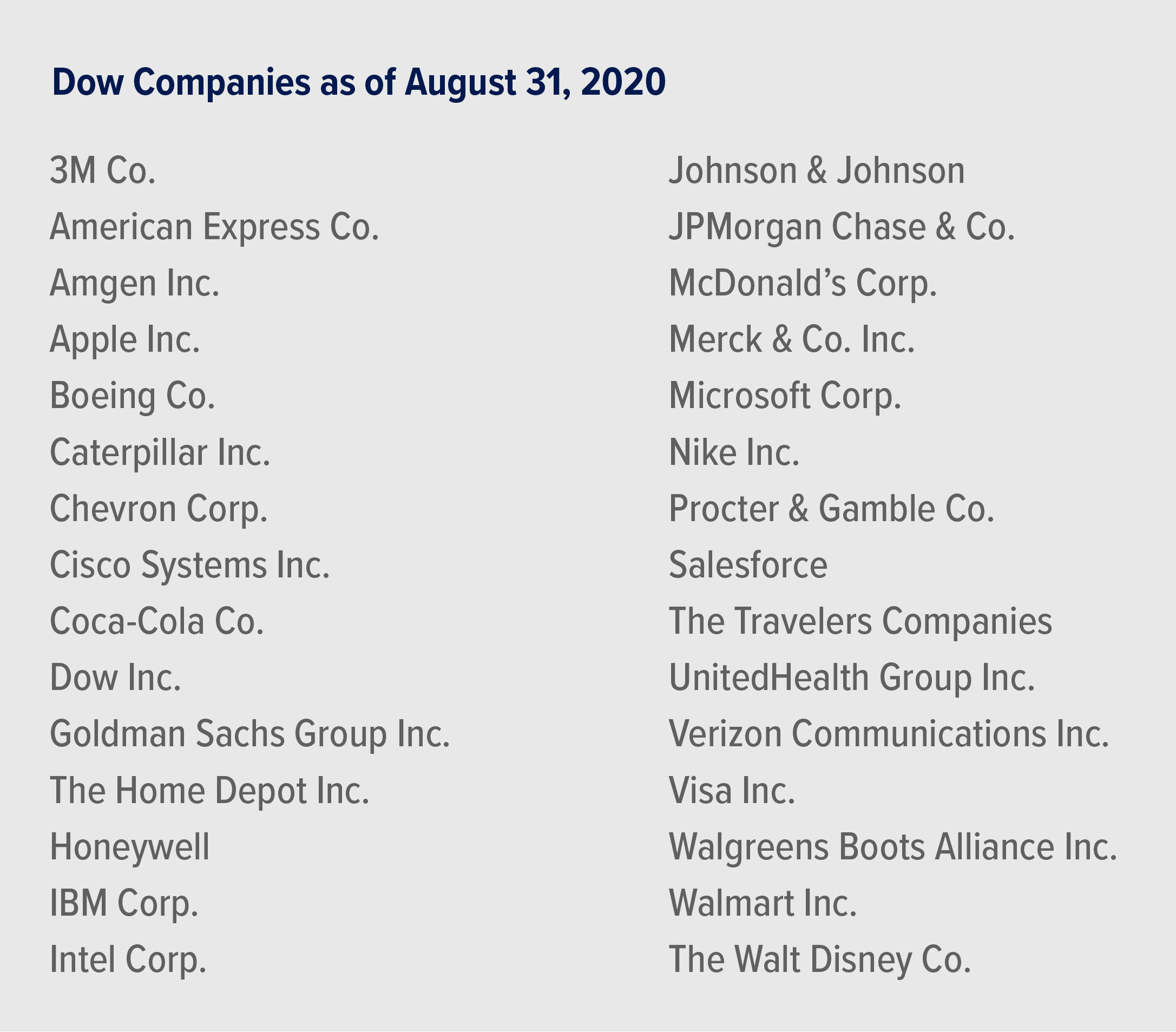
The 30 companies that make up the Dow are often referred to as “blue chips.” This term, borrowed from poker where blue chips have the highest value, denotes companies that are financially sound, well-established, and leaders in their respective industries.
The Selection Process
Unlike many indexes that follow a strict rules-based inclusion (such as “the 500 largest companies”), the Dow is managed by a selection committee. The Averages Committee, composed of representatives from S&P Dow Jones Indices and The Wall Street Journal, decides which companies are in and which are out. There are no rigid quantitative rules, but the committee generally looks for companies with an excellent reputation, sustained growth, and interest to a large number of investors. They also ensure that the index maintains a balance that reflects the broader U.S. economy, excluding the transportation and utilities sectors, which have their own specific Dow averages.
Why Membership Matters
Being added to the Dow is a mark of ultimate corporate prestige. It signals that a company has “arrived” as a cornerstone of the American economy. Conversely, being removed can be a blow to a company’s image and often results in selling pressure as index-tracking funds rebalance their portfolios. For investors, the Dow represents a “safe haven” of sorts; while these stocks can still lose value, they are generally less volatile than small-cap stocks or speculative tech startups. They are the companies that pay dividends and have the cash reserves to weather economic downturns.
Is the Dow Still Relevant in Modern Finance?
In the age of high-frequency trading and trillion-dollar tech giants, some critics argue that the Dow is an antiquated relic. With only 30 stocks and a “flawed” price-weighting system, does it still matter?
The “Small Sample Size” Debate
The most common criticism of the Dow is that 30 stocks cannot possibly represent the complexity of a multi-trillion-dollar economy. Critics point to the S&P 500, which tracks 500 companies and uses market-cap weighting, as a more accurate barometer of the total market. Because the Dow is price-weighted, it can sometimes be skewed by a single high-priced stock, potentially ignoring broader market trends if the other 29 stocks are moving in the opposite direction.
The Dow as a Psychological Indicator
Despite these technical criticisms, the Dow remains incredibly relevant for one primary reason: visibility. Because it has been around for over 125 years, it provides the longest continuous look at the history of the U.S. stock market. For the general public, “the Dow” is synonymous with “the market.”
When the Dow hits a milestone—such as 30,000 or 40,000—it generates headlines that drive consumer sentiment. If the Dow is soaring, people feel wealthier and are more likely to spend money. If it is crashing, consumer confidence wanes. In the world of finance, psychology is often just as important as math, and the Dow remains the world’s most powerful psychological financial tool.
How to Invest in the Dow Jones Industrial Average
For an individual investor looking to grow their wealth, the Dow offers a straightforward path to exposure in the world’s most successful corporations. You cannot “buy” the index itself, but there are several ways to mirror its performance.
Exchange-Traded Funds (ETFs) and the “Diamonds”
The most popular way to invest in the Dow is through an ETF. The most famous of these is the SPDR Dow Jones Industrial Average ETF Trust, which trades under the ticker symbol DIA. Investors often call these “Diamonds.” By purchasing shares of DIA, you are essentially buying a fractional share of all 30 companies in the index, weighted according to the Dow’s price-weighting methodology. This provides instant diversification across sectors like financials (JPMorgan Chase), tech (Microsoft, Apple), and healthcare (UnitedHealth Group).
Individual Stock Selection and Dividend Strategies
Some investors use the Dow as a shopping list. Because these companies are vetted for stability, they are often the foundation of “dividend growth” portfolios. A popular strategy known as the “Dogs of the Dow” involves buying the ten stocks in the index with the highest dividend yield at the beginning of the year. This strategy bets on the idea that high-yield blue-chip companies are temporarily undervalued and will see a price correction (and thus a capital gain) over the following twelve months.
Conclusion: The Pulse of the Market
The Dow Jones Industrial Average is more than just a list of stocks; it is a narrative of American capitalism. While it may have its eccentricities—such as the price-weighting system and its small sample size—it has stood the test of time as a reliable indicator of economic health and investor sentiment.
For the modern investor, the Dow provides a window into the “Blue-Chip” world, offering a sense of stability in an often volatile financial landscape. Whether you are tracking it through a daily news update or investing in it through an ETF, understanding the Dow is an essential component of financial literacy. It remains the ultimate benchmark, a historical legacy, and a vital tool for anyone looking to navigate the world of money and investing.
aViewFromTheCave is a participant in the Amazon Services LLC Associates Program, an affiliate advertising program designed to provide a means for sites to earn advertising fees by advertising and linking to Amazon.com. Amazon, the Amazon logo, AmazonSupply, and the AmazonSupply logo are trademarks of Amazon.com, Inc. or its affiliates. As an Amazon Associate we earn affiliate commissions from qualifying purchases.