
The concept of passive income is often shrouded in the hyperbole of “get-rich-quick” schemes and images of effortless wealth. However, for the serious investor and the financially literate professional, passive income represents a sophisticated financial strategy: the decoupling of time from earning potential. In its purest form, passive income is money earned from an enterprise or investment in which the individual is not actively involved on a day-to-day basis.
Building a robust portfolio of passive streams requires a significant upfront investment—either in the form of capital or “sweat equity.” This guide explores the mechanics of wealth accumulation within the “Money” niche, focusing on proven financial vehicles and digital asset management to help you achieve long-term fiscal autonomy.
Understanding the Mechanics of Passive Income
Before diving into specific vehicles, it is essential to understand the underlying principles of how passive income functions within a modern financial framework.
Dispelling the Myths: Effort vs. Automation
One of the most common misconceptions is that passive income requires zero effort. In reality, most streams are “front-loaded.” This means they require an intense period of work or a substantial financial layout at the beginning. Once the system is built or the asset is purchased, the maintenance requirements drop significantly, but they rarely disappear entirely. A successful passive income strategy involves setting up systems that automate the value-delivery process, allowing the owner to shift from a “labor-focused” role to an “oversight” role.
The Role of Initial Capital and Time Equity
Every passive income stream is fueled by one of two resources: time or money. If you have significant savings, you can deploy capital into income-producing assets like dividend stocks or real estate. This is “money making money.” If you lack capital, you must invest time—creating intellectual property, building a digital platform, or developing a product. Over time, as these time-based assets generate revenue, that revenue can be reinvested into capital-based assets, creating a powerful “flywheel effect” that accelerates wealth building.
High-Yield Investment Strategies for Long-Term Wealth
For those with existing capital, the financial markets offer some of the most reliable and scalable methods for generating recurring revenue.
Dividend Growth Investing
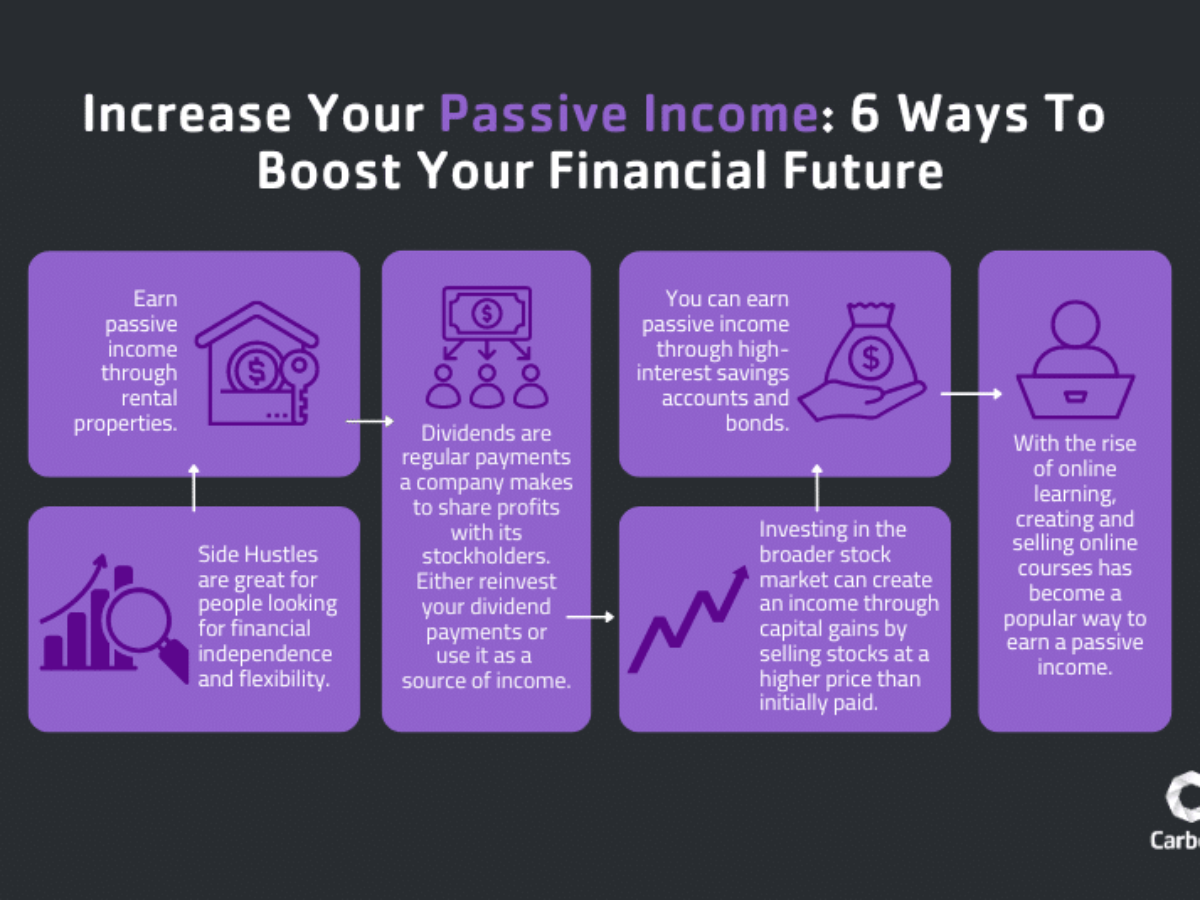
Dividend investing involves purchasing shares in profitable companies that distribute a portion of their earnings to shareholders. The “Dividend Growth” strategy focuses specifically on companies—often referred to as Dividend Aristocrats—that have a history of increasing their payouts annually for 25 years or more. By reinvesting these dividends through a Dividend Reinvestment Plan (DRIP), investors benefit from compounding interest, where they earn returns on their returns. This creates a snowball effect that can eventually cover a significant portion of one’s living expenses.
Real Estate Crowdfunding and REITs
Traditional real estate is a powerful income generator but often demands high management intensity. For a truly passive approach, investors turn to Real Estate Investment Trusts (REITs) or real estate crowdfunding platforms. REITs are companies that own, operate, or finance income-producing real estate across various sectors. By buying shares in a REIT, you gain exposure to the real estate market and receive dividends without the headaches of property management, maintenance, or tenant relations. Crowdfunding platforms allow for even more granular control, letting investors participate in specific commercial or residential developments with relatively low entry points.
Index Funds and the Power of Compounding
While not as “exciting” as individual stock picking, broad-based index funds (like those tracking the S&P 500) are the cornerstone of passive wealth. By capturing the growth of the entire market, index funds offer a low-cost, diversified way to build a portfolio. When combined with a systematic withdrawal strategy, an index fund portfolio functions as a self-sustaining income stream. The key here is the “4% Rule,” a rule of thumb in retirement planning that suggests an investor can withdraw 4% of their portfolio annually without exhausting the principal, adjusted for inflation.
Leveraging Digital Assets for Recurring Revenue
In the digital age, the “Money” niche has expanded to include assets that exist entirely online. These assets often have high profit margins because the cost of reproduction is virtually zero.
Content Monetization through Niche Websites
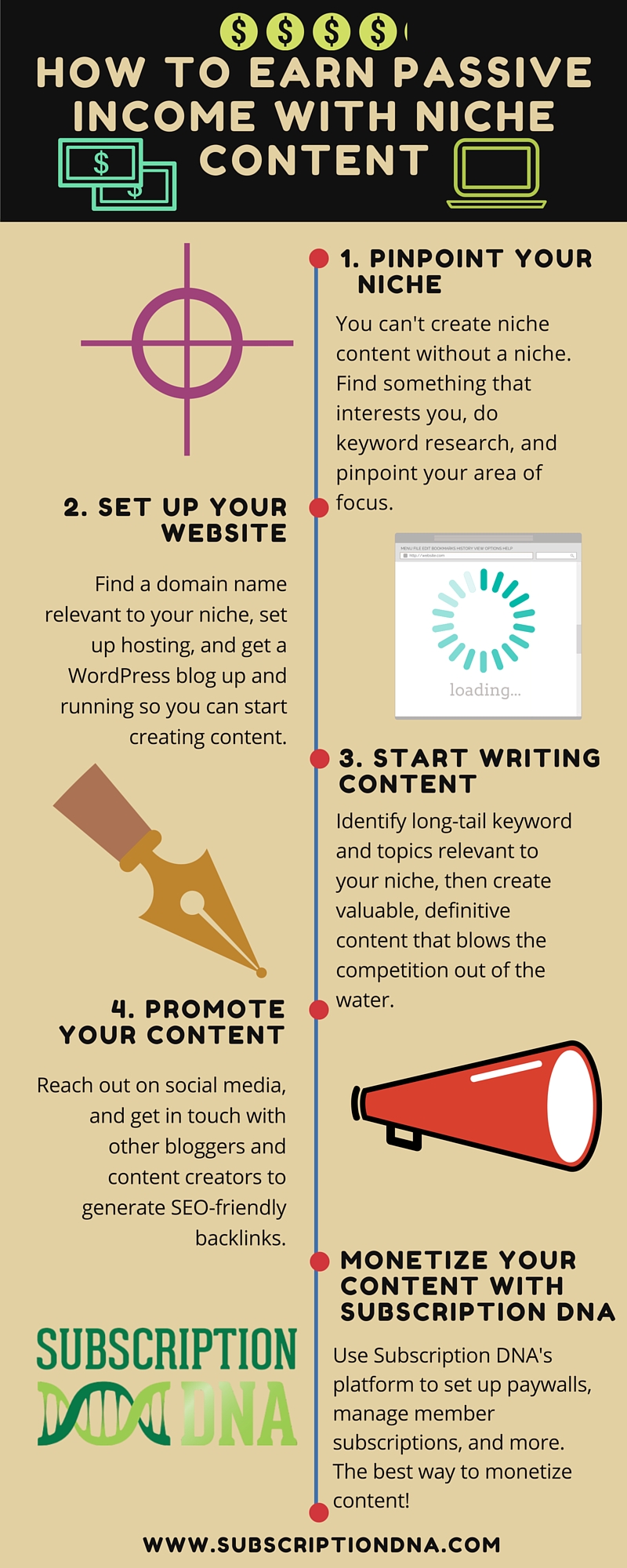
Building a niche authority website is a classic example of time equity. By producing high-quality, SEO-optimized content around a specific financial or consumer topic, you can attract a consistent stream of organic traffic. This traffic can then be monetized through display advertising (via platforms like AdThrive or Mediavine) and affiliate marketing. Once a site ranks well in search engines, it can generate revenue for years with only occasional updates, making it a premier digital asset.
Developing and Licensing Digital Products
The creator economy has opened doors for professionals to package their expertise into digital products. This includes e-books, online courses, and specialized templates. Unlike physical goods, a digital product is created once and sold thousands of times. If the product solves a high-value problem—such as financial planning templates or industry-specific training—it can command a premium price. By utilizing automated sales funnels and email marketing, the entire sales process from lead generation to fulfillment can be handled without human intervention.
Affiliate Marketing Systems
Affiliate marketing involves promoting a third party’s product or service and earning a commission on every sale made through your unique link. Within the finance niche, this is particularly lucrative. Recommending high-quality brokerage firms, credit cards, or insurance products can yield high commissions. The key to making this passive is to integrate these links into evergreen content—reviews or “how-to” guides that continue to attract readers long after they are published.
Business Automation and Scalable Side Hustles
For the entrepreneurial-minded, building a business that operates without your daily presence is the ultimate form of passive income.
E-commerce and Print-on-Demand Models
E-commerce has shifted away from the traditional “warehouse and ship” model toward more automated frameworks. Print-on-Demand (POD) and dropshipping allow entrepreneurs to sell products without holding inventory. When a customer makes a purchase, the order is automatically sent to a third-party supplier who handles the manufacturing and shipping. By focusing on the “Brand” and “Marketing” aspects and automating the logistics, the business owner can generate profit with minimal physical involvement in the supply chain.
Peer-to-Peer (P2P) Lending Platforms
P2P lending allows individuals to act as the bank. Through platforms like Prosper or LendingClub, you can lend small amounts of money to various borrowers in exchange for interest payments. By diversifying your investment across hundreds of different loans, you mitigate the risk of individual defaults. This provides a fixed-income stream that often exceeds the interest rates offered by traditional savings accounts or CDs, though it does come with a higher risk profile.
Managing and Protecting Your Passive Income Portfolio
Building the streams is only half the battle; the other half is ensuring that your income is protected from taxes, inflation, and market volatility.
Tax Implications and Asset Protection
Passive income is often taxed differently than earned income. For instance, “qualified dividends” are taxed at a lower rate than standard salary in many jurisdictions. Furthermore, structuring your passive income activities through a legal entity, such as an LLC or a S-Corp, can provide significant tax advantages and liability protection. Understanding the difference between active and passive activity loss rules is crucial for optimizing your year-end tax position and ensuring you keep more of what you earn.
Reinvestment Strategies for Accelerated Growth
The fastest way to scale passive income is to treat it as “investment capital” rather than “lifestyle capital.” In the early stages, every dollar generated by a dividend or a digital product should be funneled back into acquiring more assets. This creates a compounding effect. If your digital course earns $1,000 a month, using that money to hire a content writer for your niche site or to buy more shares of a REIT will lead to exponential growth.

Diversification and Risk Management
No income stream is perfectly safe. Markets shift, algorithms change, and industries get disrupted. To build a “bulletproof” passive income portfolio, you must diversify across different asset classes. A mix of equities (stocks), real estate, and digital assets ensures that a downturn in one sector won’t collapse your entire financial foundation. The goal is to build a “mosaic of income”—where dozens of small streams flow together to create a powerful and resilient financial river.
In conclusion, the journey to making passive income is a marathon, not a sprint. It requires a disciplined approach to capital allocation, a willingness to invest time upfront, and a strategic mindset regarding automation and scale. By focusing on high-quality financial instruments and scalable digital assets, you can build a sustainable system that provides not just wealth, but the ultimate luxury: the freedom to choose how you spend your time.
aViewFromTheCave is a participant in the Amazon Services LLC Associates Program, an affiliate advertising program designed to provide a means for sites to earn advertising fees by advertising and linking to Amazon.com. Amazon, the Amazon logo, AmazonSupply, and the AmazonSupply logo are trademarks of Amazon.com, Inc. or its affiliates. As an Amazon Associate we earn affiliate commissions from qualifying purchases.