
For fans of the long-running procedural crime drama Criminal Minds, the term “Unsub” is as familiar as the opening monologue about human nature’s darker depths. It’s a word that encapsulates the core mystery and the relentless pursuit of the Behavioral Analysis Unit (BAU) as they delve into the minds of perpetrators whose identities are, initially, a blank slate. More than just a piece of jargon, “Unsub” is the pivot around which every episode revolves, representing the unknown subject whose twisted psychology and patterns of behavior must be meticulously deconstructed before their name can finally be brought to light.
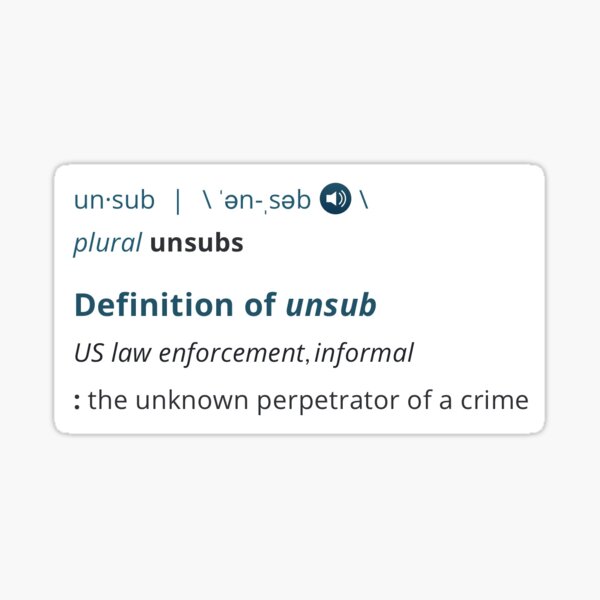
In its simplest form, “Unsub” is an acronym for “Unknown Subject” or “Unknown Suspect.” It serves as the primary designation for the individual responsible for a series of crimes when their identity has not yet been established. Unlike a traditional “suspect,” who might be known to the victim or identified early in an investigation, an Unsub is a phantom, a perpetrator defined only by their actions, their victims, and the clues they leave behind, often unintentionally. The BAU’s entire methodology hinges on transforming this “unknown” into “known” through the scientific application of behavioral analysis and criminal profiling. This process is not merely about solving a crime; it’s about understanding the intricate architecture of a disturbed mind, piecing together a psychological portrait from disparate fragments of evidence, and ultimately preventing further harm. The term “Unsub” thus becomes a powerful narrative device, constantly reminding both the characters and the audience of the daunting challenge at hand: to identify and apprehend a dangerous individual based on the abstract science of behavior.
Deconstructing the “Unsub”: More Than Just a Mystery
The allure of Criminal Minds lies in its exploration of the complex psychological landscapes of both the victims and, more significantly, the perpetrators. The “Unsub” is the central enigma, a puzzle whose pieces are scattered across crime scenes, victimology reports, and psychological profiles. Understanding what an Unsub represents is fundamental to appreciating the show’s intricate storytelling and the profound work of its fictional BAU team.
The Core Definition and Origin
The term “Unsub” is primarily a colloquialism popularized by Criminal Minds, though the concept it represents is deeply rooted in real-world criminal investigative practices. While law enforcement agencies typically refer to such individuals as “unknown perpetrators” or “persons of interest” before identification, “Unsub” became the show’s concise and memorable shorthand. Its brilliance lies in its directness: it immediately tells us that the person responsible for the crime is currently an anonymous entity, defined solely by their actions rather than a name, face, or established connection. This distinction is crucial. A traditional “suspect” might have an alibi to check, acquaintances to interview, or a known background to investigate. An Unsub, however, exists largely within the realm of inference and deduction. The focus shifts entirely from traditional detective work – asking “who did it?” – to the more abstract and psychological question of “who would do it, and why?” This fundamental difference dictates the unique approach taken by the BAU, setting their methods apart from conventional police procedures often depicted in other crime dramas.
The BAU’s Lens: Profiling the Unseen
For the BAU, the Unsub is not just a label; it’s a dynamic entity that takes shape through the meticulous process of criminal profiling. This isn’t about guesswork; it’s about applying forensic psychology and behavioral science to create a detailed portrait of the perpetrator. This portrait encompasses several key elements:
- Modus Operandi (M.O.): The consistent method or system an Unsub uses to commit their crimes. This might include how they select victims, the tools they use, how they gain access, or how they dispose of bodies. The M.O. is learned behavior and can evolve over time.
- Signature: Distinctive, often ritualistic, behaviors that are not necessary for the commission of the crime but fulfill a psychological need for the Unsub. This could be a specific type of wound, an object left at the scene, or a particular post-mortem act. The signature is deeply personal and rarely changes.
- Victimology: A detailed study of the victims, including their demographics, lifestyles, relationships, and any shared characteristics. Understanding why a particular victim was chosen can reveal crucial insights into the Unsub’s motivations and fantasy life.
- Motive: The underlying psychological drive or reason for the Unsub’s actions. While obvious motives like greed or revenge exist, the BAU often uncovers complex psychological motives related to power, control, sexual gratification, or social inadequacy.
- Geographic Profiling: Analyzing the locations of crime scenes to infer the Unsub’s likely home or work base, or their comfort zone.
Through these lenses, the BAU constructs a composite sketch that goes beyond physical appearance, diving into the Unsub’s personality, habits, intelligence level, occupation, social skills, and even their emotional state. This iterative process of narrowing down possibilities, refining the profile with each new piece of evidence, is what makes the hunt for the Unsub so compelling and challenging. It’s a testament to the power of behavioral science in shedding light on the most obscured aspects of human depravity.
The Technological Edge in Unmasking the Unsub
While Criminal Minds is deeply rooted in the human element of psychology and intuition, the modern world, even a fictionalized one, cannot operate without the pervasive influence of technology. The website’s focus on Tech—covering everything from software and AI tools to digital security and productivity—provides a rich framework for understanding how the identification and apprehension of an Unsub are increasingly supported, and even driven, by advanced technological capabilities. The BAU, despite its emphasis on human behavior, would be crippled without the vast array of technological tools at its disposal.
Data, Analytics, and Digital Forensics
In today’s interconnected world, every individual leaves a digital footprint, and even the most careful Unsub can inadvertently provide digital clues. This is where technology becomes an indispensable ally.
- Databases and Software: The BAU frequently utilizes sophisticated federal databases, cross-referencing everything from criminal records and vehicle registrations to DNA samples and fingerprint archives. Specialized software can rapidly process vast amounts of data, identifying patterns or anomalies that human analysts might miss. Imagine an AI-powered system sifting through millions of surveillance footage hours, identifying recurring vehicles or gait patterns, or flagging unusual online purchases that align with a developing Unsub profile.
- Digital Forensics: The digital realm offers a treasure trove of evidence. Computers, smartphones, social media accounts, and even IoT devices can hold critical information about an Unsub’s online activities, communications, and movements. Digital forensic specialists extract data from seized devices, reconstructing timelines, uncovering hidden files, and tracking IP addresses. This could reveal an Unsub’s research into their victims, their communication with potential accomplices, or even their online fantasies that mirror their real-world actions.
- AI and Machine Learning: While perhaps depicted in a more advanced state on television, the potential for AI and machine learning in criminal investigations is immense. These tools can analyze vast datasets of crime statistics, victim profiles, and behavioral patterns to identify correlations or predict potential future actions of an Unsub. Predictive analytics could help law enforcement prioritize investigations, allocate resources more effectively, and even anticipate where an Unsub might strike next based on environmental factors and past behavior, dramatically increasing productivity and precision in the BAU’s operations.
Enhancing Productivity and Precision in Profiling
Technology isn’t just about finding digital breadcrumbs; it’s about making the entire investigative process more efficient, accurate, and ultimately, more productive.

- Streamlined Communication and Collaboration: The BAU’s ability to communicate instantly with local law enforcement, send and receive detailed reports, and share multimedia evidence (photos, videos, 3D crime scene scans) relies heavily on secure digital communication platforms and advanced networking. This reduces delays and ensures all parties have access to the latest intelligence, critical when time is of the essence in preventing an Unsub from striking again.
- From Raw Data to Actionable Intelligence: Tools for data visualization can transform complex raw data into easily understandable charts, graphs, and maps, allowing profilers to quickly grasp geographic patterns, temporal trends, and connections between seemingly unrelated events. Geographic information systems (GIS) software helps visualize crime scene clusters, potential travel routes, and even predict the most probable areas for an Unsub to operate from. This translates directly into more precise profiling, allowing the BAU to formulate more accurate hypotheses about the Unsub’s characteristics and whereabouts.
- Future Implications: As technology continues to evolve, the integration of cutting-edge tech like advanced biometrics, real-time surveillance analytics, and sophisticated cyber-intelligence tools will only strengthen the capabilities of units like the BAU. The ongoing development of AI, capable of identifying subtle behavioral nuances from multiple data sources, promises to revolutionize criminal profiling, moving towards an era where the “Unknown Subject” becomes “Known” with unprecedented speed and accuracy.
The “Brand” of the Unsub and the BAU: Reputation and Patterns
The concept of a “brand” is often associated with businesses, products, or personal identities cultivated for professional purposes. However, when viewed through a broader lens – as a consistent pattern of behavior, a recognizable identity, or a reputation – the idea of branding becomes surprisingly relevant to both the Unsub and the BAU itself. The website’s focus on brand strategy, corporate identity, and reputation provides an intriguing perspective on how these elements play out in the context of criminal investigation.
The Unintentional Branding of a Perpetrator
Ironically, an Unsub often creates a distinct “brand” through their actions, albeit unintentionally. This “brand” is not designed for recognition in a positive sense, but rather serves as a consistent identifier for the BAU.
- Consistency in M.O. and Signature: As discussed, an Unsub’s M.O. and signature are the hallmarks of their crimes. These repeated actions, preferences, and psychological needs form a unique “brand identity.” Whether it’s a specific method of incapacitating victims, a particular type of trophy taken, or a ritualistic staging of a crime scene, these elements become the Unsub’s distinctive “logo” or “trademark.” The BAU meticulously analyzes these patterns to understand the individual behind them. Just as a company’s brand promise dictates its product design and marketing, an Unsub’s psychological drives dictate their criminal behavior, creating a consistent, albeit macabre, brand narrative.
- How the BAU “Reads” This Brand: The profilers are essentially “brand strategists” in reverse. They deconstruct the Unsub’s “brand” by analyzing every aspect of their “product” – the crime – to understand the “creator.” They look for inconsistencies, evolutions, and deviations, all of which tell a story about the Unsub’s psychological state, their development as a criminal, and their potential future actions. This analytical approach, focused on identifying and interpreting a distinct pattern of behavior, mirrors how brand experts decipher consumer trends and market identities.
- Impact on Community Reputation: An Unsub’s actions can also profoundly affect the “brand” or reputation of a community or city. A string of unsolved crimes can foster fear, erode public trust in law enforcement, and even deter tourism or economic development. The BAU’s goal is not only to apprehend the Unsub but also to restore the community’s sense of safety and repair its tarnished reputation, much like a crisis management team works to restore a corporate brand’s image after a scandal.
The FBI’s BAU: A Brand of Expertise
In contrast to the Unsub’s unintentional brand, the FBI’s Behavioral Analysis Unit has, partly thanks to Criminal Minds, cultivated a powerful and respected brand of expertise, authority, and systematic problem-solving.
- How Criminal Minds Solidified the BAU’s Reputation: The show has played a significant role in popularizing the concept of criminal profiling and elevating the public perception of the BAU. It depicts a team of highly intelligent, empathetic, and dedicated individuals who use cutting-edge psychological techniques to solve the most heinous crimes. This consistent portrayal has built a strong brand image for the fictional (and by extension, real) BAU as the go-to experts for complex, psychologically driven investigations.
- Trust, Authority, and Systematic Approach as Brand Pillars: The BAU’s “brand pillars” are built on trust, authority, and a methodical approach. Viewers trust the BAU team to ultimately catch the Unsub, even when local law enforcement is overwhelmed. Their authority comes from their specialized knowledge and the prestige of the FBI. Their systematic approach – gathering facts, developing a profile, refining it, and executing an arrest – demonstrates a commitment to a rigorous, data-driven process, reinforcing their credibility and competence. This mirrors how successful corporate brands establish trust and authority through consistent quality, clear messaging, and reliable performance.
- Public Perception Shaped by Media: The show’s portrayal has shaped public perception of criminal psychology and federal law enforcement. It has even inspired many to pursue careers in forensic psychology or law enforcement, demonstrating the powerful influence of media in “marketing” a particular profession or methodology. This is a classic example of how narrative and consistent messaging can build a strong, recognizable, and influential “brand” in the public consciousness.
The Tangential Role of Money in Understanding and Solving Crimes
While the psychological underpinnings of an Unsub’s behavior are central to Criminal Minds, the website’s focus on “Money” – personal finance, investing, business finance, and online income – offers a fascinating, albeit often secondary, dimension to understanding crime and its resolution. Money can be both a powerful motivator for criminal acts and a crucial pathway to identifying perpetrators.
Financial Motives and Forensic Accounting
Not all Unsubs are driven by deep-seated psychological pathologies unconnected to material gain. Many crimes, even those with a psychological component, have a financial root, linking directly to topics explored within the “Money” section.
- Financial Motives as a Driver: While Criminal Minds often focuses on serial killers with complex psychological signatures, there are many criminal enterprises where financial gain is the primary, or even sole, motivator. Fraud, embezzlement, kidnapping for ransom, organized crime, and even some forms of robbery or murder can be directly linked to the pursuit of wealth, escape from debt, or the protection of illicit income streams. Understanding these financial drivers is a critical part of a comprehensive criminal profile, as it can reveal the Unsub’s network, resources, and risk tolerance.
- Role of Financial Trails in Identifying Unsubs: In cases driven by financial motives, the “money trail” often becomes the most potent weapon for identification. Forensic accountants and financial investigators analyze banking records, credit card transactions, digital currency movements, investment portfolios, and tax records to uncover illicit activities and identify individuals involved. For an Unsub engaged in financial crime, their meticulous planning might be undone by a single misplaced transaction or an unexplained surge in assets. Tools and strategies used in personal finance and business finance can be inverted to track and expose criminal financial networks, effectively turning legitimate financial data analysis into a tool for unmasking the unknown. Even for psychologically driven Unsubs, financial means (or lack thereof) can dictate their access to resources, their ability to travel, or their choice of victims (e.g., targeting wealthy individuals).

The Economic Cost of Crime and the Value of Resolution
Beyond individual motives, the broader economic impact of crime is immense, and the swift identification and apprehension of an Unsub represent a significant financial benefit to society.
- Financial Burden on Society: Crime carries a staggering economic cost. This includes direct costs such as law enforcement salaries, judicial system expenses, incarceration costs, victim compensation, and property damage. Indirect costs are even higher, encompassing lost productivity, decreased property values, impacts on tourism, and the psychological toll on communities that require extensive public health resources. An active Unsub creates an ongoing financial drain, both through the direct costs of their crimes and the resources dedicated to their pursuit.
- Economic Incentive to Identify Unsubs Swiftly: Every day an Unsub remains at large, the financial burden on society grows. Each new crime adds to investigative costs, victim services, and the overall disruption of economic activity. Therefore, there is a clear economic incentive to identify and apprehend Unsubs as quickly as possible. The efficiency of units like the BAU, enhanced by technology and systematic profiling, translates directly into a reduction of these costs. Faster resolution means fewer victims, less property damage, and a quicker restoration of community stability, representing a tangible financial return on investment in specialized law enforcement capabilities. This connection highlights how effective problem-solving, even in criminal justice, has profound economic implications, mirroring the efficiency and risk management strategies discussed in business finance.
In conclusion, the term “Unsub” on Criminal Minds is far more than mere television jargon. It represents the ultimate challenge in criminal investigation: to reconstruct the identity and motives of a dangerous perpetrator from behavioral fragments. This quest, while intensely human and psychological, is increasingly augmented by advanced technology, shaping a distinct “brand” for both the criminal and the crime-solvers, and carrying significant, often overlooked, financial ramifications for society. Understanding the “Unsub” is to understand the intricate interplay of psychology, technology, and societal impact in the relentless pursuit of justice.
aViewFromTheCave is a participant in the Amazon Services LLC Associates Program, an affiliate advertising program designed to provide a means for sites to earn advertising fees by advertising and linking to Amazon.com. Amazon, the Amazon logo, AmazonSupply, and the AmazonSupply logo are trademarks of Amazon.com, Inc. or its affiliates. As an Amazon Associate we earn affiliate commissions from qualifying purchases.