
That little red light, often shaped like a battery, illuminating on your dashboard can be a source of significant anxiety for any driver. It’s a visual alert that something isn’t quite right with your car’s electrical system, and more specifically, its ability to keep itself powered. While the immediate thought might be a dead battery, the reality is often more nuanced, encompassing a range of potential issues that could impact your vehicle’s performance and even leave you stranded. Understanding what this warning light signifies is crucial for proactive maintenance and avoiding costly repairs. This article, drawing upon our expertise in tech, brand, and money, will demystify the car battery light, exploring the underlying technology, the implications for your vehicle’s brand reputation, and the financial considerations involved in addressing the problem.

The Heart of the System: Understanding Your Car’s Charging System
Your car’s battery is not solely responsible for starting your engine. Once the engine is running, it’s the charging system that takes over, powering all the electrical components and crucially, recharging the battery. This intricate system is composed of several key players, each with a vital role to play:
The Battery: The Power Reserve
The battery itself is essentially a high-capacity capacitor that stores electrical energy. It’s responsible for providing the initial surge of power needed to crank the starter motor and bring the engine to life. Beyond that initial jolt, it acts as a buffer, supplying power when electrical demands temporarily exceed the alternator’s output, and absorbing excess voltage when the alternator is producing more than is needed. Modern car batteries are typically lead-acid batteries, but advancements in technology are seeing the rise of lithium-ion batteries in some electric and hybrid vehicles, offering lighter weight and longer lifespans.
The Alternator: The Power Generator
The alternator is the workhorse of your charging system. Driven by a belt connected to the engine’s crankshaft, it converts mechanical energy into electrical energy. As the engine runs, the alternator spins, producing alternating current (AC) which is then converted to direct current (DC) by a component called a rectifier, making it compatible with your car’s electrical system. The output of the alternator varies with engine speed, meaning it produces more electricity when you’re driving at higher RPMs and less when you’re idling.
The Voltage Regulator: Maintaining Equilibrium
The voltage regulator is the brain of the charging system. It monitors the electrical output of the alternator and ensures that the voltage supplied to the battery and the rest of the car’s electrical system remains within a safe and optimal range. Too little voltage, and the battery won’t charge properly, leading to dim lights and a weak electrical system. Too much voltage, and you risk damaging sensitive electronic components and even the battery itself. The voltage regulator is typically integrated into the alternator assembly, though in some older vehicles, it might be a separate unit.
The Warning Light: The Indicator of Imbalance
The battery warning light illuminates when the car’s computer detects a discrepancy between the voltage being produced by the charging system and the voltage required to properly operate the vehicle and recharge the battery. This doesn’t always mean the battery itself is faulty; it usually points to an issue within the charging system that is preventing the battery from receiving its necessary charge.
Why is My Battery Light On? Common Culprits and Their Technological Roots
When the battery light illuminates, it’s a signal that the charging system is not functioning as intended. Several components can contribute to this malfunction, each with its own technological underpinnings.
A Failing Alternator: The Powerhouse in Decline
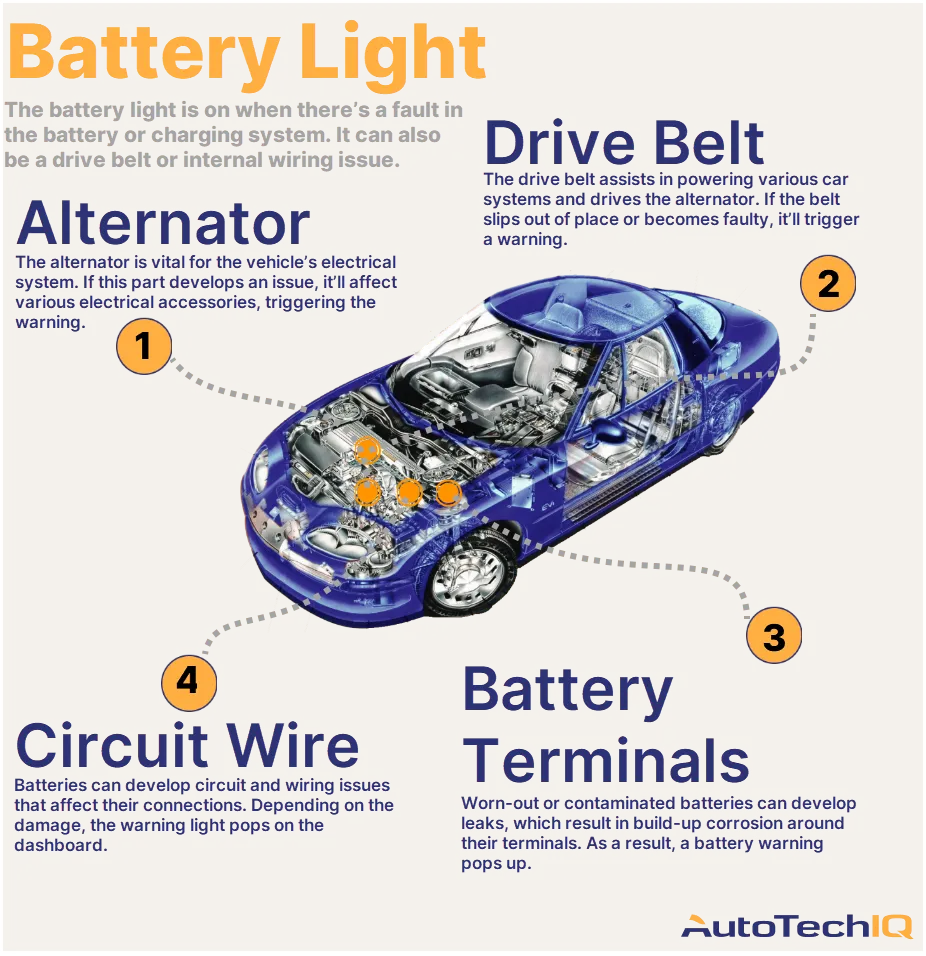
The most common reason for the battery light to come on is a failing alternator. Over time, the internal components of the alternator, such as the brushes, diodes, or bearings, can wear out.
- Worn Brushes: These conductive contacts transfer electricity from the stationary part of the alternator to the rotating rotor. As they wear down, they make less consistent contact, reducing the alternator’s output.
- Faulty Diodes (Rectifier): The rectifier converts AC to DC. If one or more diodes fail, the alternator will produce less DC power, or even no power at all.
- Worn Bearings: These allow the rotor to spin smoothly. If they become noisy or seize, they can hinder the alternator’s rotation and eventually lead to failure.
A failing alternator will progressively struggle to keep up with the electrical demands of the vehicle, leading to a gradual drain on the battery. This is why you might notice dimming headlights, a sluggish-feeling engine, or electrical accessories malfunctioning before the battery light becomes a constant fixture.
A Loose or Corroded Serpentine Belt: The Unsung Connector
The serpentine belt, a long, multi-grooved belt, drives several accessories from the engine’s crankshaft, including the alternator. If this belt becomes loose, worn, or slips, it won’t be able to spin the alternator at the correct speed, or at all.
- Belt Tensioner: A faulty belt tensioner can lead to a loose belt. This component uses a spring or hydraulic mechanism to maintain optimal belt tension.
- Belt Wear and Tear: Over time, the rubber of the serpentine belt can degrade, crack, or fray, reducing its grip and leading to slippage.
- Corrosion on Pulleys: Accumulation of dirt, rust, or other debris on the alternator pulley can reduce the belt’s grip.
A slipping serpentine belt is often accompanied by a squealing noise, especially when accelerating or turning the steering wheel.
A Bad Battery: The Power Source Itself
While the battery light often points to the charging system, the battery itself can be the root cause of the problem. A battery’s lifespan is finite, typically ranging from 3 to 5 years, depending on usage and climate.
- Sulfation: Over time, lead sulfate crystals can build up on the battery plates, reducing its capacity to hold a charge.
- Internal Shorts: Damage to the separators between the battery plates can cause internal shorts, leading to a significant loss of power.
- Age and Extreme Temperatures: Older batteries are more prone to failure, and extreme heat or cold can significantly accelerate battery degradation.
If your battery is at the end of its lifespan, it might not be able to accept a sufficient charge from the alternator, triggering the warning light.
Wiring and Connection Issues: The Unseen Obstacles
The electrical system is a complex network of wires and connectors. A loose connection, corroded terminal, or damaged wire within the charging system can interrupt the flow of electricity.
- Corroded Battery Terminals: The terminals where the battery cables connect can corrode, creating a barrier that impedes electrical flow.
- Loose Alternator Connections: The main power wire and ground wire connecting to the alternator need to be secure. A loose connection can lead to intermittent charging.
- Damaged Wiring Harnesses: The wiring harnesses that carry electrical signals throughout the vehicle can be damaged by vibration, heat, or physical impact.
These less obvious issues can be frustrating to diagnose but are critical to address for a functioning charging system.
The Brand and Financial Implications of a Battery Light
Beyond the immediate concern of driving with a warning light, the implications of a faulty charging system extend to your vehicle’s brand value and your personal finances.
Maintaining Your Vehicle’s Brand Integrity
For manufacturers, the battery light is a critical indicator of a core system’s health. A consistently illuminated battery light can be perceived by consumers as a sign of unreliability, tarnishing the brand’s reputation for dependability. In the digital age, where online reviews and social media discussions are paramount, negative experiences related to common issues like charging system failures can spread rapidly.
- Customer Satisfaction: A vehicle with a faulty charging system can lead to frustrating breakdowns and costly repairs, negatively impacting customer satisfaction and loyalty.
- Resale Value: A history of electrical problems can significantly reduce a car’s resale value. Potential buyers will be wary of a vehicle that has demonstrated issues with its fundamental power supply.
- Brand Perception: Consistent issues with charging systems can contribute to a brand being perceived as less robust or technologically advanced, impacting future sales and market position.
Proactive maintenance and addressing warning lights promptly are not just about keeping your car running; they are about preserving the long-term value and reputation of your vehicle and its brand.
The Financial Fallout: From Minor Fixes to Major Overhauls
The cost associated with a battery light can vary dramatically, from relatively minor repairs to substantial investments. Understanding these potential costs can help you budget and prioritize repairs.
- Minor Repairs: Replacing a worn serpentine belt or cleaning corroded battery terminals are generally inexpensive repairs, often costing less than $200.
- Alternator Replacement: This is typically the most significant expense, with prices ranging from $400 to $1,000 or more, depending on the make and model of the vehicle and whether you opt for an OEM (Original Equipment Manufacturer) or aftermarket part.
- Battery Replacement: A new car battery can cost between $100 and $300, again varying by brand and type.
- Diagnostic Fees: If the cause of the battery light isn’t immediately obvious, you may incur diagnostic fees from a mechanic, which can range from $50 to $150.
Ignoring the battery light can lead to more severe and expensive problems down the line. A completely drained battery can leave you stranded, requiring a tow truck. Furthermore, a malfunctioning charging system can overcharge or undercharge your battery, shortening its lifespan and potentially damaging other electrical components, leading to a cascade of costly repairs.
Proactive Steps and Technological Solutions
Preventing the battery light from becoming a persistent problem relies on a combination of regular maintenance and embracing available technological solutions.
Regular Maintenance: The Foundation of Reliability
The most effective way to avoid the anxiety and expense of a battery light is through diligent preventative maintenance.
- Battery Inspection: Regularly check your battery terminals for corrosion. Clean them with a wire brush and a baking soda and water solution if you see any buildup.
- Belt Checks: Inspect your serpentine belt for cracks, fraying, or excessive wear. Pay attention to any squealing noises, which can indicate a slipping belt.
- Professional Inspections: During routine oil changes or other scheduled maintenance, ask your mechanic to specifically inspect your charging system, including the alternator and battery voltage.
- Battery Testing: Many auto parts stores offer free battery testing. It’s a good practice to have your battery tested annually, especially as it approaches the 3-year mark.

Leveraging Technology for Early Detection and Diagnosis
The automotive industry is increasingly integrating advanced technology to improve diagnostics and driver awareness.
- OBD-II Scanners: For the tech-savvy individual, an On-Board Diagnostics (OBD-II) scanner can read error codes from your car’s computer, providing specific information about charging system malfunctions. These devices are relatively inexpensive and can save you money on diagnostic fees.
- Smart Battery Testers: Modern battery testers can provide a comprehensive report on a battery’s health, including its cranking amps, state of charge, and internal resistance, giving a more accurate picture than a simple voltage check.
- Vehicle Health Monitoring Systems: Some newer vehicles come equipped with sophisticated vehicle health monitoring systems that can alert you to potential issues with your charging system before the dashboard light even illuminates. These systems often use predictive analytics to forecast component failures.
- Mobile Diagnostic Apps: As technology advances, mobile apps are emerging that can connect to your car’s diagnostic port and provide real-time data and alerts on various vehicle systems, including charging performance.
In conclusion, the battery light on your car’s dashboard is more than just an indicator; it’s a vital communication from your vehicle about the health of its electrical heart. By understanding the technology behind the charging system, recognizing the common causes of failure, and appreciating the brand and financial implications, you can approach this warning with knowledge and confidence. Regular maintenance, coupled with an awareness of emerging technological solutions, will ensure your vehicle remains reliable, its brand value intact, and your finances protected from unexpected and costly repairs. When that little red light appears, don’t ignore it – address it, and keep your journey powered safely.
aViewFromTheCave is a participant in the Amazon Services LLC Associates Program, an affiliate advertising program designed to provide a means for sites to earn advertising fees by advertising and linking to Amazon.com. Amazon, the Amazon logo, AmazonSupply, and the AmazonSupply logo are trademarks of Amazon.com, Inc. or its affiliates. As an Amazon Associate we earn affiliate commissions from qualifying purchases.