
The quest for the perfect diamond often begins with a singular desire: to find a stone that truly stands out. While carat weight is the most common metric people associate with a diamond’s size, the truth is far more nuanced. “Biggest” isn’t merely about mass; it’s about perceived size, visual impact, and the sheer brilliance that commands attention. In a world where every glimmer counts, understanding which diamond cuts maximize this visual grandeur can transform your choice from a simple purchase into a strategic investment in sparkle. This exploration delves into the fascinating interplay of physics, artistry, technological innovation, brand marketing, and financial acumen that determines a diamond’s perceived magnitude, helping you secure a stone that looks truly magnificent.

The Illusion of Grandeur: Understanding Perceived Size
When we talk about a diamond looking “big,” we’re often discussing an optical illusion—a clever manipulation of light and geometry that makes a stone appear larger than its carat weight might suggest. This isn’t just about the physical dimensions, but how the diamond interacts with light and how its shape occupies space, creating an impactful visual statement.
Beyond Carat Weight: Key Factors Influencing Visual Impact
Carat weight is a measure of a diamond’s mass, with one carat equaling 200 milligrams. While a higher carat weight generally means a larger diamond, it doesn’t guarantee a bigger look. Two diamonds of the exact same carat weight can appear vastly different in size due to their cut. Several factors contribute to this visual deception:
- Table Size: The table is the large, flat facet on the top of the diamond. A larger table, relative to the diamond’s overall diameter, can create a broader face-up appearance. However, too large a table can compromise brilliance by allowing light to pass straight through rather than reflecting it.
- Depth Percentage: This refers to the depth of the diamond from the table to the culet, expressed as a percentage of its width. A shallower depth percentage (within acceptable limits) can spread the diamond’s weight across a wider diameter, making it appear larger. Conversely, a very deep diamond will “hide” more of its weight in its pavilion, making it look smaller from above.
- Girdle Thickness: The girdle is the narrow band that separates the crown from the pavilion. An overly thick girdle adds weight without contributing to the diamond’s face-up size, essentially making it look smaller for its carat weight. A thin or medium girdle is ideal for maximizing perceived size.
- Facet Arrangement and Proportions: The number, size, and arrangement of facets determine how light enters, reflects, and exits the diamond. Expertly cut facets are crucial for maximizing brilliance, fire (flashes of color), and scintillation (sparkle). These optical properties, while not directly increasing physical size, contribute immensely to a diamond’s overall visual impact and perceived grandeur. A diamond that sparkles intensely often appears more prominent and vibrant than a duller stone of the same dimensions.
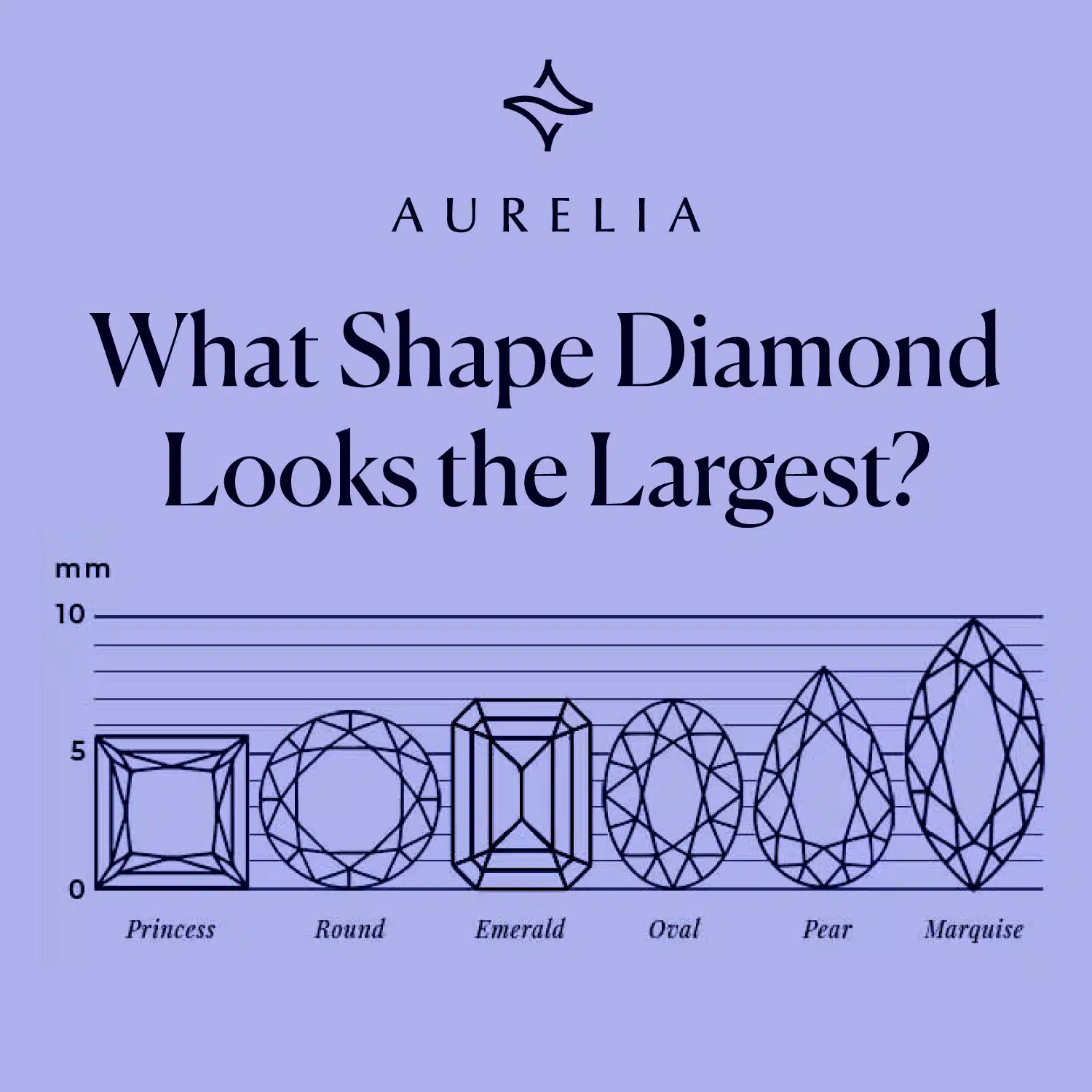
- Overall Shape and Elongation: Certain shapes inherently lend themselves to appearing larger due to their elongated dimensions. These shapes create a greater surface area relative to their carat weight, making them excellent choices for those prioritizing visual size.
The Top Contenders: Cuts Renowned for Appearing Larger
While the classic Round Brilliant is often lauded for its unparalleled brilliance and fire, several fancy cuts are specifically known for maximizing perceived size relative to their carat weight. These cuts strategically distribute their weight to offer a larger face-up appearance:
- Marquise Cut: This elongated, boat-shaped diamond boasts pointed ends and a wide body. Its length creates a significant surface area that makes it appear larger than a round diamond of the same carat weight. The marquise cut also has the added benefit of making the wearer’s finger appear longer and more slender.
- Oval Cut: A graceful and increasingly popular choice, the oval cut offers a brilliant sparkle similar to a round diamond but with an elongated shape. This elongation gives it excellent “spread,” making it look considerably larger than a round brilliant of equivalent weight, while still retaining a timeless elegance.
- Pear Cut: Combining the rounded end of an oval with the pointed end of a marquise, the pear-shaped diamond is both unique and visually expansive. Its teardrop shape creates a large face-up dimension and, like the marquise, can elongate the finger. When set with the point facing the nail, it draws the eye upward, enhancing its perceived size.
- Emerald Cut: A step-cut diamond with rectangular facets, the emerald cut emphasizes clarity and the elegant lines of the stone. While it doesn’t possess the same fiery brilliance as a round cut, its large, open table and elongated shape provide a striking, sophisticated appearance that looks substantial. Its broad, reflective surfaces showcase the diamond’s purity and depth, creating an impressive visual footprint.
- Radiant Cut: A hybrid cut, the radiant combines the elegant, trimmed corners of an emerald cut with the brilliant faceting of a round or princess cut. This fusion offers the best of both worlds: the perceived size of an elongated shape and the captivating sparkle that makes a diamond truly pop. Its extensive faceting allows for incredible light return, contributing to its “big look.”
These cuts offer distinct advantages for those prioritizing visual size, demonstrating that the right choice can significantly amplify a diamond’s presence without necessarily increasing its carat weight.
Leveraging Technology for Optimal Sparkle and Size Perception (Tech Focus)
The diamond industry, traditionally steeped in manual craftsmanship, has been dramatically transformed by technological advancements. Today, tech plays a pivotal role not only in the precise creation of diamond cuts but also in helping consumers make informed decisions about perceived size and visual impact. From AI-driven analysis to immersive digital tools, technology is redefining how we understand and choose diamonds.
Precision Cutting and AI-Driven Analysis
The art of diamond cutting, once solely the domain of master craftsmen, is now augmented by cutting-edge technology that ensures unprecedented precision and optimization.
- CAD/CAM (Computer-Aided Design and Manufacturing): This technology is at the heart of modern diamond cutting. Jewelers use CAD software to design precise facet patterns and simulate how light will interact with the stone. This allows them to virtually “cut” a rough diamond multiple times, experimenting with different proportions to determine the optimal balance between weight retention and aesthetic appeal—including maximizing the face-up size and brilliance. CAM then translates these designs into exact instructions for laser cutting and automated polishing machines. This ensures that every angle, every facet, is precisely placed to achieve peak light performance and spread, a crucial factor in perceived size.
- Laser Cutting and Automated Polishing: These technologies have revolutionized the cutting process, allowing for intricate facet patterns that were once impossible to achieve manually. Lasers provide unparalleled accuracy, minimizing material waste and creating perfectly symmetrical facets. Automated polishing systems ensure a consistent, flawless finish, further enhancing a diamond’s sparkle and its ability to appear larger and more vibrant.
- 3D Modeling and Light Performance Software: Before a single cut is made, sophisticated software can analyze the raw diamond and predict how light will travel through it. These tools create detailed 3D models, simulating brilliance, fire, and scintillation under various lighting conditions. For consumers and cutters alike, this means the ability to identify the cut that will yield the largest-looking diamond with the best optical properties, preventing costly errors and ensuring maximum visual impact.
- AI in Grading and Optimization: Artificial intelligence is increasingly being deployed in diamond grading laboratories. AI algorithms can analyze vast datasets of diamond proportions, facet angles, and light return measurements. They can identify optimal ranges that consistently lead to diamonds with superior brilliance and, critically, a larger perceived size. This AI-driven analysis provides objective, data-backed insights, moving beyond subjective human assessment to recommend cuts that deliver maximum visual value, helping both cutters maximize their yield and consumers make the “biggest” choice. AI can even suggest adjustments to rough stones to optimize for desired aesthetic outcomes like spread or brilliance.
Digital Tools for Informed Decisions
Beyond the cutting floor, technology empowers consumers with powerful tools to visualize and compare diamonds, making the quest for the “biggest-looking” stone more accessible and personalized than ever.
- Virtual Try-On Apps: Augmented reality (AR) technology has brought the jewelry store experience into our homes. Virtual try-on apps allow users to “wear” different diamond cuts and sizes on their own hand using their smartphone camera. This immersive experience helps consumers visualize how various cuts—like a marquise vs. an oval—appear on their finger, directly impacting their perception of size and fit before any physical purchase. It’s an invaluable tool for understanding real-world visual impact.
- Advanced Online Visualizers: Reputable online diamond retailers offer high-resolution 360-degree videos and interactive 3D models of their diamonds. These visualizers allow buyers to examine the diamond from every angle, zoom in on facets, and even see how it sparkles under different virtual lighting conditions. By comparing multiple diamonds side-by-side using these tools, consumers can meticulously assess factors like table size, depth, and overall spread, directly comparing perceived sizes without ever needing to see them in person. This transparency, facilitated by technology, is crucial for making confident decisions.
- Data Analytics on Cut Performance: Online platforms often provide comprehensive data analytics on diamond performance, including visual size comparisons. They aggregate information on how different cuts and proportions relate to their face-up diameter. This data-driven approach helps consumers identify cuts that consistently offer a larger visual footprint for their carat weight, guiding them toward the most visually impactful options based on objective metrics.
- Digital Security and Authenticity: The digital age also brings concerns about authenticity. Blockchain technology and other digital verification methods are being integrated to provide immutable records of a diamond’s journey, from mine (or lab) to finger. This ensures that the specifications presented online—including details pertinent to perceived size like dimensions and cut grade—are accurate and tamper-proof, building trust and safeguarding consumer investment in a digitally transparent marketplace.
Through these technological innovations, the journey to finding a diamond that looks the biggest becomes not just an aesthetic pursuit, but a highly informed and digitally empowered decision.
The Brand of Brilliance: Marketing Perceived Size (Brand Focus)
In the competitive world of luxury, a diamond is more than just a stone; it’s a symbol, a statement, and often, a brand. Jewelers and designers have long understood the allure of perceived size, employing sophisticated branding and marketing strategies to highlight specific cuts and designs that enhance a diamond’s visual magnitude. This approach doesn’t just sell diamonds; it helps consumers make a personal statement, aligning their choice with their individual brand identity.
Crafting Desirability: How Brands Highlight Visual Magnitude
The way a diamond is presented and discussed by a brand significantly influences our perception of its size and desirability. Brands are masters at storytelling and visual communication, particularly when it comes to emphasizing visual impact.
- Proprietary Cuts as Brand Differentiators: Many high-end and innovative jewelry brands develop their own proprietary diamond cuts. These cuts, often with unique faceting patterns or slightly altered proportions, are meticulously designed to maximize brilliance and, crucially, perceived size. Brands like Hearts On Fire (known for their “World’s Most Perfectly Cut Diamond”) or specific designers with signature cushion or princess cuts, market these as superior for their optical performance and “spread.” By giving these cuts a unique name and intellectual property protection, they build a strong brand around the promise of exceptional sparkle and a larger visual presence.
- Marketing Language and Imagery: Brands strategically use language that emphasizes “visual impact,” “finger coverage,” “presence,” and “magnificence” rather than solely focusing on carat weight. Their advertising campaigns feature stunning imagery of diamonds that look expansive and brilliant, often showcasing them on models’ hands to illustrate the dramatic scale. This messaging subtly reinforces the idea that their diamonds offer more “wow factor” for your money, focusing on the experience of owning a visually significant diamond.
- Setting Design as a Branding Tool: A diamond’s setting plays a critical role in enhancing its perceived size, and brands leverage this expertly. Halo settings, where a central diamond is encircled by smaller diamonds, are a classic example; they create the illusion of a much larger single stone. Brands often develop signature halo designs or utilize minimal settings (like thin bands and delicate prongs) that allow the center stone to take center stage, emphasizing its size. A brand’s reputation can also be built on its expertise in crafting settings that maximize the beauty and apparent size of its diamonds, becoming synonymous with quality and clever design.
- Reputation and Trust: Over time, jewelers and brands build a reputation for consistent quality and ethical practices. A brand known for offering diamonds that are expertly cut to maximize perceived size, coupled with transparent grading and sourcing, fosters trust. This trust is a powerful brand asset, assuring customers that they are investing in a diamond that not only looks impressive but is also ethically sound and represents true value.
Personal Statements: Your Diamond, Your Brand Identity
Beyond the corporate identity of the jeweler, a diamond itself becomes a powerful tool for personal branding—a reflection of individual style, aspirations, and values. The choice of a diamond cut that looks “biggest” often communicates a specific persona.
- Expression of Style and Confidence: A visually prominent diamond can convey a sense of boldness, confidence, and a desire to make a statement. For many, a larger-looking diamond isn’t just about showing off; it’s about expressing their personal flair and celebrating significant life milestones with a tangible symbol of grandeur. Whether it’s the sleek elegance of an emerald cut or the romantic spread of an oval, the chosen shape tells a story about the wearer’s aesthetic preferences.
- Aligning with Personal Branding: In an era where personal branding is increasingly important, every choice, from fashion to accessories, contributes to one’s narrative. Opting for a diamond that looks bigger can align with a personal brand that values prominence, success, and making an impact. It’s a subtle yet powerful non-verbal cue that communicates ambition and a taste for the extraordinary.
- Social and Cultural Trends: The popularity of certain diamond cuts is often influenced by celebrity endorsements, fashion trends, and broader cultural shifts. Brands capitalize on these trends, promoting cuts that are currently in vogue for their visual impact. For example, the recent resurgence of oval and pear cuts, often seen on influencers and celebrities, is partly driven by their ability to appear larger and more contemporary. Choosing a fashionable, large-looking diamond can also be a way for individuals to signal their awareness of current trends and their connection to a contemporary aesthetic.
- Corporate Identity (Indirect Influence): From a business perspective, jewelers whose corporate identity is built around offering “value” or “affordable luxury” will naturally gravitate towards sourcing and promoting cuts that offer the best perceived size-to-cost ratio. They understand their target demographic often seeks maximum visual return on their investment, and their branding reflects this commitment.
Ultimately, the brand of a diamond—both the jeweler’s and the wearer’s—is intricately linked to its perceived size. It’s about crafting desirability, communicating value, and allowing individuals to make a sparkling statement that resonates with their unique identity.
Smart Spending: Maximizing Visual Impact for Your Budget (Money Focus)
For many, the desire for a visually impressive diamond must be balanced with practical financial considerations. The good news is that achieving a “biggest look” doesn’t necessarily require an exorbitant budget. With a strategic approach, focusing on the right cuts and smart compromises, you can maximize your diamond’s visual impact without overspending. This involves understanding value beyond just carat weight and making informed choices that stretch your money further.
Value vs. Volume: Getting the Biggest Look Without Breaking the Bank
The secret to maximizing visual impact on a budget lies in understanding where to strategically allocate your resources and where to make smart compromises among the 4Cs (Carat, Cut, Color, Clarity).
- Strategic Cut Selection: As discussed, certain cuts inherently appear larger than others for the same carat weight. Opting for elongated shapes like marquise, oval, or pear can give you a significantly larger face-up area compared to a round brilliant of identical carat weight, often at a slightly lower price point per carat for fancy shapes. This is one of the most effective ways to get more “volume” for your money.
- Balancing the 4Cs for Visual Impact: Instead of prioritizing a high carat weight above all else, focus on an excellent cut grade. A well-cut diamond will sparkle more intensely, making it appear more vibrant and, by extension, more noticeable and impactful, regardless of its exact dimensions. Then, strategically compromise on color and clarity. Moving down just one or two grades (e.g., from D to G color, or from FL to VS2/SI1 clarity) can result in substantial cost savings without a noticeable difference to the naked eye. An “eye-clean” SI1 or VS2 diamond with a G-H color can look just as stunning as a flawless, colorless stone, especially when brilliance is maximized by an excellent cut, allowing you to allocate more budget to a larger perceived size.
- Setting as a Budget Enhancer: The right setting can magnify a diamond’s perceived size without adding to its carat weight. A halo setting, where small diamonds encircle the center stone, can make the main diamond appear half a carat to a full carat larger. Thin bands and delicate prongs also make the center stone look more prominent. These setting choices are often much more cost-effective than simply buying a physically larger diamond.
- Lab-Grown Diamonds: The emergence of lab-grown diamonds has been a game-changer for budget-conscious buyers seeking maximum visual impact. Lab-grown diamonds are chemically, physically, and optically identical to natural diamonds but typically cost 50-70% less. This significant price difference allows consumers to purchase a much larger diamond—both in carat weight and perceived size—or a higher-quality diamond within the same budget, without compromising on sparkle or beauty. They offer an unparalleled “biggest look” for your money.
- Financial Tools and Comparison Shopping: Utilizing online financial tools and comparison websites is crucial. These platforms allow you to filter diamonds by perceived size (often measured in millimeters across the top), compare prices across different cuts and quality grades, and visualize the impact of various compromises. This data-driven approach ensures you make the most financially savvy decision to achieve your desired visual outcome.

Investment and Resale Considerations
While the primary goal might be to get the “biggest look,” it’s also wise to consider the long-term financial implications of your diamond purchase, including its potential for holding value or resale.
- Popularity vs. Resale Value: Generally, classic cuts like the round brilliant tend to hold their resale value better due to consistent demand and timeless appeal. However, popular fancy cuts that offer a great spread, like ovals and pears, have also seen strong demand in recent years. If you choose a fancy cut primarily for its perceived size, be aware that market trends can fluctuate. While a “bigger look” is desirable for personal enjoyment, it doesn’t automatically translate to higher investment value if other 4Cs are significantly compromised.
- The “Wow” Factor vs. Market Value: A diamond chosen solely for its “looks biggest” factor might not command a premium on the secondary market if its cut quality is poor (leading to a dull appearance) or if its color and clarity grades are too low. Investment-grade diamonds typically maintain a balance of all 4Cs, with cut often being paramount for maximizing both beauty and value retention. Focusing on an excellent cut, even with slight compromises in color/clarity, is generally a safer bet for both visual impact and potential resale.
- Online Income and Side Hustles (Indirect): Understanding the nuances of perceived size and value can be beneficial for those involved in online income streams or side hustles related to jewelry. Knowledgeable stylists, online sellers, or content creators who can identify and recommend diamonds that offer exceptional visual impact for a given budget can build a niche. Identifying trends in cuts that are gaining popularity for their “spread” can be a valuable insight for reselling pre-owned jewelry.
- Business Finance for Jewelers: From a business finance perspective, jewelers optimize their inventory by understanding which cuts offer the best perceived size-to-cost ratio for their target market. Stocking and marketing these visually impactful diamonds allows them to attract a broader customer base and meet consumer demand for impressive-looking stones within various budget ranges, thereby improving sales and profitability.
In conclusion, achieving the “biggest look” for your diamond is a multifaceted endeavor that combines scientific understanding of proportions, leveraging cutting-edge technology, appreciating strategic brand marketing, and making smart financial decisions. Whether you prioritize the elongated elegance of a marquise, the brilliant spread of an oval, or the budget-friendly expanse of a lab-grown diamond, the perfect choice is one that not only looks magnificent but also brilliantly aligns with your personal style and financial goals. The ultimate “biggest” diamond is the one that sparks the most joy and confidence for you, shining bright in every sense of the word.
aViewFromTheCave is a participant in the Amazon Services LLC Associates Program, an affiliate advertising program designed to provide a means for sites to earn advertising fees by advertising and linking to Amazon.com. Amazon, the Amazon logo, AmazonSupply, and the AmazonSupply logo are trademarks of Amazon.com, Inc. or its affiliates. As an Amazon Associate we earn affiliate commissions from qualifying purchases.