
For decades, the answer to the question “how many calories do I need a day?” was found in static tables at the back of health textbooks or calculated via rudimentary mathematical formulas on a piece of scratchpad. However, the intersection of health and technology has fundamentally transformed this inquiry. We have moved past the era of generalized estimations into the age of “Precision Nutrition,” where software, artificial intelligence (AI), and sophisticated hardware provide real-time, data-driven answers tailored to an individual’s unique biology.
In the current tech landscape, calculating caloric needs is no longer about a one-size-fits-all number. It is about a dynamic ecosystem of wearable sensors, machine learning algorithms, and integrated software platforms that monitor everything from your heart rate variability to your metabolic efficiency.
The Evolution of Metabolic Tracking: From Static Formulas to Real-Time Data
Historically, calculating caloric needs relied on equations like the Harris-Benedict or the Mifflin-St Jeor. While these were revolutionary for their time, they were limited by their inability to account for the nuances of human daily life. They treated the body like a closed system with a fixed output. Today, technology has opened that system, providing a continuous stream of data that makes the old formulas look like relics of a pre-digital age.
Beyond the Harris-Benedict Equation
Traditional formulas use age, weight, height, and a subjective “activity multiplier” to estimate Total Daily Energy Expenditure (TDEE). The flaw in this tech-less approach is human error; people notoriously over-report their activity levels and under-report their sedentary time. Modern software replaces these subjective inputs with objective data points. By using high-frequency accelerometers found in smartphones and smartwatches, technology can now distinguish between a light walk and high-intensity interval training (HIIT), adjusting your “needed calories” in real-time.
The Rise of Bio-Sensing Wearables
The hardware revolution has been the biggest catalyst in metabolic tracking. Devices from industry leaders like Oura, Whoop, and Garmin have moved beyond simple step counting. They now utilize photoplethysmography (PPG) sensors to measure heart rate and blood oxygen levels, alongside skin temperature and perspiration sensors. These data points allow the device’s onboard software to estimate Basal Metabolic Rate (BMR) with a much higher degree of accuracy than a paper-based chart ever could. When the software knows your heart rate is elevated due to stress or recovery, it adjusts the caloric recommendation to account for the physiological load.
The Role of Artificial Intelligence in Predicting Caloric Requirements
While hardware collects the data, Artificial Intelligence is the engine that interprets it. The question of “how many calories do I need” is effectively a predictive modeling problem, and AI is uniquely suited to solve it. Through machine learning, software can now learn an individual’s specific “metabolic fingerprint.”
Machine Learning and Basal Metabolic Rate (BMR)
One of the most exciting trends in AI health tech is the ability to adapt to a user’s changing physiology. If a user consistently loses weight on a caloric intake that an old-school formula would deem a “maintenance” level, an AI algorithm can identify this discrepancy. It analyzes the delta between predicted weight change and actual weight change, refining its internal model of the user’s BMR. This creates a feedback loop where the software becomes more accurate the longer it is used, moving away from “average” data and toward “personal” data.
Dynamic Activity Tracking and TDEE
AI tools are also becoming more adept at identifying specific types of movement. Through pattern recognition, modern fitness apps can differentiate between a morning commute on a bike and a session on a stationary trainer. This is crucial because different types of thermogenesis—the process of heat production in organisms—require different caloric “fuel.” Advanced AI can now estimate the “Afterburn Effect” (Excess Post-exercise Oxygen Consumption or EPOC), telling the user not just how many calories they burned during the workout, but how many extra they will need over the next six hours to facilitate recovery.
Top Apps and Platforms Revolutionizing Personal Health Data
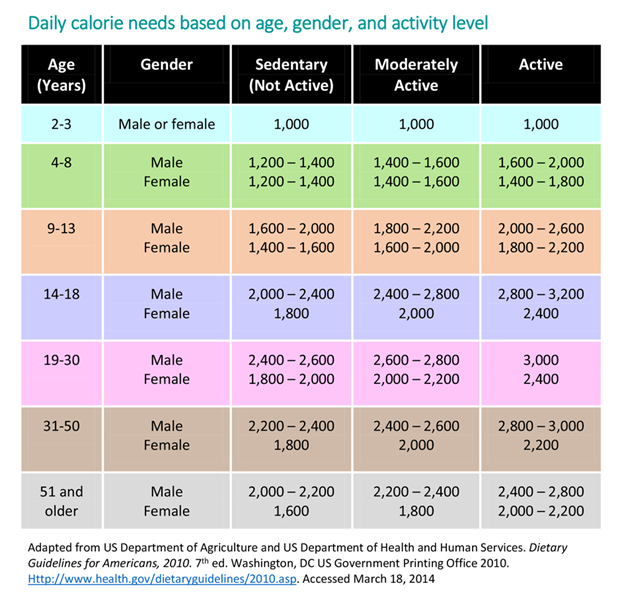
The software market is currently saturated with tools designed to answer the caloric question. However, the real value lies in the “Tech Stack” of health—how different apps communicate with each other to provide a holistic view of energy needs.
Integrated Ecosystems: Apple Health and Google Fit
The most powerful tools in a user’s arsenal are often the centralized hubs provided by big tech. Apple Health and Google Fit act as data aggregators. By pulling data from a smart scale (like Withings), a sleep tracker, and a workout app (like Strava), these platforms create a centralized repository of biometric data. This interoperability is key; when your scale reports a weight drop, your calorie-tracking app can automatically adjust your daily targets without manual input. This automation reduces friction, which has historically been the biggest barrier to consistent health monitoring.
AI-Powered Nutrition Logging
Manual calorie counting is famously tedious. Tech companies are solving this through computer vision and Natural Language Processing (NLP). Apps like Snap calorie or the latest updates to MyFitnessPal allow users to simply take a photo of their meal. AI algorithms then identify the food items, estimate the volume through depth-sensing cameras (like the LiDAR sensors on high-end iPhones), and calculate the caloric content. While not 100% perfect, this level of automation is lightyears ahead of manual database searching, providing a more realistic and sustainable way for users to understand their daily intake needs.
Digital Security and Privacy in the Age of Health Tech
As we entrust apps with the intimate details of our metabolic health, the conversation must shift to digital security. Your caloric needs, heart rate patterns, and body composition are highly sensitive pieces of PII (Personally Identifiable Information). In the tech world, this is a burgeoning field of concern and innovation.
The Vulnerability of Biometric Data
Biometric data is a goldmine for advertisers and, potentially, insurance companies. If an app knows exactly how many calories you need and what you are eating, it can build a psychological profile of your habits. Leading tech firms are now implementing “Differential Privacy” and on-device processing. This means the actual analysis of your caloric needs happens on your phone’s local chip (like Apple’s Neural Engine) rather than on a cloud server. This ensures that the answer to “how many calories do I need?” stays between you and your device.
Decentralized Health Data and the Future of Web3
There is a growing movement toward “Data Sovereignty” in the health tech space. Some startups are exploring the use of blockchain technology to store health data. In this model, you own your metabolic data in a digital vault, and you grant temporary access to a calorie-tracking app or a doctor. This “Zero-Knowledge Proof” approach ensures that you get the insights you need—like your daily caloric requirements—without actually surrendering your raw data to a corporate database.
The Future of Personalized Nutrition: CGMs and Smart Homes
Looking ahead, the question of caloric needs will be answered by even more invasive—yet more accurate—technological tools. We are moving toward a future of “Ambient Sensing,” where your environment knows your needs before you do.
Continuous Glucose Monitors (CGMs) for Non-Diabetics
One of the hottest trends in the Silicon Valley “bio-hacking” scene is the use of Continuous Glucose Monitors (CGMs) like those from Levels or Supersapiens. Originally designed for diabetics, these sensors provide a real-time graph of blood sugar levels. From a tech perspective, this is the ultimate calorie-tuning tool. It allows users to see exactly how their body responds to specific inputs. If a certain “healthy” snack spikes your glucose and leads to a crash, the software can suggest a different caloric timing or composition to keep your energy stable.
Smart Kitchens and Automated Micronutrient Optimization
The ultimate destination for this technology is the “Smart Home.” We are seeing the prototype phase of smart refrigerators and ovens that are synced with your wearable data. Imagine a scenario where, upon finishing a 10-mile run, your smart oven suggests a meal with the exact caloric and macronutrient profile your Garmin watch says you need. This integration of IoT (Internet of Things) and personal health data will eventually make the manual question of “how many calories do I need?” obsolete. The tech will simply guide you through your day, adjusting your environment and your food availability to match your biological requirements.
In conclusion, the quest to understand our caloric needs has evolved from a mathematical guesswork game into a sophisticated branch of data science. By leveraging AI, wearables, and secure data ecosystems, technology is providing us with a level of self-knowledge that was once unimaginable. As these tools continue to refine their algorithms and protect our privacy, the “daily calorie” will move from a static number to a fluid, living data point that empowers better health through technical precision.
aViewFromTheCave is a participant in the Amazon Services LLC Associates Program, an affiliate advertising program designed to provide a means for sites to earn advertising fees by advertising and linking to Amazon.com. Amazon, the Amazon logo, AmazonSupply, and the AmazonSupply logo are trademarks of Amazon.com, Inc. or its affiliates. As an Amazon Associate we earn affiliate commissions from qualifying purchases.