
In the intricate symphony of mechanical marvels that is a modern automobile, countless components work in unison, often out of sight and out of mind, to deliver the performance, comfort, and safety we expect. Among these unsung heroes, bearings stand out as fundamental, silently facilitating motion and significantly impacting everything from your car’s fuel efficiency to its structural integrity. More than just simple rings of metal, these precision-engineered parts embody a confluence of technology, influence brand reputation, and have a profound financial impact on vehicle ownership. Understanding what bearings are and their critical role in your car isn’t just for mechanics; it’s essential for any driver who values reliability, safety, and a sound investment.
The Unsung Heroes: What Exactly Do Bearings Do?
At its core, a bearing is a machine element that constrains relative motion to only the desired motion, and reduces friction between moving parts. Without bearings, the sheer force of metal-on-metal contact would generate immense heat, rapid wear, and ultimately, catastrophic failure. In a car, where myriad parts rotate, oscillate, and slide against each other at high speeds and under significant loads, bearings are indispensable.
Fundamental Function: Reducing Friction
Imagine pushing two rough surfaces against each other and trying to slide them. The resistance you feel is friction. Now imagine placing tiny, smooth balls or rollers between them. The resistance dramatically decreases, and the motion becomes effortless. This is precisely what a bearing achieves. By converting sliding friction into much lower rolling friction, bearings allow components like wheels, axles, and engine parts to spin freely and smoothly, minimizing energy loss and preventing premature wear. This efficiency directly translates to better fuel economy and extended component life.
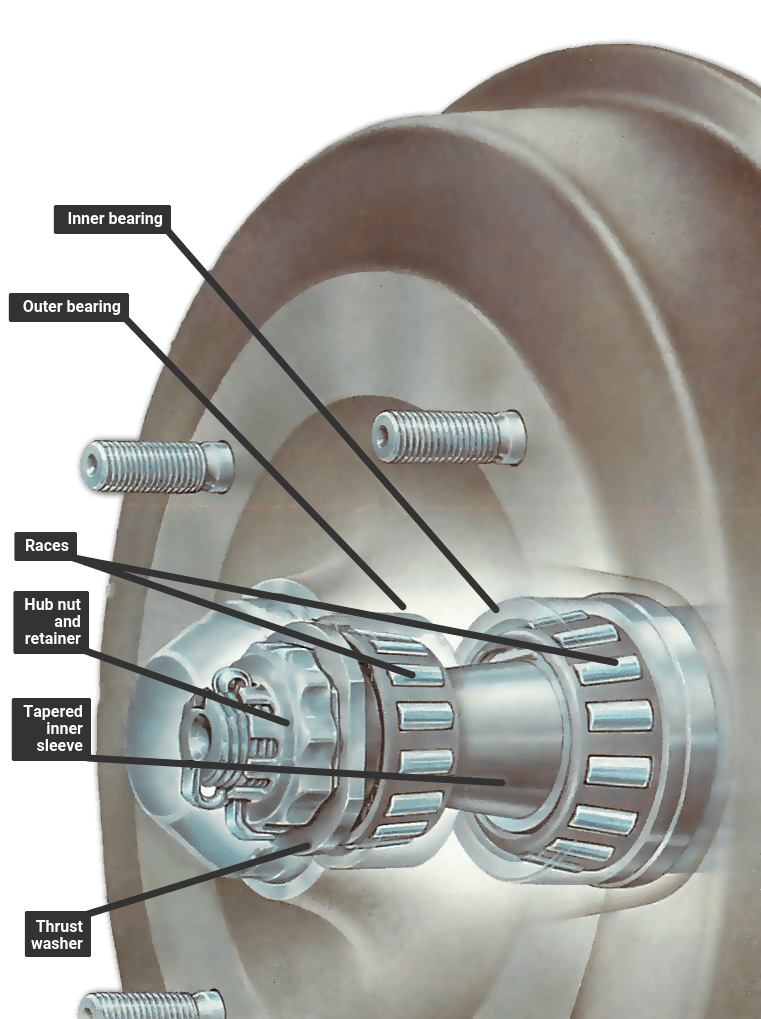
Core Components: Inner Race, Outer Race, Rolling Elements, Cage
While bearings come in various forms, most share fundamental design principles. They typically consist of:
- Inner Race (or Inner Ring): The inner circular component that fits onto the rotating shaft.
- Outer Race (or Outer Ring): The stationary outer circular component that fits into a housing.
- Rolling Elements: These are the crucial components – balls, cylindrical rollers, tapered rollers, or needles – that fit between the inner and outer races. They are responsible for carrying the load and facilitating the rolling motion.
- Cage (or Retainer): A separator that holds the rolling elements at equal intervals, preventing them from clumping together and ensuring even load distribution.
- Seals/Shields: Often included to keep lubricant in and contaminants (like dirt and moisture) out, critical for the bearing’s longevity.
Types of Bearings in Automotive Applications
The specific design of a bearing is dictated by the type of load it needs to handle (radial, axial, or combined) and the operating conditions. In a car, you’ll find several types:
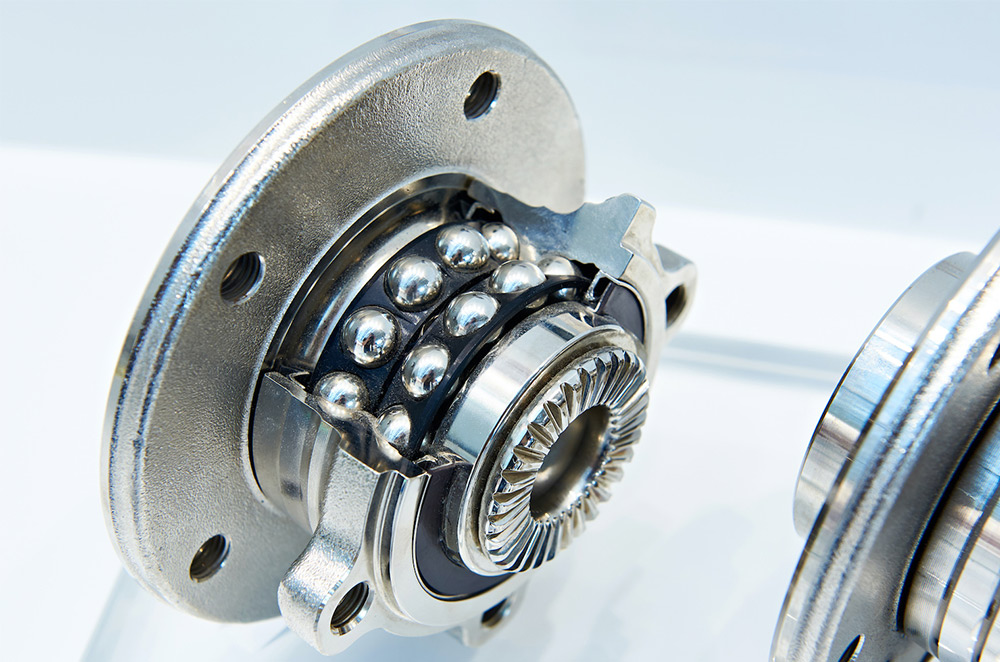
- Ball Bearings: Excellent for handling radial loads and some axial loads at high speeds. They are ubiquitous in applications like alternators, water pumps, and some wheel bearings.
- Roller Bearings: Capable of carrying much heavier radial loads than ball bearings due to the larger contact area of their cylindrical or tapered rollers.
- Cylindrical Roller Bearings: Best for heavy radial loads, often found in transmissions and differentials.
- Tapered Roller Bearings: Designed to handle both heavy radial and heavy axial (thrust) loads, making them ideal for wheel bearings and axle shafts where forces come from multiple directions.
- Needle Roller Bearings: A type of cylindrical roller bearing with rollers that are very thin and long. They are used in tight spaces, such as universal joints and some transmission components.
- Thrust Bearings: Specifically designed to handle purely axial (thrust) loads, preventing components from moving back and forth along a shaft. These are crucial in parts like clutch assemblies and steering columns.
Where Bearings Live: Critical Locations in Your Vehicle
Bearings are distributed throughout your car, each performing a vital function in its specific location. Their proper operation is paramount to the overall performance, safety, and longevity of the vehicle.
Wheel Bearings: The Foundation of Smooth Rolling
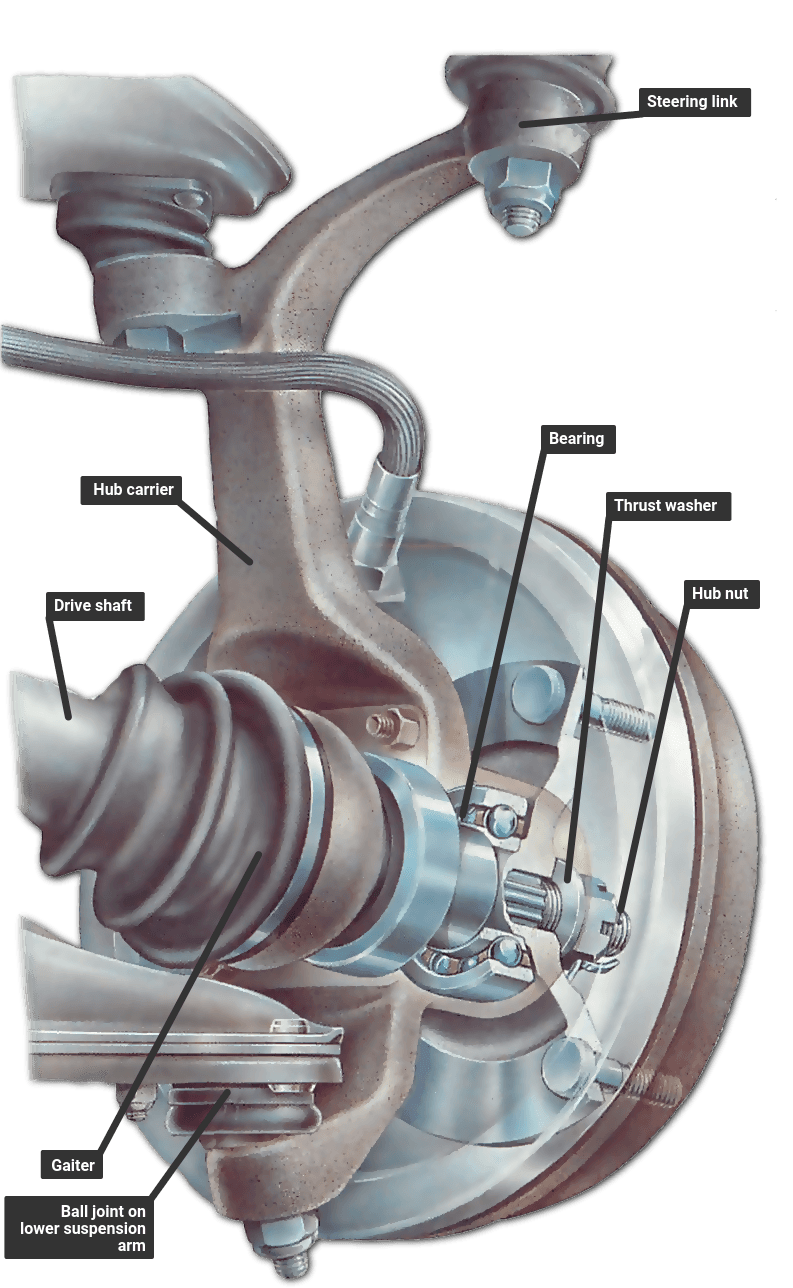
Perhaps the most commonly recognized bearings in a car are the wheel bearings. Located within the wheel hub, they allow the wheels to spin freely with minimal friction while supporting the entire weight of the vehicle. These bearings also absorb the significant radial and axial forces generated during driving, cornering, and braking. A failing wheel bearing often presents as a growling or humming noise that changes with speed or turning, vibrations felt through the steering wheel, or excessive play in the wheel. Timely replacement is crucial not just for comfort, but for safety, as a severely failed wheel bearing can lead to a wheel detaching.
Engine Bearings: Protecting the Heartbeat of Your Car
Inside the engine, bearings are subjected to immense forces and extreme temperatures.
- Main Bearings: These support the crankshaft, allowing it to rotate smoothly within the engine block. They are crucial for transmitting power from the pistons to the drivetrain.
- Connecting Rod Bearings: Located at the large end of the connecting rods, these bearings link the connecting rods to the crankshaft journals. They enable the reciprocating motion of the pistons to be converted into the rotational motion of the crankshaft.
These engine bearings are typically plain bearings (also called sleeve bearings or journal bearings), which don’t use rolling elements but rely on a thin film of oil to separate the moving surfaces. Their integrity is absolutely critical; a failure here can quickly lead to catastrophic engine damage.
Transmission Bearings: Enabling Gear Changes
The transmission, whether manual or automatic, relies heavily on bearings to facilitate the smooth and efficient transfer of power from the engine to the drive wheels. Bearings support the input and output shafts, countershafts, and individual gears, ensuring they rotate freely and precisely engage. Faulty transmission bearings can lead to noisy operation, difficulty shifting gears, or even transmission failure, significantly impacting the driving experience and the car’s ability to move.
Other Vital Spots
Bearings are also found in numerous other critical systems:
- Alternator and A/C Compressor: Both utilize bearings to allow their internal components to spin at high speeds, generating electricity and circulating refrigerant, respectively.
- Power Steering Pump: Bearings here ensure the pump operates smoothly to assist steering.
- Differentials: These components, essential for allowing wheels on the same axle to rotate at different speeds, house bearings to support their internal gears.
- Driveshafts and Axle Shafts: Bearings support these shafts as they transmit power to the wheels.
Essentially, any component in your car that rotates or moves with respect to another stationary part likely has a bearing facilitating that motion.
The Technological Edge: How Bearings Evolve
Far from being static, unchanging components, bearings are at the forefront of materials science and engineering innovation. The demands of modern vehicles – higher performance, greater efficiency, increased reliability, and the advent of electric and autonomous systems – continually push the boundaries of bearing technology. This intersection of mechanical necessity and cutting-edge research makes bearings a fascinating area within the broader Tech landscape.
Precision Engineering and Materials Science
The performance of a bearing hinges on extreme precision. Manufacturing tolerances are often measured in microns, ensuring optimal load distribution and minimal friction. Advanced materials play a crucial role:
- High-Strength Steels: Modern bearings are often made from specialized alloys like chromium steel, which offer exceptional hardness, wear resistance, and fatigue strength.
- Advanced Lubricants: The right lubricant is as important as the bearing itself. Synthetic greases and oils with additives are engineered to withstand extreme temperatures, pressures, and shear forces, extending bearing life and reducing friction further.
- Surface Treatments and Coatings: Techniques like nitriding or applying specialized coatings can enhance surface hardness, corrosion resistance, and reduce friction even further, contributing to longevity and efficiency.
Nanotechnology is beginning to influence bearing design, with researchers exploring nano-textured surfaces and composite materials to create bearings that are lighter, stronger, and even more efficient.
Smart Bearings and Predictive Maintenance
The integration of sensors and digital technology is revolutionizing bearing maintenance and reliability. “Smart bearings” are equipped with miniature sensors that can monitor critical parameters such as temperature, vibration, load, and even lubrication quality in real-time.
- IoT Integration: These sensors can transmit data wirelessly to a vehicle’s onboard diagnostics (OBD) system or even to cloud-based platforms.
- AI for Diagnostics: Artificial intelligence and machine learning algorithms can analyze this continuous data stream to identify subtle changes or patterns indicative of impending bearing failure long before it becomes critical. This enables highly accurate predictive maintenance, shifting from reactive repairs (fixing something after it breaks) to proactive intervention (replacing a part before it fails). This drastically reduces unexpected breakdowns, minimizes costly collateral damage, and optimizes maintenance schedules, representing a significant technological leap in vehicle reliability and uptime.
Impact on Vehicle Performance and Efficiency
The relentless pursuit of fuel economy and reduced emissions drives much of the innovation in bearing technology. Even marginal reductions in friction, when multiplied across hundreds of bearings in a vehicle, can lead to measurable improvements in efficiency.
- Reduced Drag: More efficient bearings mean less energy is wasted as heat due to friction, allowing more engine power to reach the wheels.
- Weight Reduction: Engineers are constantly striving to make components lighter without compromising strength. Lighter bearings contribute to overall vehicle weight reduction, further enhancing fuel economy and improving handling dynamics.
- Noise and Vibration Reduction: Precision bearings contribute to a smoother, quieter ride, a critical factor in perceived vehicle quality and passenger comfort.
The Cost of Neglect vs. The Value of Quality: Bearings and Your Wallet
While often hidden, the state of your car’s bearings has a direct and substantial impact on your Money. Neglecting failing bearings can lead to escalating repair costs, while investing in quality components can safeguard your finances and enhance your vehicle’s long-term value.
Symptoms of Failing Bearings
Recognizing the early signs of bearing wear is crucial for preventing more extensive and expensive damage. Common symptoms include:
- Noise: A persistent humming, grinding, growling, or roaring sound that changes with speed or when turning. Wheel bearings often produce noise that is loudest when driving.
- Vibration: A wobbling or vibrating sensation felt through the steering wheel, floorboard, or seat, especially at certain speeds.
- Play: Excessive looseness or “play” in the wheel when the vehicle is jacked up and the wheel is wiggled.
- Uneven Tire Wear: While not exclusive to bearings, uneven wear can sometimes indicate issues with alignment or suspension, which bearings contribute to.
Ignoring these symptoms can turn a relatively simple bearing replacement into a much more complex and costly repair involving multiple damaged components.
The Financial Ripple Effect of Failure
The direct cost of replacing a bearing itself might seem manageable, but the true financial impact of a neglected failure can be severe.
- Collateral Damage: A completely seized wheel bearing, for instance, can cause the wheel to lock up, leading to loss of control, or can damage the brake system, axle, or suspension components. Engine bearing failure almost always necessitates a complete engine rebuild or replacement, which can easily run into thousands of dollars – often exceeding the value of older vehicles.
- Towing and Downtime: An unexpected breakdown due to bearing failure often requires towing, adding to the cost. The vehicle will also be out of commission for a period, potentially incurring rental car expenses or impacting your daily routine.
- Safety Risks: The greatest cost, of course, isn’t financial, but the potential for an accident due to a critical component failure at speed.
Brand Trust and Quality Components
The quality of bearings used by a car manufacturer significantly influences its Brand reputation. Premium car brands invest heavily in high-quality, durable bearings that contribute to their vehicles’ renowned reliability, smooth ride, and longevity. Conversely, a brand that consistently experiences bearing failures will quickly erode customer trust and face warranty claims and recalls.
When it comes to replacement, the choice between OEM (Original Equipment Manufacturer) parts, reputable aftermarket brands, and cheaper generic alternatives also has financial implications. While generic parts might offer upfront savings, they often come with compromised durability and precision, potentially leading to premature failure and repeated repair costs. Investing in quality bearings from trusted manufacturers like SKF, Timken, NTN, or Koyo ensures that your repair lasts and maintains the vehicle’s integrity, protecting your investment. This choice directly reflects on the value and reliability you expect from your vehicle.
DIY vs. Professional Replacement
For some, a DIY approach to wheel bearing replacement might seem like a way to save money. However, specialized tools (like bearing presses), specific torque settings, and intricate assembly procedures are often required. Incorrect installation can damage the new bearing, affect alignment, or compromise safety. For critical components like engine or transmission bearings, professional expertise is virtually always required. Considering the complexity and safety implications, factoring in the cost of professional installation is often a wise financial decision, ensuring the job is done correctly and safely.
Beyond the Grease and Steel: Bearings and the Future of Mobility
As the automotive industry undergoes its most significant transformation in a century, the role of bearings continues to evolve. From the electrification of powertrains to the rise of autonomous driving, new challenges and opportunities for bearing technology are emerging, shaping the future of mobility.
Electric Vehicles and New Bearing Demands
Electric Vehicles (EVs) place different, and often more stringent, demands on bearings compared to traditional internal combustion engine (ICE) vehicles.
- Higher RPMs: Electric motors often operate at significantly higher rotational speeds (RPMs) than gasoline engines, necessitating bearings designed for extreme precision, reduced vibration, and high-speed durability.
- Different Load Characteristics: While engine loads are eliminated, the weight and torque of large battery packs and powerful electric motors present unique load challenges.
- Noise Reduction: With the absence of engine noise, any mechanical sound from bearings becomes much more noticeable. EV bearings must therefore be ultra-quiet and exceptionally smooth, driving innovation in lubrication and design to minimize NVH (Noise, Vibration, and Harshness).
- Electrical Insulation: In some EV applications, bearings require electrical insulation to prevent premature wear due to current passing through the rolling elements, a phenomenon known as “electrical pitting.”
Autonomous Vehicles and Redundancy
Autonomous vehicles will place an even greater premium on component reliability and redundancy. For self-driving cars, the failure of any critical component, including bearings in steering, braking, or wheel assemblies, could have catastrophic consequences. This drives a need for:
- Enhanced Diagnostics: The smart bearing technology discussed earlier will become even more crucial, providing real-time health monitoring and predictive analytics to ensure components are replaced long before they pose a risk.
- Longer Lifespans: Bearings designed to last the entire lifecycle of the vehicle will become standard, reducing maintenance needs and improving overall system reliability.
- Fail-Safe Designs: While not unique to bearings, the concept of fail-safe and redundant systems will permeate every aspect of autonomous vehicle engineering, potentially leading to new bearing configurations.
Sustainability and Lifecycle Management
The automotive industry is increasingly focused on sustainability. For bearings, this translates to:
- Extended Life Bearings: Reducing the frequency of replacement through superior design and materials contributes to less waste and resource consumption.
- Recyclability: Efforts to make bearings more easily recyclable at the end of their life cycle.
- Reduced Friction for Green Driving: The ongoing quest for ultra-low friction bearings directly supports the goal of greater energy efficiency and lower carbon footprints across all vehicle types. This also includes the development of more environmentally friendly lubricants.
In essence, bearings, these seemingly simple components, are integral to the cutting edge of automotive Tech, foundational to a brand’s reputation for reliability, and a significant factor in your personal Money management as a car owner. From the foundational mechanics to the future of autonomous electric mobility, they remain indispensable.
In conclusion, bearings are far more than just anonymous metal rings within your car. They are precision-engineered marvels that underpin every aspect of your vehicle’s operation, from its safety and performance to its fuel efficiency and longevity. Overlooking their vital role is to misunderstand a fundamental truth about automotive engineering. Understanding their function, recognizing the signs of wear, and appreciating the technological advancements that continuously improve them empowers you as a car owner. By valuing quality and timely maintenance, you ensure not only the smooth running of your vehicle but also protect your investment, proving that even the smallest, hidden components can have the largest impact on your driving experience and financial well-being.
aViewFromTheCave is a participant in the Amazon Services LLC Associates Program, an affiliate advertising program designed to provide a means for sites to earn advertising fees by advertising and linking to Amazon.com. Amazon, the Amazon logo, AmazonSupply, and the AmazonSupply logo are trademarks of Amazon.com, Inc. or its affiliates. As an Amazon Associate we earn affiliate commissions from qualifying purchases.