
The cowl of Batman is one of the most coveted and challenging roles in cinematic history. To embody the brooding billionaire Bruce Wayne, the dedicated detective Commissioner Gordon, and the relentless vigilante known as the Batman, an actor must possess a unique blend of gravitas, physicality, and the ability to convey a complex inner turmoil. Over the decades, a distinguished lineage of actors has donned the cape and cowl, each leaving their indelible mark on the Dark Knight’s legacy.
This exploration delves into the actors who have portrayed Batman, not just as a retrospective of their performances, but also through the lens of how their portrayals have evolved, the public’s reception, and the underlying narratives that have shaped our understanding of Gotham’s protector. We’ll examine how different eras, directorial visions, and even the technological advancements in filmmaking have influenced the Batman we see on screen, and in turn, how these actors have defined him for generations of fans.

The Genesis of the Bat: Early Cinematic Interpretations
Batman’s journey from comic book pages to the silver screen began long before the era of blockbuster franchises. The early interpretations, while perhaps less sophisticated than their modern counterparts, laid the groundwork for the character’s enduring appeal. These actors had the unenviable task of translating a two-dimensional icon into a believable on-screen presence, often with limited resources and a more straightforward narrative approach.
The Serials: Dawn of the Caped Crusader
Before feature films, Batman’s exploits were brought to life in a series of movie serials, a popular format in the 1940s. These were episodic adventures designed to keep audiences coming back week after week.
Lewis Wilson: The First Live-Action Batman
In 1943, Lewis Wilson became the very first actor to portray Batman in the live-action serial Batman. Wilson, a relatively unknown actor at the time, brought a certain earnestness to the role. His Batman was a more straightforward hero, grappling with Japanese spies in a wartime setting. While the production values were modest and the portrayal less psychologically complex than later iterations, Wilson’s performance was crucial in establishing Batman’s visual presence on screen, complete with the early Bat-suit and Batmobile. The serial’s success demonstrated the character’s potential for live-action adaptation, paving the way for future cinematic endeavors.
Robert Lowery: The Stalwart Defender
Following Wilson, Robert Lowery took on the mantle in the 1949 serial Batman and Robin. Lowery’s Batman was perceived as more heroic and commanding than Wilson’s, exuding a strong physical presence. The serial introduced Robin, played by Johnny Duncan, to the live-action world, further solidifying the dynamic duo’s cinematic foundation. While still constrained by the serial format and the era’s filmmaking conventions, Lowery delivered a performance that emphasized Batman’s courage and dedication to justice, resonating with audiences of the time.
These early serials, though often campy by today’s standards, were instrumental in popularizing Batman beyond the comic books. They established visual cues and heroic archetypes that would influence subsequent portrayals, proving that the Dark Knight could captivate a live audience.
The Dawn of the Modern Era: Redefining the Caped Crusader
The latter half of the 20th century saw Batman’s cinematic presence undergo significant transformations, moving from the gritty serials to the visually dynamic and psychologically richer films that would redefine the character for new generations. This era benefited from advancements in filmmaking technology and a growing interest in exploring the darker, more complex aspects of the superhero genre.
Tim Burton’s Gothic Vision
Tim Burton’s 1989 film Batman was a watershed moment, injecting a much-needed dose of gothic sensibility and psychological depth into the franchise.
Michael Keaton: The Brooding Enigma
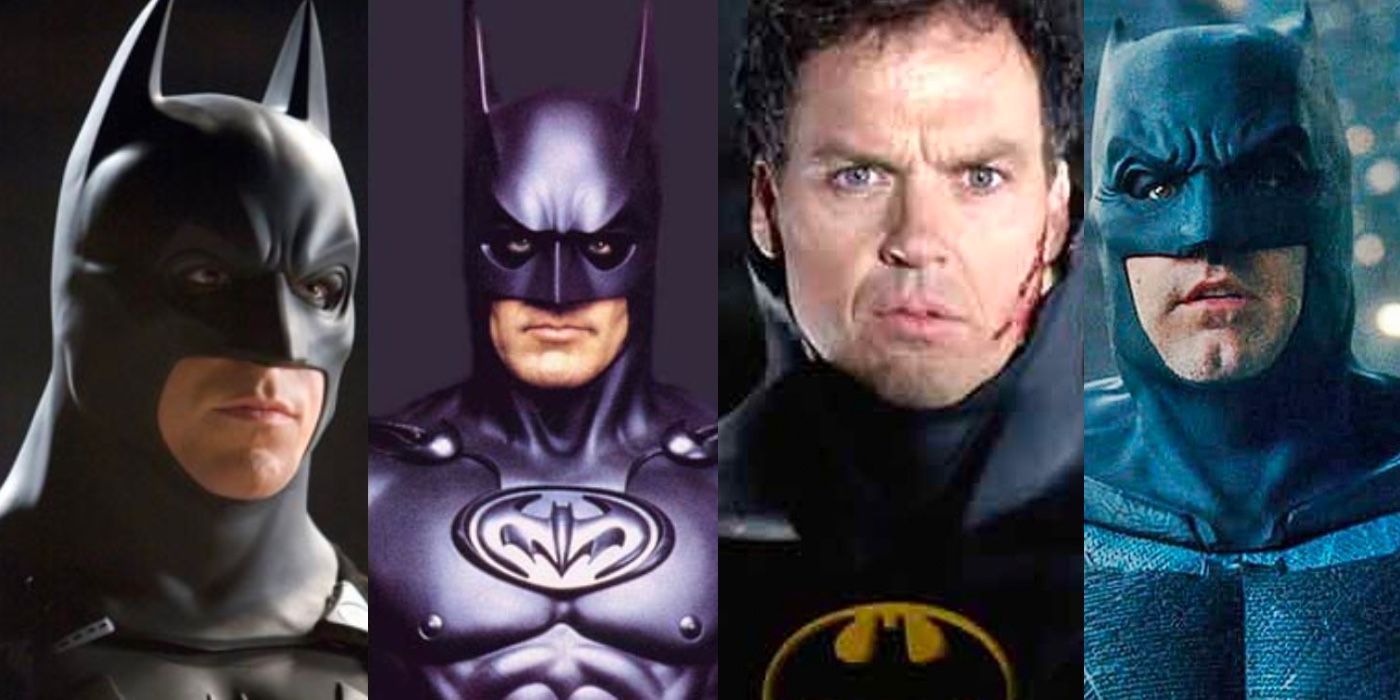
Michael Keaton, a surprising choice at the time for many, delivered a performance that was both intensely brooding and subtly vulnerable. Burton envisioned Batman not just as a superhero, but as a deeply troubled individual, a product of his trauma. Keaton’s portrayal leaned into this internal darkness, showcasing a Batman who was more of an urban phantom than a traditional caped crusader. His Bruce Wayne was withdrawn and haunted, while his Batman was a creature of shadows, driven by a palpable rage. Keaton’s performance, though debated by some upon release, is now widely recognized for its nuanced portrayal of the psychological toll of vigilantism and its integral role in establishing the dark, gritty tone that would influence future Batmen. His interpretation proved that Batman’s strength lay not just in his physical prowess but in his psychological scars.
The Animated Revolution and its Live-Action Echoes
The success of Batman: The Animated Series in the 1990s re-energized the character’s popularity and cemented a darker, more mature aesthetic. This influence eventually trickled down to live-action.
Kevin Conroy: The Definitive Voice of Batman

While not a live-action actor in the traditional sense for his defining role, Kevin Conroy deserves an honorable mention as the voice of Batman in Batman: The Animated Series and countless other animated projects and video games. Conroy’s rich, resonant voice became synonymous with the Dark Knight for millions. He masterfully balanced the duality of Bruce Wayne’s refined demeanor with Batman’s gravelly, commanding presence. His portrayal set a benchmark for the character’s voice and attitude, influencing how actors approached the role in live-action, particularly in conveying the authoritative and weary nature of the vigilante.
Val Kilmer: The Stoic Warrior
Following Keaton, Val Kilmer stepped into the Batsuit for Batman Forever (1995). Kilmer brought a more stoic and athletic presence to the role. His Bruce Wayne was more outwardly confident, while his Batman was a dedicated warrior fighting to protect Gotham. Directed by Joel Schumacher, the film adopted a brighter, more stylized aesthetic than Burton’s predecessors, and Kilmer’s performance reflected this. He embodied the physical demands of the role with conviction, portraying a Batman who was a formidable presence on screen. His interpretation showcased a more conventional heroic stance, a slight departure from Keaton’s introspective approach.
George Clooney: The Charming, Yet Flawed Knight
George Clooney‘s portrayal in Batman & Robin (1997) remains one of the most divisive. While Clooney is a charismatic actor, the film’s campy tone and over-the-top villains overshadowed his performance. His Bruce Wayne was more suave and debonair, but the film’s departure from the character’s darker roots led to a less impactful Batman. Despite the film’s shortcomings, Clooney’s presence brought a certain star power to the role, even if the material didn’t allow for a deeply complex interpretation. This era, while attempting to capture the fantastical elements of the comics, ultimately struggled to find the right balance for the character in live-action.
The Nolan Renaissance: Realism and Psychological Depth
Christopher Nolan’s The Dark Knight Trilogy (2005-2012) is widely considered a monumental achievement in superhero filmmaking, reintroducing Batman to a mainstream audience with a grounded, gritty, and psychologically complex approach. This era focused on the realism of Batman’s mission and the profound impact of his vigilantism on both himself and Gotham City.
Christian Bale: The Embodiment of Dedication and Transformation
Christian Bale became the face of the Dark Knight for a generation, delivering a performance that was lauded for its intensity and commitment. Bale famously altered his physique dramatically for the role, embodying both the lithe, athletic Batman and the more imposing Bruce Wayne. His portrayal emphasized the sheer physical and mental discipline required to be Batman. He brought a raw, almost animalistic quality to the Caped Crusader’s fight scenes, and his deeply internalized performance explored Bruce Wayne’s struggle with his dual identity and the immense responsibility he carried.
The Bale Method: A Demanding Portrayal
Bale’s performance was characterized by his famous “Batman voice,” a growling, almost guttural alteration of his voice that he adopted to distance himself from Bruce Wayne and intimidate criminals. This choice, while sometimes debated, was an integral part of his characterization, highlighting the psychological transformation he underwent to become the Batman. He delved into the trauma that shaped Bruce Wayne, portraying a man driven by a singular purpose and haunted by the ghosts of his past. His Batman was a symbol of fear for criminals and hope for the citizens of Gotham, a meticulously crafted vigilante operating in a world that often mirrored his own darkness. The trilogy, with Bale at its center, cemented Batman’s place as a complex, morally ambiguous figure, rather than a simple superhero.
The DCEU and Beyond: New Interpretations and Evolving Universes
Following Nolan’s groundbreaking trilogy, Batman’s cinematic universe continued to expand, introducing new actors and fresh interpretations that grappled with the character’s enduring legacy and his place in an increasingly interconnected cinematic landscape. This period saw Batman interact with a wider pantheon of DC heroes, leading to varied takes on his persona.
Ben Affleck: The Grim, Experienced Crusader
Ben Affleck donned the cowl in Zack Snyder’s Batman v Superman: Dawn of Justice (2016) and continued in Suicide Squad (2016), Justice League (2017), and Zack Snyder’s Justice League (2021). Affleck’s Batman was a more weathered, grizzled, and experienced version of the character. This Batman was older, more cynical, and operated with a brutal efficiency born from years of fighting crime. His Bruce Wayne was more outwardly the public figure, a stark contrast to his hardened vigilante persona. Affleck brought a commanding physical presence and a palpable sense of world-weariness to the role. His Batman was a force of nature, a grim reaper of Gotham’s underworld, reflecting a darker, more utilitarian approach to justice.
The “Knightmare” Sequences and Philosophical Debates
Affleck’s portrayal often explored the philosophical implications of Batman’s existence within a world where metahumans were emerging. The “Knightmare” sequences in Batman v Superman offered glimpses into a dystopian future, hinting at the potential consequences of Batman’s methods and the moral compromises he might have to make. While his tenure was met with mixed reactions, Affleck’s Batman was praised by many for its fidelity to certain darker comic interpretations and its sheer intimidating presence. His performance highlighted the evolution of Batman from a lone crusader to a more pragmatic and perhaps even weary protector in a larger superhero context.
Robert Pattinson: A Raw and Relatable Detective
In Matt Reeves’ The Batman (2022), Robert Pattinson presented a new, grittier, and more introspective Batman. This iteration focused on Bruce Wayne’s early years as the Caped Crusader, emphasizing his detective skills and his raw, unpolished approach to fighting crime. Pattinson’s Batman is less of a polished superhero and more of a haunted, driven individual still grappling with his trauma and his mission. His Bruce Wayne is almost reclusive, a ghost in his own mansion, while his Batman is a creature of the night, fueled by vengeance and a deep-seated need to understand the corruption that plagues Gotham.
The Detective’s Journey
Pattinson’s performance is characterized by a profound sense of vulnerability and an almost punk-rock aesthetic to the Batsuit. This Batman is a detective first and foremost, meticulously piecing together clues in a city drowning in crime and deception. His portrayal emphasizes the psychological toll of his crusade, showcasing a Batman who is as much a prisoner of his mission as he is its architect. The Batman succeeded in bringing the character back to his noir roots, presenting a raw, emotionally resonant interpretation that captivated audiences and critics alike. This fresh take on the iconic character proves that there is always room for new perspectives and deeper explorations of Batman’s enduring appeal.
From the early serials to the modern blockbusters, each actor who has played Batman has contributed to the rich tapestry of this legendary character. Their performances, shaped by directorial vision and evolving cinematic technologies, continue to captivate audiences and ensure that the legend of the Dark Knight endures for generations to come.
aViewFromTheCave is a participant in the Amazon Services LLC Associates Program, an affiliate advertising program designed to provide a means for sites to earn advertising fees by advertising and linking to Amazon.com. Amazon, the Amazon logo, AmazonSupply, and the AmazonSupply logo are trademarks of Amazon.com, Inc. or its affiliates. As an Amazon Associate we earn affiliate commissions from qualifying purchases.