
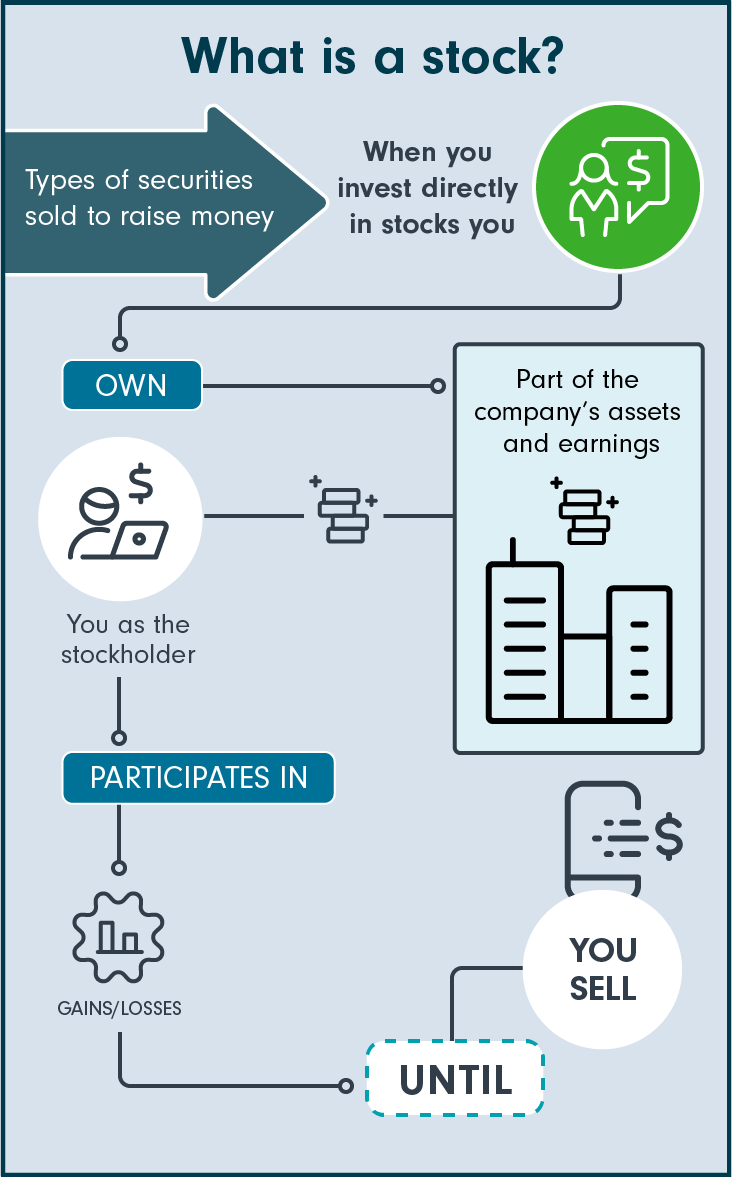
The concept of “stock” is the cornerstone of modern capitalism and the primary vehicle through which millions of individuals build long-term wealth. At its simplest level, a stock is a security that represents the ownership of a fraction of a corporation. This entitles the owner of the stock to a proportion of the corporation’s assets and profits equal to how much stock they own. Units of stock are called “shares.”
For the individual investor, stocks are more than just numbers on a screen; they represent a claim on the future success of a business. When you buy a share of a company, you are essentially becoming a partner in that enterprise. Whether it is a local startup or a global titan like Apple or Coca-Cola, the fundamental mechanics of stock ownership remain the same. This guide delves into the intricate world of equities, exploring how they work, why they exist, and how you can leverage them to secure your financial future.

The Fundamentals of Stock Ownership
To understand stocks, one must first understand why they exist. Companies require capital—money—to grow. They can obtain this capital in two primary ways: borrowing it (debt) or selling a piece of the business (equity). When a company “goes public,” it offers shares to the general population through an Initial Public Offering (IPO). This process transforms a private company into a publicly traded one, allowing it to raise massive amounts of capital to fund research, expansion, or debt repayment.
What is a Share?
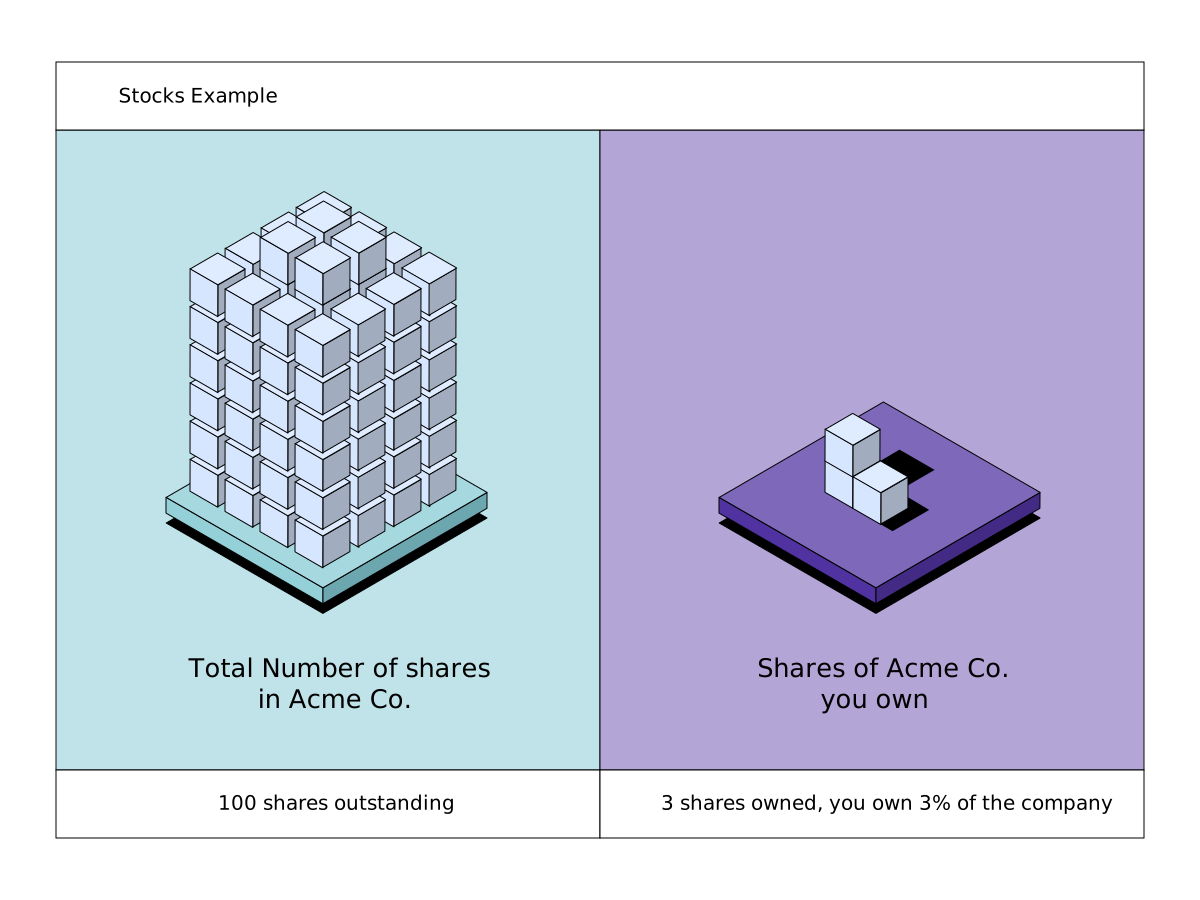
A share is a single unit of ownership. If a company has 1,000 shares outstanding and you own 100 of them, you own 10% of the company. This ownership gives you a “stake” in everything the company owns and everything it earns. While you don’t own the company’s physical assets directly (you can’t walk into a Google office and take a chair), you own a legal claim to the residual value of those assets after all liabilities are paid.
Common vs. Preferred Stock
Not all stocks are created equal. Most individual investors purchase Common Stock. Common stock carries the right to vote on corporate matters, such as electing the board of directors. It also offers the highest potential for long-term capital appreciation. However, in the event of bankruptcy, common stockholders are last in line to receive any remaining assets.
Preferred Stock, on the other hand, functions somewhat like a hybrid between a stock and a bond. Preferred stockholders usually do not have voting rights, but they have a higher claim on assets and earnings. For example, preferred shareholders receive dividends before common shareholders. This makes preferred stock a favorite for those seeking consistent income rather than aggressive growth.
Why Do Companies Issue Stock?
The primary driver for issuing stock is the infusion of “permanent” capital. Unlike a bank loan, equity does not have to be paid back with interest. Instead, the company “pays” its investors by sharing its success. If the company thrives, the stock price rises, and the investor’s wealth increases. If the company fails, the investor may lose their entire investment, but the company is not legally obligated to refund them.
How the Stock Market Functions
The stock market is a vast, interconnected network of exchanges where buyers and sellers meet to trade shares. It is the world’s most efficient mechanism for price discovery, ensuring that a stock is worth exactly what the market is willing to pay for it at any given second.
Stock Exchanges and Indices
A stock exchange is the physical or virtual marketplace where stocks are traded. The New York Stock Exchange (NYSE) and the NASDAQ are the most prominent examples in the United States. To help investors track the health of the market, we use Indices. An index, like the S&P 500 or the Dow Jones Industrial Average, tracks a specific basket of stocks to provide a snapshot of market performance. When people say “the market is up,” they are usually referring to the performance of these major indices.
The Role of Brokers and Trading Platforms
In the digital age, individual investors interact with the stock market through a broker. Modern fintech has democratized access to the markets, allowing anyone with a smartphone to buy fractional shares of major companies with zero commissions. These platforms act as intermediaries, executing your “buy” or “sell” orders on the exchange. Behind the scenes, sophisticated algorithms match your order with a seller on the other side of the trade, often in milliseconds.
Supply, Demand, and Price Volatility
The price of a stock is determined by the law of supply and demand. If more people want to buy a stock (demand) than sell it (supply), the price goes up. But what drives demand? Generally, it is the expectation of future earnings. If a company announces a revolutionary new product, investors flock to the stock, driving the price higher. Conversely, if a company reports a loss or faces a lawsuit, fear may cause investors to sell, driving the price down. This constant tug-of-war is what creates market volatility—the rapid up-and-down movement of stock prices.
Strategies for Stock Market Success
Investing in stocks is not gambling; it is the calculated deployment of capital into productive enterprises. To succeed, an investor must adopt a strategy that aligns with their financial goals, risk tolerance, and time horizon.
Growth vs. Value Investing
Two of the most popular philosophies in the stock world are growth and value investing. Growth investors look for companies that are expected to grow at an above-average rate compared to the rest of the market. These are often tech or biotech firms that reinvest all their profits into expansion. While these stocks can provide massive returns, they are often more volatile.
Value investors, pioneered by legends like Benjamin Graham and Warren Buffett, look for “bargains.” They search for companies that are trading for less than their intrinsic value—essentially buying a dollar for eighty cents. These companies are often established firms with steady cash flows that the market has temporarily overlooked.
Dividend Investing for Passive Income
Many mature companies pay out a portion of their earnings to shareholders in the form of dividends. For example, if you own 100 shares of a company that pays a $1 annual dividend per share, you will receive $100 every year just for holding the stock. This is a popular strategy for retirees or those looking to build a “passive income” stream. The “Dividend Aristocrats”—companies that have increased their dividends every year for 25 consecutive years—are highly prized by conservative investors.
The Importance of Diversification
One of the most vital rules in finance is: “Don’t put all your eggs in one basket.” Diversification involves spreading your investments across different sectors (tech, healthcare, energy), different company sizes, and even different geographic regions. By diversifying, you ensure that a failure in one company or sector won’t ruin your entire portfolio. Many modern investors achieve instant diversification by buying Exchange-Traded Funds (ETFs) or Mutual Funds, which allow you to own hundreds of different stocks through a single investment.
Risks and Rewards: Navigating the Financial Landscape
While stocks have historically outperformed almost every other asset class over the long term, they are not without risk. Understanding these risks is essential for maintaining the emotional discipline required to stay invested during market downturns.
Market Risk and Inflation
Market risk refers to the possibility that the entire stock market will decline. This can happen due to recessions, geopolitical instability, or global health crises. However, the greatest risk for many is actually “inflation risk”—the risk that your cash will lose purchasing power over time. While stocks are volatile, they are one of the few assets that historically outpace inflation, preserving the “real” value of your money.
Fundamental vs. Technical Analysis
To determine which stocks to buy, investors use two primary types of analysis. Fundamental analysis involves looking at the company’s “vitals”—its balance sheet, income statement, management quality, and competitive advantages. You are looking at the business itself.
Technical analysis, conversely, ignores the business fundamentals and focuses on price charts and volume. Technical analysts believe that all known information is already baked into the price, and they look for patterns in market psychology to predict future price movements. While professional investors often use a mix of both, long-term wealth building is typically rooted in strong fundamentals.
The Power of Compounding
The “magic” of stock market investing lies in compound interest. When your stocks grow in value or pay dividends, and you reinvest those gains, you begin to earn returns on your returns. Over decades, this exponential growth can turn modest monthly contributions into a multi-million-dollar nest egg. The key ingredient to compounding is not necessarily the amount of money you start with, but the amount of time you allow your money to stay invested.
Conclusion
Understanding “what is a stock” is the first step toward financial literacy and independence. A stock is more than a ticker symbol; it is a piece of a living, breathing business. By participating in the stock market, you are positioning yourself to benefit from human innovation, corporate productivity, and global economic growth.
While the market can be intimidating due to its volatility and complexity, the principles of successful investing are timeless: understand what you own, diversify your holdings, keep costs low, and—most importantly—maintain a long-term perspective. Whether you are saving for a first home, a child’s education, or your own retirement, the stock market remains one of the most powerful tools ever devised for personal financial advancement. The journey of a thousand miles begins with a single share.
aViewFromTheCave is a participant in the Amazon Services LLC Associates Program, an affiliate advertising program designed to provide a means for sites to earn advertising fees by advertising and linking to Amazon.com. Amazon, the Amazon logo, AmazonSupply, and the AmazonSupply logo are trademarks of Amazon.com, Inc. or its affiliates. As an Amazon Associate we earn affiliate commissions from qualifying purchases.