
The year is 1689. England, having just weathered the tumultuous Glorious Revolution, stood at a crossroads, poised to redefine the very essence of its governance. The monarchical absolutism that had plagued the nation for decades was to be definitively curtailed, replaced by a new understanding of power rooted in the consent of the governed. At the heart of this transformation lay a seminal document: the English Bill of Rights. More than just a piece of legislation, it was a declaration, a reset button for the relationship between the Crown and its subjects, establishing foundational principles that would ripple through history, influencing constitutions and declarations of rights worldwide.
While primarily concerned with limiting royal power and affirming parliamentary supremacy, the enduring spirit of the Bill of Rights—its emphasis on accountability, defined rights, and the rule of law—finds surprisingly potent echoes in our modern world. In an era dominated by rapid technological advancement, intricate brand strategies, and complex global financial systems, understanding the historical bedrock of these concepts offers invaluable perspective. This article will delve into the origins and core tenets of the English Bill of Rights, and then, remarkably, explore how its principles, when viewed through a contemporary lens, offer profound insights into the domains of technology, branding, and money.
A Revolutionary Blueprint for Governance
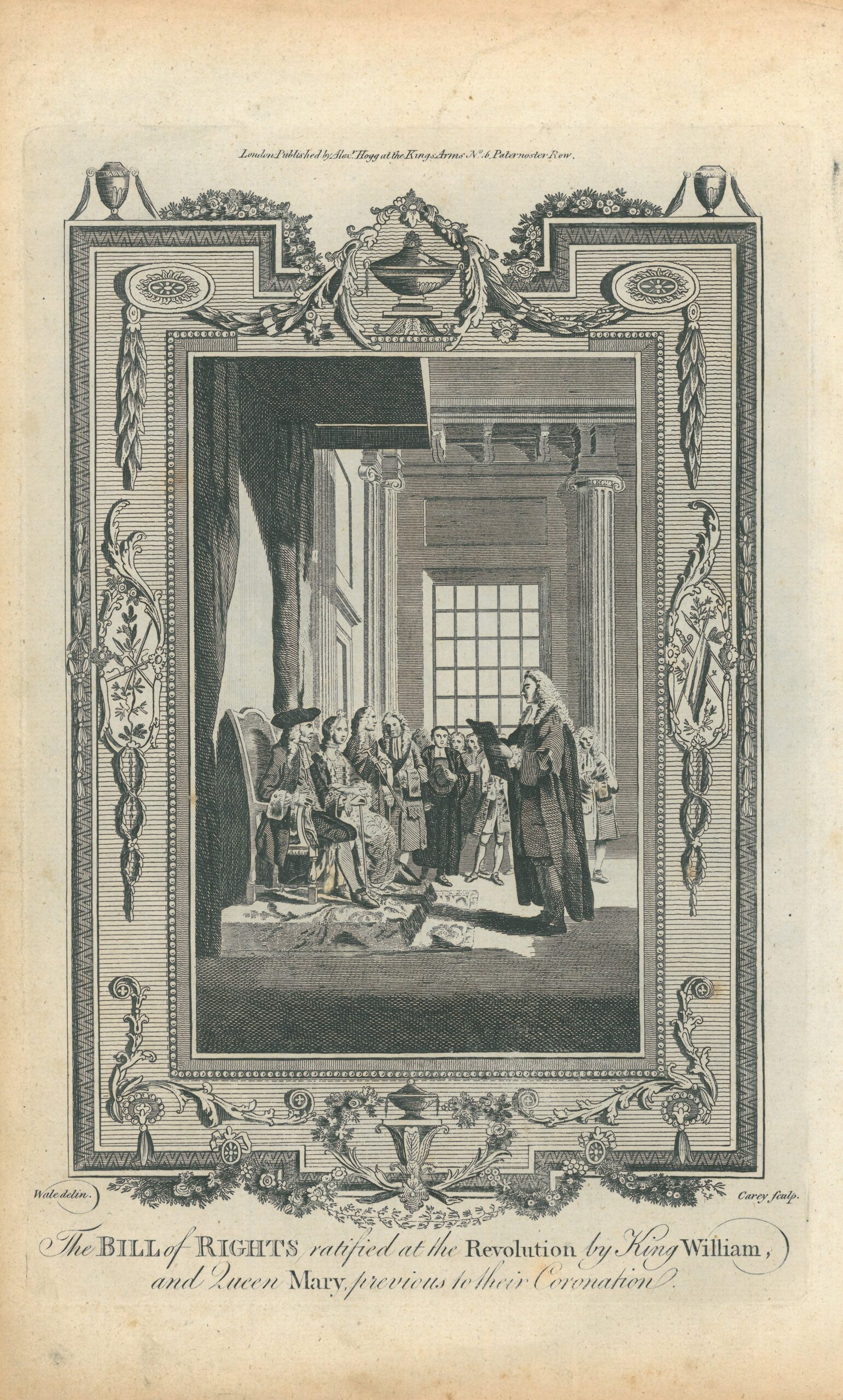
The English Bill of Rights was not conceived in a vacuum. It was the direct consequence of a century of political and religious strife, culminating in the flight of King James II and the ascension of William III and Mary II to the throne. This was a “Revolution,” not of bloodshed, but of constitutional re-evaluation, affirming Parliament’s ascendancy and fundamentally altering the balance of power.
The Context: From Absolutism to Limited Monarchy
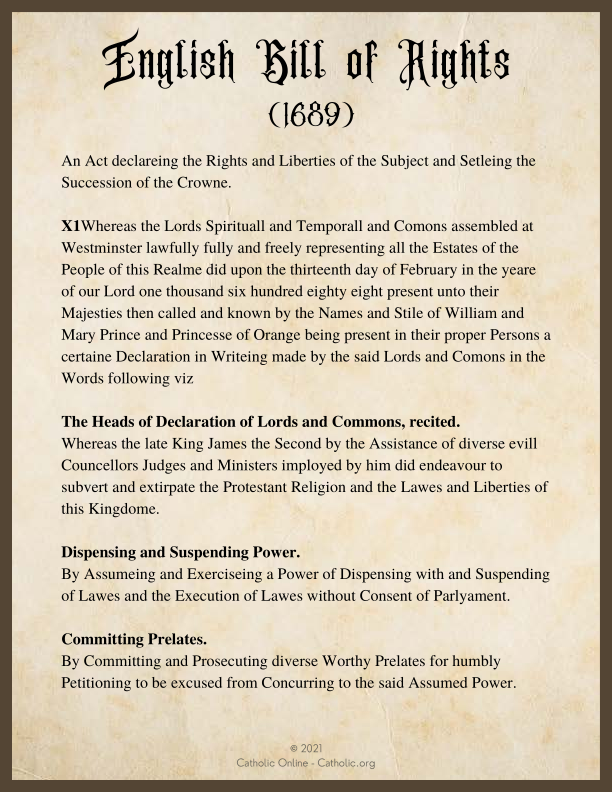
For much of the 17th century, England was locked in a struggle between the Crown’s desire for absolute power, particularly under the Stuart monarchs, and Parliament’s assertion of its traditional rights and the liberties of the English people. James II, a Roman Catholic in a predominantly Protestant nation, exacerbated these tensions through his arbitrary use of power, disregard for parliamentary laws, and attempts to impose religious tolerance for Catholics, which was widely perceived as a threat to the established Church of England and Protestant ascendancy. He suspended laws, maintained a standing army without parliamentary consent, and interfered with judicial independence, alarming both the political elite and the general populace.
The “Glorious Revolution” of 1688 saw a coalition of English parliamentarians invite William of Orange, James II’s Protestant nephew and son-in-law, to invade England and depose the king. James fled, and Parliament, rather than restoring the monarchy unconditionally, presented William and Mary with the Declaration of Rights in February 1689. Upon their acceptance of the throne, this Declaration was formally enacted into law as the Bill of Rights in December 1689. It was not a grant of rights by the monarch, but an assertion of pre-existing rights by Parliament, a profound shift in the “brand” of English governance.
Core Tenets and Enduring Principles
The Bill of Rights systematically addressed the abuses of James II, establishing a framework for a constitutional monarchy where the monarch’s power was explicitly limited by law and Parliament. Its key provisions included:
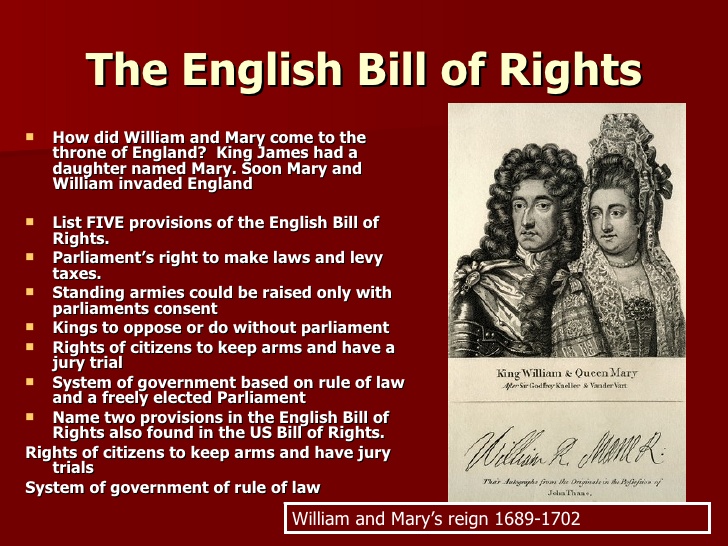
- Parliamentary Supremacy: The monarch could not suspend or dispense with laws, levy taxes, or maintain a standing army in peacetime without Parliament’s consent. This gave Parliament crucial control over the nation’s finances and military.
- Freedom of Speech in Parliament: Members of Parliament were granted freedom of debate and speech, without fear of prosecution outside of Parliament, a vital element for effective legislative oversight.
- Free Elections: It mandated that parliamentary elections should be free, ensuring the representative nature of the legislative body.
- Right to Petition: Subjects were granted the right to petition the king without fear of prosecution.
- No Cruel and Unusual Punishment: It prohibited excessive bail, excessive fines, and cruel and unusual punishments, laying a cornerstone for modern human rights.
- Protestant Succession: It explicitly settled the succession of the Crown within the Protestant lineage, solidifying the religious and political landscape.
- Regular Parliaments: It stipulated that Parliament ought to be held frequently, ensuring ongoing accountability of the Crown.
These tenets were instrumental in reshaping England’s political identity, fundamentally “re-branding” the monarchy from an absolute power to one bound by law and accountable to Parliament. This new “corporate identity” for the state, emphasizing rule of law and representative governance, would become a powerful model for nations worldwide. It established a framework that, while imperfect by modern standards, laid the groundwork for parliamentary democracy and individual liberties, signaling a new era of trust and predictability in governance.
Echoes in the Digital Age: Tech, Rights, and Governance
The English Bill of Rights, a document forged in an era of quill pens and horse-drawn carriages, might seem light-years removed from our hyper-connected, tech-driven world. Yet, its fundamental principles of limiting power, ensuring transparency, and safeguarding individual liberties find strikingly relevant applications in the challenges posed by modern technology. The spirit of 1689 provides a historical “protocol” for establishing rules in novel domains, much like we grapple with the wild west of the digital frontier.
Digital Security and the Spirit of Consent
One of the most significant provisions of the Bill of Rights was the prohibition of maintaining a standing army in peacetime without parliamentary consent. This reflected a deep-seated distrust of unchecked executive power and a demand for democratic oversight over instruments of force. In the digital age, this principle resonates profoundly with debates around digital security and surveillance. When governments or corporations collect vast amounts of personal data, when AI tools analyze our every digital footprint, or when state-sponsored actors engage in cyber warfare, where is the “parliamentary consent”?
The concept of informed consent, crucial in data collection and privacy policies, directly parallels the historical need for public consent in matters affecting national security and individual liberties. The challenges of regulating tech giants, ensuring ethical AI development, and safeguarding against digital authoritarianism all hinge on establishing clear rules and democratic accountability, mirroring Parliament’s assertion of control over the Crown’s military power. Just as subjects feared arbitrary force then, citizens today fear arbitrary data collection and algorithmic discrimination, necessitating a modern “Bill of Rights” for digital citizenship that demands transparency and democratic oversight over the new “standing armies” of data and AI.
Freedom of Expression in a Networked World
The Bill of Rights explicitly protected “freedom of speech and debates or proceedings in Parliament.” While not extending to all citizens, this provision was crucial for open political discourse and holding power accountable. Today, freedom of expression takes on new dimensions in our networked world. Social media platforms, messaging apps, and online forums are the new public squares, but they are also often privately owned and centrally moderated.
The historical battle for parliamentary freedom of speech highlights the importance of unchecked platforms for debate. In the digital realm, we face questions of censorship, content moderation, and the power of tech companies to shape public discourse. How do we ensure “free elections” in the age of deepfakes and algorithmic echo chambers? How do we protect the “right to petition” when access to information is curated by AI? The Bill of Rights’ foundational assertion that deliberation should be free from external coercion provides a powerful historical analogy for the ongoing struggle to maintain an open and equitable digital commons, free from undue corporate or governmental influence, and to ensure that digital rights are recognized and protected with the same gravity as historical liberties. The very architecture of digital platforms, the algorithms that govern our feeds, and the tools of digital security are ripe areas where the spirit of transparent, accountable governance, first articulated in 1689, must be applied.
The Financial Foundation of Liberty and Prosperity
Beyond its political implications, the English Bill of Rights had a profound and often underappreciated impact on the economic landscape, laying critical groundwork for financial stability, property rights, and the eventual rise of Great Britain as an economic powerhouse. The principles established in 1689 directly inform how we approach modern money matters, from personal finance to global investment.
Taxation, Property, and Economic Stability
Perhaps the most direct financial consequence of the Bill of Rights was its stipulation that “levying money for or to the use of the Crown by pretence of prerogative, without grant of Parliament, for longer time, or in other manner than the same is or shall be granted, is illegal.” This single clause placed the control of the nation’s purse strings firmly in the hands of Parliament. This parliamentary control over taxation was revolutionary, preventing the monarch from arbitrarily seizing assets or raising funds without the consent of the elected representatives.
This shift created an environment of predictability and security for property owners and merchants. When individuals and businesses knew that their wealth could not be arbitrarily confiscated through royal decree, they were more inclined to invest, innovate, and engage in long-term economic planning. This certainty in property rights and the rule of law over fiscal matters fostered an era of unprecedented economic growth in England. It reduced sovereign risk, making government borrowing more reliable (as Parliament guaranteed repayment, not just the king), which in turn fueled investment in infrastructure, trade, and eventually, the Industrial Revolution. For personal finance today, the underlying principle remains: stable governance and clearly defined property rights are fundamental for wealth creation and secure investment.
Modern Money and Financial Tools: A Legacy of Regulation
The legacy of the Bill of Rights extends to how we manage modern money and utilize financial tools. The concept of parliamentary accountability over national finance laid the groundwork for robust public financial management, independent central banking (established shortly after with the Bank of England), and sophisticated financial regulations. These institutions and rules, designed to ensure stability and prevent arbitrary financial actions, are direct descendants of the 1689 principles.
Consider online income strategies or side hustles today. They thrive in an environment where contracts are enforceable, digital property (like NFTs or cryptocurrencies) has recognized legal standing, and financial transactions are regulated to prevent fraud and maintain market integrity. The financial markets, from stock exchanges to investment funds, rely on transparency, rule of law, and accountability—principles enshrined in the Bill of Rights’ control over royal finances. Even today’s debates about digital currencies, financial technology (FinTech) regulation, and global taxation are, at their core, about establishing legitimate oversight and ensuring democratic consent over economic power, just as Parliament asserted its authority over the Crown’s finances centuries ago. The predictability and stability that the Bill brought to public finance created the bedrock for private financial growth, making it a surprisingly relevant document for understanding the foundations of our contemporary financial world.
Branding a Legacy: From Kingdom to Global Influence
Beyond its immediate impact on English governance and finance, the Bill of Rights played a crucial role in shaping England’s (and later Great Britain’s) brand on the international stage. It fundamentally altered the nation’s corporate identity, transforming it from a monarchy prone to absolutism into a beacon of constitutionalism and limited government, a powerful narrative that would influence political thought and revolutions for centuries to come.
The English Brand of Constitutionalism
The establishment of parliamentary supremacy and defined liberties through the Bill of Rights created a powerful and enduring “brand” for England: that of a nation committed to the rule of law, individual freedoms, and representative government. This constitutional framework became a compelling alternative to the absolute monarchies prevalent across much of Europe. England’s political stability and economic prosperity in the wake of 1689 were often attributed to this unique system, making its constitutional model a desirable export.
This “brand strategy” for governance proved incredibly successful. The principles enshrined in the Bill of Rights served as a direct inspiration for the American colonists in their struggle for independence, culminating in their own Bill of Rights. Similarly, Enlightenment thinkers across Europe looked to the English model as a blueprint for political reform. The enduring “reputation” of the English legal and political system, built upon this foundational document, attracted immigration and investment, reinforcing the narrative of a free and secure society. It demonstrated how a clear, publicly articulated set of rules for governance could become a powerful differentiating factor for a nation, akin to a strong corporate identity in the modern business world.
Personal Branding and Public Trust in a Constitutional Framework
While primarily focused on institutional power, the Bill of Rights also implicitly informed the personal branding of leaders within a constitutional framework. No longer could monarchs rule by divine right or arbitrary whim; their authority was derived from and bound by law. This meant that legitimacy, and thus the “brand” of a leader, became intertwined with adherence to constitutional principles and accountability to Parliament. For individuals, this established a standard of public trust: leaders were expected to operate within defined limits, fostering confidence in the political system.
In today’s world, whether it’s a CEO upholding corporate governance standards, a politician adhering to ethical codes, or an influencer building a trustworthy personal brand, the underlying principle remains: credibility and trust are built on transparency, accountability, and operating within established rules. The Bill of Rights served as a powerful “case study” in how a nation could restore public trust after a period of arbitrary rule, by explicitly defining roles, rights, and responsibilities. This lesson in building a resilient political “brand” through adherence to foundational principles remains highly relevant, emphasizing that the strength of any entity—be it a nation, a corporation, or an individual—rests on the integrity of its stated values and its commitment to the rules that govern its operation.
Conclusion
The English Bill of Rights, a document born from the political turmoil of the late 17th century, stands as a testament to the enduring human quest for liberty, accountability, and ordered governance. Its primary aim was to redefine the power of the monarchy and assert the supremacy of Parliament, thereby laying crucial groundwork for modern democracy. Yet, its influence extends far beyond the confines of historical texts and political science classrooms.
The principles embedded within this foundational document—the demand for consent, the safeguarding of expression, the assertion of financial oversight, and the commitment to the rule of law—resonate with surprising force in the complexities of our contemporary world. From the ethical dilemmas of AI tools and digital security to the intricate strategies of brand reputation and corporate identity, and from the stability required for personal finance and investing to the regulation of online income and business finance, the spirit of the English Bill of Rights continues to offer a guiding framework. It reminds us that fundamental questions of power, rights, and accountability are timeless, and that historical precedents can provide profound insights as we navigate the ever-evolving landscapes of technology, branding, and money. The 1689 Bill of Rights, therefore, is not merely a relic of the past, but a living testament to the enduring principles that underpin a free and prosperous society, continually informing the conversations that shape our future.
aViewFromTheCave is a participant in the Amazon Services LLC Associates Program, an affiliate advertising program designed to provide a means for sites to earn advertising fees by advertising and linking to Amazon.com. Amazon, the Amazon logo, AmazonSupply, and the AmazonSupply logo are trademarks of Amazon.com, Inc. or its affiliates. As an Amazon Associate we earn affiliate commissions from qualifying purchases.