
The seemingly simple word “a” is a cornerstone of the English language, acting as a linguistic chameleon that adapts to its surroundings and plays a crucial role in conveying meaning. While often overlooked due to its ubiquity, understanding the grammatical function and nuances of “a” can illuminate how we construct sentences, clarify meaning, and even how we conceptualize the world around us. This exploration delves into the nature of “a” not just as a grammatical entity, but also as a concept that resonates across various domains, including technology, branding, and finance, where clarity and precision are paramount.

The Indispensable Article: “A” as a Determiner
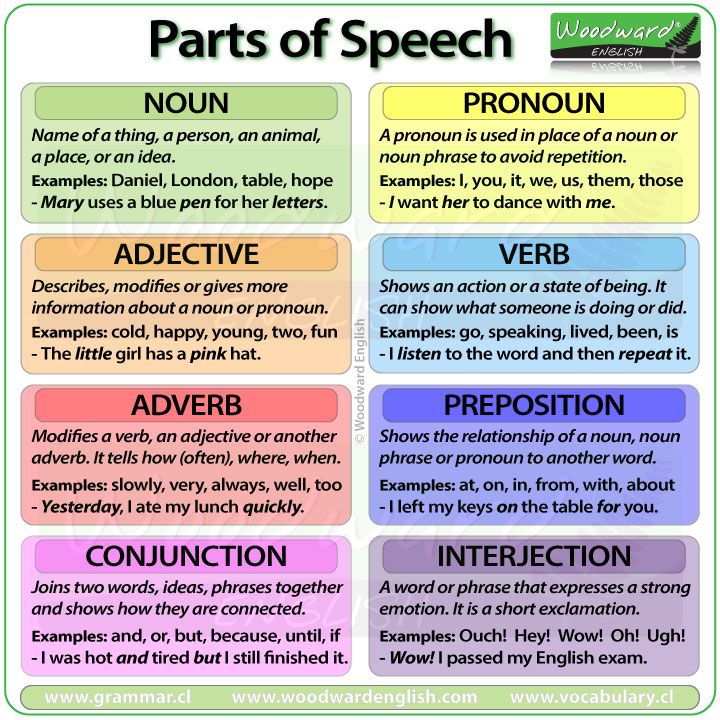
At its core, “a” is classified as an indefinite article. This means it precedes singular, countable nouns and indicates that the noun is neither specific nor previously mentioned. It’s the counterpart to the definite article “the,” which refers to a particular or specific noun. The choice between “a” and “an” is dictated by the sound of the word that immediately follows: “a” is used before words that begin with a consonant sound, while “an” is used before words that begin with a vowel sound.
The Genesis of Indefiniteness: When Specificity Fades
The function of “a” lies in its ability to generalize. When we say “I need a pen,” we are expressing a need for any pen, not a specific one that the listener or reader would already know about. This indefiniteness is key to effective communication. It allows us to introduce new concepts, refer to members of a category, and express general truths without needing to specify each instance.
Consider the following examples:
- Introducing a new subject: “I saw a dog in the park.” Here, “dog” is being introduced for the first time.
- Referring to a member of a class: “A doctor is expected to be knowledgeable.” This refers to any individual who is a doctor, not a particular one.
- Expressing frequency or rate: “She earns $50 a day.” This indicates a rate of earnings per day.
The choice between “a” and “an” is not about the spelling of the word but its pronunciation. For instance, we say “a university” because “university” starts with a “yoo” sound (a consonant sound), not a pure vowel sound. Conversely, we say “an hour” because the “h” is silent, and the word begins with a vowel sound. This subtle distinction is vital for fluency and comprehension.
Beyond Grammar: “A” as a Concept in Technology and Digital Environments
The principle of “a” – of introducing something new, generalizing, or referring to an instance within a broader category – has significant parallels in the world of technology. While not literally using the word “a” in code, the underlying concepts are mirrored in how we organize, categorize, and interact with digital information.
AI and the Ambiguity of “A”
In the realm of Artificial Intelligence, the concept of ambiguity and generalization, which “a” embodies, is a constant challenge. AI models are trained on vast datasets to recognize patterns and make predictions. When an AI encounters a new piece of data, it needs to categorize it or infer its meaning.
- Object Recognition: When an AI identifies “a cat” in an image, it’s applying its learned knowledge to a specific instance of a broad category. It doesn’t necessarily know which cat, but it recognizes the features that define “cat.” This is analogous to saying “I saw a cat.”
- Natural Language Processing (NLP): In NLP, understanding the role of articles like “a” is crucial for deciphering intent and meaning. An AI needs to differentiate between “I want a pizza” (any pizza) and “I want the pizza we ordered yesterday” (a specific pizza). The presence or absence of an article profoundly alters the meaning, and AI systems must be adept at processing these distinctions.
- Generating Content: When AI tools generate text, they often operate on probabilities and generalizations. The resulting content might be about “a” topic, introducing it in a way that the reader may not be familiar with, mirroring the introductory function of the indefinite article.
Software and App Functionality: Creating Instances
Many software applications and apps deal with the creation of distinct entities or instances. When you open a new document in a word processor, you’re creating “a document.” When you start a new project in a design app, you’re initiating “a project.” These are singular, countable entities, and the concept of “a” underpins the user’s understanding of creating a new, distinct item within the software’s framework.
- User Accounts: Each user creating an account on a platform is creating “a user.”
- File Management: Saving a file creates “a file,” a distinct entity within a larger system.
- Notifications: Receiving “a notification” signifies a single, discrete piece of information directed at the user.
The digital world thrives on creating and managing these singular instances. The linguistic function of “a” – to refer to one instance of a type – directly translates into the creation and management of digital objects.
Branding and Marketing: Establishing Identity and Uniqueness
In the competitive landscape of branding and marketing, the concept of “a” also plays a pivotal role, albeit in a more abstract sense. While not about grammatical articles, it’s about establishing a distinct identity, differentiating from the crowd, and making a singular impact.

Creating “A” Brand Identity
A successful brand aims to be recognized as unique and singular in its offering and appeal. When a company launches “a new product,” they aim for it to stand out and be perceived as distinct from competitors. This is about creating “a” memorable experience, “a” compelling story, or “a” unique solution for the consumer.
- Positioning: Brands strive to occupy “a” specific niche or position in the market. This means being recognized as the go-to for “a particular type of service” or “a specific solution.”
- Campaigns: A marketing campaign aims to create “a” specific message or impression. While there might be multiple ads, they all contribute to the singular goal of the campaign.
- Personal Branding: For individuals, personal branding is about crafting “a” unique professional identity. It’s about being known for “a” specific skill set, “a” particular approach, or “a” distinctive personality. This singular focus helps individuals stand out in a crowded professional environment.
The Power of “One” in Marketing
While “a” denotes indefiniteness, the underlying idea of singularity is powerful in marketing. Think of slogans that emphasize uniqueness or exclusivity. The aspiration is for your brand to be perceived as “the” one, but the initial introduction, the broad appeal, often starts with establishing it as “a” valuable option.
- “A” Better Way: Marketers often position their products as “a better way” to do something, implying a singular, improved solution.
- “A” Choice: Consumers are presented with “a choice,” and brands want to be that choice.
- “A” Solution: Businesses often sell “a solution” to a problem, highlighting the singular benefit they provide.
The goal is to move from being “a” contender to “the” definitive choice, but the initial step involves establishing oneself as a distinct and valuable option within the marketplace.
Personal Finance and Investing: Individual Units and Opportunities
In the realm of money, the concept of “a” surfaces in the context of individual units of currency, singular financial instruments, and discrete opportunities.
“A” Dollar, “A” Share, “A” Opportunity
When we talk about personal finance, we often deal with individual units.
- “A” dollar: This is the fundamental unit of currency. Every transaction, every saving, every investment ultimately boils down to managing these individual units.
- “A” share of stock: When investing, you buy “a share” of a company. This is a singular unit representing ownership, and the accumulation of these individual units forms an investment portfolio.
- “A” bank account: Each bank account is a distinct financial entity, holding individual assets.
Identifying Financial Opportunities
The idea of “a” also relates to identifying singular financial opportunities.
- “A” side hustle: Someone looking to increase their income might seek out “a side hustle,” a specific venture to generate additional earnings.
- “A” investment opportunity: Investors are constantly scanning the market for “a new investment opportunity,” a discrete chance to grow their wealth.
- “A” budget: Creating “a budget” involves setting out a plan for managing finances on a singular, defined period, often monthly.
The financial world is built upon the management and growth of these discrete, singular units and opportunities. The clarity of understanding what “a” means – one, not the whole, but a significant building block – is essential for sound financial decision-making.
Conclusion: The Enduring Significance of “A”
From its humble beginnings as a fundamental grammatical building block, the word “a” carries a conceptual weight that extends far beyond sentence structure. It represents indefiniteness, the introduction of new ideas, and the concept of singularity within a broader category.
In technology, it mirrors how we create and categorize digital entities and how AI grapples with generalization. In branding, it underscores the importance of establishing a unique identity and making a singular impact. And in finance, it relates to the individual units and discrete opportunities that form the bedrock of wealth management.
Understanding “what type of word is a” is more than just a linguistic exercise; it’s an insight into how we structure thought, interact with the world, and navigate complex systems, both digital and real. The next time you encounter this seemingly insignificant article, remember its profound underlying significance – a testament to the power of simplicity and the fundamental building blocks of communication and comprehension.
aViewFromTheCave is a participant in the Amazon Services LLC Associates Program, an affiliate advertising program designed to provide a means for sites to earn advertising fees by advertising and linking to Amazon.com. Amazon, the Amazon logo, AmazonSupply, and the AmazonSupply logo are trademarks of Amazon.com, Inc. or its affiliates. As an Amazon Associate we earn affiliate commissions from qualifying purchases.