
Service dogs are extraordinary animals, meticulously trained to perform specific tasks that mitigate the disabilities of their handlers. Far from being mere pets, these dedicated canines are working partners, providing vital assistance that fosters independence, enhances safety, and improves the overall quality of life for individuals with a wide range of challenges. While the iconic image of a guide dog leading a visually impaired person is widely recognized, the world of service dogs is incredibly diverse, encompassing a spectrum of specialized roles that are continually evolving, often supported by advancements in technology, strategic branding efforts, and significant financial investment.

The Diverse World of Canine Companionship: Core Service Dog Types
The definition of a service dog under the Americans with Disabilities Act (ADA) is a dog that is individually trained to do work or perform tasks for the benefit of an individual with a disability. This broad definition encompasses a multitude of specialized roles, each tailored to specific needs. These highly trained animals are a testament to the profound bond between humans and dogs, leveraging their innate abilities to perform complex tasks that dramatically impact their handlers’ lives.
Guide Dogs: Navigating the World with Visual Impairment
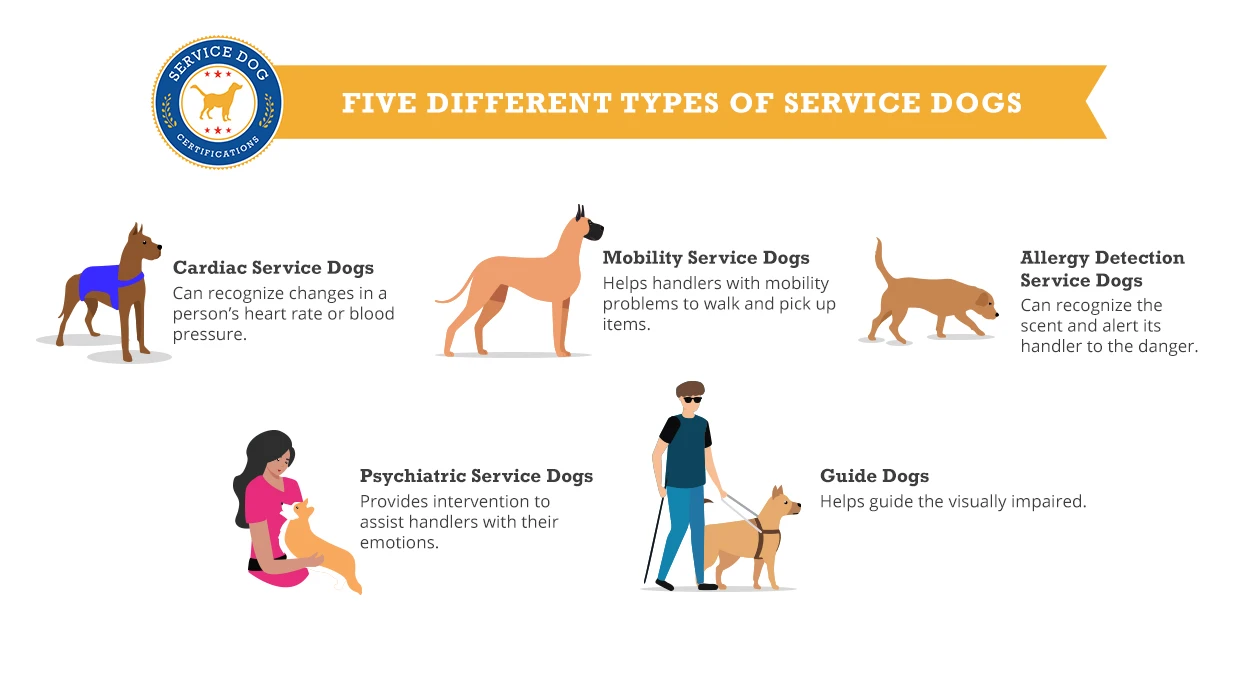
Perhaps the most recognized type, Guide Dogs assist individuals who are blind or visually impaired to navigate their environments safely and independently. They are trained to guide their handlers around obstacles, stop at curbs and stairs, and indicate changes in elevation. Modern training often incorporates elements of spatial awareness and problem-solving, allowing the dog to make intelligent decisions in complex urban settings. The partnership between a handler and their guide dog is built on trust and communication, forming an invaluable team that tackles daily challenges.
Hearing Dogs: Ears for the Deaf and Hard of Hearing
Hearing Dogs are specifically trained to alert individuals who are deaf or hard of hearing to important sounds in their environment. These sounds can range from mundane alerts like a doorbell or alarm clock to critical signals such as a smoke alarm, telephone ringing, or a baby crying. The dog will typically make physical contact with their handler, leading them to the source of the sound. In today’s smart homes, hearing dogs can even be trained to react to alerts from connected devices, bridging the gap between digital notifications and their handler’s awareness.
Mobility Assistance Dogs: Empowering Physical Independence
For individuals with mobility impairments, Mobility Assistance Dogs perform a variety of physical tasks that increase their handler’s independence and reduce reliance on human assistance. These tasks can include retrieving dropped items, opening and closing doors, turning lights on and off, pulling wheelchairs, and providing balance support. The training is highly individualized, based on the specific physical needs of the handler, transforming daily activities that might otherwise be challenging or impossible into manageable tasks.
Medical Alert and Response Dogs: Life-Saving Sentinels
Medical Alert Dogs are trained to detect and respond to specific medical conditions. This category includes Diabetic Alert Dogs, who can sense changes in their handler’s blood sugar levels through scent and alert them before an emergency arises. Similarly, Seizure Response Dogs are trained to provide comfort, retrieve medication, or even summon help during or after a seizure. Allergen Detection Dogs can identify specific allergens, preventing dangerous exposures. These dogs offer a crucial layer of protection, often detecting subtle physiological changes imperceptible to humans or even medical devices.
Psychiatric Service Dogs: Supporting Mental Well-being
Psychiatric Service Dogs assist individuals with mental health disabilities such as PTSD, severe anxiety, depression, and obsessive-compulsive disorder. Their tasks are specifically designed to mitigate psychiatric symptoms, which can include interrupting panic attacks, providing deep pressure therapy to soothe anxiety, reminding handlers to take medication, creating a physical barrier in crowded spaces, or even locating an exit. These dogs provide a constant, non-judgmental presence that helps ground their handlers and navigate challenging emotional states.
The Digital Frontier: Technology’s Role in Service Dog Support and Training
The rapid advancements in technology are profoundly impacting the world of service dogs, enhancing their training, monitoring their health, and integrating them more seamlessly into modern life. From sophisticated tracking devices to smart home integration, technology is becoming an indispensable tool for handlers, trainers, and organizations alike, driving new levels of efficiency and connectivity.
Enhancing Training and Performance
Technology is revolutionizing service dog training methodologies. GPS trackers allow trainers to monitor a dog’s movements during off-leash training, analyze routes, and evaluate spatial awareness, providing invaluable data for refining techniques. Specialized apps enable handlers and trainers to log progress, track specific tasks performed, monitor health metrics, and access training protocols remotely. Furthermore, virtual reality (VR) simulations are being explored to expose dogs to a wide array of environments and scenarios in a controlled setting, preparing them for the unpredictable challenges of the real world without actual risk. These digital tools ensure consistency, data-driven improvements, and personalized training plans, ultimately leading to more proficient service dogs.
Smart Homes and Accessibility Integration

As homes become smarter, service dogs are increasingly interacting with connected technologies to assist their handlers. Dogs can be trained to activate smart switches that control lights, open automated doors, or even operate smart appliances. For individuals with mobility limitations, this integration means a dog can interact with voice-activated systems or specially designed buttons to manipulate their environment. Internet of Things (IoT) devices, when paired with a service dog’s capabilities, create a more accessible and autonomous living space, allowing handlers greater control over their surroundings and reducing dependence on human assistance.
Health Monitoring and Veterinary Tech
Wearable technology isn’t just for humans; it’s proving invaluable for service dogs too. Devices similar to fitness trackers can monitor a dog’s activity levels, sleep patterns, heart rate, and even body temperature, providing crucial insights into their overall health and well-being. This proactive monitoring helps detect potential health issues early, ensuring the dog remains in peak condition for its demanding role. Telemedicine is also gaining traction, allowing handlers to consult with veterinarians remotely, which is particularly beneficial for those with mobility challenges or living in remote areas. Advanced diagnostic tools, often leveraged by AI for quicker and more accurate interpretations, further support the specialized veterinary care these vital companions require.
Building Trust and Reputation: The “Brand” of Service Dogs
The concept of “brand” extends beyond commercial products; it encompasses reputation, public perception, and trust. For service dogs and the organizations that train them, branding is critical. It shapes how the public understands their role, influences policy, and combats the pervasive issue of misrepresentation, ensuring that the integrity of these life-changing partnerships remains intact.
Organizational Branding and Public Education
Reputable service dog organizations meticulously cultivate their brand through transparent practices, ethical training, and consistent messaging. Their “brand” communicates their mission, success stories, and the rigorous standards they uphold, which is vital for fundraising and attracting qualified handlers. A strong organizational brand helps differentiate legitimate service dogs from pets masquerading as service animals, a growing problem that undermines the public’s trust and creates access issues for genuine teams. Effective public education campaigns, often driven by these organizations, reinforce the “brand” of a service dog as a highly trained, working animal, not a pet, thereby fostering respect and appropriate interaction from the public.
Navigating Public Perception and Legal Frameworks
The “brand” of service dogs is also shaped by their public perception and the legal frameworks governing their access. Laws like the ADA legally define a service dog’s rights, effectively branding them as necessary medical equipment rather than pets, and granting them access to public spaces where pets are typically prohibited. Businesses and establishments are increasingly aware of the importance of being “service dog friendly,” as their compliance impacts their own corporate identity and reputation for inclusivity. However, ongoing public education is crucial to counter misunderstandings, inappropriate interactions, and fraudulent claims that dilute the professional “brand” of true service dog teams. Clear identification, such as vests and patches, serves as a visual “brand” that communicates their working status.
The Ethical “Brand”: Responsible Breeding and Training
At the core of the service dog “brand” is a commitment to ethical practices. This begins with responsible breeding programs that prioritize health, temperament, and genetic suitability, ensuring that dogs are born with the right foundational qualities for service work. It extends through humane, positive-reinforcement training methods that prioritize the dog’s welfare and build a strong, trust-based partnership. The ethical “brand” also encompasses the lifetime commitment to the dog, including proper care, retirement planning, and ongoing support for both the dog and handler. Organizations that uphold these high ethical standards reinforce the credibility and respect associated with legitimate service dogs, differentiating themselves from less scrupulous operations.
The Financial Landscape: Investing in Independence and Impact
The creation and deployment of a service dog represent a significant financial undertaking. From specialized breeding to years of intensive training and ongoing care, the costs are substantial. Understanding the financial landscape is crucial, not only for individuals seeking a service dog but also for the non-profits, donors, and policymakers who enable these life-changing partnerships to flourish and recognize their profound economic and societal impact.
The Cost of a Life-Changing Partnership
Acquiring and maintaining a fully trained service dog is a considerable investment. The cost can range from $20,000 to $50,000 or even more, covering breeding, extensive veterinary care, specialized food, equipment, and two years or more of professional training. This figure also includes the placement process, handler training, and ongoing follow-up support from the training organization. While many organizations provide dogs to handlers at little or no cost, the underlying expenses for these organizations are immense, reflecting the meticulous attention to detail and professional expertise required to produce a highly capable and reliable service animal.
Funding and Financial Assistance
Due to the prohibitive costs, the vast majority of service dogs are provided by non-profit organizations that rely heavily on donations, grants, sponsorships, and fundraising events. These organizations operate on a model of collective financial support, channeling funds from generous individuals, corporations, and foundations to cover the costs of breeding, raising, and training service dogs. For handlers, financial assistance can come from various sources, including personal fundraising, specific grants for service dog acquisition, or sometimes through health insurance, although coverage for service dogs remains inconsistent and often limited. Pet insurance typically does not cover service dog training or initial acquisition costs, highlighting the unique financial category service dogs occupy.
The Economic and Societal Return on Investment
Despite the high initial outlay, investing in service dogs yields significant economic and societal returns. For individuals, a service dog can dramatically increase independence, enabling them to return to work, pursue education, and participate more fully in community life, thereby reducing reliance on human caregivers and potentially decreasing long-term healthcare costs. Studies have shown that service dogs contribute to improved mental health, reduced anxiety, and increased self-sufficiency, which translates into broader societal benefits. By empowering individuals with disabilities to achieve greater autonomy and contribute economically, service dogs represent a profound investment in human potential and well-being, demonstrating a powerful return that extends far beyond monetary value. Combating fraud in the service dog industry is also a financial imperative, as misrepresentation drains resources and undermines the public support necessary for legitimate programs.
The world of service dogs is a testament to the incredible capabilities of canines and the profound impact they have on human lives. From guiding the visually impaired to alerting to medical emergencies, these animals are more than companions; they are crucial partners in independence. As technology continues to advance, as organizations refine their branding and public education efforts, and as financial models evolve to support these vital programs, the role of service dogs will only continue to expand and deepen, offering hope and practical assistance to an ever-growing number of individuals with disabilities around the globe. Their journey from loyal pets to highly specialized assistants is a story of continuous innovation, unwavering dedication, and the enduring power of the human-animal bond.
aViewFromTheCave is a participant in the Amazon Services LLC Associates Program, an affiliate advertising program designed to provide a means for sites to earn advertising fees by advertising and linking to Amazon.com. Amazon, the Amazon logo, AmazonSupply, and the AmazonSupply logo are trademarks of Amazon.com, Inc. or its affiliates. As an Amazon Associate we earn affiliate commissions from qualifying purchases.