
The Sun, our life-giving star, is a colossal furnace of unfathomable power and heat. Its sheer scale and the processes occurring within it are central to life on Earth, influencing everything from global climate patterns to the very concept of sustainable energy. When we ponder “what temperature is the Sun’s core,” we’re not just asking a scientific question; we’re delving into the fundamental physics that govern stars, unlocking insights that drive technological innovation, shape global economies, and even influence how brands communicate power and sustainability.
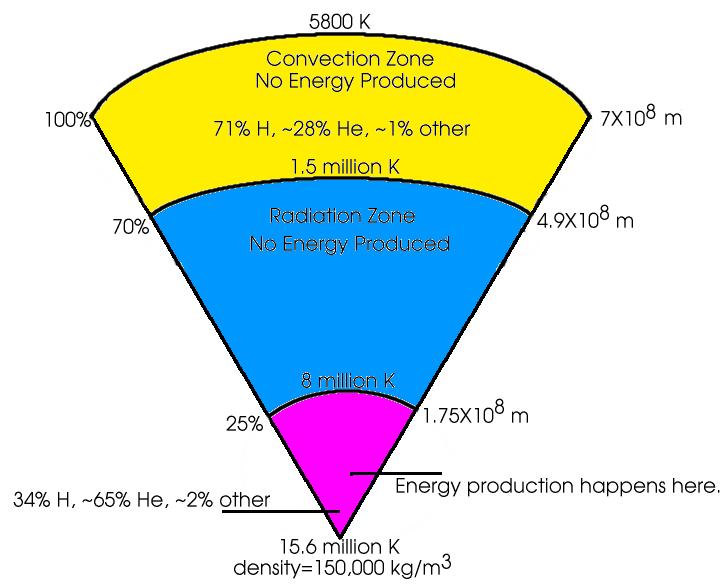
At its heart, the Sun’s core blazes at an astonishing 15 million degrees Celsius (approximately 27 million degrees Fahrenheit). This mind-boggling temperature isn’t just an astronomical curiosity; it’s the critical condition required for the most powerful process in the universe: nuclear fusion. Understanding this immense heat and the mechanisms behind it provides a launchpad for exploring advancements in technology, the strategic branding of innovation, and the significant financial investments being made in harnessing stellar energy here on Earth.

Unveiling the Solar Furnace: The Science Behind the Heat
The Sun’s core is not merely hot; it’s an extreme environment where matter exists in a state unlike anything found naturally on Earth. To comprehend how we arrive at the figure of 15 million degrees Celsius, we must first understand the fundamental processes that create and sustain this heat, and then appreciate the sophisticated technologies that allow us to “measure” something so distant and inaccessible.
Nuclear Fusion: The Engine of Stellar Power
The Sun is primarily composed of hydrogen and helium. In its core, the immense gravitational pressure is so intense that it crushes matter to an incredible density, about 150 times that of water. This extreme pressure, combined with the staggering temperature, strips electrons from atoms, creating a plasma – a superheated gas of ionized particles. Within this plasma, atomic nuclei collide with such force that they overcome their natural electromagnetic repulsion, fusing together.
Specifically, in the Sun’s core, hydrogen nuclei (protons) fuse to form helium nuclei through a process called the proton-proton chain. This reaction doesn’t just combine elements; it converts a small fraction of their mass into pure energy, according to Einstein’s famous equation E=mc². This energy is primarily released as gamma-ray photons and neutrinos. The photons then begin an arduous journey outward, scattering and re-emitting countless times over hundreds of thousands of years before finally emerging from the Sun’s surface as sunlight. This continuous cascade of nuclear fusion is the ultimate source of the Sun’s luminosity and its staggering internal temperature, perpetually maintaining the conditions necessary for fusion to continue.
The Technological Quest for Knowledge: How We Measure the Unmeasurable
Given that the Sun’s core is thousands of kilometers beneath an opaque plasma surface, directly measuring its temperature is impossible. So, how do scientists arrive at such precise figures as 15 million degrees Celsius? The answer lies in a combination of advanced physics, sophisticated computational models, and cutting-edge observational technologies, firmly placing solar research within the realm of “Tech.”
Astrophysicists develop detailed stellar models based on fundamental laws of physics, such as gravity, thermodynamics, and nuclear reactions. These models take into account the Sun’s mass, luminosity, chemical composition, and age, then use complex algorithms to simulate the conditions within its interior, predicting temperature, pressure, and density profiles. Supercomputers are essential tools for running these intricate simulations, allowing scientists to test hypotheses and refine their understanding of stellar evolution.
A particularly powerful technological method is helioseismology, which is to the Sun what seismology is to Earth. Helioseismology involves studying the vibrations and oscillations on the Sun’s surface. Just as seismic waves reveal Earth’s internal structure, the patterns of these solar vibrations provide crucial data about the density, temperature, and movement of plasma deep within the Sun, including its core. Instruments aboard spacecraft like NASA’s Solar and Heliospheric Observatory (SOHO) and Solar Dynamics Observatory (SDO) collect precise data on these solar oscillations, feeding it into the sophisticated models. Furthermore, advances in Artificial Intelligence (AI) and machine learning are increasingly being employed to analyze the vast amounts of data collected by these observatories, identifying subtle patterns and anomalies that might escape traditional analysis, thereby enhancing the accuracy of our understanding of the solar interior. These technological marvels allow humanity to peer into the heart of our star, transforming theoretical predictions into empirically supported knowledge.
From Stellar Insight to Earthly Innovation: Tech, Brand, and the Sun’s Legacy
The scientific understanding of the Sun’s core doesn’t remain confined to astrophysics journals. It spills over into numerous domains, inspiring some of the most critical technological developments of our time and profoundly influencing how industries, organizations, and even individuals “Brand” themselves in an increasingly energy-conscious world. The very concept of tapping into stellar power has become a powerful narrative.
Harnessing the Sun: The Technology of Tomorrow
The Sun’s incredible power output has naturally led humanity to seek ways to harness it on Earth. This quest is a cornerstone of modern “Tech,” driving innovation in renewable energy and the ambitious pursuit of fusion power.
Solar Photovoltaics (PV), the technology behind solar panels, directly converts sunlight into electricity. While this process happens at the Sun’s surface (photons, not core heat), the inspiration comes from the ultimate power source. Continuous technological advancements in materials science, manufacturing efficiency, and smart grid integration have made solar energy increasingly competitive. From highly efficient monocrystalline panels to flexible thin-film technologies and perovskite solar cells, the evolution of PV technology is rapid. Coupled with advances in battery storage, solar energy systems are becoming more reliable and scalable, transforming how homes and businesses power themselves. “Smart” solar systems, integrated with AI-driven energy management software, optimize energy usage, predict generation, and seamlessly interact with the grid, showcasing the full spectrum of modern tech.
Perhaps even more directly inspired by the Sun’s core is the pursuit of nuclear fusion power. Projects like the International Thermonuclear Experimental Reactor (ITER) in France, along with numerous private ventures, aim to replicate the Sun’s core conditions on a miniature scale. The goal is to achieve controlled fusion – fusing hydrogen isotopes (deuterium and tritium) to release vast amounts of clean energy, with minimal radioactive waste. This is an enormous technological challenge, requiring breakthroughs in plasma confinement (using powerful magnetic fields in devices called tokamaks or stellarators), material science for reactor components, and advanced control systems. If successful, fusion power could offer an almost limitless, clean energy source, fundamentally altering the global energy landscape and representing the ultimate technological triumph in mimicking our star.
Branding the Infinite: The Sun’s Influence on Identity and Marketing
The Sun is more than just a celestial body; it’s a universal symbol imbued with profound meaning: life, energy, warmth, power, and optimism. This powerful iconography is extensively leveraged in “Brand” strategy, particularly within the clean energy, technology, and sustainability sectors.
Companies operating in renewable energy often incorporate solar imagery, colors (yellow, orange), and concepts into their corporate identity and marketing. Brands like “SunPower,” “SolarCity” (now Tesla Energy), and countless others directly reference the star to convey their mission and values. They position themselves as providers of clean, sustainable energy, aligning their brand with the positive attributes of the Sun. This isn’t just aesthetic; it’s a strategic move to build reputation, foster consumer trust, and differentiate themselves in a competitive market. A brand that embodies the Sun’s qualities—reliable, abundant, life-giving—resonates deeply with environmentally conscious consumers and investors.
Beyond specific companies, the “brand” of science itself, particularly space exploration and astrophysics, relies heavily on the inspirational power of phenomena like the Sun. Agencies like NASA and ESA leverage breathtaking images and discoveries to maintain public interest, secure funding, and inspire the next generation of scientists and engineers. Their branding often uses themes of discovery, exploration, and the vastness of the cosmos, with the Sun being a prominent feature. Even personal branding for thought leaders in climate action or technology often draws upon the imagery of light, energy, and a brighter future, all subtly or explicitly linked to our star. The ability to communicate complex scientific endeavors, like understanding the Sun’s core, in an accessible and inspiring way is a critical component of brand success in the science communication sphere.
The Financial Frontier: Investing in Our Star’s Future
The quest to understand and harness the Sun’s power carries immense financial implications, driving investment, shaping economic policies, and creating new markets. From personal finance decisions to large-scale business finance, the Sun’s influence is increasingly tied to “Money.”
The Economics of Energy: Solar Investments and Global Impact
The growth of solar energy has opened up significant investment opportunities, transforming the financial landscape. “Money” flows into solar panel manufacturing, project development (utility-scale solar farms, residential installations), energy storage solutions, and the development of smart grid technologies. Investors can engage through direct equity in renewable energy companies, specialized green funds, exchange-traded funds (ETFs) focused on clean energy, or even green bonds, which specifically fund environmentally friendly projects.
The economic benefits extend beyond direct investment. Increased solar deployment reduces reliance on fossil fuels, leading to energy independence and price stability for nations. It creates new jobs in manufacturing, installation, and maintenance. Governments globally offer incentives like tax credits, feed-in tariffs, and grants to accelerate solar adoption, recognizing its long-term financial and environmental returns. Financial tools and platforms that provide data on energy markets, carbon credits, and ESG (Environmental, Social, and Governance) investing allow individuals and institutions to track performance and make informed decisions about where to allocate capital in this burgeoning sector. The Sun’s power, once seen as limitless and free in its natural state, now underpins a multi-trillion-dollar global industry, demonstrating a powerful convergence of environmental necessity and financial opportunity.
Funding the Final Frontier: Astrophysics and Space Exploration
Understanding the Sun’s core temperature and the dynamics of our star isn’t a cheap endeavor. It requires substantial “Money” in the form of government funding for national space agencies and scientific research institutions. Billions are invested in designing, building, launching, and operating spacecraft like the Parker Solar Probe (which flies closer to the Sun than any previous mission) and ground-based solar observatories. This public funding drives fundamental research, pushing the boundaries of human knowledge and generating unforeseen technological spin-offs that benefit various industries.
Beyond public investment, there’s a growing trend of private investment in space tech and related scientific ventures. While much of this private capital currently targets satellite deployment and space tourism, foundational scientific understanding (like that derived from solar physics) informs the long-term potential of resource extraction, orbital infrastructure, and even future deep-space missions. Companies involved in advanced materials, artificial intelligence, and sophisticated sensors often find their innovations have applications in both terrestrial and extraterrestrial contexts. The intellectual property generated from publicly funded research also creates economic value through licensing and commercialization. Ultimately, the long-term financial return on investment in astrophysics and space exploration is not just in direct economic output but in the intellectual capital, technological advancements, and inspirational boost to human potential that such endeavors provide, ensuring a robust talent pipeline for future innovation.

Beyond the Core: The Sun’s Enduring Relevance in a Digital Age
The Sun’s core, at its fiery 15 million degrees Celsius, represents not just an extreme physical state but a nexus of human ingenuity, economic drive, and brand storytelling. What started as a purely scientific inquiry into the heart of our star expands into a holistic understanding of how we interact with the universe and leverage its principles for our own progress.
In an increasingly digital and interconnected world, the themes derived from understanding the Sun remain profoundly relevant. “Tech” continues to advance our ability to observe, simulate, and harness solar energy, pushing the boundaries of what’s possible in renewable power and fusion research. “Brand” strategies effectively communicate the promise of a sustainable future, drawing on the universal appeal and power of our star to build identity and inspire action. And “Money” acts as the fuel, driving investment in the technologies and research necessary to transition towards a cleaner, more energy-secure planet.
From the deepest scientific models run on supercomputers to the financial instruments funding solar farms, and the compelling narratives spun by green energy brands, the Sun’s core temperature is more than just a number. It is a symbol of immense power, a beacon for technological ambition, and a reminder of our interconnectedness with the cosmos – a connection that continues to define our progress in the digital age and beyond.
aViewFromTheCave is a participant in the Amazon Services LLC Associates Program, an affiliate advertising program designed to provide a means for sites to earn advertising fees by advertising and linking to Amazon.com. Amazon, the Amazon logo, AmazonSupply, and the AmazonSupply logo are trademarks of Amazon.com, Inc. or its affiliates. As an Amazon Associate we earn affiliate commissions from qualifying purchases.