
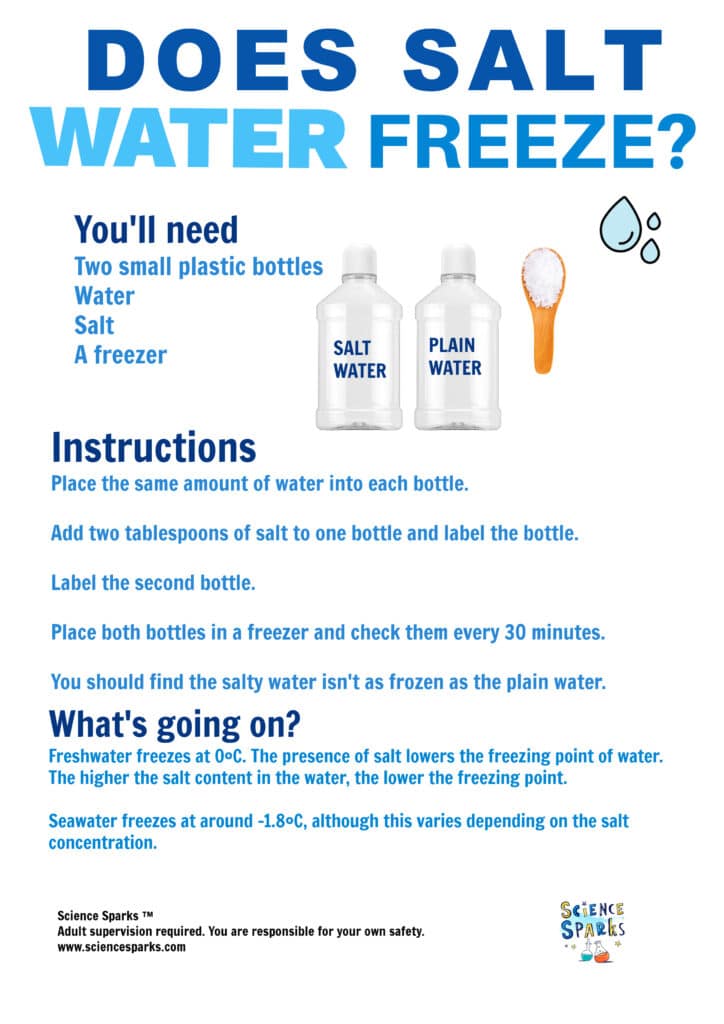
The question “what temperature does seawater freeze?” might seem straightforward, but its answer unravels a fascinating tapestry of physics, environmental science, and surprisingly, has profound implications for global technology, branding, and financial markets. Unlike freshwater, which consistently freezes at 0°C (32°F), seawater presents a more complex scenario. The presence of dissolved salts, primarily sodium chloride, significantly alters its physical properties, lowering its freezing point. This seemingly minor difference has colossal repercussions, influencing everything from global climate patterns and marine ecosystems to international shipping routes and the strategies of tech innovators and financial investors alike.
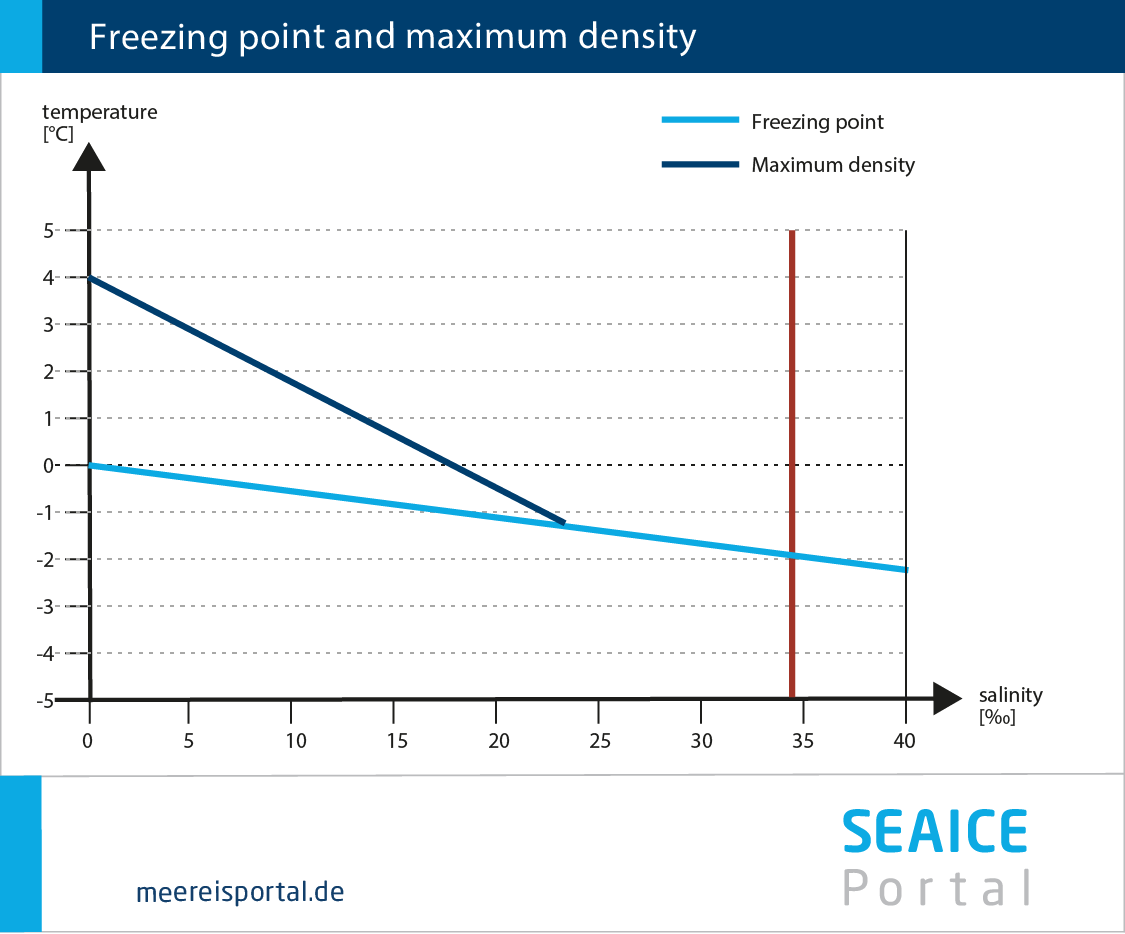
At its core, seawater typically begins to freeze at approximately -1.8°C (28.8°F). However, this is merely an average, as the precise freezing point is a dynamic variable, intricately linked to the water’s salinity, pressure, and even the presence of suspended particles. Understanding these nuances is not just an academic exercise; it’s a critical foundation for predicting environmental changes, safeguarding maritime operations with cutting-edge technology, shaping corporate sustainability branding, and informing strategic financial decisions across various sectors.
The Science Behind Seawater’s Freezing Point: A Deeper Dive
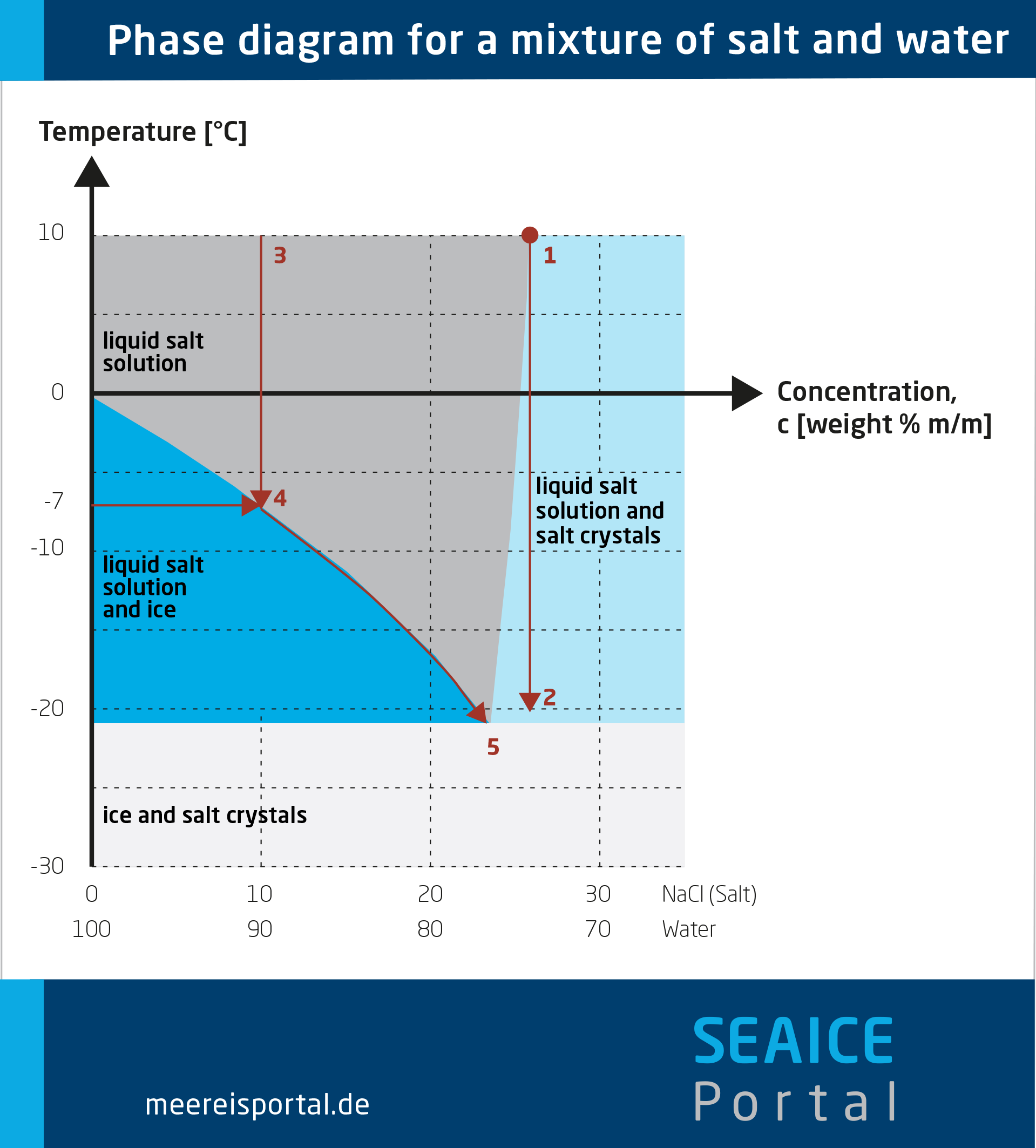
The primary reason seawater freezes at a lower temperature than freshwater lies in a phenomenon known as freezing point depression. This is a colligative property of solutions, meaning it depends on the number of solute particles in the solvent, not their chemical identity. In the case of seawater, the dissolved salts act as impurities, disrupting the orderly lattice structure that water molecules typically form when solidifying into ice. More energy must be removed (i.e., the temperature must be lowered further) for these disordered water molecules to arrange themselves into a stable crystalline ice structure.
Salinity: The Primary Determinant
Salinity, defined as the total concentration of dissolved salts in water, is the most influential factor dictating seawater’s freezing point. The average ocean salinity is around 35 parts per thousand (ppt), or 3.5%. For every 1 ppt increase in salinity, the freezing point drops by approximately 0.056°C (0.10°F).
- Typical Ocean Water (35 ppt): Freezes around -1.8°C (28.8°F).
- Brackish Water (lower salinity): Freezes at a temperature closer to 0°C but still below it.
- Hypersaline Water (higher salinity): Found in enclosed seas or highly evaporative areas, can have a freezing point significantly lower than -1.8°C.
This variability in salinity across the globe means that the exact freezing temperature of seawater is not a universal constant but a localized measurement. For tech companies developing oceanographic sensors or AI-driven predictive models, accurately accounting for salinity variations is paramount. Robust software solutions are needed to process real-time data from autonomous underwater vehicles (AUVs) and satellite imagery, correlating salinity levels with temperature readings to provide precise freezing point estimations. This data is crucial for maritime safety apps, climate modeling software, and even the design of specialized gadgets for polar exploration.
Pressure and Impurities: Secondary Factors
While salinity dominates, other factors also exert a minor influence:
- Pressure: Increased pressure slightly lowers the freezing point of water. In the deep ocean, where pressures are immense, this effect is measurable, though less significant than salinity.
- Suspended Particles: Particulates like sediment or biological matter can act as nucleation sites, potentially aiding ice formation, but they don’t fundamentally alter the thermodynamic freezing point in the same way dissolved salts do. However, their presence can influence the rate and type of ice formation.
These intricate scientific details underscore the complexity involved in studying Earth’s polar regions and oceans. For research institutions and governmental bodies, investing in advanced technology—from high-precision thermometers and conductivity-temperature-depth (CTD) sensors to sophisticated data analytics platforms and AI tools for pattern recognition—is a financial necessity. Such investments enable detailed mapping of ocean conditions, critical for understanding climate change and informing policy. This scientific rigor also lends credibility to the ‘brand’ of nations and organizations committed to environmental stewardship and cutting-edge research.
The Dynamic World of Sea Ice: Beyond the Number
The freezing of seawater initiates the formation of sea ice, a critical component of Earth’s climate system with far-reaching environmental and economic consequences. Sea ice isn’t just frozen water; it’s a dynamic, ever-changing landscape that profoundly impacts marine life, ocean currents, and even global weather patterns.
Formation and Types of Sea Ice
When seawater begins to freeze, it doesn’t immediately turn into a solid block. Initially, tiny ice crystals, called frazil ice, form near the surface. As more frazil ice accumulates, it can coalesce into grease ice (a soupy mixture) and then into pancake ice (circular pieces with raised edges). Eventually, these pieces can consolidate into vast, continuous sheets of pack ice or fast ice (which remains attached to the coastline).
- First-year ice: Ice that forms and melts within a single year.
- Multi-year ice: Ice that has survived at least one summer melt season, typically thicker and stronger due to brine drainage and consolidation.
The formation process itself is fascinating. As freshwater molecules freeze out of the saline solution, the remaining water becomes even saltier and denser, sinking into the ocean depths in a process called brine rejection. This cold, dense, salty water is a crucial driver of the global ocean conveyor belt, influencing heat distribution around the planet.
Environmental and Economic Implications
The presence and extent of sea ice have monumental environmental and economic ramifications.
- Climate Regulation: Sea ice reflects a significant portion of incoming solar radiation back into space (the albedo effect). Its reduction due to climate change leads to more heat absorption by the dark ocean, creating a feedback loop that accelerates warming – a critical area of study for climate modeling software and AI-driven predictive analytics.
- Ecosystems: Sea ice provides essential habitats for polar bears, seals, and a wide array of microorganisms (ice algae), forming the base of Arctic and Antarctic food webs. Changes in ice extent directly threaten these delicate ecosystems.
- Shipping and Trade: The retreat of Arctic sea ice opens new shipping lanes, such as the Northern Sea Route, drastically shortening travel times between Asia and Europe. This presents significant economic opportunities for maritime companies, potentially reducing fuel costs and transit times, but also introduces new risks and demands for advanced navigation technologies and digital security for shipping logistics. Nations and companies are vying to establish brand leadership in these emerging corridors, often by emphasizing their technological prowess and commitment to responsible transit.
- Resource Exploitation: Melting ice makes previously inaccessible regions potentially available for oil, gas, and mineral exploration, sparking complex financial and geopolitical considerations. Investments in offshore drilling technology and specialized vessels are tied directly to these changing conditions.
- Tourism: Polar tourism thrives on the unique landscapes and wildlife associated with sea ice. Brands offering expedition cruises market exclusive experiences, leveraging stunning photography and tales of adventure, but must also navigate the ethical complexities of operating in fragile environments.
- Coastal Protection: Sea ice can act as a natural barrier, protecting coastlines from storm surges and erosion. Its decline exposes vulnerable communities and infrastructure, leading to significant financial costs for adaptation and reinforcement.
For businesses and governments, the ability to monitor and predict sea ice dynamics is invaluable. This is where the intersection of Tech (satellite monitoring, IoT sensors on buoys, AI for forecasting, AUVs), Money (investments in infrastructure, climate finance, risk management for shipping and resource extraction), and Brand (corporate social responsibility, national branding around Arctic research or sustainable resource management) becomes profoundly evident.
Technological Frontiers in Understanding and Navigating Icy Waters
The extreme conditions of polar regions necessitate cutting-edge technological solutions, not only for scientific understanding but also for practical applications in an increasingly accessible Arctic. The fusion of diverse tech disciplines is creating unprecedented capabilities in monitoring, analysis, and safe operations in icy environments.
Precision Monitoring and Data Analysis
The vastness and harshness of the polar oceans make direct, continuous human observation impractical. This challenge has driven remarkable innovation in remote sensing and autonomous systems:
- Satellite Imagery and Remote Sensing: Earth observation satellites (e.g., Copernicus Sentinel, NASA ICESat-2) provide invaluable data on sea ice extent, thickness, and movement. Advanced software processes these images, applying machine learning algorithms to differentiate ice types, detect leads (cracks in the ice), and track multi-year ice.
- Autonomous Underwater Vehicles (AUVs) and Uncrewed Surface Vessels (USVs): These robotic ‘gadgets’ are equipped with a suite of sensors (CTD, sonar, altimeters) to collect data beneath and within the ice, providing high-resolution insights into ice keel depths, ocean currents, and marine life distribution. Their endurance and ability to operate in conditions too dangerous for manned vessels are transformative.
- Internet of Things (IoT) in Polar Regions: Networks of smart buoys and sensors embedded in ice or deployed from ships provide real-time data on temperature, salinity, pressure, and ice movement. This data feeds into centralized platforms, enabling comprehensive monitoring and early warning systems.
- AI and Big Data Analytics: The sheer volume of data generated by these platforms necessitates powerful AI tools and big data analytics software. AI algorithms can identify subtle patterns in ice dynamics, predict future ice conditions with greater accuracy, and even help optimize shipping routes to avoid hazards. Digital security protocols are paramount to protect this vast, critical dataset from cyber threats.
These technological advancements offer tangible returns on investment. Accurate ice forecasting reduces risks for maritime shipping, leading to lower insurance premiums and increased operational efficiency (Money). Companies developing these robust, reliable tech solutions build strong brands synonymous with innovation and safety (Brand). Furthermore, the data gathered informs global climate models, enabling more precise predictions about future sea-level rise and environmental shifts, thereby guiding international policy and investment in adaptation strategies.
Innovating for Safety and Sustainability
Beyond pure data collection, technology plays a pivotal role in ensuring the safety and promoting the sustainability of human activities in icy waters.
- Advanced Navigation Systems: Ships operating in the Arctic are equipped with specialized radar, sonar, and GPS systems integrated with real-time ice charts and weather data. AI-powered route optimization software helps vessels navigate complex ice conditions, minimizing risks of collision or becoming ice-bound.
- Enhanced Communication: Reliable communication in remote polar regions is critical for safety. Satellite communication systems and emerging low Earth orbit (LEO) satellite constellations (e.g., Starlink) provide high-bandwidth connectivity, enabling better data transfer and emergency response capabilities.
- Eco-Friendly Ship Design: As traffic increases, there’s a growing focus on designing ice-strengthened vessels that are also environmentally friendly, with reduced emissions and advanced waste management systems. These designs are often showcased as part of a shipping company’s corporate responsibility branding.
- Digital Twins and Simulation: Creating digital replicas of polar environments and maritime operations allows for scenario planning, testing new technologies virtually, and training personnel without real-world risk. This productivity-enhancing tech tool helps optimize strategies before costly physical deployment.
The development and deployment of these technologies require significant financial investment, often from both public and private sectors. Governments invest in polar research and infrastructure for national security and economic interests, while private companies see market opportunities in providing specialized services and equipment. The ‘Brand’ of a company or nation associated with these pioneering efforts often communicates leadership in technology, environmental stewardship, and strategic foresight.
The Future of Our Oceans: Challenges and Opportunities
The questions surrounding what temperature seawater freezes, and the subsequent formation of sea ice, lead us to a pivotal point in understanding the future of our planet. Climate change is rapidly altering polar regions, presenting both formidable challenges and unprecedented opportunities.
Climate Change and the Shifting Ice Fronts
The most significant challenge stems from global warming. Rising atmospheric and ocean temperatures are causing sea ice to thin and retreat, particularly in the Arctic. This isn’t just a localized phenomenon; it has global ramifications:
- Accelerated Warming: The positive feedback loop (less ice, more heat absorption) is contributing to amplified warming in the Arctic, known as Arctic amplification.
- Sea Level Rise: While melting sea ice itself doesn’t directly raise sea levels (it’s already displacing water), the warming that causes sea ice melt also contributes to the melting of land-based ice sheets and glaciers, which does cause sea level rise.
- Extreme Weather Events: Emerging research suggests a connection between Arctic warming and changes in atmospheric circulation, potentially influencing extreme weather events in temperate latitudes.
Understanding these complex interdependencies requires continued investment in advanced climate modeling software, AI tools for predictive analytics, and long-term data collection efforts. These efforts are crucial for formulating effective climate action and adaptation strategies, necessitating significant financial commitments from nations and international bodies.
Strategic Investments and Branding in a Changing Arctic
The melting Arctic presents a dichotomy: environmental crisis alongside new avenues for economic activity. This requires a delicate balance of strategic investment and responsible branding.
- Investment in Sustainable Solutions: Financial markets are increasingly focused on green investments. This includes funding research into renewable energy technologies suitable for polar regions, developing sustainable shipping practices, and supporting technologies for environmental monitoring and protection. Venture capital and private equity are exploring opportunities in ‘Blue Economy’ startups focused on ocean health and sustainable resource management.
- Geopolitical and Economic Branding: Arctic nations are keen to brand themselves as responsible stewards of the region, emphasizing their scientific contributions, technological capabilities, and commitment to sustainable development. This extends to personal branding for scientists, explorers, and policymakers who shape the narrative around the Arctic.
- Corporate Responsibility and Innovation: Companies operating in or benefiting from the Arctic—from shipping and logistics firms to tech companies developing polar-specific gadgets and software—are increasingly aware of the need for robust corporate social responsibility initiatives. Their brand identity is often tied to their commitment to environmental protection, safety, and community engagement. This can include investing in digital security to protect sensitive environmental data or developing AI tools to optimize resource use.
- Financial Tools for Risk Management: As new economic opportunities emerge in the Arctic, so do new risks. Financial tools like specialized insurance policies for Arctic operations, carbon pricing mechanisms, and investment vehicles focused on climate resilience will become increasingly important.
In conclusion, the deceptively simple question of “what temperature does seawater freeze?” opens a gateway to understanding some of the most critical challenges and opportunities of our time. It highlights the profound interconnectedness of scientific principles, technological innovation, economic drivers, and strategic branding in shaping our planet’s future. From the precise measurements enabled by modern tech gadgets and software to the billions invested in new shipping routes and climate research, and the deliberate construction of corporate and national brands around sustainability and exploration, the dynamics of freezing seawater ripple across every facet of our global society.
aViewFromTheCave is a participant in the Amazon Services LLC Associates Program, an affiliate advertising program designed to provide a means for sites to earn advertising fees by advertising and linking to Amazon.com. Amazon, the Amazon logo, AmazonSupply, and the AmazonSupply logo are trademarks of Amazon.com, Inc. or its affiliates. As an Amazon Associate we earn affiliate commissions from qualifying purchases.