
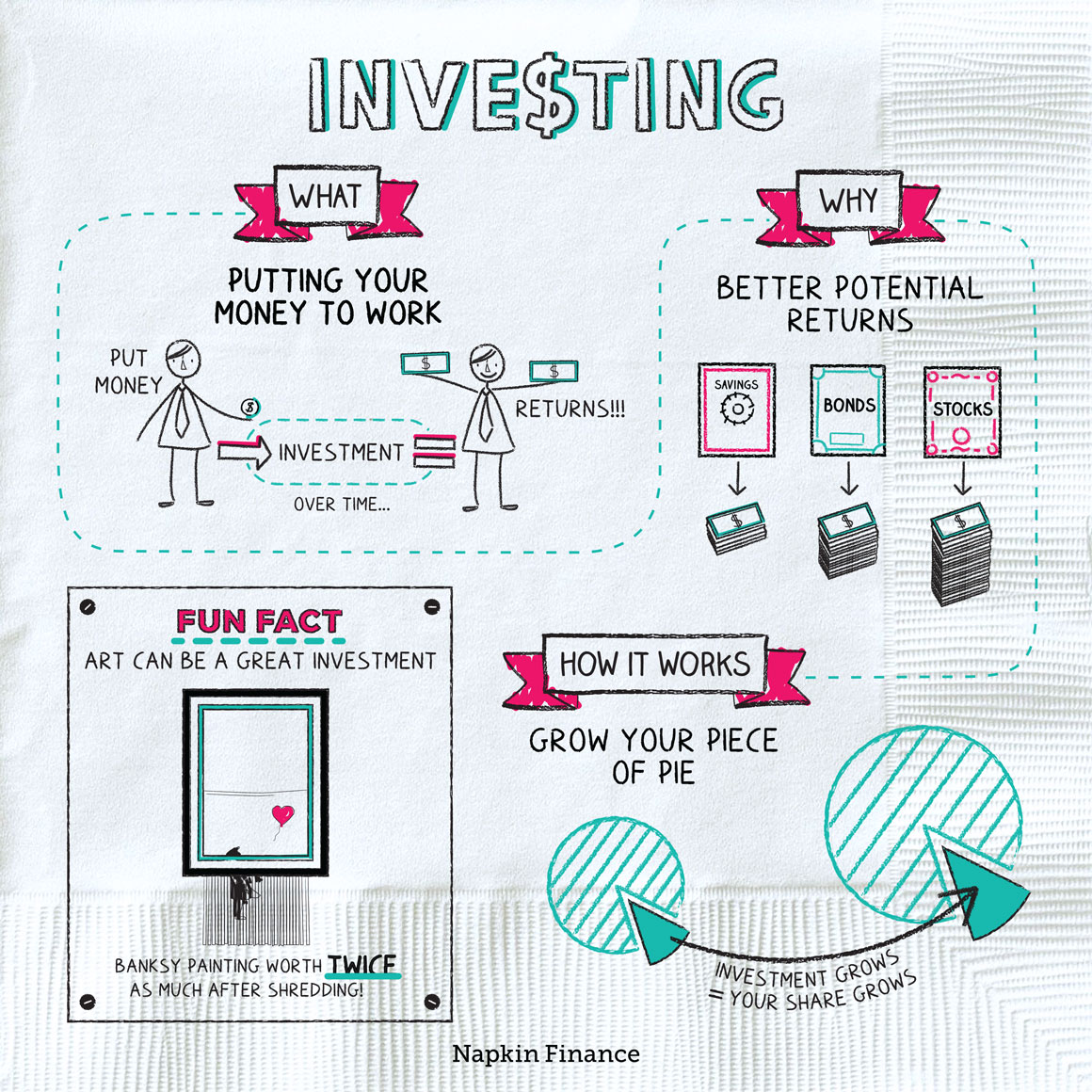
Investing is often perceived as a complex pursuit reserved for Wall Street professionals or those with significant capital. However, at its core, investing is the simple act of putting your money to work today to generate more money in the future. In an era defined by inflation and economic shifts, the ability to invest effectively is no longer a luxury—it is a fundamental necessity for financial security. Whether you are looking to fund a comfortable retirement, purchase a home, or build a legacy, understanding the mechanisms of the financial markets is the first step toward achieving your goals.
This guide provides a systematic roadmap for navigating the investment landscape, focusing on the principles of risk management, asset allocation, and the psychological discipline required to succeed over the long term.
Laying the Groundwork: Preparing Your Finances for Investment
Before committing a single dollar to the stock market or any other asset class, it is crucial to ensure that your financial foundation is stable. Investing involves risk, and the last thing any investor wants is to be forced to liquidate their holdings during a market downturn because they lack liquid cash for an emergency.
Eliminating High-Interest Debt
The most guaranteed “return on investment” you can achieve is paying off high-interest debt, such as credit card balances. If you are paying 20% interest on a credit card and investing in a market that historically returns 8% to 10%, you are effectively losing money every month. Prioritizing the elimination of high-interest liabilities creates more “dry powder” for your investment portfolio and reduces your overall financial risk.
Establishing an Emergency Fund
An emergency fund is a liquid reserve of cash—typically held in a high-yield savings account—that covers three to six months of essential living expenses. This fund acts as a buffer against life’s uncertainties, such as job loss, medical emergencies, or unforeseen home repairs. By having this safety net, you protect your long-term investments from being tapped prematurely, allowing the power of compounding to remain uninterrupted.
Defining Your Investment Objectives
Successful investing requires a clear destination. Are you investing for a down payment on a house in five years, or are you building a nest egg for a retirement thirty years away? Your “time horizon” is the most significant factor in determining your strategy. Generally, the longer your time horizon, the more risk you can afford to take, as you have the time to recover from short-term market fluctuations.
Navigating the Core Asset Classes
To build a robust portfolio, you must understand the different “buckets” where you can place your money. Each asset class carries a different risk-reward profile, and a balanced approach is usually the most effective path for individual investors.
Equities: The Engine of Growth
Equities, or stocks, represent ownership in a company. When you buy a stock, you are betting on the future profitability and growth of that business. Historically, the stock market has been one of the greatest wealth-creation tools in history, offering higher potential returns than bonds or savings accounts over the long run. However, stocks are volatile; their prices can swing dramatically based on economic news, company performance, or global events.
Fixed Income: Providing Stability and Cash Flow
Bonds are essentially loans you provide to a government or a corporation in exchange for regular interest payments and the return of your principal at a specific date. Bonds are generally considered lower risk than stocks and serve as a stabilizing force in a portfolio. When the stock market is volatile, bonds often hold their value better, providing a “cushion” for the investor. They are particularly useful for those nearing retirement who require a steady stream of income.
Real Estate and Alternative Investments
Beyond stocks and bonds, investors often look to real estate as a hedge against inflation and a source of rental income. While physical real estate requires significant capital and management, Real Estate Investment Trusts (REITs) allow individuals to invest in large-scale properties through the stock market. Other alternatives include commodities like gold, or private equity, which can provide further diversification away from traditional markets.

Mastering Investment Strategies and Diversification
Once you understand the assets, the next step is determining how to assemble them. A random collection of stocks is not a strategy; a deliberate, diversified approach is what leads to sustainable growth.
The Power of Index Funds and Passive Management
For most individual investors, trying to “beat the market” by picking individual stocks is a losing game. Research consistently shows that even professional fund managers struggle to outperform the S&P 500 over long periods. Passive investing—primarily through index funds or Exchange-Traded Funds (ETFs)—seeks to match the performance of the market as a whole. These funds offer instant diversification and have much lower fees than actively managed funds, ensuring that more of your money stays invested rather than going to a broker.
Dollar-Cost Averaging: Mitigating Volatility
Market timing—trying to buy at the bottom and sell at the top—is notoriously difficult and often leads to poor decisions driven by emotion. Dollar-cost averaging (DCA) is a strategy where you invest a fixed amount of money at regular intervals, regardless of the price. When prices are high, you buy fewer shares; when prices are low, you buy more. Over time, this lowers your average cost per share and removes the stress of trying to “time” the perfect entry point.
Asset Allocation and Rebalancing
Asset allocation is the process of deciding what percentage of your portfolio should be in stocks versus bonds or other assets. A common rule of thumb is the “Rule of 100” (or 110), where you subtract your age from 100 to determine your stock percentage. For example, a 30-year-old might have 70% in stocks and 30% in bonds. Over time, as some assets grow faster than others, your allocation will drift. Rebalancing is the practice of periodically selling some of your winners and buying more of your underperformers to return to your original target, effectively forcing you to “buy low and sell high.”
Selecting the Right Investment Accounts and Platforms
Where you hold your investments is just as important as what you invest in. Different accounts offer different tax advantages that can significantly impact your net wealth over decades.
Maximizing Retirement Accounts
In the United States, accounts like the 401(k) and the Individual Retirement Account (IRA) are designed to encourage long-term saving.
- Traditional accounts offer an immediate tax deduction on contributions, but you pay taxes when you withdraw the money in retirement.
- Roth accounts are funded with after-tax dollars, meaning you get no immediate tax break, but your withdrawals in retirement are entirely tax-free.
Taking advantage of an employer match in a 401(k) is essentially receiving a 100% return on your money instantly—it is a financial opportunity that should never be ignored.
Taxable Brokerage Accounts and Robo-Advisors
Once you have maximized your tax-advantaged retirement accounts, a standard taxable brokerage account offers the most flexibility. There are no contribution limits or withdrawal age restrictions. For those who prefer a “hands-off” approach, robo-advisors use algorithms to automatically manage your asset allocation and rebalancing based on your risk profile. These platforms provide a professional level of management at a fraction of the cost of a traditional human financial advisor.
Managing Risk and the Psychology of Investing
The greatest threat to an investment portfolio is often the investor themselves. Financial markets move in cycles, and human psychology is hardwired to react to those cycles in ways that are often detrimental to wealth building.
Determining Your Personal Risk Tolerance
Risk tolerance is a measure of how much market volatility you can withstand without panicking. It is a combination of your financial ability to take a loss and your emotional temperament. If the thought of your portfolio dropping 20% in a month would cause you to lose sleep or sell your holdings, you may need a more conservative allocation. Understanding your “stomach for risk” before a crash happens is vital for staying the course.

Maintaining Discipline in Volatile Markets
The history of the stock market is a series of “crises” that eventually gave way to new all-time highs. From the dot-com bubble to the 2008 financial crisis and the 2020 pandemic, markets have always recovered. The investors who lost the most were those who let fear drive them to sell at the bottom. Successful investing requires a “boring” mindset: a commitment to your plan, a focus on the long term, and the discipline to ignore the daily noise of financial news cycles.
In conclusion, investing is not a get-rich-quick scheme; it is a long-term discipline. By building a firm foundation, diversifying your assets, utilizing tax-advantaged accounts, and managing your emotional responses to market swings, you can harness the power of the global economy to secure your financial future. The best time to start was yesterday; the second best time is today.
aViewFromTheCave is a participant in the Amazon Services LLC Associates Program, an affiliate advertising program designed to provide a means for sites to earn advertising fees by advertising and linking to Amazon.com. Amazon, the Amazon logo, AmazonSupply, and the AmazonSupply logo are trademarks of Amazon.com, Inc. or its affiliates. As an Amazon Associate we earn affiliate commissions from qualifying purchases.