
When an investor or a curious observer asks, “How much is one Bitcoin worth?” the most immediate answer is usually a numerical figure flashing on a digital exchange—a price tag influenced by global demand, 24/7 trading, and market sentiment. However, in the realm of personal finance and institutional investing, the “worth” of Bitcoin extends far beyond its current spot price. Understanding Bitcoin’s valuation requires a deep dive into the economic principles of scarcity, the mechanics of decentralized networks, and its emerging role as a strategic asset in a modern financial portfolio.

To truly grasp what one Bitcoin is worth, one must look past the ticker symbol and examine the underlying financial architecture that gives this digital asset its unique standing in the global marketplace.
The Mechanics of Bitcoin’s Market Value
At its most fundamental level, the price of Bitcoin is determined by the law of supply and demand. Unlike fiat currencies, which can be printed at the discretion of central banks, Bitcoin operates on a fixed supply schedule. This creates a unique market dynamic where the supply side is perfectly predictable, leaving the price to be determined almost entirely by fluctuations in demand.
Supply and Demand: The Halving Effect
The total supply of Bitcoin is hard-capped at 21 million coins. This programmed scarcity is enforced through an event known as “the halving,” which occurs approximately every four years. During a halving, the reward given to miners for securing the network is cut in half, effectively reducing the rate at which new Bitcoins enter circulation.
From a monetary perspective, this creates a disinflationary pressure. When the supply of a new asset slows down while demand remains constant or increases, the price naturally moves upward. Historically, halving events have served as catalysts for significant “bull runs,” as the market adjusts to the tightened supply. Investors track these cycles meticulously to gauge the “fair value” of Bitcoin relative to its production cost and circulating supply.
Liquidity and Exchange Volatility
Bitcoin trades on global exchanges, ranging from retail platforms like Coinbase to institutional desks like those at Goldman Sachs. Because Bitcoin is a global asset, its price is the result of aggregate liquidity across hundreds of different platforms.
Volatility is a byproduct of this liquidity structure. While the market capitalization of Bitcoin has grown into the trillions, it remains relatively small compared to the global gold market or the total value of the S&P 500. Consequently, large “whale” transactions can cause significant price swings. For the individual investor, this means that while the “worth” of a Bitcoin might be $60,000 today, the perceived value can shift rapidly based on short-term liquidations or macroeconomic shocks. Understanding this volatility is essential for anyone looking to incorporate Bitcoin into a long-term financial strategy.
Determinants of Intrinsic Value in a Digital Era
Critics often argue that Bitcoin has no intrinsic value because it lacks physical form or the backing of a government. However, in the niche of business finance and digital economics, value is increasingly derived from utility, security, and network effects rather than physical substance.
Scarcity as a Financial Primitive
In traditional finance, gold is valued for its “stock-to-flow” ratio—the amount of gold currently held in reserves versus the amount produced each year. Bitcoin is the first digital asset to successfully replicate this scarcity. Because it cannot be forged, duplicated, or inflated beyond its 21-million-coin limit, it functions as a “digital gold.”
The worth of Bitcoin is intrinsically tied to its censorship resistance. In regions experiencing hyperinflation or political instability, the ability to hold wealth in an asset that cannot be seized by a local government or devalued by a central bank provides immense “utility value.” In this context, the worth of one Bitcoin is not just its dollar price, but the financial sovereignty it provides to the holder.
Network Effect and Metcalfe’s Law
Metcalfe’s Law states that the value of a telecommunications network is proportional to the square of the number of connected users of the system. This principle is frequently applied to Bitcoin’s valuation. As more merchants accept Bitcoin, more institutional custody solutions are built, and more individual wallets are created, the utility of the entire network grows exponentially.
The “worth” of a single Bitcoin is bolstered by the billions of dollars of infrastructure built around it. Every time a company like PayPal or Visa integrates Bitcoin into its services, the floor price of the asset tends to rise because the network has become more accessible and useful. For the investor, the growing adoption curve suggests that Bitcoin’s value is a reflection of its dominance as the primary layer of the “Internet of Value.”

Bitcoin as a Strategic Asset Class
As the financial landscape evolves, Bitcoin has transitioned from a speculative experiment to a legitimate asset class. Modern portfolio theory now frequently includes a small percentage of Bitcoin as a way to enhance risk-adjusted returns.
Hedging Against Inflation and Currency Devaluation
One of the primary drivers of Bitcoin’s valuation in recent years has been the unprecedented expansion of the global money supply. When central banks engage in quantitative easing, the purchasing power of fiat currency often declines. Investors look for “hard assets” to protect their wealth.
Bitcoin’s worth is often measured against the debasement of the US Dollar or the Euro. If the supply of dollars increases by 20% in a year, and the supply of Bitcoin only increases by 1.8%, Bitcoin serves as an effective “inflation hedge.” It is a mathematical exit ramp from the traditional inflationary system, making it an attractive tool for long-term wealth preservation.
Institutional Adoption and Spot ETFs
The landscape of Bitcoin’s “worth” changed dramatically with the approval of Spot Bitcoin ETFs (Exchange-Traded Funds) in the United States. This allowed trillions of dollars in institutional capital to flow into the asset through traditional brokerage accounts.
Institutional adoption provides a level of price support and legitimacy that was absent in Bitcoin’s early years. When major asset managers like BlackRock or Fidelity allocate capital to Bitcoin, they are not looking for a quick trade; they are making a structural allocation. This shift from “retail-driven speculation” to “institutional-grade investing” has helped stabilize the asset’s price floor and has fundamentally changed how its market value is calculated by analysts.
Evaluating Risk and Future Price Drivers
No discussion of what Bitcoin is worth is complete without addressing the risks that could impact its future valuation. In finance, risk and reward are inextricably linked, and Bitcoin remains a high-risk, high-reward asset.
Regulatory Landscapes and Market Sentiment
The value of Bitcoin is sensitive to the regulatory environment. Positive developments, such as clear tax guidelines or the legal recognition of digital assets as property, tend to drive the price up. Conversely, restrictive regulations or bans on mining can lead to sharp devaluations.
Market sentiment often acts as a leading indicator of price. The “Fear and Greed Index” is a common tool used by crypto-financial analysts to determine if the asset is overvalued or undervalued at any given moment. Because Bitcoin is a sentiment-driven market, the “worth” can often disconnect from the fundamentals during periods of extreme euphoria or panic. A disciplined investor looks at the long-term adoption metrics rather than the daily noise of the news cycle.
Technological Integration and the Lightning Network
While we are focusing on the money niche, it is impossible to ignore that the financial utility of Bitcoin is limited by its transaction speed. However, the development of “Layer 2” solutions like the Lightning Network is changing the economic equation.
By allowing for near-instant, low-cost micropayments, the Lightning Network expands Bitcoin’s use case from a “Store of Value” (like gold) to a “Medium of Exchange” (like cash). If Bitcoin can successfully capture a portion of the global payments market, its valuation models will need to be revised upward to account for this massive increase in velocity and utility. The “worth” of one Bitcoin in a world where it is used for daily commerce is vastly different from its worth as a stagnant digital bar of gold.
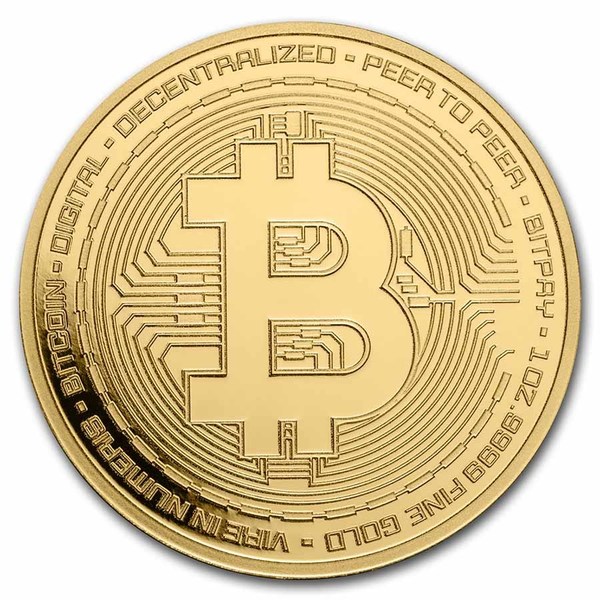
Conclusion: The Evolving Definition of Worth
To ask “how much is one Bitcoin worth” is to ask a question about the future of money itself. At this moment, its worth is defined by a volatile yet upward-trending market price, influenced by its programmed scarcity and growing institutional acceptance.
For the personal financier, Bitcoin represents a diversification tool; for the business owner, it represents a potential payment rail; and for the global citizen, it represents a hedge against economic instability. While the numerical value will continue to fluctuate in the short term, the intrinsic value of Bitcoin—rooted in its decentralized nature and fixed supply—remains the primary reason it has become the best-performing asset class of the last decade. As we move further into a digital-first economy, the worth of one Bitcoin may eventually be measured not in dollars, but in the sheer amount of financial freedom and security it provides to its holder.
aViewFromTheCave is a participant in the Amazon Services LLC Associates Program, an affiliate advertising program designed to provide a means for sites to earn advertising fees by advertising and linking to Amazon.com. Amazon, the Amazon logo, AmazonSupply, and the AmazonSupply logo are trademarks of Amazon.com, Inc. or its affiliates. As an Amazon Associate we earn affiliate commissions from qualifying purchases.