
Costco Wholesale Corporation is a retail behemoth, a household name synonymous with bulk buying, treasure hunting, and consistently competitive pricing. For millions of members worldwide, Costco is more than just a place to shop; it’s a destination, a loyalty-inspiring brand built on a unique business model. But when it comes to ownership, the question “Who owns Costco?” is more nuanced than a simple individual or family name. Unlike many privately held companies, Costco is a publicly traded entity, meaning its ownership is dispersed among its shareholders. This article delves into the intricate world of Costco’s ownership, exploring who holds the reins of this retail titan and what that means for its operational strategy, financial performance, and future trajectory.

The Publicly Traded Landscape: Shareholders as Owners
As a publicly traded company, Costco’s ownership is primarily vested in its shareholders. This means that any individual or institution that purchases shares of Costco stock on a stock exchange becomes a part-owner of the company. This is a fundamental concept in corporate finance, distinguishing public companies from private ones where ownership is concentrated among a smaller group.
Understanding Stock Ownership
When you buy a share of Costco stock (ticker symbol: COST), you are buying a small piece of the company. The total number of outstanding shares represents the entirety of the company’s equity. The more shares an individual or entity owns, the larger their proportional stake in Costco. This ownership stake grants shareholders certain rights, including the right to vote on important corporate matters, such as the election of the board of directors.
Institutional Investors: The Dominant Force
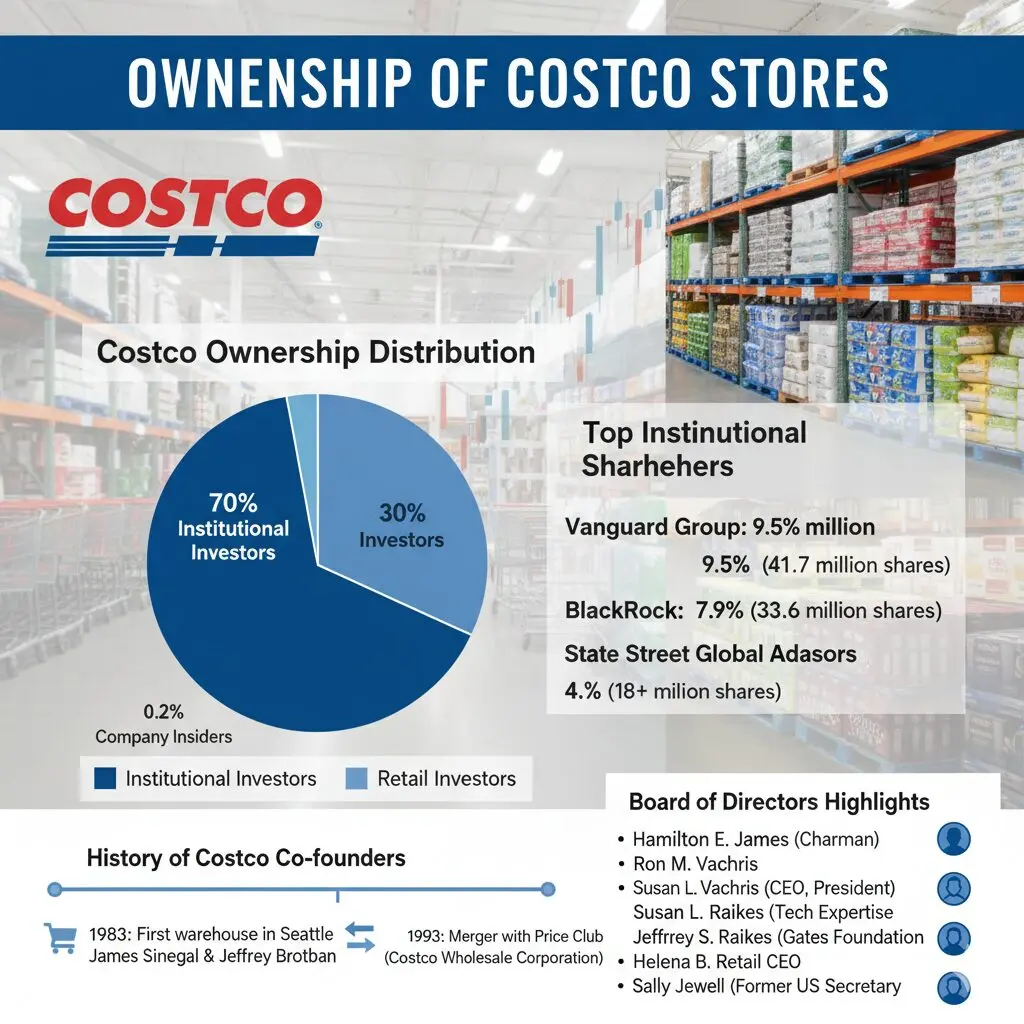
While individual investors do own a significant portion of Costco, the dominant force in its ownership structure lies with institutional investors. These are entities that pool money from various sources, such as pension funds, mutual funds, hedge funds, and insurance companies, to invest in a diversified portfolio of assets, including stocks. These institutions often hold vast quantities of shares in major corporations like Costco due to their scale and professional management.
Major institutional investors in Costco typically include well-known names like Vanguard Group, BlackRock, and Berkshire Hathaway. These entities are not driven by personal consumption needs but by financial objectives – seeking returns on investment for their clients. Their substantial holdings give them significant influence in corporate governance. While they may not dictate day-to-day operations, their voting power on the board of directors and their influence on management compensation and strategic decisions are undeniable. The sheer volume of shares they control means their investment decisions, whether to buy, hold, or sell, can significantly impact Costco’s stock price and overall market valuation.
Individual Investors and Member Influence
While institutional investors are the largest stakeholders, individual investors also play a crucial role in Costco’s ownership. These are the everyday people who invest in Costco for its perceived stability, growth potential, or dividend payouts. Their collective holdings, though smaller than those of institutions, still contribute to the overall shareholder base and can influence voting outcomes in aggregate.
It’s also worth noting the unique relationship between Costco’s ownership and its membership base. While members are not direct owners in the shareholder sense, their loyalty and purchasing power are what generate the revenue and profits that attract investors. The membership fee, a cornerstone of Costco’s business model, is a significant revenue stream that contributes to profitability. This strong member base is a critical asset that shareholders value, making member retention and satisfaction a key focus for management, which in turn is overseen by the board elected by shareholders. Therefore, while not legally “owners” of the company, the millions of Costco members are instrumental to its success and, by extension, its value to its shareholders.
The Board of Directors: Guardians of Shareholder Interests
The board of directors acts as the primary governing body for a publicly traded company. Elected by shareholders, the board has a fiduciary duty to act in the best interests of the company and its owners – the shareholders. For Costco, this means setting strategic direction, overseeing management, and ensuring the company operates ethically and profitably.
Roles and Responsibilities of the Board
The board of directors is responsible for a wide range of crucial functions. They appoint and oversee the Chief Executive Officer (CEO) and other senior executives, setting their compensation and performance expectations. They approve major corporate policies, significant investments, mergers, and acquisitions. Furthermore, the board is tasked with ensuring the company complies with all relevant laws and regulations and maintains sound financial reporting practices. In essence, they are the stewards of the company, tasked with safeguarding and enhancing shareholder value.
Composition and Governance

The composition of Costco’s board of directors is a critical factor in its governance. Boards are typically comprised of both executive and non-executive directors. Executive directors are usually senior officers of the company (like the CEO), while non-executive directors are independent individuals from outside the company. The presence of a strong majority of independent directors is considered a hallmark of good corporate governance, as they are less likely to be swayed by internal company pressures and are better positioned to offer objective oversight.
Costco’s board actively reviews its own effectiveness and the composition of its committees, such as the audit committee and the compensation committee, to ensure they are functioning optimally and serving shareholder interests. The election of directors is a key opportunity for shareholders, both institutional and individual, to voice their preferences and influence the direction of the company’s leadership.
Management Team: The Operational Executors
While shareholders technically own Costco and the board of directors provides oversight, it is the management team, led by the CEO, that is responsible for the day-to-day operations and strategic implementation. Their performance directly impacts the company’s profitability and, consequently, shareholder value.
The CEO and Executive Leadership
The Chief Executive Officer (CEO) is the highest-ranking executive in a company and is responsible for executing the overall strategy set by the board. For Costco, the CEO and their executive team are tasked with managing inventory, negotiating with suppliers, overseeing warehouse operations, developing marketing strategies, and ensuring the unique Costco shopping experience is maintained. Their ability to navigate the competitive retail landscape, manage costs effectively, and drive member growth is paramount to Costco’s success.
The leadership team also includes executives responsible for finance, operations, merchandising, human resources, and technology. Each of these departments plays a vital role in the company’s overall performance. Their decisions on pricing, product selection, operational efficiency, and technological investments directly influence Costco’s ability to deliver value to its members and returns to its shareholders.
The Strategic Vision and Member Focus
The management team’s primary objective is to execute a strategy that fosters continued growth and profitability. Costco’s long-standing strategy, which has proven remarkably successful, centers on offering high-quality merchandise at remarkably low prices, supported by a membership fee that acts as a barrier to entry and a consistent revenue stream. This strategy requires meticulous inventory management, strong supplier relationships, and a lean operational model.
The focus on member value is not merely a marketing slogan; it’s a core operational principle. The management team is tasked with ensuring that the benefits of membership – the low prices, the curated selection of goods, and the treasure-hunt experience – are consistently delivered. This unwavering commitment to the member experience is what differentiates Costco and underpins its strong brand loyalty, which in turn is a significant driver of its financial performance and attractiveness to investors.
The Future of Costco Ownership: Evolution and Growth
As Costco continues to evolve, its ownership structure is likely to remain rooted in its publicly traded status. However, several factors can influence the dynamics of its ownership and, consequently, its future trajectory.
Shareholder Activism and Corporate Responsibility
In the realm of public companies, shareholder activism can become a significant force. This refers to efforts by shareholders, particularly institutional investors, to influence a company’s management or policies. While Costco has historically enjoyed a stable ownership base and a consistent strategic approach, periods of underperformance or significant strategic shifts could potentially lead to increased shareholder scrutiny or demands for change.
Furthermore, there is a growing emphasis on Environmental, Social, and Governance (ESG) factors in investing. Institutional investors are increasingly prioritizing companies that demonstrate strong ESG practices. Costco’s commitment to its employees, ethical sourcing, and community engagement are all aspects that ESG-conscious shareholders will scrutinize. The board and management will need to continue to address these evolving expectations to maintain investor confidence and potentially attract new shareholders.
Mergers, Acquisitions, and Market Dynamics
While Costco has largely grown organically, the possibility of mergers or acquisitions, though perhaps less likely given its size and established position, cannot be entirely ruled out in the long term. Such significant corporate events would undoubtedly alter the ownership landscape. More commonly, however, shifts in the stock market, economic cycles, and competitive pressures will influence the flow of capital into and out of Costco stock. The ongoing evolution of retail, including the rise of e-commerce and the increasing sophistication of online marketplaces, will continue to shape the competitive environment and necessitate strategic adjustments from Costco’s leadership, which will be guided by the oversight of its shareholder-elected board.
In conclusion, the ownership of Costco Wholesale Corporation is a multifaceted concept, anchored in its status as a publicly traded entity. Its millions of shareholders, dominated by institutional investors but including a significant base of individual investors, collectively hold the ultimate ownership. These owners elect a board of directors responsible for governance and strategic oversight, who in turn appoint and monitor a management team tasked with the operational execution of Costco’s proven business model. This intricate web of ownership, governance, and operational management is what drives Costco’s continued success and its enduring appeal to both consumers and investors alike.
aViewFromTheCave is a participant in the Amazon Services LLC Associates Program, an affiliate advertising program designed to provide a means for sites to earn advertising fees by advertising and linking to Amazon.com. Amazon, the Amazon logo, AmazonSupply, and the AmazonSupply logo are trademarks of Amazon.com, Inc. or its affiliates. As an Amazon Associate we earn affiliate commissions from qualifying purchases.