
For many prospective car buyers, the transition from an internal combustion engine (ICE) to an electric vehicle (EV) is driven by two main factors: environmental impact and financial logic. When the conversation turns to EVs, Tesla remains the dominant figure in the market. However, determining “how much a Tesla costs” is a more complex calculation than simply looking at the sticker price on the website. To understand the true financial commitment, one must look beyond the Manufacturer’s Suggested Retail Price (MSRP) and analyze the total cost of ownership, including tax incentives, fueling costs, maintenance, and the brand’s unique depreciation curve.
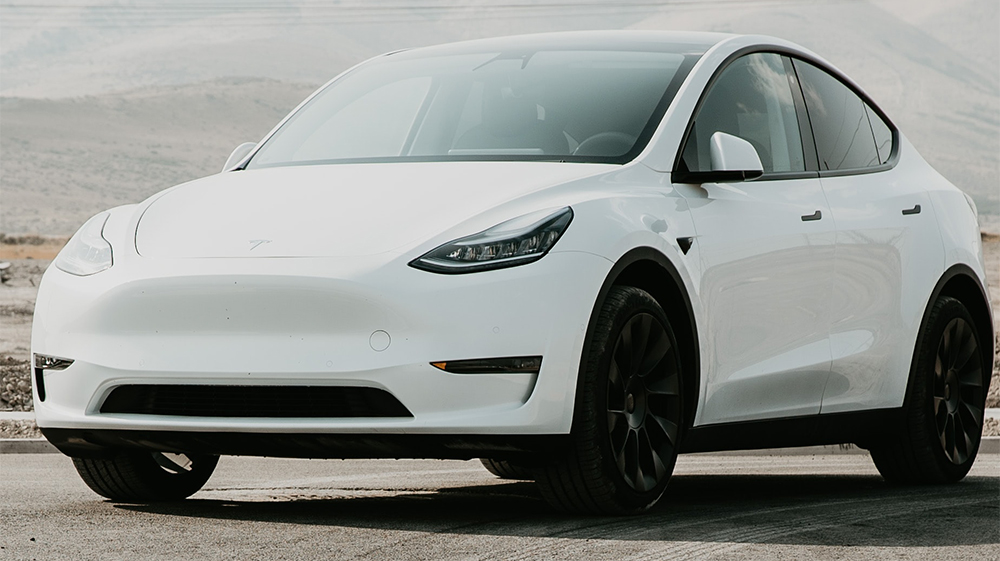
In this financial analysis, we will break down the current pricing architecture of the Tesla lineup and explore the underlying economic factors that determine whether a Tesla is a sound investment for your personal balance sheet.
Understanding the Base Purchase Price and Model Tiering
Tesla’s pricing strategy is famously dynamic. Unlike traditional dealerships that operate through a franchise model with room for negotiation, Tesla utilizes a direct-to-consumer model with fixed, albeit frequently changing, prices. As of the current fiscal landscape, the Tesla lineup is divided into distinct tiers targeting different economic demographics.
The Entry-Level: Model 3 and Model Y
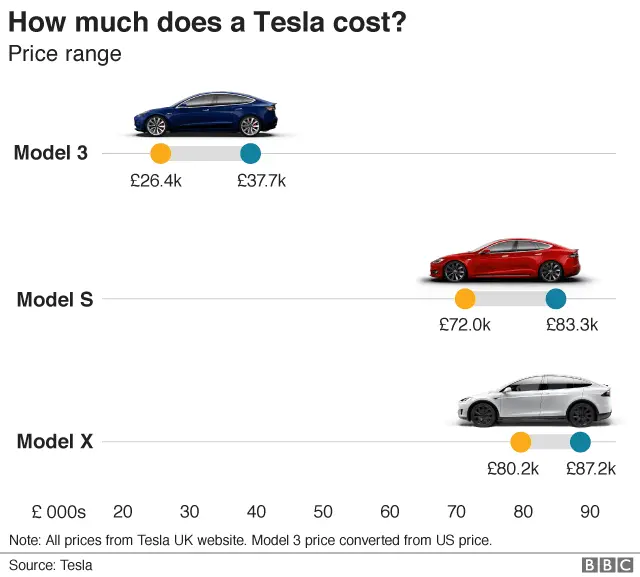
The Model 3 and Model Y represent the volume-drivers for Tesla. From a personal finance perspective, these are the most accessible points of entry. The Model 3, a compact sedan, typically starts in the high $30,000 to low $40,000 range. It is positioned as a competitor to entry-level luxury sedans like the BMW 3 Series or Audi A4.
The Model Y, a compact SUV, sits slightly higher on the price scale, usually starting in the mid-to-high $40,000s. Because the Model Y shares much of its architecture with the Model 3 but offers the utility of an SUV—the most popular vehicle segment in North America—it often represents a better “value-per-dollar” for families, leading to higher resale stability.
The Premium Tier: Model S and Model X
For those in a higher wealth bracket, the Model S (sedan) and Model X (SUV) represent the luxury “flagship” assets. These vehicles typically start between $75,000 and $80,000, with high-performance “Plaid” variants exceeding $90,000 to $100,000.
From a financial planning standpoint, these models carry a higher “luxury tax” in the form of steeper depreciation. While they offer superior range and performance, the marginal utility compared to a Model 3 or Y is often lower relative to the significant jump in capital outlay. Investors and high-net-worth individuals often view these models as lifestyle purchases rather than pragmatic transportation solutions.
The Specialized Assets: Cybertruck and Future Projections
The introduction of the Cybertruck has added a new layer to Tesla’s pricing structure. With initial “Foundation Series” models priced over $100,000, the Cybertruck currently occupies a niche of early adopters and business owners looking for a unique commercial vehicle. However, as production scales, the anticipated entry of rear-wheel-drive variants aims to bring the price point closer to the $60,000 range, competing with high-end Ford F-150 or Rivian models.
Navigating Incentives, Tax Credits, and Rebates
In the realm of personal finance, the “effective cost” of a vehicle is often significantly lower than the MSRP due to government intervention. For Tesla, these incentives are a critical component of the pricing math.
Federal Tax Credits (The Inflation Reduction Act)
The United States federal government offers a Clean Vehicle Credit of up to $7,500 for qualifying new electric vehicles. However, this is not a universal discount. From a tax planning perspective, buyers must meet specific criteria:
- MSRP Caps: Vans, SUVs, and trucks must have an MSRP below $80,000, while sedans and other vehicles must be below $55,000. This makes the Model 3 and Model Y prime candidates for the credit, while most Model S and X configurations are excluded.
- Income Limits: The credit is subject to Modified Adjusted Gross Income (MAGI) limits ($300,000 for married couples, $150,000 for individuals).
- Point-of-Sale Transfer: A significant recent change allows buyers to transfer the credit to the dealer (Tesla) at the time of purchase, effectively acting as an immediate $7,500 down payment rather than a credit claimed months later on a tax return.
State-Level Incentives and Utility Rebates
Beyond federal aid, states like California, New York, and Colorado offer additional rebates or tax credits that can range from $500 to $5,000. Furthermore, many utility companies provide financial incentives for installing a Level 2 home charging station. When combined, these incentives can reduce the net purchase price of a Model 3 to a level comparable to a mid-range Toyota Camry or Honda Accord.
Total Cost of Ownership (TCO) vs. Internal Combustion Engines
The true financial case for a Tesla is built over the lifespan of the vehicle. While the upfront cost may be higher than a comparable gasoline car, the operational expenses—the Total Cost of Ownership—often tell a different story.

Charging Costs and Fuel Displacement
The most immediate saving is the “fuel” cost. On average, charging a Tesla at home costs significantly less per mile than buying gasoline. If a gallon of gas costs $3.50 and a comparable ICE vehicle gets 30 MPG, the cost is approximately $0.12 per mile. In contrast, with an average electricity rate of $0.15 per kWh, a Tesla Model 3 (which gets about 4 miles per kWh) costs roughly $0.04 per mile. Over 15,000 miles per year, this results in an annual saving of $1,200. Over a five-year ownership period, that is $6,000 in direct cash flow improvement.
Maintenance and Service Schedules
Teslas lack many of the mechanical complexities of ICE vehicles. There are no oil changes, spark plugs, timing belts, or smog checks. The primary recurring maintenance costs include tire rotations, cabin air filter replacements, and windshield wiper fluid.
However, a savvy financial planner must account for two specific Tesla maintenance outliers:
- Tires: Due to the heavy weight of the batteries and the high torque of electric motors, Tesla tires tend to wear out 20-30% faster than those on conventional cars.
- Insurance: Because Teslas are high-tech vehicles with aluminum frames and specialized sensors, they can be more expensive to repair. Insurance premiums are often 15-25% higher than the national average for luxury sedans.
The Home Infrastructure Investment
One “hidden” cost is the installation of a home charging system. While a mobile connector can plug into a standard outlet, most owners opt for a Tesla Wall Connector for faster charging. The unit costs roughly $450, but professional electrical installation can range from $500 to $2,000 depending on the age of the home’s electrical panel. This is a one-time capital expenditure that should be factored into the Year 1 cost analysis.
Depreciation and Resale Value: The Investment Perspective
For any major asset, depreciation is the largest “silent” expense. Historically, Teslas held their value remarkably well compared to other luxury brands. However, recent aggressive price cuts by Tesla to maintain market share have caused a shift in the secondary market.
Historical Residual Value Patterns
Earlier adopters of the Model 3 saw record-low depreciation, sometimes selling used cars for nearly what they paid for them during the supply chain shortages of 2021-2022. Today, the market has normalized. A Tesla now depreciates at a rate more in line with other premium brands, losing approximately 40-50% of its value over five years.
Factors Impacting Resale: Battery Health and Software
The “Black Swan” event for Tesla resale value is battery degradation. While data suggests Tesla batteries retain about 85-90% of their capacity after 150,000 miles, the perception of battery health heavily influences used car prices. Additionally, the inclusion of “Full Self-Driving” (FSD) software—a $12,000 to $15,000 add-on—rarely recoups its full value on the secondary market. From a pure money-saving perspective, buying FSD is generally considered a poor investment compared to keeping that capital in a high-yield savings account or index fund.
Financing and Leasing Strategies
How you pay for a Tesla is just as important as how much you pay. In a high-interest-rate environment, the “cost of money” can add thousands to the total price.
Traditional Loans vs. Tesla’s In-House Financing
Tesla offers in-house financing, but savvy buyers should always shop around. Credit unions often offer “green vehicle” loans with interest rates 0.5% to 1.0% lower than standard auto loans. On a $50,000 loan over 60 months, a 1% difference in interest saves approximately $1,300 over the life of the loan.
The Pro-Business Case for Leasing
For business owners or those who want to avoid the risks of rapid technological obsolescence, leasing a Tesla can be a strategic move. The $7,500 federal tax credit is often applied directly to lease payments regardless of the income limits that apply to purchases (due to a loophole in commercial vehicle tax credits). This can make a lease significantly more affordable than a purchase for high-income earners.
Final Financial Assessment
So, how much does a Tesla cost? While the sticker price might suggest a range of $39,000 to $100,000+, the financial reality is a moving target.
For a buyer who qualifies for the $7,500 federal credit, lives in a state with additional rebates, and drives 15,000 miles a year, a Tesla Model 3 can actually be cheaper to own over five years than a $30,000 gasoline-powered SUV. Conversely, for a high-income individual who does not qualify for credits and drives very few miles, the high insurance premiums and depreciation of a Model S may make it a significantly more expensive asset than a traditional luxury car.
Ultimately, the decision to buy a Tesla should be treated as a multifaceted financial calculation. By weighing the upfront capital against long-term operational savings and government subsidies, you can determine if a Tesla fits into your broader wealth-building strategy.
aViewFromTheCave is a participant in the Amazon Services LLC Associates Program, an affiliate advertising program designed to provide a means for sites to earn advertising fees by advertising and linking to Amazon.com. Amazon, the Amazon logo, AmazonSupply, and the AmazonSupply logo are trademarks of Amazon.com, Inc. or its affiliates. As an Amazon Associate we earn affiliate commissions from qualifying purchases.