
In the realm of personal finance, travel is often categorized as a discretionary expense that many believe requires significant capital. However, for the financially savvy individual, the cost of airfare is not a fixed price tag but a variable market value that can be manipulated through strategic timing, asset allocation, and market arbitrage. Finding cheap flights is less about “luck” and more about understanding the complex economic structures of the aviation industry and leveraging financial tools to minimize out-of-pocket expenditure.
When viewed through the lens of capital management, every dollar saved on a flight is a dollar that remains in your investment portfolio, compounding over time. This guide explores the sophisticated financial strategies required to navigate the global aviation market and secure high-value travel for a fraction of the retail cost.

The Economics of Dynamic Pricing and Market Timing
The aviation industry operates on one of the most sophisticated dynamic pricing models in the world. Known as “yield management,” this system ensures that airlines maximize revenue per seat by constantly adjusting prices based on demand, velocity of sales, and competitor positioning. To find cheap flights, one must first understand the financial mechanics of these fluctuations.
Understanding the Booking Window and Capital Allocation
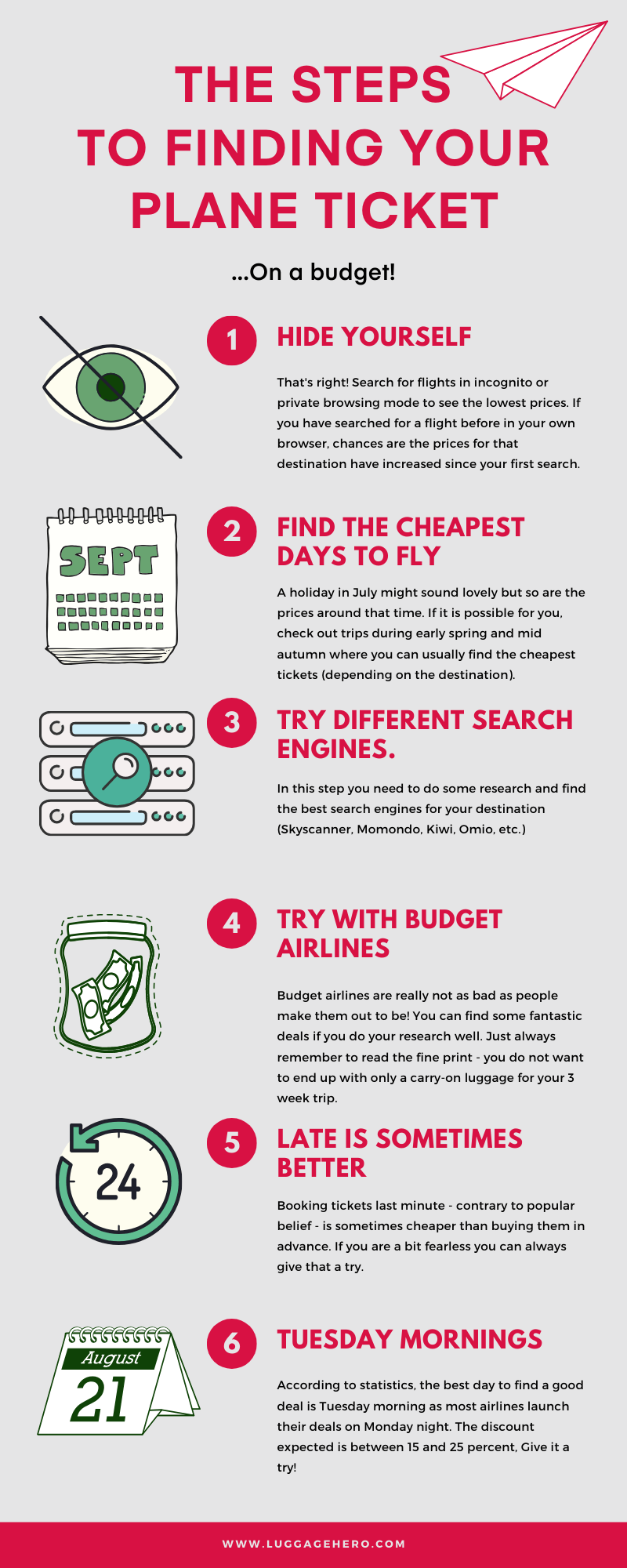
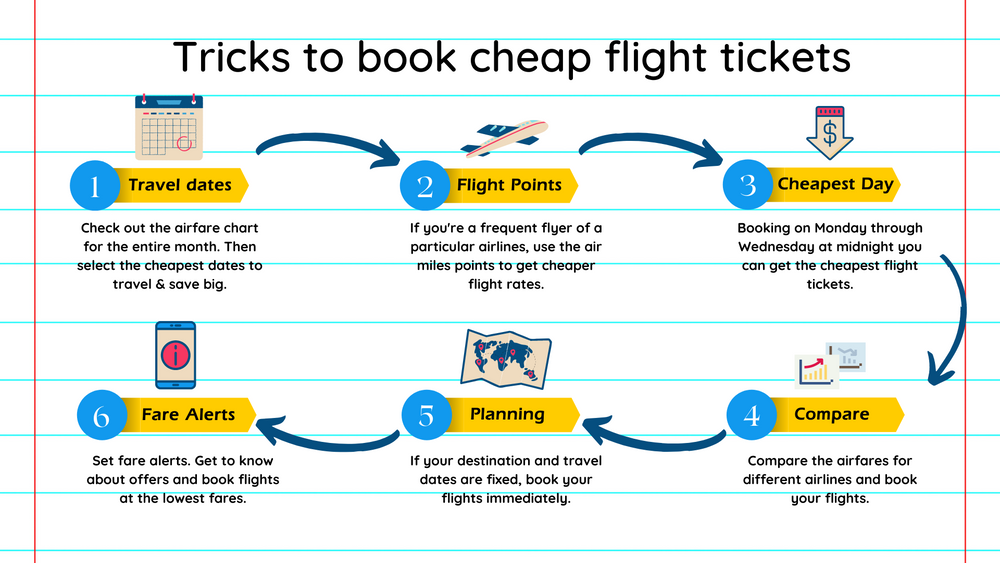
From a financial perspective, booking a flight is an exercise in timing the market. Data suggests that for domestic flights, the “prime booking window” typically opens 1 to 3 months before departure, while international routes require a 2- to 8-month lead time. Booking too early can be as detrimental as booking too late, as airlines often release their lowest-tier “economy light” fares only once they have established a baseline of demand from corporate travelers who pay premium prices for flexibility.
By treating flight purchases as a time-sensitive investment, you can avoid the “last-minute premium”—a surge in price designed to exploit price-insensitive business travelers. Monitoring price volatility via financial tracking tools allows you to identify the “support level” of a route, ensuring you strike when the price hits its historical floor.
Seasonal Arbitrage and the Shoulder Season Strategy
In any market, buying when demand is low is the fundamental rule of value investing. The travel industry is highly cyclical. By traveling during the “shoulder seasons”—the periods between peak holiday surges and off-peak troughs—you can capture significant price discrepancies. For example, flying to Europe in late September rather than July can result in a 40–60% reduction in cost while maintaining similar utility (weather and amenities). This is a classic example of arbitrage: achieving the same or similar experience at a significantly lower capital outlay.
Strategic Credit Arbitrage and the Points Ecosystem
For those serious about optimizing their personal finances, the “sticker price” of a flight should be considered a last resort. The modern financial landscape offers a secondary currency—loyalty points and frequent flyer miles—that can be leveraged to bypass traditional cash expenditures entirely.
Maximizing the ROI of Credit Card Sign-up Bonuses
The fastest way to acquire the capital necessary for international travel is through strategic credit card “churning” or optimization. Financial institutions are willing to pay a high customer acquisition cost, often offering 60,000 to 100,000 miles for reaching a specific spending threshold. When valued at a conservative 1.5 cents per mile, a single sign-up bonus can represent $900 to $1,500 in travel purchasing power.
To execute this correctly, one must treat credit cards as financial tools rather than debt instruments. By shifting everyday expenses—rent, groceries, and utilities—onto high-yield travel cards and paying the balance in full, you convert necessary spending into travel assets. This effectively lowers the “real cost” of your flights to zero, or near-zero, by utilizing the bank’s marketing budget to fund your transit.
Transfer Partners and the Valuation of Digital Assets
Not all points are created equal. The most sophisticated financial travelers focus on “convertible currencies” provided by major banks (such as Chase Ultimate Rewards or Amex Membership Rewards). These assets are valuable because they can be transferred to various airline partners at a 1:1 ratio.
The strategy here is to identify “sweet spots” in partner award charts. For instance, using 50,000 miles to book a business class seat that retails for $4,000 yields a “Return on Point” (ROP) of 8 cents per mile—a massive appreciation in the value of your digital assets compared to using them for a 1-cent-per-mile statement credit. This is the pinnacle of travel finance: moving assets into the specific “currency” where they have the highest purchasing power.
Currency Arbitrage and Point-of-Sale Strategies
Global airfare is priced based on the Point of Sale (POS)—the geographic location where the transaction is perceived to occur. Because of currency fluctuations and local purchasing power parity, the same seat on the same flight can be priced differently depending on which currency you use to pay.
Exploiting Foreign Exchange Discrepancies
By using a travel-optimized credit card with no foreign transaction fees, travelers can sometimes save 10–15% by booking through a version of an airline’s website targeted at a different country. For example, if the Mexican Peso is currently weak against the US Dollar, searching for a flight on the Spanish-language, Mexico-based version of an airline’s site may yield a lower price than the US-based equivalent.
This requires a basic understanding of foreign exchange (FX) markets. When you pay in the local currency of the airline’s home base or a region with a weaker economy, the conversion rate applied by your bank often beats the “fixed” price set by the airline for the international market.
The Financial Risks of Hidden City Ticketing
A more aggressive form of price arbitrage is “hidden city ticketing.” This occurs when a flight from Point A to Point C with a layover at Point B is cheaper than a direct flight from Point A to Point B. The traveler buys the ticket to Point C but exits the airport at the layover (Point B).
From a financial risk-management perspective, this strategy carries “regulatory” risks within the airline’s ecosystem. While it can save hundreds of dollars, it can also lead to the forfeiture of frequent flyer miles or the cancellation of return legs. A sound financial plan for travel should weigh the immediate savings against the potential long-term loss of account standing and future loyalty benefits.
Integrating Travel into a Long-Term Financial Plan
Finding cheap flights should not be a desperate act of frugality; it should be a structured component of a comprehensive wealth-management strategy. By automating the way you save and spend on travel, you ensure that your lifestyle goals do not compromise your retirement or investment targets.
The Travel Sinking Fund
The most effective way to manage the “Money” aspect of travel is the implementation of a “Sinking Fund.” Rather than taking a hit to your primary savings when a flight deal appears, you should allocate a fixed percentage of your monthly income into a dedicated high-yield savings account (HYSA) specifically for travel.
When a “mistake fare” or a massive discount is flagged by your monitoring tools, having liquid capital ready allows you to act instantly. In the world of cheap flights, speed is a financial advantage. Those who have to “check their budget” often miss the window of opportunity, whereas those with an allocated sinking fund can execute the trade immediately.
Calculating the Opportunity Cost of “Cheap”
Finally, a professional approach to travel finance requires an analysis of opportunity cost. A flight that is $200 cheaper but involves two 10-hour layovers may actually be more “expensive” when you factor in the cost of food during the wait, the potential need for a transit hotel, and—most importantly—the value of your time.
If your hourly earning rate is $50, and you spend an extra 10 hours in transit to save $200, you have essentially broken even. However, you have also arrived at your destination more fatigued, potentially reducing the “utility” of the first few days of your trip. The goal of financial optimization is to find the “efficient frontier”—the point where you are getting the maximum value for the least amount of money, without sacrificing the quality of your most non-renewable resource: time.
Conclusion
Mastering the art of finding cheap flights is a vital skill for anyone looking to optimize their personal finances. By understanding the yield management systems of airlines, leveraging the points and miles ecosystem, and utilizing currency arbitrage, you can significantly reduce one of life’s largest recurring expenses. When travel is treated as a market to be analyzed rather than a cost to be endured, the world becomes much more accessible, and your financial future becomes much more secure. Through disciplined budgeting and strategic asset allocation, the high-flying lifestyle of a global traveler becomes a sustainable reality rather than a financial burden.
aViewFromTheCave is a participant in the Amazon Services LLC Associates Program, an affiliate advertising program designed to provide a means for sites to earn advertising fees by advertising and linking to Amazon.com. Amazon, the Amazon logo, AmazonSupply, and the AmazonSupply logo are trademarks of Amazon.com, Inc. or its affiliates. As an Amazon Associate we earn affiliate commissions from qualifying purchases.