
Costco Wholesale Corporation is a global retail titan, synonymous with bulk savings, high-quality private labels, and a fiercely loyal membership base. However, for a company that commands such significant market influence and generates over $200 billion in annual revenue, the question of “who owns Costco” is often met with misconceptions. Unlike private family-owned empires like Mars or Cargill, or founder-controlled entities like Meta, Costco is a publicly traded corporation. Its ownership is a complex tapestry of institutional investors, mutual funds, and individual shareholders.

To understand the ownership of Costco is to understand the modern financial landscape of Wall Street, where massive asset management firms hold the keys to the world’s most successful businesses. In this deep dive, we will explore the institutional giants that dominate Costco’s cap table, the role of executive insiders, and how this ownership structure influences the company’s financial strategy and long-term stability.
The Publicly Traded Powerhouse: Understanding Costco’s Ownership Structure
Costco Wholesale Corporation is listed on the NASDAQ stock exchange under the ticker symbol COST. Because it is a publicly traded entity, ownership is divided into millions of shares of common stock that can be bought and sold by anyone with access to a brokerage account. This transparency is a hallmark of the “Money” niche—Costco’s financial health and ownership shifts are documented quarterly in filings with the Securities and Exchange Commission (SEC).
The Transition from Private to Public Markets
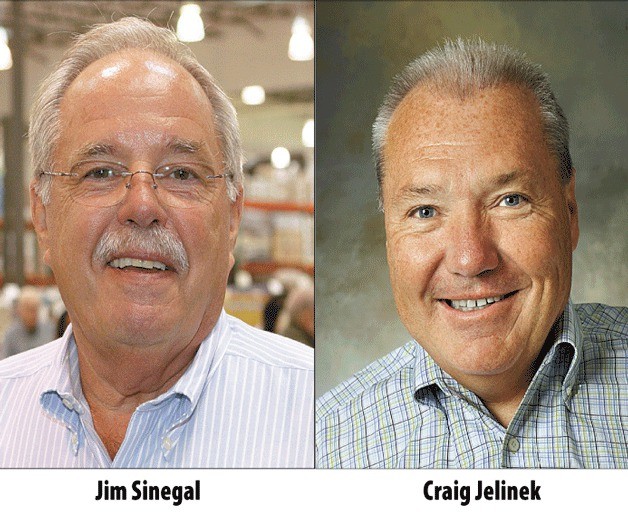
Costco’s journey to public ownership began in 1983 when James Sinegal and Jeffrey Brotman opened the first warehouse in Seattle. The company’s growth was explosive, leading to an initial public offering (IPO) in 1985. A pivotal moment in its ownership history occurred in 1993 when Costco merged with Price Club. This merger didn’t just expand the footprint; it consolidated the financial power of two retail pioneers, creating a powerhouse that could compete with Walmart’s Sam’s Club. Today, the “owners” are no longer just the founders, but a global network of investors who see the warehouse model as a cornerstone of a defensive investment portfolio.
How the Shareholder-Led Model Influences Strategy
In a publicly traded environment, the primary fiduciary duty of the board of directors is to maximize shareholder value. This often creates a tension between short-term profits and long-term brand integrity. However, Costco is frequently cited in financial circles as a “unicorn” that manages to satisfy both. By focusing on low margins and high volume, Costco maintains a stock price that has consistently outperformed the S&P 500. For investors, owning “COST” isn’t just about owning a retailer; it’s about owning a subscription-based cash flow machine.
The Real Owners: Institutional Investors and Major Shareholders
While individual retail investors own a portion of the company, the vast majority of Costco’s shares—upwards of 80%—are held by institutional investors. These are large organizations, such as pension funds, insurance companies, and investment firms, that manage money on behalf of millions of people.
The Vanguard Group and BlackRock: The Institutional Giants
If you look at the top of the ownership list for almost any major U.S. corporation, two names invariably appear: The Vanguard Group and BlackRock, Inc. As of recent filings, The Vanguard Group is typically the largest shareholder of Costco, holding approximately 8% to 9% of the total outstanding shares. BlackRock follows closely behind, often holding between 6% and 7%.
These firms do not “own” Costco in the sense that they control daily operations. Instead, they hold these shares in various mutual funds and Exchange-Traded Funds (ETFs). For example, if you own an S&P 500 index fund, you are a fractional owner of Costco through these institutional vehicles. From a financial perspective, the heavy presence of Vanguard and BlackRock provides a “floor” for the stock, as these institutions rarely liquidate their positions quickly, lending the stock its characteristic stability.
The Role of State Street and Other Asset Managers
Beyond the “Big Two,” State Street Corporation holds a significant stake, often around 3% to 4%. Other major players include Geode Capital Management and various sovereign wealth funds. These institutional owners are passive by nature but carry immense “proxy voting” power. They vote on board members, executive compensation packages, and shareholder resolutions. For the savvy investor, watching the “13F” filings of these institutions is a key way to gauge professional sentiment toward Costco’s financial future.
Internal Stakeholders: Insider Ownership and the Role of the Board
While institutions own the bulk of the equity, the “insiders”—executives and members of the Board of Directors—own a smaller but highly significant portion of the company. Insider ownership is a critical metric in finance; it demonstrates “skin in the game,” signaling to outside investors that the people running the company have a personal financial interest in its success.
Executive Leadership and Stock Ownership
Current and former executives, including CEO Ron Vachris and CFO Richard Galanti (who recently transitioned out of the role), hold significant blocks of shares. While their individual percentages may seem small (often less than 1% of total shares), in the context of a $300+ billion market cap, these holdings represent hundreds of millions of dollars in personal wealth. This alignment of interests is one reason why Costco has avoided the “vulture capitalism” that has plagued other retail chains; the leadership is invested in the long-term appreciation of the stock rather than short-term liquidation.
The Legacy of James Sinegal and Jeffrey Brotman
The founders’ influence remains a guiding light for the company’s financial philosophy. Although James Sinegal stepped down as CEO years ago, his approach to capital allocation—prioritizing employee wages and consumer value over aggressive margin expansion—remains the blueprint. Interestingly, the late Charlie Munger, the famed vice chairman of Berkshire Hathaway, was a longtime board member and a vocal proponent of Costco. While Berkshire Hathaway eventually sold its direct stake in Costco in 2020, Munger’s personal ownership and his public endorsements solidified Costco’s reputation as a “gold standard” investment in the value-investing community.
Financial Performance and Investor Sentiment
To understand why people want to own Costco, one must look at its unique financial engine. In the world of business finance, Costco is less a retailer and more a membership club with a retail component.
The Membership Model as a Revenue Engine
The brilliance of Costco’s financial model lies in its membership fees. In a typical fiscal year, membership fees account for a massive portion of the company’s net income. While the margins on products like the $4.99 rotisserie chicken or the $1.50 hot dog combo are razor-thin (or even negative), the high renewal rate—consistently above 90% in the U.S. and Canada—provides a predictable, high-margin revenue stream. Investors value this predictability; it allows for more accurate discounted cash flow (DCF) modeling, which often leads to the stock trading at a “premium” price-to-earnings (P/E) ratio compared to competitors like Target or Walmart.
Dividend Policy and Capital Allocation
Costco is also a favorite among “income investors” due to its dividend policy. While the yield is relatively modest, the company has a history of issuing “special dividends”—large, one-time payouts to shareholders when the company has excess cash on the balance sheet. In early 2024, for instance, Costco paid out a special dividend of $15 per share. This strategy demonstrates a commitment to returning value to the “owners” (the shareholders) without permanently bloating the quarterly dividend obligation.
Why Ownership Matters for the Future of Retail
Ownership isn’t just about who gets the profits; it’s about who determines the direction of the company. As the retail landscape shifts toward e-commerce and AI-driven logistics, the institutional owners of Costco will play a pivotal role.
Institutional Influence on ESG and Long-Term Goals
Large asset managers like BlackRock are increasingly focused on Environmental, Social, and Governance (ESG) metrics. Because these firms own such a large slice of Costco, they push the company toward sustainable sourcing, carbon footprint reduction, and equitable labor practices. For Costco, which already boasts a reputation for high employee retention and ethical business practices, this alignment with institutional owners creates a virtuous cycle that protects the company from the reputational risks that can tank a stock’s price.

The Resilience of the Costco Investment Thesis
In conclusion, no single individual “owns” Costco. It is owned by the public, managed by a disciplined executive team, and anchored by the world’s largest financial institutions. For the individual investor or the curious consumer, this structure provides a level of security. The diversified ownership ensures that the company cannot be easily manipulated by a single activist investor or a family feud. Instead, Costco remains a cornerstone of the global economy—a publicly-owned powerhouse that continues to redefine what it means to be a successful, shareholder-driven business in the 21st century.
aViewFromTheCave is a participant in the Amazon Services LLC Associates Program, an affiliate advertising program designed to provide a means for sites to earn advertising fees by advertising and linking to Amazon.com. Amazon, the Amazon logo, AmazonSupply, and the AmazonSupply logo are trademarks of Amazon.com, Inc. or its affiliates. As an Amazon Associate we earn affiliate commissions from qualifying purchases.