
The seemingly simple calculator, a ubiquitous tool in modern life, has a rich and fascinating history that stretches back centuries, predating the electronic marvels we use today. While the term “inventor” often implies a single, definitive moment of creation, the evolution of the calculator is a testament to the cumulative ingenuity of numerous brilliant minds, each building upon the work of their predecessors. This exploration delves into the technological lineage of the calculator, tracing its path from rudimentary mechanical devices to the sophisticated digital instruments that have fundamentally reshaped how we process information and solve mathematical problems.

The Dawn of Mechanical Calculation: Early Forerunners and Ingenious Mechanisms
The quest to automate calculation is as old as mathematics itself. Long before the advent of electricity or silicon chips, humanity sought ways to mechanize tedious arithmetic. This era was characterized by mechanical marvels, gears, and levers, pushing the boundaries of what was thought possible in terms of automated computation.
The Abacus: An Ancient Counting Framework
While not a “calculator” in the modern sense, the abacus stands as the earliest known device for performing arithmetic. Its origins are shrouded in antiquity, with evidence suggesting its use in Sumeria as far back as 2700–2300 BC. The abacus, a framed rack with rods or wires on which beads are moved, allowed users to perform addition, subtraction, multiplication, and division by representing numbers with the position of the beads. It was a crucial tool for merchants, scribes, and mathematicians for millennia, demonstrating the fundamental human drive to systematize and simplify numerical operations. Its enduring presence in some cultures even today highlights its elegant simplicity and effectiveness as a computational aid.
Pascal’s Calculator: The First Mechanical Marvel
The true genesis of the mechanical calculator can be attributed to Blaise Pascal, a French mathematician and philosopher. In 1642, at the young age of 19, Pascal invented the Pascaline. Driven by a desire to alleviate his tax-collecting father’s arduous labor, Pascal designed a device that could perform addition and subtraction. The Pascaline used a series of gears and dials, where turning one dial would cause the next to advance by a specific amount, much like the odometer in a car. Each dial represented a decimal place, and carry-over mechanisms were ingeniously designed to handle the transfers between them. While revolutionary for its time, the Pascaline was complex to manufacture and relatively expensive, limiting its widespread adoption. Nevertheless, it laid a crucial foundation for future mechanical calculating machines.
Leibniz’s Stepped Reckoner: Advancing the Capabilities
Gottfried Wilhelm Leibniz, a German mathematician and philosopher, took the concept of mechanical calculation a significant step further. Building upon Pascal’s work, Leibniz developed the Stepped Reckoner around 1672. This ingenious machine not only performed addition and subtraction but also multiplication and division, albeit indirectly. The Stepped Reckoner introduced the concept of a “stepped drum,” a cylinder with a variable number of teeth, which allowed for the manipulation of multiplication factors. This innovation was a significant leap forward, making more complex calculations feasible. Leibniz also made crucial contributions to the development of binary arithmetic, a concept that would later become fundamental to digital computing.
The Era of Electromechanical and Early Electronic Calculation
As the Industrial Revolution gained momentum, so too did the complexity and demand for more efficient calculation tools. This period saw the integration of electricity and the early stirrings of electronic computation, paving the way for the devices we recognize today.
The Arithmometer: Mass-Produced Mechanical Power
The Arithmometer, invented by Charles Xavier Thomas de Colmar in 1820, marked a significant milestone as the first commercially successful mechanical calculator. Unlike its predecessors, which were often experimental or produced in limited numbers, Thomas de Colmar’s design was robust, reliable, and produced on a larger scale. The Arithmometer could perform all four basic arithmetic operations: addition, subtraction, multiplication, and division, and it remained in production for nearly a century. Its success demonstrated a clear market for sophisticated calculating machines and influenced the design of subsequent mechanical calculators.
The Dawn of Electromechanical Computing: Hollerith and Tabulating Machines
The late 19th and early 20th centuries witnessed the burgeoning field of electromechanical computing, driven by the need to process vast amounts of data. Herman Hollerith, an American inventor, developed an electromechanical tabulating machine for the 1890 U.S. Census. This machine used punched cards to store and process data, drastically reducing the time required to tabulate the census results. Hollerith’s invention was a precursor to modern computers and laid the groundwork for data processing. While not a calculator in the direct sense of performing arithmetic operations on demand, it automated complex data analysis, a related endeavor in the realm of computation. The company he founded eventually evolved into IBM.
The First Electronic Computers and Early Electronic Calculators
The mid-20th century saw the transition from electromechanical to purely electronic computation. The development of the vacuum tube and later the transistor enabled the creation of much faster and more powerful machines. Early electronic computers like ENIAC (Electronic Numerical Integrator and Computer) and EDVAC (Electronic Discrete Variable Automatic Computer) could perform complex calculations at unprecedented speeds.
However, the first truly dedicated electronic calculators began to emerge in the late 1950s and early 1960s. These were often large, expensive, and used complex circuitry. Companies like Friden and Remington Rand produced early electronic calculators that began to replace their mechanical counterparts. These machines offered significant speed advantages, performing calculations in milliseconds rather than minutes or hours. The development of integrated circuits (ICs) in the late 1950s by companies like Texas Instruments and Fairchild Semiconductor would soon revolutionize this field, leading to the miniaturization and affordability of electronic calculators.
The Digital Revolution: Integrated Circuits and the Personal Calculator
The invention of the integrated circuit (IC) was the catalyst for the true democratization of computing power, and the calculator was at the forefront of this transformation. This period saw the dramatic miniaturization, increased functionality, and drastic reduction in cost, bringing the calculator from specialized environments into the hands of everyone.
The Transistorized Calculator: Portability and Affordability
The widespread adoption of transistors in the 1950s and 1960s allowed for the creation of smaller, more reliable, and less power-hungry calculating machines. This paved the way for the development of “desk calculators” that were more compact and accessible than their predecessors. Companies like Casio and Sharp were pioneers in this space, introducing increasingly sophisticated and affordable transistorized calculators. These devices offered improved speed and functionality, making them attractive to businesses and even some academic institutions.
The Microprocessor and the Pocket Calculator Explosion
The development of the microprocessor in the early 1970s by Intel (the Intel 4004, released in 1971) was a watershed moment. This single chip contained all the essential components of a central processing unit (CPU), drastically reducing the size and cost of electronic devices. This innovation directly led to the birth of the pocket calculator.
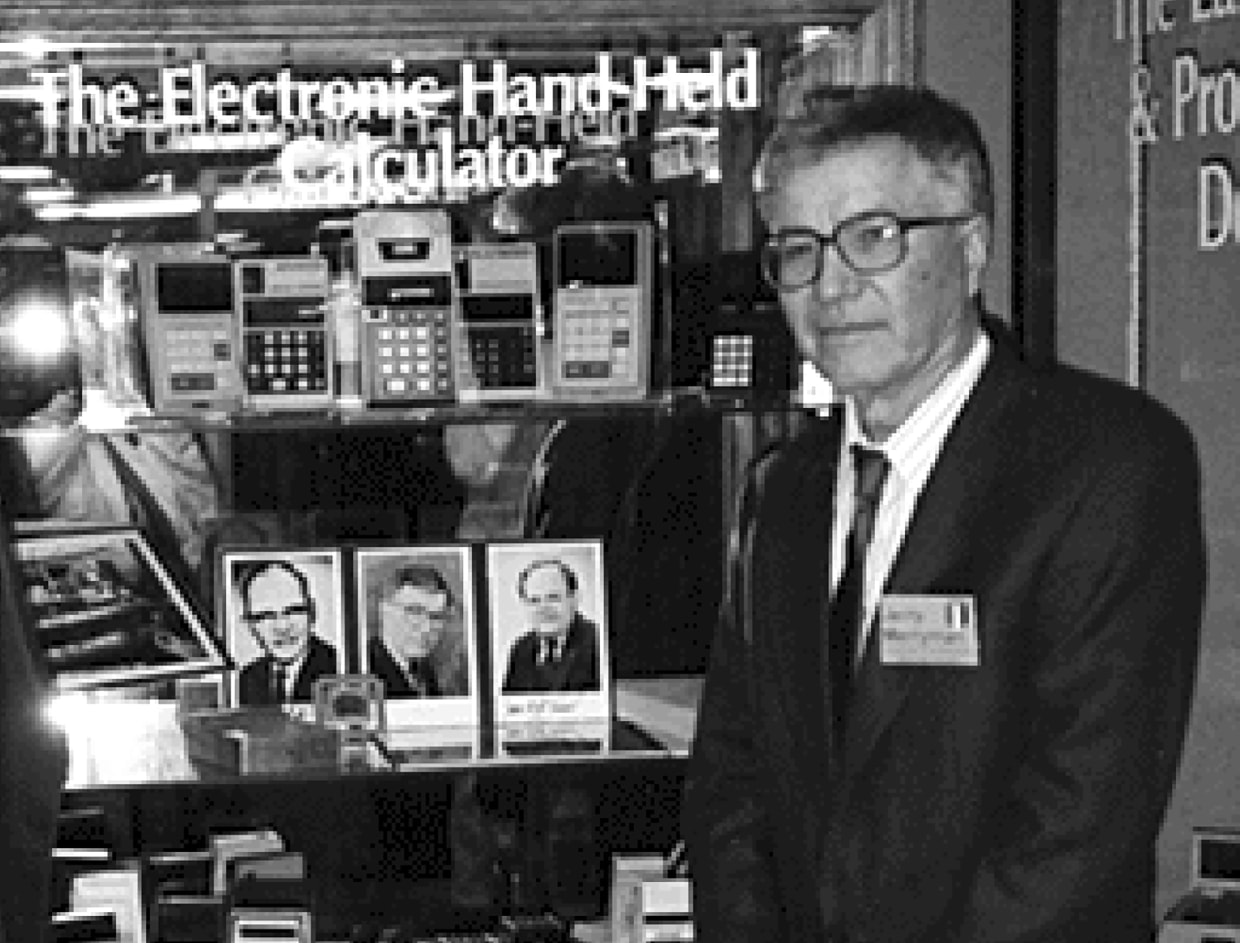
Texas Instruments (TI) and Bowmar Instrument Corporation were among the first to market with affordable, hand-held electronic calculators in the early 1970s. The Bowmar 901B is often cited as one of the very first pocket calculators. However, it was Texas Instruments with its affordable TI-2500 Datamath and later models, and HP (Hewlett-Packard) with its more advanced scientific calculators like the HP-35, that truly ignited the pocket calculator revolution.
The TI-2500 Datamath, released in 1972, was a significant step towards mass adoption due to its relatively low price point. The HP-35, released in the same year, was a breakthrough for scientific and engineering communities, offering trigonometric and logarithmic functions, making complex calculations accessible outside of specialized laboratories.
The affordability and portability of these devices meant that calculators were no longer confined to offices or laboratories. Students, professionals, and individuals across all walks of life could now own and use powerful calculating tools. This had a profound impact on education, business, and daily life, simplifying complex tasks and fostering a greater engagement with mathematics and quantitative reasoning.
The Legacy of the Calculator: Evolution Towards Ubiquitous Computing
The journey of the calculator from mechanical gears to silicon chips is a microcosm of technological progress. Each innovation built upon the last, driven by a constant pursuit of greater efficiency, accuracy, and accessibility. The calculator’s legacy extends far beyond its primary function; it is a foundational technology that paved the way for the broader digital revolution.
From Dedicated Devices to Integrated Functionality
The evolution of the calculator didn’t stop with the pocket-sized device. The advent of the personal computer in the late 1970s and 1980s saw calculator functionality integrated into software. Operating systems included built-in calculator applications, offering basic to scientific capabilities. This integration further diminished the need for standalone devices for many users, but the core concept of readily accessible computational power remained.

The Mobile Calculator and Beyond
Today, the calculator is an indispensable feature on virtually every smartphone, tablet, and personal computer. These mobile calculators often offer advanced scientific, graphing, and even programming functionalities, transcending the limitations of their early ancestors. Furthermore, sophisticated mathematical software and online tools continue to build upon the principles first embodied by these early calculating devices.
The story of the calculator’s invention is not about a single individual but a continuous thread of human ingenuity. From Pascal’s gears to Leibniz’s stepped drum, from Thomas de Colmar’s commercial success to Hollerith’s data processing, and ultimately to the microprocessor that empowered millions with pocket calculators, each contribution was vital. The “inventor” of the calculator is, in essence, a collective, a testament to humanity’s enduring drive to understand, quantify, and master the world around us through the power of computation. The calculator, in its myriad forms, stands as a profound symbol of how technological innovation can democratize knowledge and empower individuals.
aViewFromTheCave is a participant in the Amazon Services LLC Associates Program, an affiliate advertising program designed to provide a means for sites to earn advertising fees by advertising and linking to Amazon.com. Amazon, the Amazon logo, AmazonSupply, and the AmazonSupply logo are trademarks of Amazon.com, Inc. or its affiliates. As an Amazon Associate we earn affiliate commissions from qualifying purchases.