
In the realm of finance, numbers are the primary language of communication. However, raw figures rarely tell the whole story. To understand the true health of an investment, the efficiency of a business, or the burden of a debt, one must master the concept of the percentage. Whether you are calculating the interest on a high-yield savings account, determining the tax implications of a capital gain, or analyzing a corporate balance sheet, knowing how to find the percentage of a number is a fundamental skill that bridges the gap between basic arithmetic and sophisticated financial literacy.

This guide explores the mechanics of percentage calculations through the lens of money management, providing you with the tools to make more informed, data-driven financial decisions.
The Fundamental Mechanics of Financial Percentages
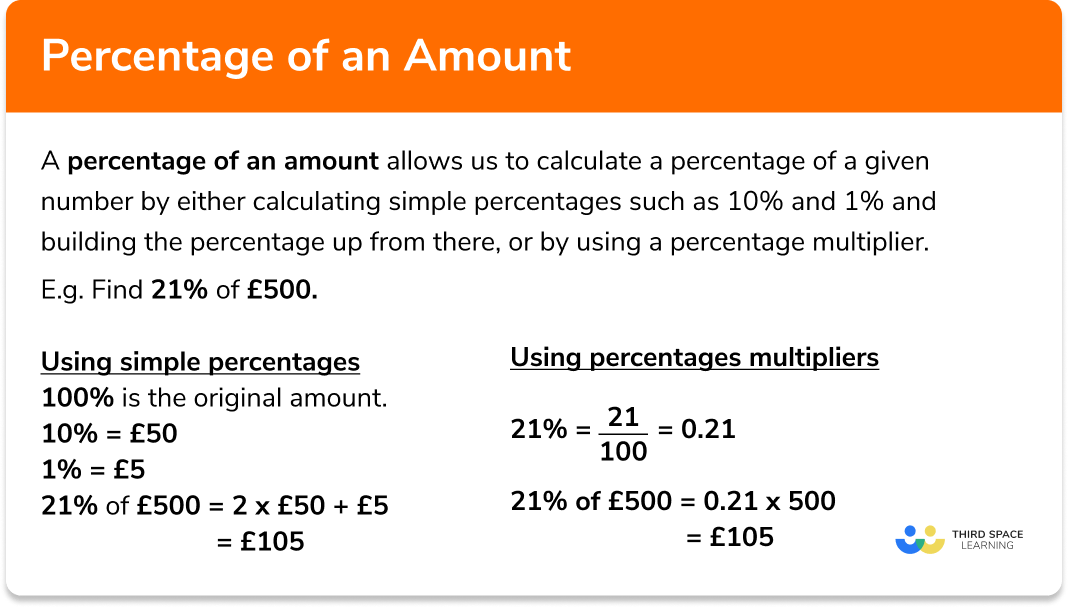
Before diving into complex financial models, it is essential to establish a firm grasp of the basic calculation. At its core, a percentage represents a fraction of 100. When we ask, “What is X percent of Y?” we are essentially looking for a specific portion of a whole.
The Standard Formula for Calculation
To find the percentage of a number, the mathematical process is straightforward: multiply the number by the percentage and then divide by 100.
Formula: $(Value times Percentage) / 100 = Result$
In a financial context, if you are looking to calculate a 15% tip on a $120 dinner bill, the calculation would be $(120 times 15) / 100 = 18$. Therefore, the tip is $18. In professional finance, this is often simplified by converting the percentage into a decimal first. To convert a percentage to a decimal, move the decimal point two places to the left (15% becomes 0.15). Then, simply multiply: $120 times 0.15 = 18$.
Understanding Percentage Increase and Decrease
In the world of investing and budgeting, we rarely deal with static numbers. We are more often concerned with how much a value has grown or shrunk. This is known as “percentage change.”
- Percentage Increase: This is used to calculate capital gains or inflation. If a stock rises from $100 to $125, the increase is 25%.
- Percentage Decrease: This is used to calculate losses or discounts. If a $2,000 laptop is on sale for 20% off, you are calculating the reduction in value ($400) to find the final price ($1,600).
Understanding these shifts is critical for assessing the performance of your portfolio over time. A 10% gain followed by a 10% loss does not bring you back to your starting point—a nuance of financial math that often surprises novice investors.
Percentages in Personal Wealth Management
For the individual, percentages are the building blocks of a sustainable budget and a robust savings plan. By viewing your income and expenses in terms of percentages rather than raw dollar amounts, you gain a clearer perspective on your financial habits.
The 50/30/20 Rule of Budgeting
One of the most effective ways to manage personal finance is the 50/30/20 rule. This framework relies entirely on finding the percentage of your take-home pay:
- 50% for Needs: Half of your income should cover essential expenses like housing, utilities, and groceries.
- 30% for Wants: This portion is allocated for lifestyle choices, such as dining out or hobbies.
- 20% for Savings and Debt Repayment: This is the most critical percentage for long-term wealth building.
By calculating these percentages monthly, you can identify “lifestyle creep”—where your “wants” begin to consume a higher percentage of your income as your salary increases.
The True Cost of Debt: APR and Interest
When you borrow money, whether through a credit card or a mortgage, the cost of that capital is expressed as an Annual Percentage Rate (APR). Knowing how to calculate the monthly interest on a balance is vital for debt management. If you carry a $5,000 balance on a credit card with a 24% APR, you can estimate your monthly interest by dividing the annual percentage by 12 (2%) and finding that percentage of your balance. 2% of $5,000 is $100—meaning you are paying $100 every month just for the privilege of carrying that debt.
Business Analytics: Using Percentages to Drive Profitability
In a corporate or small business environment, percentages serve as Key Performance Indicators (KPIs). They allow business owners to compare their performance against industry benchmarks and historical data, regardless of the size of the company.
Calculating Profit Margins
A business may have millions of dollars in revenue, but if its margins are thin, it remains in a precarious position. There are two primary margins every professional should monitor:
- Gross Profit Margin: Calculated by taking your total revenue, subtracting the Cost of Goods Sold (COGS), and dividing that number by the total revenue. This percentage tells you how efficiently you are producing or purchasing your products.
- Net Profit Margin: This is the “bottom line.” It represents the percentage of revenue remaining after all operating expenses, taxes, and interest have been paid. A net margin of 10% means that for every dollar earned, the company keeps ten cents as profit.
Return on Investment (ROI)
For business finance professionals, ROI is the ultimate percentage. It measures the gain or loss generated on an investment relative to the amount of money invested.
ROI Formula: $[(Current Value – Original Cost) / Original Cost] times 100$
If a company spends $10,000 on a marketing campaign that generates $15,000 in new profit, the ROI is 50%. Mastery of this calculation allows businesses to allocate capital to the most productive areas, ensuring long-term growth.
Taxes and Deductions: Navigating the Percentages of Compliance
Taxes are perhaps the most pervasive application of percentages in the financial world. From sales tax at the point of purchase to progressive income tax brackets, percentages dictate how much of your wealth remains in your pocket.
Marginal vs. Effective Tax Rates
Many taxpayers are confused by the difference between their marginal tax bracket and their effective tax rate.
- Marginal Rate: The percentage of tax applied to the last dollar you earned. If you are in the 22% bracket, it does not mean you pay 22% on your entire income.
- Effective Rate: This is the actual percentage of your total income that goes to the government. It is calculated by dividing your total tax paid by your total taxable income.
Understanding how to find these percentages helps in tax planning, particularly when deciding whether to contribute to a traditional 401(k) (which reduces taxable income) or a Roth IRA (which uses post-tax dollars).
Calculating Sales Tax and Value Added Tax (VAT)
For businesses, calculating the correct percentage of sales tax is a matter of legal compliance. If you operate in a jurisdiction with a 7.5% sales tax, you must be able to quickly determine the tax amount on any transaction. Conversely, for consumers, being able to calculate the total cost including tax—by multiplying the price by 1.075—is a simple but effective way to manage a shopping budget.
Strategic Investment: Calculating Growth and Volatility
For the modern investor, percentages are used to measure both the potential rewards and the inherent risks of the market.
Dividend Yields and Interest Income
Income-focused investors often look at “yield” to compare different assets. A dividend yield is the percentage of a company’s share price that it pays out in dividends each year. If a stock is trading at $50 and pays an annual dividend of $2, the yield is 4% ($2 / $50). Comparing these percentages allows an investor to decide whether a stock, a bond, or a certificate of deposit (CD) offers the best return for their capital.
The Rule of 72: A Shortcut for Compound Growth
While not a direct percentage of a number, the “Rule of 72” is a famous financial mental math trick based on percentages. It estimates how long it will take for an investment to double at a fixed annual rate of interest. By dividing 72 by the annual percentage rate of return, you get the approximate number of years for your money to double. For example, at a 6% return, your money will double in 12 years (72 / 6).
Portfolio Allocation and Rebalancing
Professional wealth management involves maintaining specific percentages of different asset classes (e.g., 60% stocks, 40% bonds). Over time, as some assets outperform others, these percentages will shift. If your stocks grow to represent 70% of your portfolio, you are now exposed to more risk than intended. “Rebalancing” is the process of calculating these new percentages and selling or buying assets to return to your target allocation.

Conclusion
The ability to find the percentage of a number is more than a basic math skill; it is a vital financial competency. From the microscopic level of daily budgeting to the macroscopic level of corporate acquisitions and global market trends, percentages provide the context necessary to evaluate value, risk, and growth. By mastering these calculations, you move beyond merely observing your financial situation to actively managing it, ensuring that every dollar—and every percentage point—is working toward your long-term prosperity.
aViewFromTheCave is a participant in the Amazon Services LLC Associates Program, an affiliate advertising program designed to provide a means for sites to earn advertising fees by advertising and linking to Amazon.com. Amazon, the Amazon logo, AmazonSupply, and the AmazonSupply logo are trademarks of Amazon.com, Inc. or its affiliates. As an Amazon Associate we earn affiliate commissions from qualifying purchases.