
For the modern investor, the stock market is often perceived as a digital entity that never sleeps. However, despite the 24/7 nature of global news and the rise of cryptocurrency, the traditional equity markets operate on a strictly regulated schedule. Understanding when the stock market closes is not merely a matter of knowing when the “open” sign is flipped; it is a fundamental component of a disciplined financial strategy. Whether you are a day trader looking to capitalize on late-day volatility or a long-term investor managing a retirement portfolio, the timing of the closing bell dictates liquidity, price discovery, and risk management.
Understanding Standard Operating Hours for Major Exchanges
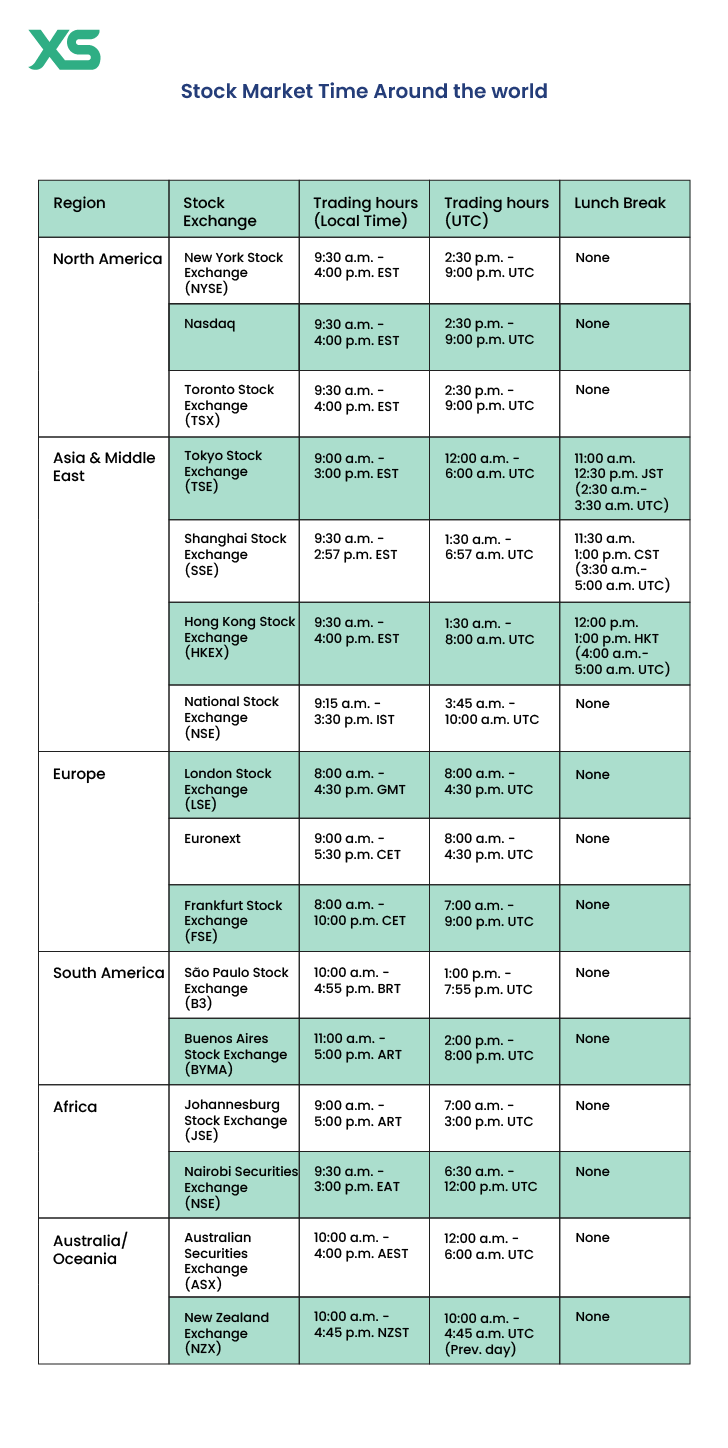
In the United States, the primary hubs for equity trading are the New York Stock Exchange (NYSE) and the NASDAQ. For these institutions, the standard trading day begins at 9:30 AM Eastern Time (ET) and concludes at 4:00 PM ET. This six-and-a-half-hour window represents the “core” session where the vast majority of trading volume occurs.
The Significance of the 4:00 PM Closing Bell
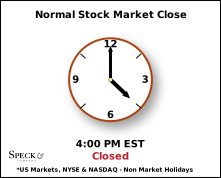
The 4:00 PM ET close is one of the most significant moments in the financial world. It represents the “Closing Cross,” a sophisticated auction process that determines the official closing price for every stock listed on the exchange. This price is crucial because it is used to calculate the Net Asset Value (NAV) of mutual funds and is the benchmark used for performance reporting in financial statements and media outlets. For the retail investor, the closing price provides a definitive snapshot of a company’s valuation at the end of the business day.
Why Markets Don’t Stay Open 24/7
Unlike the foreign exchange (Forex) or cryptocurrency markets, stock exchanges maintain set hours to concentrate liquidity. By forcing all buyers and sellers into a specific time window, the market ensures that there are enough participants to facilitate trades at fair prices. If the market were open 24/7, the volume would be spread thin, leading to wider “spreads” (the difference between the buy and sell price) and increased volatility, which could be detrimental to the average household investor.
Global Market Variations
While the 4:00 PM ET close is the standard for the U.S., global markets operate on their own local schedules. For instance, the London Stock Exchange (LSE) typically closes at 4:30 PM GMT, while the Tokyo Stock Exchange has a lunch break—closing for an hour between 11:30 AM and 12:30 PM local time before a final close at 3:00 PM. Investors with international portfolios must remain cognizant of these time zone differences to avoid being “locked into” a position overnight in one region while another region’s market is crashing.
Beyond the Bell: The Dynamics of Extended-Hours Trading
While the official closing bell rings at 4:00 PM, trading does not necessarily stop. The evolution of Electronic Communication Networks (ECNs) has allowed for “Extended-Hours Trading,” which consists of pre-market and after-hours sessions.
How After-Hours Trading Works
After-hours trading typically occurs from 4:00 PM to 8:00 PM ET. During this time, investors can still place orders through most major brokerage platforms. However, these trades are not executed on the floor of the NYSE but rather through digital networks that match buyers and sellers directly. This session is particularly active during “Earnings Season,” as most public companies release their quarterly financial results immediately after the 4:00 PM close to avoid causing mass panic during the standard trading session.
The Risks of Post-Close Participation
While the ability to trade after the market closes offers flexibility, it comes with significant risks that the average investor should consider:
- Lower Liquidity: There are far fewer participants in the after-hours market. This means it may be difficult to sell a large position without significantly moving the price.
- Wide Spreads: Because there are fewer buyers and sellers, the gap between the bid and ask price can be much larger than during the day, meaning you might pay more or receive less than the “market price.”
- Increased Volatility: News events (like an earnings miss) can cause prices to swing wildly in the after-hours because there is less volume to stabilize the price movement.
The Role of Institutional vs. Retail Investors in Extended Hours
Historically, after-hours trading was the playground of institutional investors—hedge funds and large banks. Today, while retail investors have access, they are often at a disadvantage due to the sophisticated algorithmic tools used by institutions. For most personal finance strategies, it is often wiser to wait for the market to open the following morning when price discovery is more stable and transparent.
Market Holidays and Early Closures: The Calendar Factor
The stock market does not follow a standard 365-day calendar. It observes specific federal holidays, and there are unique days where the market closes early, which can catch unprepared investors off guard.
Scheduled Federal Holidays
The NYSE and NASDAQ are closed for several major holidays in the United States, including New Year’s Day, Martin Luther King Jr. Day, Presidents’ Day, Good Friday, Memorial Day, Juneteenth, Independence Day, Labor Day, Thanksgiving, and Christmas. If a holiday falls on a Saturday, the market is typically closed on the preceding Friday; if it falls on a Sunday, the market closes on the following Monday.
Half-Day Sessions and Early Closes
There are specific days when the market closes at 1:00 PM ET instead of 4:00 PM. The most notable examples are the day after Thanksgiving (Black Friday) and Christmas Eve (if it falls on a weekday). These early closures are characterized by “thin” trading volume. Many professional traders take these days off, which can lead to erratic price movements. For someone managing their own side hustle income or personal investments, these half-days are often better spent on research rather than active execution.
The Impact of Time Zones on Execution
For investors living on the West Coast of the U.S. or abroad, the “close” is a moving target. A trader in California must realize the market closes at 1:00 PM local time. Missing this window can be costly, especially if an investor intended to liquidate a position before a long holiday weekend. Keeping a synchronized market calendar is a simple but essential step in professional financial management.
Strategic Timing: Why the Last Hour of Trading Matters
In the world of finance, the final hour of the trading day (3:00 PM to 4:00 PM ET) is frequently referred to as the “Power Hour.” This is arguably the most critical time of the day for price action and volume.
The “Power Hour” and Volatility
The Power Hour is characterized by a surge in trading volume as institutional investors rebalance their portfolios and day traders close out their intraday positions to avoid “overnight risk.” This window often sees the most significant price moves of the day. For an investor looking for an entry point into a long-term position, the volatility of the Power Hour can provide opportunities, but it also requires a high degree of emotional discipline.
Overnight Risk and News Cycles
The reason many traders rush to finish their business by the 4:00 PM close is “overnight risk.” Once the market closes, you lose the ability to exit a position instantly if bad news breaks. Whether it is a geopolitical event, a natural disaster, or a surprise CEO resignation, a stock’s price can “gap down” overnight. This means that if a stock closes at $100, it might open the next morning at $85 without ever giving you the chance to sell at $95. Understanding the close is fundamentally about understanding the boundary of your control over your capital.
Utilizing Modern Tools for Timing
To manage the closing process effectively, investors should utilize financial tools that offer real-time alerts. Most modern brokerage apps allow users to set notifications for the “Market Close,” or better yet, “Limit Orders” that execute automatically if a stock hits a certain price before the bell rings. Leveraging these tools ensures that your financial strategy is not dependent on you staring at a clock, but rather on pre-defined logical triggers.

Conclusion: Discipline Through Timing
Knowing what time the stock market closes is more than a logistical necessity; it is a hallmark of a professional approach to money management. The 4:00 PM ET close serves as the heartbeat of the financial system, providing a definitive end-point for valuation and a starting point for the evaluation of the day’s economic health.
By respecting the standard hours, understanding the nuances of the after-hours market, and staying mindful of the holiday calendar, investors can protect themselves from unnecessary volatility and liquidity traps. In the pursuit of financial independence and wealth accumulation, time is just as important as capital. Mastering the clock is the first step toward mastering the market.
aViewFromTheCave is a participant in the Amazon Services LLC Associates Program, an affiliate advertising program designed to provide a means for sites to earn advertising fees by advertising and linking to Amazon.com. Amazon, the Amazon logo, AmazonSupply, and the AmazonSupply logo are trademarks of Amazon.com, Inc. or its affiliates. As an Amazon Associate we earn affiliate commissions from qualifying purchases.