
Understanding your potential Social Security benefits is a cornerstone of robust retirement planning. While it’s a complex system, grasping its intricacies can significantly impact your financial future and provide a clearer picture of your retirement lifestyle. This guide delves into the factors that determine your Social Security payout, how to estimate your future benefits, and strategies to maximize your income from this vital government program.
The Pillars of Your Social Security Benefit Calculation
Your Social Security retirement benefit isn’t a static number; it’s meticulously calculated based on your lifetime earnings history and when you choose to claim your benefits. The Social Security Administration (SSA) uses a formula that considers your highest 35 years of earnings, adjusted for inflation, to determine your average indexed monthly earnings (AIME). This AIME is then plugged into a progressive formula to arrive at your primary insurance amount (PIA), which is the benefit you’d receive if you claim at your full retirement age.
Your Earnings Record: The Foundation of Your Benefit
The most critical factor influencing your Social Security benefit is your earnings history. Every dollar you earn and pay Social Security taxes on is recorded by the SSA. These earnings are “indexed” to account for changes in average wages over time. This means that your past earnings are brought up to near-current wage levels. For example, earnings from 35 years ago are adjusted to reflect how much those same earnings would be worth today in terms of their contribution to average wages.
The SSA looks at your entire earnings record, not just recent years. However, they specifically focus on your highest 35 years of indexed earnings. This is why consistently working and earning throughout your career is crucial. If you have fewer than 35 years of earnings, the SSA will use zeros for the missing years, which will lower your average earnings and, consequently, your benefit amount. Conversely, if you have more than 35 years of earnings, the SSA will use your 35 highest-earning years, potentially increasing your average.
The Role of Average Indexed Monthly Earnings (AIME)
Once your highest 35 years of indexed earnings are identified, the SSA sums them up and divides by 420 (the number of months in 35 years). This results in your AIME. The AIME serves as the basis for calculating your primary insurance amount (PIA).
It’s important to understand that “indexed” doesn’t mean inflation-adjusted in the way you might typically think. It’s an adjustment based on national average wage trends. While this adjustment helps ensure that past earnings maintain their relative value in terms of societal earnings levels, it’s not a direct cost-of-living adjustment (COLA) applied to your past earnings before averaging. The COLA comes into play later, applied to your benefit after it’s calculated based on your PIA.
The Progressive Benefit Formula: Ensuring Fairness
The PIA calculation uses a progressive formula that provides a higher percentage of your previous earnings to lower-income workers than to higher-income workers. This is a key feature designed to provide a more substantial safety net for those who earned less over their careers. The formula is divided into three “bend points.”
For instance, under the current formula (which changes slightly each year), the first bend point might apply to the first portion of your AIME, replacing a higher percentage of it. The second bend point applies to a subsequent portion of your AIME, replacing a smaller percentage, and so on. This tiered approach ensures that while your benefit is tied to your earnings, it’s also structured to offer a more significant replacement rate for lower earners.
For example, if your AIME falls within a certain range, the SSA might replace 90% of the first portion, 32% of the next portion, and 15% of the amount above that. This formula is adjusted annually to reflect changes in average wages. The exact percentages and bend points are published by the SSA and can be found on their website.
Timing is Everything: Claiming Your Social Security Benefits
The age at which you decide to start receiving Social Security benefits has a profound impact on the monthly amount you’ll receive. The SSA has established three key ages: your earliest eligibility age, your full retirement age, and age 70. Understanding these ages and their implications is critical for optimizing your retirement income.
Earliest Retirement Age: Taking Benefits Early
You can start receiving Social Security retirement benefits as early as age 62. However, claiming at this age comes with a significant reduction in your monthly benefit. For each month you claim before your full retirement age, your benefit is permanently reduced. If you claim at age 62 and your full retirement age is 67, your benefit will be reduced by approximately 30%. This reduction is permanent for the rest of your life.
While taking benefits early can provide immediate income, it’s essential to consider the long-term consequences. You might receive smaller payments for potentially many years, which can strain your retirement finances if you live a long life. This option is often considered by those facing financial hardship or who have health concerns and don’t expect to live a long life.
Full Retirement Age (FRA): Receiving Your Calculated Benefit
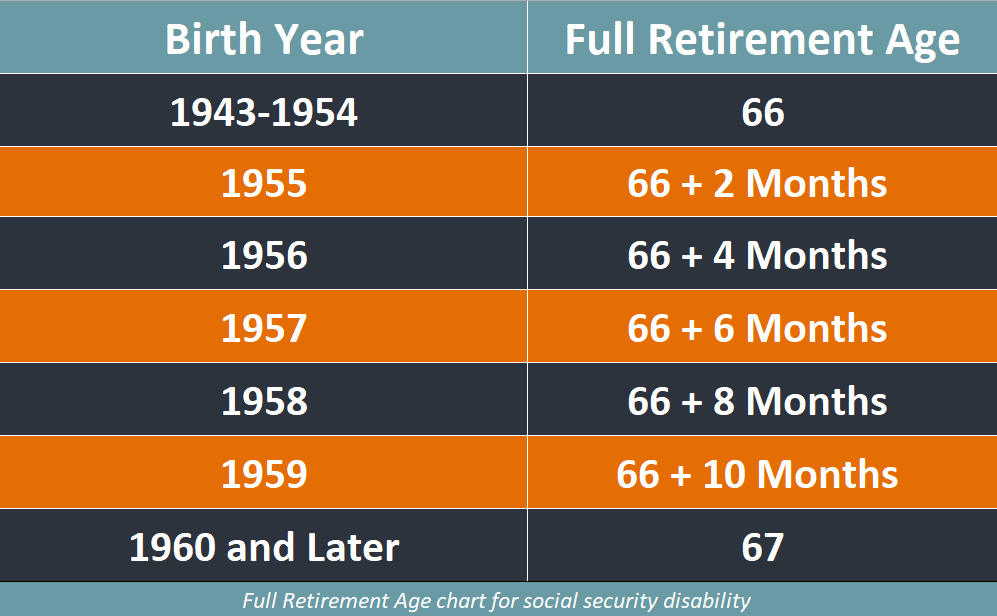
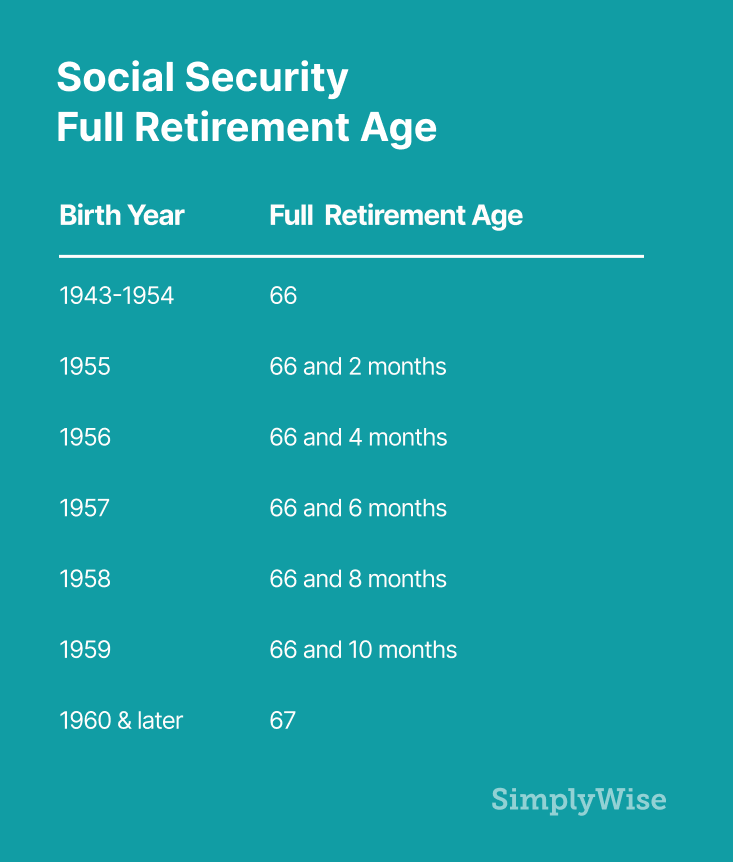
Your full retirement age (FRA) is the age at which you are entitled to 100% of your primary insurance amount (PIA). The FRA is not a fixed age for everyone; it depends on your birth year. For individuals born between 1943 and 1954, the FRA is 66. For those born in 1960 or later, the FRA is 67. If you were born between 1955 and 1959, your FRA gradually increases from 66 and two months to 66 and 10 months.
Claiming benefits at your FRA ensures you receive the full amount your earnings record has earned you, without any reductions. This is often the optimal strategy for individuals who can afford to wait and whose financial planning supports delaying benefits.
Delayed Retirement Credits: Maximizing Your Payout
For every year you delay claiming your Social Security benefits beyond your full retirement age, up to age 70, you earn delayed retirement credits. These credits increase your monthly benefit amount. The SSA offers a significant incentive to wait, with benefits increasing by a certain percentage for each month you delay past your FRA.
For example, if your FRA is 67, delaying benefits until age 70 can result in a monthly payment that is approximately 24% higher than if you claimed at 67. This increase is compounded annually and is a powerful tool for boosting your retirement income, especially if you anticipate a long retirement or have other retirement savings that can cover your expenses until age 70. Waiting until age 70 is often considered the “maximum benefit” strategy for Social Security.
Estimating Your Future Social Security Benefits

Accurately forecasting your future Social Security income is crucial for effective retirement planning. The Social Security Administration provides tools and resources to help you get an estimate, and understanding these tools will empower you to make informed decisions.
The Social Security Statement: Your Personal Benefit Forecast
The most reliable way to estimate your future Social Security benefits is by creating an account on the Social Security Administration’s official website (ssa.gov) and accessing your personalized Social Security Statement. This statement provides a detailed breakdown of your earnings history, your estimated benefits at various claiming ages (early, full retirement, and age 70), and information about potential survivor and disability benefits.
Your Social Security Statement is updated annually, so it’s wise to review it periodically. It uses your actual earnings record up to the present and projects your future earnings based on assumptions. It’s important to remember that these are estimates, and your actual benefit amount will depend on your continued earnings and the Social Security laws in effect when you claim.
Key Information on Your Statement: Understanding the Numbers
Your Social Security Statement will typically show three key benefit estimates:
- Benefit at your earliest eligibility age (age 62): This is your reduced benefit amount if you claim at the earliest possible age.
- Benefit at your full retirement age: This is your primary insurance amount (PIA), the benefit you’re entitled to without reduction.
- Benefit at age 70: This is your maximum possible monthly benefit, incorporating all delayed retirement credits.
The statement will also provide an estimate of your benefit if you become disabled or if you die and leave a spouse or children. Familiarize yourself with these figures and understand how they relate to your retirement income needs.
What If You Haven’t Worked Long Enough?
If you haven’t worked long enough to qualify for Social Security benefits, you won’t receive a retirement benefit. To be eligible for retirement benefits, you need to earn 40 “credits” in your lifetime, which generally takes about 10 years of work. If you have fewer than 40 credits, you won’t receive a retirement benefit, though some exceptions might apply for disability or survivor benefits depending on the circumstances.
If you’re concerned about not having enough credits, it’s important to continue working and earning to accumulate the necessary credits. You can check your progress towards these credits by reviewing your Social Security Statement.
Strategies to Maximize Your Social Security Benefit
Beyond understanding the basic calculation, there are strategic decisions you can make to potentially increase the amount of Social Security income you receive in retirement. These strategies involve careful planning and a good understanding of how the system works.
The Power of Working Longer and Earning More
As discussed earlier, your Social Security benefit is based on your highest 35 years of earnings. Therefore, continuing to work, especially in higher-earning years, can significantly boost your average indexed monthly earnings (AIME) and, consequently, your monthly benefit. Even a few extra years of strong earnings can replace lower-earning years or years with no earnings in your record.
Furthermore, delaying your retirement beyond your full retirement age allows you to accrue delayed retirement credits, as previously detailed. This is often the most impactful way to increase your monthly benefit. Even if you’ve reached your FRA, continuing to work and deferring benefits can lead to a substantially higher payout later.
Coordinating Benefits with a Spouse
For married couples, understanding spousal and survivor benefits can significantly enhance their combined retirement income. A spouse may be eligible to receive benefits based on their partner’s earnings record, even if their own earnings record is lower.
-
Spousal Benefits: If your spouse is eligible for Social Security retirement benefits, you may be eligible to receive a spousal benefit. This benefit is generally up to 50% of your spouse’s primary insurance amount (PIA). You can claim spousal benefits as early as age 62, but the benefit will be reduced if claimed before your full retirement age. To receive spousal benefits, your spouse must have already claimed their own retirement benefits.
-
Survivor Benefits: If one spouse passes away, the surviving spouse may be eligible to receive survivor benefits. This benefit is typically equal to the deceased spouse’s PIA, or 100% of their benefit, whichever is greater. This provides a crucial income stream for a surviving spouse, especially if their own retirement benefit is lower.
There are complex rules around coordinating benefits, including “deemed filing,” where claiming one benefit might deem you to be claiming others. It’s highly recommended to consult with a financial advisor or the SSA to understand the optimal claiming strategies for married couples.
The Impact of Taxes on Your Social Security Benefits
It’s important to be aware that a portion of your Social Security benefits may be subject to federal income tax. The amount of your benefit that is taxed depends on your “combined income,” which includes your adjusted gross income (AGI), any non-taxable interest, and half of your Social Security benefits.
- Single Filers: If your combined income is between $25,000 and $34,000, up to 50% of your Social Security benefits may be taxable. If your combined income exceeds $34,000, up to 85% of your benefits may be taxable.
- Married Couples Filing Jointly: If your combined income is between $32,000 and $44,000, up to 50% of your Social Security benefits may be taxable. If your combined income exceeds $44,000, up to 85% of your benefits may be taxable.
Some states also tax Social Security benefits, so it’s essential to consider state tax laws in your retirement planning. Strategies like managing withdrawals from tax-deferred retirement accounts (e.g., 401(k)s, IRAs) can help control your overall taxable income in retirement and, therefore, the taxability of your Social Security benefits.
By understanding these elements and proactively planning, you can gain a clearer picture of your future Social Security income and make informed decisions to secure a financially sound retirement.
aViewFromTheCave is a participant in the Amazon Services LLC Associates Program, an affiliate advertising program designed to provide a means for sites to earn advertising fees by advertising and linking to Amazon.com. Amazon, the Amazon logo, AmazonSupply, and the AmazonSupply logo are trademarks of Amazon.com, Inc. or its affiliates. As an Amazon Associate we earn affiliate commissions from qualifying purchases.