
Understanding how to calculate a percentage increase is more than just a mathematical exercise; it’s a fundamental financial skill that empowers individuals and businesses alike to make informed decisions. In the dynamic world of money, values are rarely static. Whether you’re tracking the growth of your investments, analyzing changes in your personal budget, monitoring business revenue, or assessing the impact of inflation, the ability to quantify these shifts accurately is paramount. A simple percentage increase provides context, transforms raw numbers into actionable insights, and reveals the true magnitude of change.
Consider your salary. A raise of $5,000 sounds significant, but its true impact can only be understood when compared to your original income. For someone earning $50,000, that’s a 10% increase, a substantial boost. For someone earning $200,000, it’s a mere 2.5%, which, while welcome, might not feel as impactful. This simple example underscores the power of percentages: they normalize data, allowing for meaningful comparisons across different scales and timeframes. This article will demystify the process of calculating a percentage increase, exploring its application across various financial scenarios, and equipping you with the knowledge to leverage this powerful tool in your financial life.
The Foundation: Understanding Absolute vs. Relative Change
Before diving into the mechanics of calculation, it’s crucial to grasp the distinction between absolute and relative change. This foundational understanding is key to appreciating why percentage increases are so vital in financial analysis.
What is Absolute Change?
Absolute change is the most straightforward way to measure a difference between two values. It’s simply the raw numerical difference between a new value and an old value.
- Formula: Absolute Change = New Value – Old Value
For example, if your investment portfolio grew from $10,000 to $12,000, the absolute change is $12,000 – $10,000 = $2,000. If your monthly grocery bill increased from $400 to $450, the absolute change is $450 – $400 = $50.
While absolute change tells you how much something has changed in nominal terms, it often lacks the context needed for meaningful interpretation, especially when comparing different items or analyzing performance over time.
Why Relative Change (Percentages) Matters More
Relative change, expressed as a percentage, provides the necessary context that absolute change often misses. It tells you how much something has changed in proportion to its original value. This proportion is incredibly powerful because it allows for standardization and comparison across vastly different scales.
- Context: A $100 increase in your daily coffee budget is far more significant than a $100 increase in your annual mortgage payment. Absolute change treats both as “100,” but percentage change immediately highlights their differing impacts.
- Comparability: When comparing the performance of two different investments, one starting at $1,000 and another at $100,000, their absolute gains will likely be very different. However, their percentage gains can be directly compared to assess which performed better proportionally.
- Insight: Percentages allow us to speak a universal language of growth or decline. “Our sales increased by 15%” is a much more insightful statement than “Our sales increased by $150,000” if the audience doesn’t know the original sales figure.
In finance, context is everything. A percentage increase provides that essential context, transforming raw data into actionable insights that drive better decision-making in personal finance, investing, and business operations.
The Core Formula: Calculating a Percentage Increase
Now that we understand the ‘why’, let’s delve into the ‘how’. The formula for calculating a percentage increase is simple, yet incredibly versatile. Mastering this formula is a cornerstone of financial literacy.
Step-by-Step Breakdown
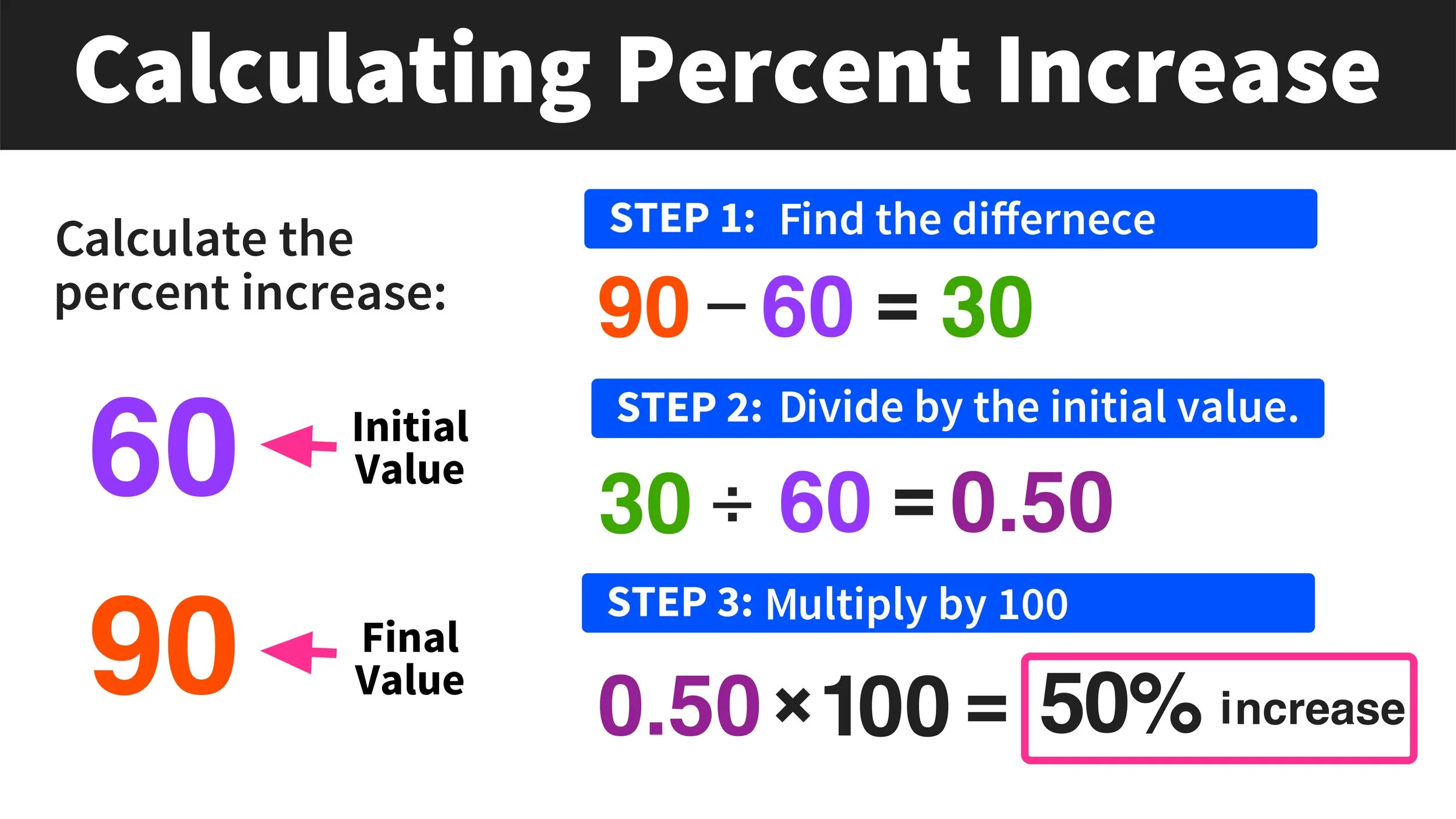
The universal formula for calculating a percentage increase is as follows:
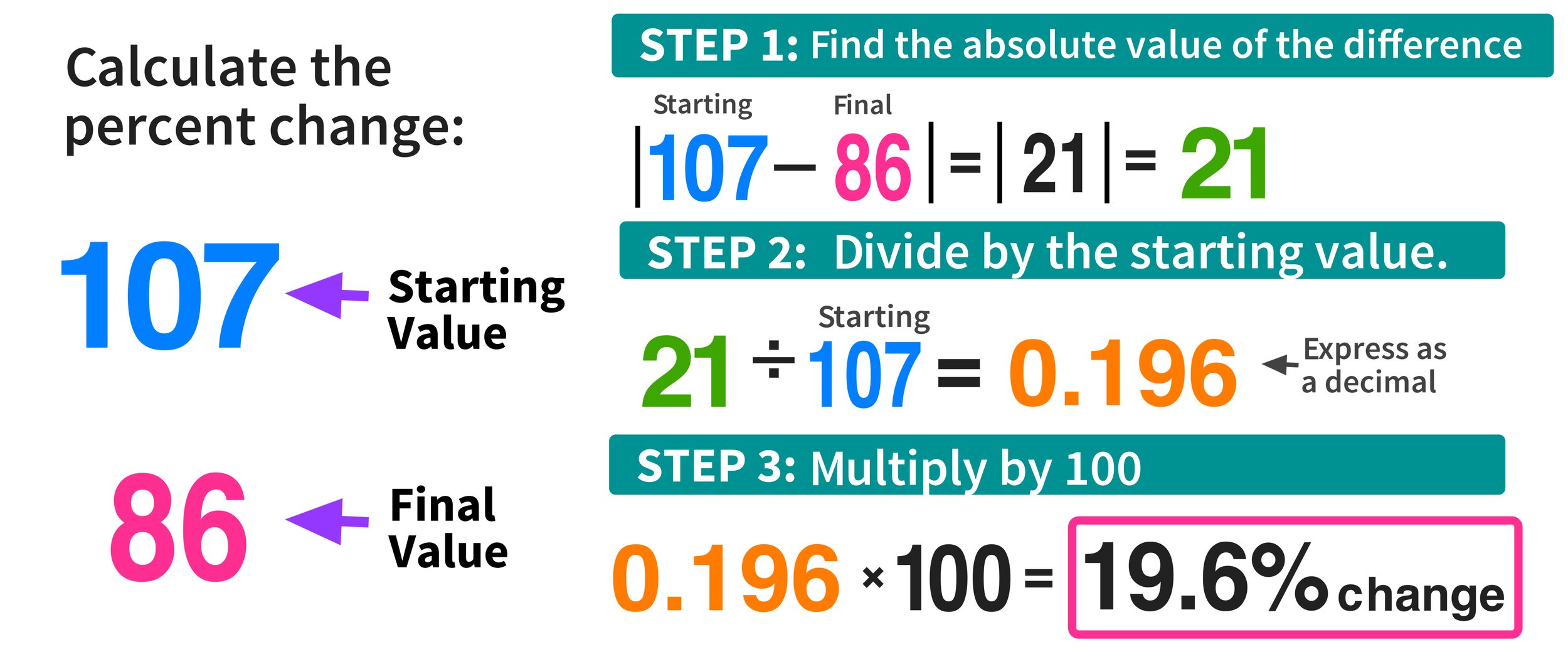
Percentage Increase = ((New Value – Old Value) / Old Value) * 100
Let’s break down each component:
- Find the Difference (New Value – Old Value): This first step calculates the absolute change, or the amount by which the value has increased.
- Divide by the Old Value: This step is crucial. By dividing the increase by the original value, you are determining the proportional change. This results in a decimal.
- Multiply by 100: To express this decimal as a percentage, you multiply it by 100.
Let’s walk through an example:
Suppose your rent increased from $1,500 per month to $1,650 per month.
- Difference: $1,650 (New Value) – $1,500 (Old Value) = $150
- Divide by Old Value: $150 / $1,500 = 0.10
- Multiply by 100: 0.10 * 100 = 10%
So, your rent increased by 10%.
Practical Examples in Personal Finance
The percentage increase calculation is invaluable in managing your personal finances:
- Salary Increases: If your annual salary goes from $60,000 to $63,000, your percentage increase is (($63,000 – $60,000) / $60,000) * 100 = (3,000 / 60,000) * 100 = 0.05 * 100 = 5%.
- Expense Growth: Your utility bill rose from $120 to $135. The percentage increase is (($135 – $120) / $120) * 100 = (15 / 120) * 100 = 0.125 * 100 = 12.5%. This alerts you to a significant cost escalation.
- Savings Growth: If your savings account balance increased from $5,000 to $5,100 due to interest, that’s (($5,100 – $5,000) / $5,000) * 100 = (100 / 5,000) * 100 = 0.02 * 100 = 2%. This tells you the effective interest rate or growth rate.
Practical Examples in Business Finance
For businesses, calculating percentage increases is critical for performance evaluation and strategic planning:
- Revenue Growth: A company’s revenue increased from $1,000,000 last year to $1,250,000 this year. The percentage increase is (($1,250,000 – $1,000,000) / $1,000,000) * 100 = (250,000 / 1,000,000) * 100 = 0.25 * 100 = 25%. This is a key metric for investors and management.
- Cost Escalation: The cost of raw materials for a product went from $5.00 per unit to $5.75 per unit. The percentage increase is (($5.75 – $5.00) / $5.00) * 100 = (0.75 / 5.00) * 100 = 0.15 * 100 = 15%. This informs pricing adjustments or sourcing strategies.
- Profit Margin Analysis: If net profit increased from $100,000 to $110,000, while revenue also increased, calculating the percentage increase in profit (10%) and comparing it to revenue growth helps assess efficiency.
Applying Percentage Increases in Investment Analysis
Nowhere is the understanding of percentage increases more crucial than in the world of investments. It’s the language of returns, growth, and risk.
Measuring Investment Returns
When you invest, your primary goal is to see your money grow. Percentage increases provide the standard metric for measuring this growth, allowing you to compare different investment opportunities fairly.
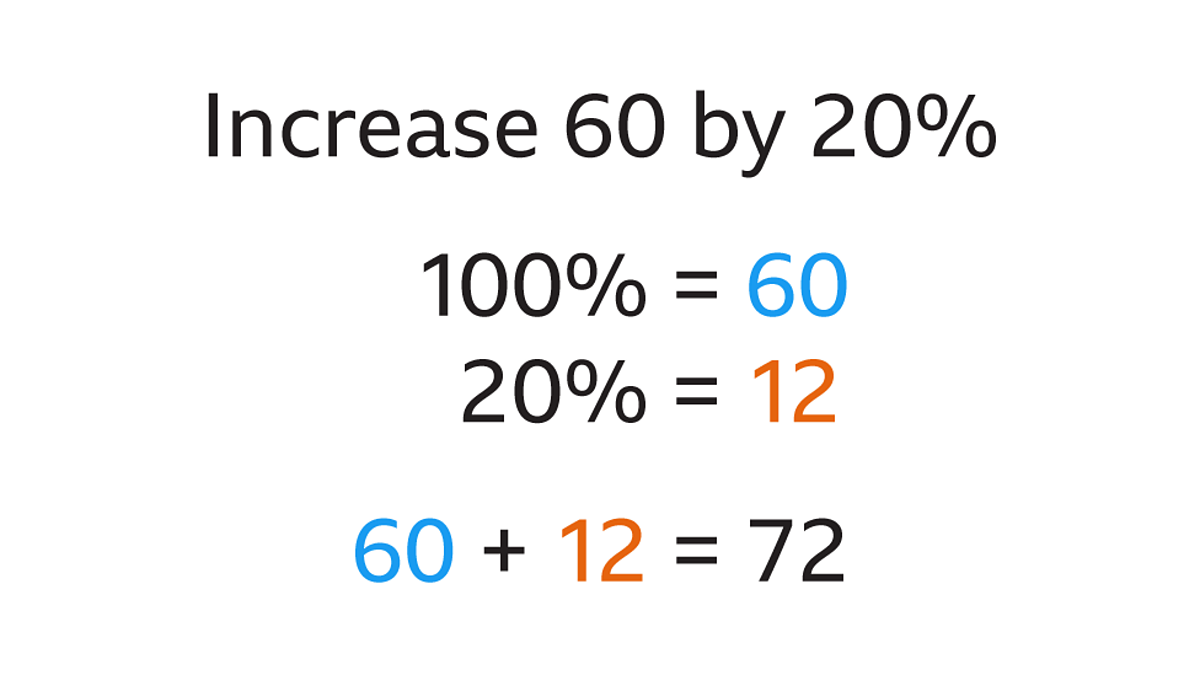
- Stock Price Growth: You bought a stock for $50 per share, and it’s now trading at $58 per share. Your percentage gain is (($58 – $50) / $50) * 100 = (8 / 50) * 100 = 0.16 * 100 = 16%.
- Portfolio Appreciation: Your entire investment portfolio started the year at $100,000 and ended at $112,000. Your portfolio’s percentage increase is (($112,000 – $100,000) / $100,000) * 100 = (12,000 / 100,000) * 100 = 0.12 * 100 = 12%. This “return on investment” (ROI) is a critical indicator of success.
- Mutual Fund/ETF Performance: Financial statements for mutual funds and Exchange Traded Funds (ETFs) invariably report performance as percentage increases (or decreases) over various periods (1-year, 5-year, 10-year, inception). This allows investors to easily compare funds against each other and against benchmark indices.
Understanding Compounding and Growth
Percentage increases are at the heart of the concept of compounding, often called the “eighth wonder of the world.” Compounding is the process where the returns you earn on your investments are reinvested, and then those reinvested returns also start earning returns. This leads to exponential growth over time.
For example, if you invest $1,000 at a 10% annual increase:
- Year 1: $1,000 * 1.10 = $1,100
- Year 2: $1,100 * 1.10 = $1,210 (10% of $1,100, not $1,000)
- Year 3: $1,210 * 1.10 = $1,331
Notice how the absolute increase grows each year ($100, then $110, then $121) even though the percentage increase remains constant. This is the magic of compounding, driven by consistent percentage gains on an ever-growing principal. Understanding this helps investors appreciate the long-term power of even modest annual percentage returns.
Inflation’s Impact (Real vs. Nominal Returns)
While your investments might show a positive percentage increase, it’s crucial to consider the impact of inflation. Inflation is the rate at which the general level of prices for goods and services is rising, and subsequently, purchasing power is falling. It is typically expressed as a percentage increase.
- Nominal Return: The stated percentage increase of your investment, without accounting for inflation.
- Real Return: The actual percentage increase in your purchasing power after accounting for inflation.
Real Return ≈ Nominal Return – Inflation Rate
If your investment grew by 8% (nominal return) but inflation was 3%, your real return is approximately 5%. This means your money’s buying power only increased by 5%, not 8%. Regularly calculating percentage increases against the inflation rate is vital for understanding the true growth of your wealth and ensuring your investments are outpacing the rising cost of living.
Common Pitfalls and Advanced Considerations
While the core calculation is straightforward, there are nuances and common mistakes to avoid when interpreting percentage increases, particularly in financial contexts.
Beware of Base Effects
The “base effect” refers to the impact of the starting point (the “old value”) on the calculated percentage increase. A small base can lead to disproportionately large percentage increases, which can sometimes be misleading.
- Example: A startup’s revenue jumps from $10,000 to $30,000. This is a 200% increase ((($30,000 – $10,000) / $10,000) * 100). This looks incredibly impressive. However, if an established company’s revenue goes from $10,000,000 to $12,000,000, it’s only a 20% increase. While the startup’s percentage increase is much higher, the established company’s absolute increase ($2,000,000) is far greater than the startup’s ($20,000). Always consider the absolute numbers alongside percentages, especially when the base is very small.
Annualized vs. Total Returns
When looking at investment performance, the timeframe is critical:
- Total Return: This is the overall percentage increase over the entire period an investment was held, regardless of how long that period was. If you buy a stock for $100 and sell it for $150 two years later, your total return is 50%.
- Annualized Return: This expresses the average annual percentage increase over a period longer than one year, allowing for comparison of investments held for different durations. A 50% total return over two years doesn’t mean 50% per year. Using compound annual growth rate (CAGR) formulas would show that a 50% gain over two years is approximately a 22.47% annualized return. Always pay attention to whether a reported percentage increase is a total return or an annualized return.
Using Percentage Increases for Forecasting and Budgeting
Beyond looking backward, percentage increases are vital for looking forward.
- Budgeting: When creating a household or business budget, you might project expense increases based on historical trends or anticipated inflation. “We expect our energy costs to increase by 5% next year.”
- Financial Forecasting: Businesses use projected percentage increases in sales, costs, and profits to create financial models and make strategic decisions. “If we grow revenue by 10% next quarter, and maintain a 25% profit margin, our profit will be X.”
- Goal Setting: If you want your retirement portfolio to reach a certain value, you need to calculate the average annual percentage increase (return) required to achieve that goal within a specific timeframe.
Tools and Technologies for Seamless Calculation
While the basic formula is simple enough for mental math or a basic calculator, modern financial life benefits immensely from tools that automate and streamline percentage increase calculations.
Spreadsheet Software (Excel, Google Sheets)
Spreadsheets are arguably the most powerful and widely used tools for financial calculations, including percentage increases.
- Formulas: You can easily set up columns for ‘Old Value’, ‘New Value’, and then use a formula like
=(B2-A2)/A2(assuming Old Value is in A2 and New Value is in B2) to calculate the decimal change, then format the cell as a percentage. - Automation: Once the formula is set up, you can drag it down to apply to hundreds or thousands of rows, instantly calculating percentage increases for a vast dataset of transactions, investments, or budget items.
- Visualization: Spreadsheets allow you to create charts and graphs that visually represent percentage increases, making trends and insights even clearer.
Financial Calculators and Online Tools
For quick, one-off calculations or for more complex financial functions involving compounding and time value of money, dedicated financial calculators or online tools are invaluable.
- Dedicated Financial Calculators: Devices like the HP 12c or TI BA II Plus have built-in functions for percentage changes, as well as more advanced financial calculations like future value, present value, and interest rates.
- Online Percentage Calculators: Numerous websites offer free, simple percentage increase calculators where you just plug in the old and new values.
- Investment Calculators: Many brokerage firms and financial planning websites provide tools to calculate annualized returns, compound growth, and project future values based on specified percentage increases.
The Power of Financial Software (Quicken, Mint, etc.)
Modern personal finance and business accounting software often integrate percentage increase tracking automatically.
- Budgeting Apps: Apps like Mint, YNAB (You Need A Budget), or PocketGuard can track your spending categories month-over-month and year-over-year, automatically showing you percentage increases or decreases in your expenses.
- Investment Trackers: Platforms like Personal Capital or portfolio trackers offered by brokerages will display the percentage gain or loss of your individual holdings and your overall portfolio in real-time or over chosen periods.
- Business Accounting Software: QuickBooks, Xero, and similar platforms generate reports that highlight percentage changes in revenue, expenses, and profit margins over various financial periods, aiding in business analysis and compliance.
By leveraging these tools, you can move beyond manual calculations and gain a deeper, more efficient understanding of the percentage increases impacting your financial landscape.
In the grand scheme of personal finance and business management, mastering the calculation and interpretation of percentage increases is not just a mathematical nicety, but a critical life skill. From evaluating a pay raise to assessing investment performance, from budgeting household expenses to forecasting corporate profits, percentages provide the essential context that raw numbers simply cannot. They allow for meaningful comparisons, reveal underlying trends, and empower you to make data-driven decisions that foster financial growth and stability. By understanding the core formula, recognizing its applications across different financial domains, being mindful of common pitfalls, and utilizing available tools, you gain a powerful analytical lens through which to view and navigate the complexities of the monetary world. Embrace this fundamental concept, and you’ll unlock a clearer, more insightful path to financial success.
aViewFromTheCave is a participant in the Amazon Services LLC Associates Program, an affiliate advertising program designed to provide a means for sites to earn advertising fees by advertising and linking to Amazon.com. Amazon, the Amazon logo, AmazonSupply, and the AmazonSupply logo are trademarks of Amazon.com, Inc. or its affiliates. As an Amazon Associate we earn affiliate commissions from qualifying purchases.