
In the world of finance, data is only as valuable as your ability to interpret it. Whether you are tracking the performance of a diversified stock portfolio, analyzing the year-over-year revenue of a burgeoning startup, or simply trying to understand how inflation is eating into your purchasing power, one metric stands above the rest: the percent increase.
Finding a percent increase is more than a simple mathematical exercise; it is a fundamental tool for assessing financial health. It provides a standardized way to compare growth across different asset classes, timeframes, and scales. In this guide, we will explore the mechanics of calculating percent increase within the “Money” niche, examining how this single formula serves as the backbone for investment analysis, business scaling, and personal wealth management.
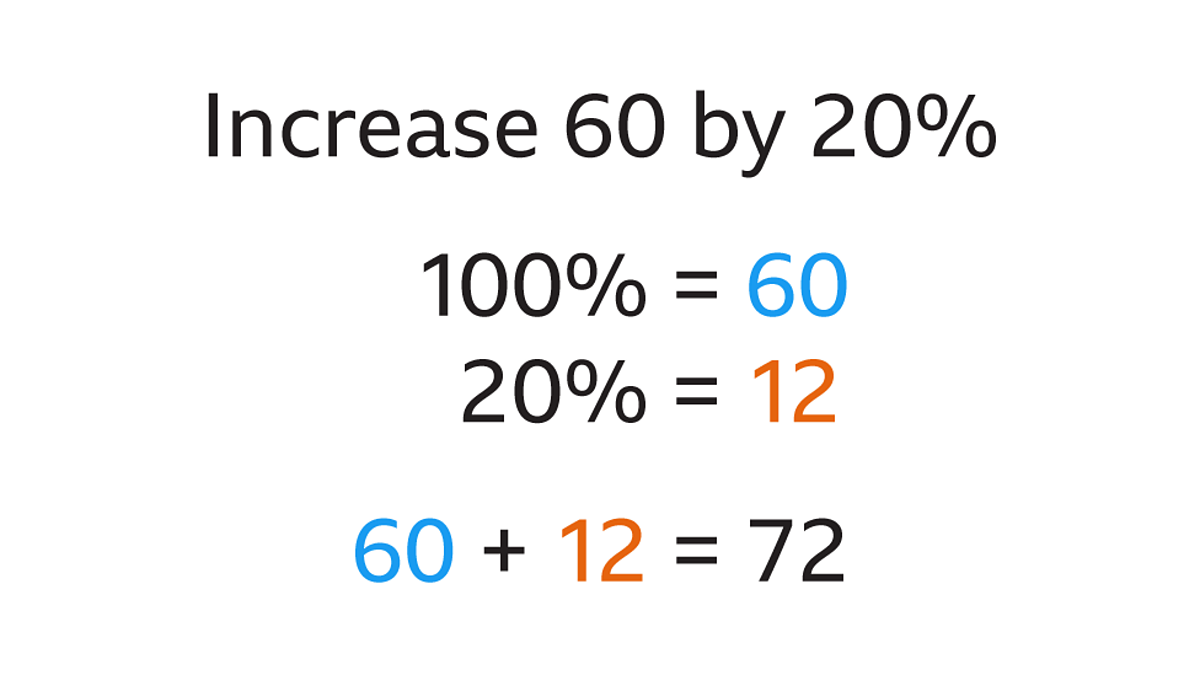
The Fundamental Formula: Calculating Growth in Financial Terms
At its core, calculating a percent increase allows an investor or business owner to determine the relative change in a value over a specific period. Without this percentage, raw numbers can be misleading. For instance, a $1,000 gain on a $5,000 investment is significantly more impressive than a $1,000 gain on a $100,000 investment. The percent increase provides the necessary context.
The Standard Percent Increase Equation
To find the percent increase, you follow a three-step process:
- Subtract the original value (the starting amount) from the new value (the current amount) to find the “increase.”
- Divide that increase by the original value.
- Multiply the resulting decimal by 100 to convert it into a percentage.
Mathematically, it looks like this:
[(New Value - Old Value) / Old Value] x 100 = Percent Increase
Common Pitfalls in Financial Calculations
One of the most frequent mistakes in financial reporting is dividing the increase by the new value rather than the original value. This results in a “margin” calculation rather than a “growth” calculation. For example, if your portfolio grows from $10,000 to $15,000, the increase is $5,000. Dividing $5,000 by the original $10,000 gives you a 50% increase. If you mistakenly divide by $15,000, you get 33%, which describes the portion of the current portfolio that is profit, not the growth rate itself.
Leveraging Financial Tools for Automation
In modern finance, manual calculations are often replaced by software. In platforms like Microsoft Excel or Google Sheets, finding a percent increase is streamlined. If your starting capital is in cell A1 and your ending capital is in cell B1, the formula =(B1-A1)/A1 will provide the growth rate. Setting the cell format to “Percentage” handles the multiplication by 100 automatically, allowing for real-time tracking of volatile assets like equities or cryptocurrencies.
Measuring Investment Performance and ROI
For the individual investor, the percent increase is synonymous with Return on Investment (ROI). Understanding how to calculate this accurately is the difference between a disciplined investor and one who is merely guessing. When you evaluate the success of a capital allocation, you must look at the percent increase to benchmark your performance against the broader market.
Comparing Asset Classes
Different investments have different entry points. You might buy a single share of a high-priced tech stock for $3,000, while also investing $3,000 across a dozen penny stocks. By the end of the year, if the tech stock is worth $3,600 and the penny stock portfolio is worth $4,500, the raw dollar gains are different, but the percent increase tells the true story. The 20% increase in the tech stock is respectable, but the 50% increase in the penny stocks indicates a much higher risk-reward payoff. Using percent increase allows you to compare “apples to apples” regardless of the initial capital required.
The Nuance of Realized vs. Unrealized Gains
It is vital to distinguish between a percent increase on paper (unrealized) and a percent increase in the bank (realized). Financial analysis often involves calculating the percent increase of an asset’s market price. However, a savvy investor also factors in “net percent increase,” which subtracts transaction fees, capital gains taxes, and commissions from the final value before calculating the growth. This provides a more realistic view of how much your wealth has actually grown.

Understanding Compounding Growth
The percent increase becomes even more powerful when viewed through the lens of compounding. If an investment sees a 10% increase every year, the dollar amount added each year grows because the 10% is being applied to an increasingly larger “original value.” This is the “Snowball Effect” of wealth. Tracking the annual percent increase helps investors determine if they are on track to meet long-term goals, such as retirement or a down payment on a home.
Business Revenue and Scale: Analyzing Corporate Health
For entrepreneurs and corporate executives, finding the percent increase is a daily requirement. It is the primary metric used to report earnings to shareholders and to determine if a business strategy is effective. In business finance, we often look at growth through specific lenses: Year-over-Year (YoY) and Quarter-over-Quarter (QoQ).
Year-over-Year (YoY) Growth Analysis
YoY growth is the gold standard for measuring a company’s trajectory. By comparing the revenue of Q3 this year to the revenue of Q3 last year, a business eliminates the noise of seasonal fluctuations. If a retail business sees a 15% increase in revenue YoY, it suggests that the brand is gaining market share or improving its operational efficiency. A stagnating or negative percent increase, conversely, is a red flag that the business model may be under threat.
Key Performance Indicators (KPIs) Beyond Revenue
Revenue isn’t the only area where percent increase matters. Financial officers track:
- Customer Acquisition Cost (CAC) Increase: If your CAC increases by 20% while your revenue only increases by 5%, your profit margins are being squeezed.
- Profit Margin Expansion: Finding the percent increase in net profit margins shows whether a company is becoming more efficient as it scales.
- Operating Expenses: Monitoring the percent increase in overhead ensures that costs aren’t outpacing growth.
Scalability and the “Rule of 40”
In the world of SaaS (Software as a Service) and venture capital, the percent increase in revenue is often balanced against profit margins. The “Rule of 40” states that a healthy growth-stage company’s combined growth rate (percent increase in revenue) and profit margin should exceed 40%. Calculating these percentages allows investors to identify high-growth “unicorns” that are worth the risk of initial losses.
Personal Finance: Tracking Net Worth and Purchasing Power
On an individual level, understanding percent increase is a cornerstone of financial literacy. It applies to everything from negotiating a salary raise to understanding how much more you are paying for groceries due to inflation.
Calculating Salary Increases and Career Growth
When you receive a raise, calculating the percent increase is more important than looking at the dollar amount. A $5,000 raise on a $50,000 salary is a 10% increase, which is substantial. The same $5,000 raise on a $150,000 salary is only a 3.3% increase, which might not even keep pace with the rising cost of living. Knowing your “raise percentage” empowers you during performance reviews and helps you gauge your career’s financial trajectory.
The Impact of Inflation on “Real” Growth
One of the most critical applications of the percent increase formula is adjusting for inflation. If your savings account offers a 4% interest rate (a 4% increase in your money), but the Consumer Price Index (CPI) shows a 5% increase in the cost of goods, your “real” percent increase is actually -1%. You are losing purchasing power despite having more nominal dollars. Understanding this helps individuals move their money from low-interest savings into assets that have a higher probability of outperforming the inflation rate.
Monitoring Net Worth Growth
Personal net worth—the sum of all assets minus all liabilities—is the ultimate scorecard in personal finance. By calculating the percent increase in your net worth annually, you can see the cumulative effect of your saving, investing, and debt-reduction efforts. A consistent year-over-year increase in net worth is the clearest indicator of moving toward financial independence.

Conclusion: The Strategic Value of Percent Increase
Finding a percent increase is a simple mathematical operation with profound implications for anyone interested in money, business, or investing. It strips away the complexity of raw data and reveals the underlying truth of financial performance. By mastering this calculation, you gain the ability to benchmark your investments, audit your business’s efficiency, and protect your personal wealth from the eroding effects of inflation.
In the modern financial landscape, those who can accurately calculate and interpret growth are the ones best positioned to capitalize on it. Whether you are looking at a stock chart, a corporate balance sheet, or your own bank account, the percent increase is the most vital number you will ever track. It is not just a measure of where you have been, but a roadmap for where your wealth is going.
aViewFromTheCave is a participant in the Amazon Services LLC Associates Program, an affiliate advertising program designed to provide a means for sites to earn advertising fees by advertising and linking to Amazon.com. Amazon, the Amazon logo, AmazonSupply, and the AmazonSupply logo are trademarks of Amazon.com, Inc. or its affiliates. As an Amazon Associate we earn affiliate commissions from qualifying purchases.