
In the intricate world of finance, numbers tell a story. But not all numbers are created equal. An absolute change might hint at movement, but it’s the relative change that truly reveals the magnitude and significance of that movement. This is where percentage increase becomes an indispensable tool. From tracking the growth of your investments to understanding the impact of inflation on your purchasing power, or even evaluating the performance of a business, mastering the art of calculating and interpreting percentage increase is not just a mathematical exercise—it’s a critical skill for informed financial decision-making.
In an era where financial literacy is paramount, the ability to dissect and comprehend growth figures empowers individuals and businesses to make smarter choices, identify trends, and project future outcomes with greater accuracy. This comprehensive guide will demystify percentage increase, exploring its core mechanics, diverse applications across personal and business finance, and offering insights to avoid common pitfalls, ultimately enhancing your financial acumen.
Understanding the Fundamentals: What is Percentage Increase?
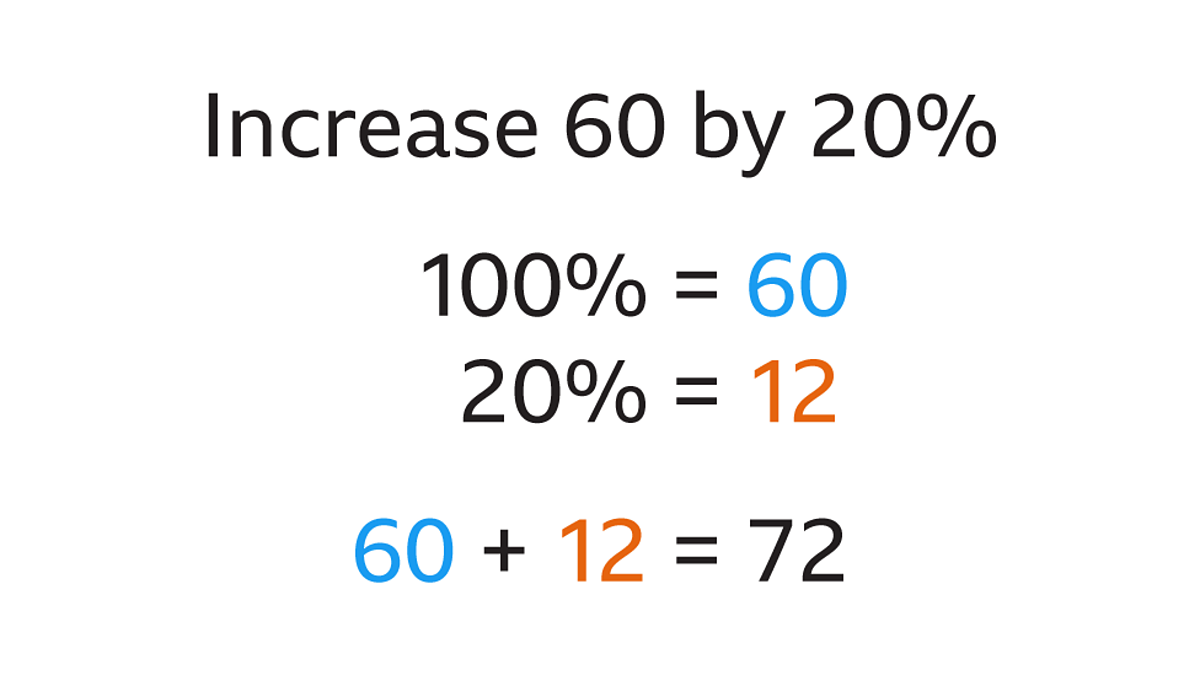
At its heart, percentage increase is a way to express the relative change between two values over time, specifically when the new value is greater than the original value. It normalizes this change, making it comparable across different scales and contexts. Instead of merely knowing that your investment grew by $1,000, percentage increase tells you if that $1,000 represents a modest 5% gain or a significant 50% surge. This distinction is crucial for understanding true performance and context.
The Core Formula and Its Logic
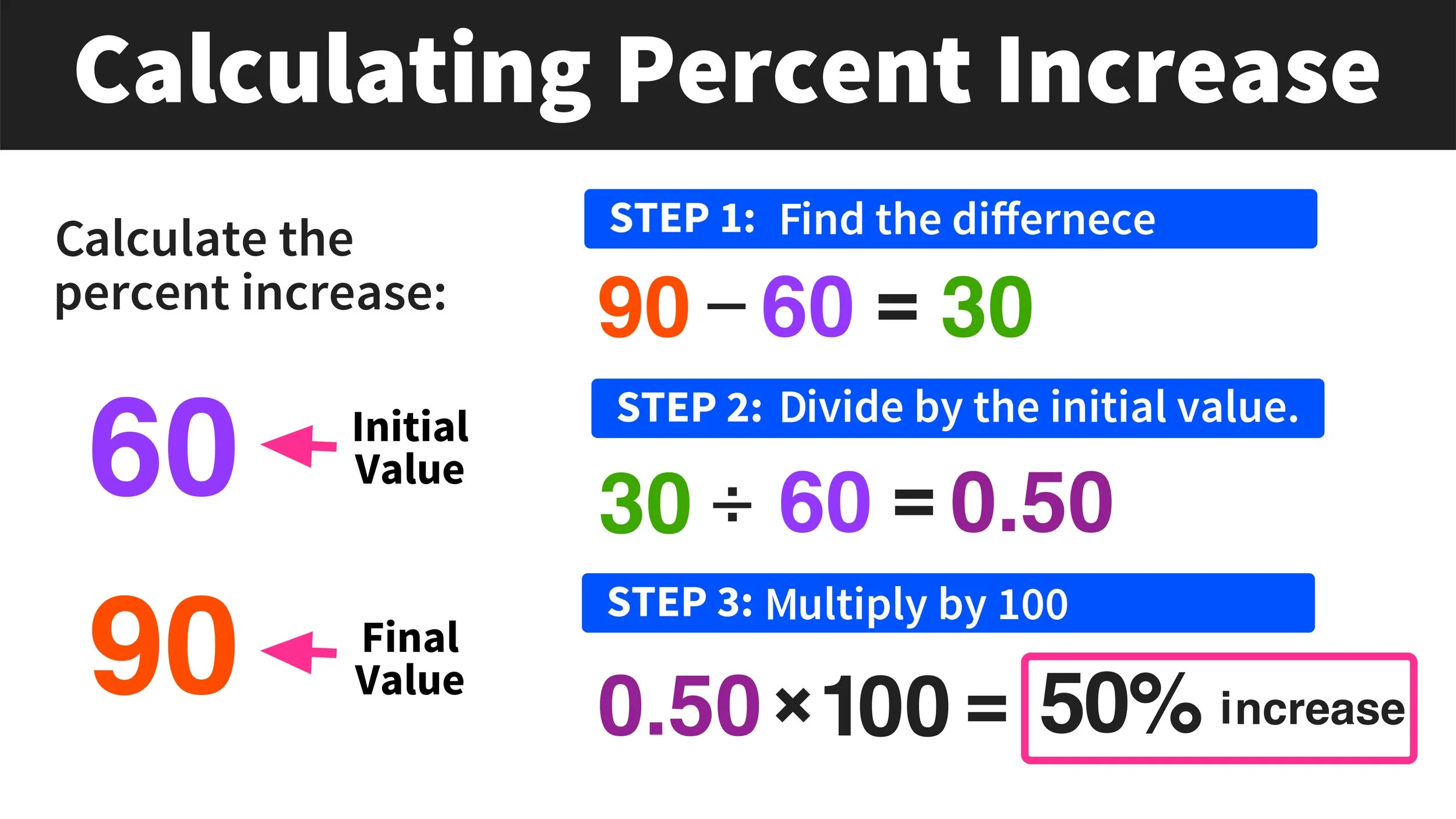
The formula for calculating percentage increase is straightforward and intuitively logical:
Percentage Increase = [ (New Value – Original Value) / Original Value ] * 100
Let’s break down each component:
- New Value: This is the later, larger figure after the increase.
- Original Value: This is the earlier, smaller figure before the increase.
- New Value – Original Value: This first step calculates the absolute increase or the raw dollar (or unit) amount of growth.
- Dividing by Original Value: This is the critical step that converts the absolute increase into a relative proportion of the starting point. It answers the question: “How much did it increase relative to what it started with?”
- Multiplying by 100: This final step converts the decimal proportion into a percentage, making it easier to read and understand.
Example: If your stock portfolio was worth $10,000 last year and is now worth $12,500:
- Absolute Increase: $12,500 – $10,000 = $2,500
- Relative Proportion: $2,500 / $10,000 = 0.25
- Percentage Increase: 0.25 * 100 = 25%
Your portfolio increased by 25%.
Why Relative Growth Trumps Absolute Numbers
While knowing the absolute dollar amount of growth is useful, percentage increase offers a far richer and more actionable insight. Consider two investors: Investor A’s portfolio grew by $1,000, and Investor B’s portfolio also grew by $1,000. On the surface, their performance seems identical. However, if Investor A started with $5,000, their percentage increase is 20% ( ($1,000 / $5,000) * 100 ). If Investor B started with $100,000, their percentage increase is only 1% ( ($1,000 / $100,000) * 100 ).
This example vividly illustrates why percentage increase is superior for comparison and evaluation. It normalizes performance, allowing for meaningful analysis regardless of the initial scale. This principle extends across all financial contexts, from comparing the growth rates of different companies to assessing the impact of a pay raise relative to your previous salary.
Everyday Finance: Applying Percentage Increase to Your Personal Money
For individuals, percentage increase is far more than an abstract mathematical concept; it’s a practical tool for managing and optimizing personal finances. It allows you to track progress, set realistic goals, and make informed decisions about your income, expenses, and investments.
Tracking Your Investments and Savings Growth
Perhaps the most common application in personal finance is monitoring the performance of investments. Whether you’re invested in stocks, mutual funds, real estate, or even a high-yield savings account, calculating the percentage increase helps you understand your actual return on investment (ROI).
- Stocks and Mutual Funds: Regularly calculating the percentage increase of your portfolio or individual holdings allows you to assess which investments are performing well and which might need reevaluation. This is crucial for portfolio rebalancing and long-term financial planning.
- Real Estate: When your property value appreciates, percentage increase quantifies that growth. If you bought a house for $300,000 and it’s now valued at $360,000, that’s a 20% increase—a significant gain that impacts your net worth.
- Savings Accounts: Even with modest interest rates, understanding the percentage increase of your savings over time, factoring in interest earned, helps you visualize the power of compounding and motivates consistent saving.
Deciphering Salary Raises and Income Evolution
A salary raise is always welcome, but understanding its percentage increase provides a clearer picture of your career progression and purchasing power. If you earned $60,000 last year and now earn $63,000, that’s a 5% raise. This percentage allows you to compare it against inflation (covered later), industry averages, or previous raises, giving you a better sense of your economic standing. Similarly, for freelancers or entrepreneurs, tracking percentage increase in monthly or annual income reveals business growth trends and helps in forecasting.
Managing Your Budget: Identifying Expenditure Shifts
Percentage increase isn’t just for positive growth; it’s also vital for understanding increases in expenses. Monitoring how specific categories of your budget (e.g., groceries, utilities, transportation) increase over time helps you identify potential financial leaks or areas where you might need to adjust your spending habits. If your electricity bill jumps from $100 to $130, that’s a 30% increase—a clear signal to investigate reasons or find ways to conserve energy. This proactive approach to budget management is key to maintaining financial health.
Strategic Insights: Percentage Increase in Business and Investing
Beyond personal finance, percentage increase is a cornerstone of business analysis, investment strategy, and economic understanding. It provides key performance indicators (KPIs) that drive strategic decisions and paint a comprehensive picture of financial health and market dynamics.
Evaluating Business Health: Revenue, Profit, and Market Share Growth
For business owners, analysts, and investors, percentage increase is fundamental to assessing a company’s performance and trajectory.
- Revenue Growth: A consistent percentage increase in revenue signifies a growing business, attracting investors and indicating market demand for its products or services. Comparing year-over-year revenue percentage increases can highlight seasonality or the impact of strategic initiatives.
- Profit Margins: Tracking the percentage increase in net profit or gross profit margins indicates how efficiently a company is converting revenue into profit. A rising percentage often points to cost control, operational efficiencies, or pricing power.
- Market Share: An increase in a company’s market share percentage suggests it’s outperforming competitors and gaining a stronger foothold in its industry, a crucial indicator of competitive advantage.
Calculating Return on Investment (ROI) with Precision
ROI is a primary metric for investors, and it’s expressed as a percentage increase. It measures the profitability of an investment relative to its cost. The formula is:
ROI = [ (Net Profit from Investment – Cost of Investment) / Cost of Investment ] * 100
If an investment of $50,000 yields a net profit of $15,000, the ROI is 30%. This percentage allows investors to compare the effectiveness of different investment opportunities, helping them allocate capital wisely to maximize returns. A higher percentage ROI generally indicates a better investment.
Navigating Inflation and Economic Changes
Inflation, the rate at which the general level of prices for goods and services is rising, and subsequently, purchasing power is falling, is almost always discussed in terms of percentage increase. Understanding the annual percentage increase in the Consumer Price Index (CPI) helps you gauge how much more expensive everyday items have become and how much more income you need just to maintain your current standard of living.
- Real vs. Nominal Growth: When your salary increases by 5%, but inflation is at 3%, your “real” percentage increase in purchasing power is only 2%. Percentage increase helps differentiate between nominal (stated) growth and real (inflation-adjusted) growth, a vital distinction for financial planning and wealth preservation.
- Economic Indicators: GDP growth, unemployment rate changes, and interest rate adjustments are all frequently presented as percentage increases or decreases. Interpreting these figures is essential for understanding the broader economic landscape and making informed personal and business decisions.
Avoiding Common Traps and Enhancing Your Analysis
While percentage increase is a powerful tool, its misuse or misinterpretation can lead to flawed conclusions. Awareness of common pitfalls and employing robust analytical practices are key to harnessing its full potential.
The Peril of Small Bases: Context is King
One of the most frequent misinterpretations arises when calculating percentage increases from very small original values. A jump from 1 to 2 units represents a 100% increase, which sounds impressive. However, the absolute change is just 1 unit, and the practical significance might be negligible. Conversely, a 10% increase on a base of $1 million ($100,000) is far more substantial than a 100% increase on a base of $100 ($100). Always consider the original value (the “base”) to put the percentage increase into proper context and avoid being swayed by seemingly dramatic figures that lack real-world impact.
Distinguishing Consecutive from Cumulative Growth
It’s crucial to understand the difference between consecutive percentage increases and cumulative growth over multiple periods. If an investment grows by 10% in year one and another 10% in year two, it does not mean a total 20% increase.
- Year 1: $100 (original) -> $110 (10% increase)
- Year 2: $110 (new original) -> $121 (10% increase on $110)
The cumulative increase from $100 to $121 is 21%, not 20%. This difference, known as compounding, becomes significant over longer periods and larger numbers. Always clarify if a given percentage increase represents a single period’s growth or the total compounded growth over several periods.
Leveraging Technology: Spreadsheets and Financial Calculators
While the formula is simple, manual calculations for multiple data points can be tedious and prone to error. Fortunately, modern technology makes calculating percentage increases effortless.
- Spreadsheets (Excel, Google Sheets): These are invaluable tools. You can set up columns for “Original Value,” “New Value,” and then apply the percentage increase formula to an entire range of data. This allows for quick, accurate calculations and easy visualization of trends.
- Example Formula in Excel:
=(B2-A2)/A2(assuming original value in A2, new value in B2, then format as percentage).
- Example Formula in Excel:
- Online Financial Calculators: Numerous websites offer simple percentage change calculators. These are convenient for quick, one-off calculations without needing to set up a spreadsheet.
- Built-in Calculator Functions: Many scientific or financial calculators also have dedicated percentage functions, simplifying the process.
Embracing these tools not only saves time but also reduces the likelihood of calculation errors, allowing you to focus on the interpretation and strategic application of the data.

Conclusion: Empowering Your Financial Decisions with Percentage Increase
The ability to calculate and, more importantly, interpret percentage increase is a cornerstone of financial literacy. It transforms raw numbers into meaningful insights, enabling you to track your personal financial journey with precision, evaluate business performance with discernment, and navigate the broader economic landscape with confidence.
From understanding the real growth of your investments and the true value of a salary raise, to critically analyzing company financial statements and comprehending the impact of inflation, percentage increase is the metric that gives context to change. By mastering its formula, recognizing its diverse applications, and understanding its nuances, you equip yourself with an essential tool for making more informed, strategic, and ultimately, more successful financial decisions. Let percentage increase be your guide to a deeper and more insightful understanding of your financial world.
aViewFromTheCave is a participant in the Amazon Services LLC Associates Program, an affiliate advertising program designed to provide a means for sites to earn advertising fees by advertising and linking to Amazon.com. Amazon, the Amazon logo, AmazonSupply, and the AmazonSupply logo are trademarks of Amazon.com, Inc. or its affiliates. As an Amazon Associate we earn affiliate commissions from qualifying purchases.