
In the realm of finance, numbers are the language of progress. Whether you are a retail investor tracking a portfolio, a business owner analyzing quarterly revenue, or an employee negotiating a salary adjustment, the ability to calculate and interpret percentage increase is a fundamental skill. While raw figures provide a snapshot of a current state, percentage increase provides the context of momentum. It tells us not just where we are, but how fast we are moving toward our financial goals.
Understanding how to compute for percentage increase allows individuals and organizations to make data-driven decisions. It strips away the ambiguity of large numbers and offers a standardized metric for comparison across different asset classes, time periods, and industries.
The Fundamental Formula: Understanding the Mechanics of Growth
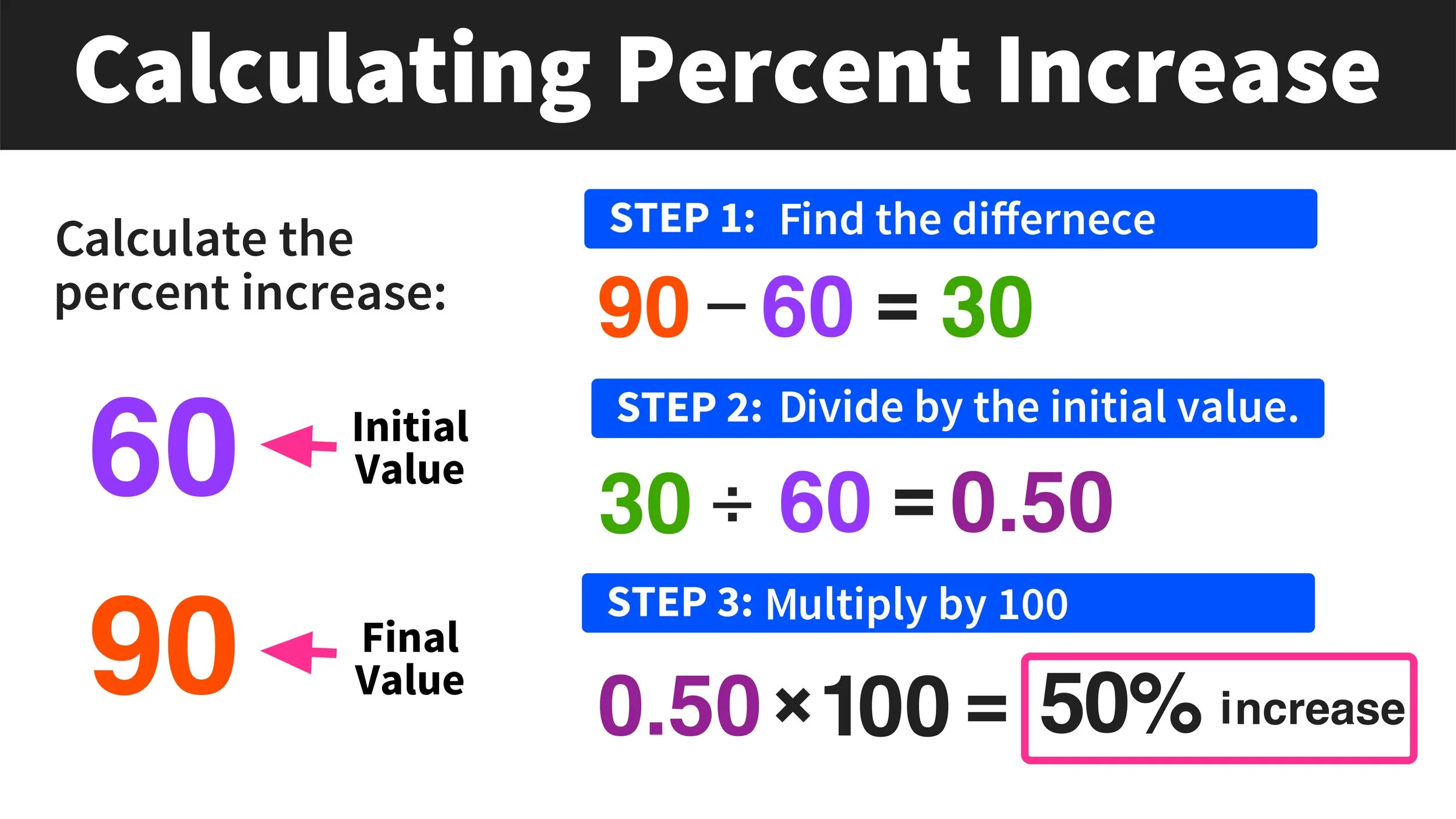
To master financial growth, one must first master the arithmetic behind it. The percentage increase formula is a mathematical expression of the difference between a final value and an initial value, relative to that initial value.
The Step-by-Step Calculation
The standard formula for computing a percentage increase is:
Percentage Increase = [(New Value – Original Value) / Original Value] × 100
To execute this calculation accurately, follow these three steps:
- Find the Absolute Difference: Subtract the original (older) value from the new (current) value. This result represents the “raw increase.”
- Divide by the Original Value: Take that raw increase and divide it by the starting number. This is the most crucial step—many people mistakenly divide by the new value, which yields an incorrect growth rate.
- Convert to a Percentage: Multiply the decimal result by 100 to express the growth as a percentage.
For example, if a stock was purchased for $150 (Original Value) and is now worth $180 (New Value), the calculation would be:
($180 – $150) / $150 = 30 / 150 = 0.20.
0.20 × 100 = 20%.
Why Percentage Increase Matters More Than Absolute Numbers
In money management, absolute numbers can be deceptive. An increase of $1,000 sounds significant, but its impact depends entirely on the base. If you earn $1,000 on a $5,000 investment, that is a stellar 20% return. If you earn $1,000 on a $1,000,000 investment, it is a negligible 0.1% return. By focusing on the percentage increase, investors and business leaders can compare the efficiency of different capital allocations regardless of their scale.
Strategic Applications in Personal Finance
In personal finance, the percentage increase is the primary metric used to measure the health of your net worth and the effectiveness of your savings strategy.
Tracking Investment Returns (ROI)
The most common use of this calculation is determining the Return on Investment (ROI). When looking at a brokerage account, the percentage increase tells you how hard your money is working for you. This is vital when comparing different asset classes. For instance, if your real estate holdings increased by 8% this year while your index funds increased by 12%, the percentage increase provides a clear signal on where your capital is seeing the most efficient growth.
Monitoring Inflation and Purchasing Power
Inflation is essentially a percentage increase in the general price level of goods and services. For individuals, understanding how to compute this is vital for maintaining purchasing power. If the Consumer Price Index (CPI) shows a 5% annual increase in the cost of living, but your income only increased by 3%, you have effectively experienced a 2% decrease in “real” wealth. Calculating the percentage increase of your expenses allows you to adjust your budget and investment contributions to stay ahead of currency devaluation.
Salary Negotiations and Merit Increases
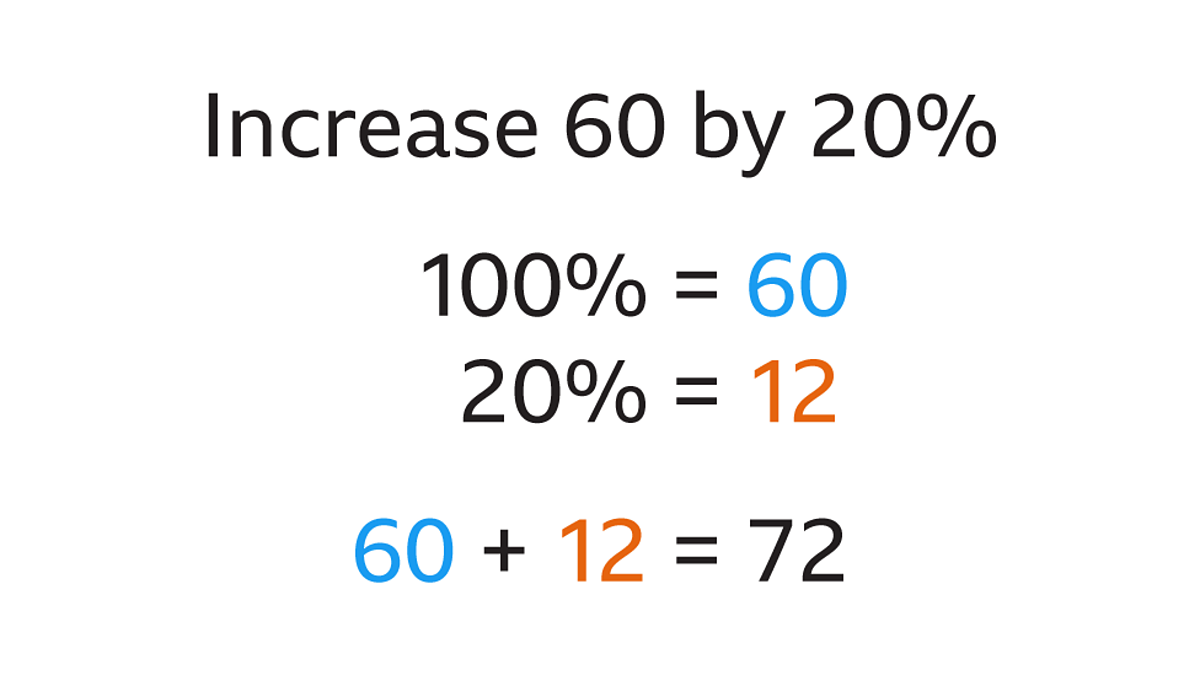
When approaching a performance review, savvy professionals do not just ask for a “raise”; they calculate the percentage increase required to match market rates or reward their contributions. If you are earning $80,000 and receive a $4,000 raise, calculating the 5% increase allows you to determine if your compensation is keeping pace with industry standards or if you are falling behind in real-wage growth.
Business Finance and Performance Metrics
For corporations and small businesses alike, percentage increase is the heartbeat of financial reporting. It is used to communicate growth to stakeholders, justify budgets, and set future targets.
Analyzing Revenue and Profit Growth
Businesses frequently report growth in terms of Year-over-Year (YoY) or Quarter-over-Quarter (QoQ). These metrics are derived directly from the percentage increase formula. A company that grows its revenue from $2 million to $2.5 million has achieved a 25% YoY growth rate. This percentage is often more important to investors than the revenue figure itself, as it indicates a “growth trajectory” that can be projected into the future to estimate company valuation.
Market Share Expansion
In competitive landscapes, a business must track the percentage increase of its market share. If a company’s sales grow by 10%, but the overall industry grows by 20%, the company is actually losing ground. By computing the percentage increase of their market penetration relative to competitors, leadership can identify whether their marketing and branding strategies are truly effective.
Operational Efficiency and Cost Analysis
Conversely, businesses use this formula to track rising costs. If the cost of raw materials increases by 15%, a business must decide whether to absorb that cost (reducing profit margins) or increase their own prices by a corresponding percentage. Monitoring these increases in real-time allows for “agile” financial management, ensuring that the company remains profitable even in volatile economic climates.
Avoiding Common Pitfalls in Growth Analysis
While the math is straightforward, the interpretation of percentage increase requires a nuanced understanding of financial context.
The Base Effect: Why Context is Everything
One of the most common traps in financial reporting is the “Base Effect.” This occurs when a very small starting number makes a percentage increase look disproportionately large. If a startup has $10 in revenue in Month 1 and $100 in Month 2, they can claim a 900% increase. While mathematically true, it is not necessarily indicative of a sustainable or massive business. When analyzing financial reports, always look at the original value (the base) to ensure the percentage increase is meaningful.
Nominal vs. Real Growth
In a high-inflation environment, “nominal” percentage increases can be misleading. A business might see a 10% increase in sales, but if the prices of their goods also rose by 10% due to inflation, their “real” growth is zero. They are moving more money, but they aren’t actually selling more units or expanding their footprint. Professional financial analysts always distinguish between nominal growth (the raw percentage) and real growth (percentage increase adjusted for inflation).
The Asymmetry of Gains and Losses
A critical lesson for investors is that percentage increases and decreases are not symmetrical. If an investment loses 50% of its value, it requires a 100% increase just to get back to the break-even point. Understanding this mathematical reality highlights the importance of risk management. It is much easier to recover from a 10% dip (requiring an 11.1% gain to recover) than it is to recover from a 50% crash.
Leveraging Tools for Financial Projection
While calculating percentage increase manually is a vital skill, modern financial tools allow for automation and sophisticated modeling.
Using Excel and Google Sheets for Automation
For anyone managing a budget or a business, spreadsheets are the gold standard. To compute percentage increase in Excel, you would use a simple cell reference formula. If your original value is in cell A2 and your new value is in B2, the formula would be:
=(B2-A2)/A2
By formatting the cell as a percentage, the software handles the “multiply by 100” step automatically. This allows for the creation of dynamic dashboards where you can track growth across dozens of categories simultaneously.

Financial Planning Software and Dashboards
For sophisticated investors, tools like Bloomberg Terminals, Morningstar, or even consumer-level apps like Mint and YNAB (You Need A Budget) provide automated percentage increase tracking. These tools often provide “rolling” percentage increases, showing how your wealth or spending has changed over 30, 60, or 90-day windows. By automating these calculations, you can move away from “doing the math” and toward “analyzing the trends.”
In conclusion, computing for percentage increase is more than a simple arithmetic exercise; it is a vital lens through which we view financial success. By mastering this calculation, you gain the ability to strip away the noise of raw data and see the true story of your money. Whether you are scaling a multinational corporation or simply trying to grow your personal savings, the percentage increase remains the most reliable compass for navigating the complexities of the financial world.
aViewFromTheCave is a participant in the Amazon Services LLC Associates Program, an affiliate advertising program designed to provide a means for sites to earn advertising fees by advertising and linking to Amazon.com. Amazon, the Amazon logo, AmazonSupply, and the AmazonSupply logo are trademarks of Amazon.com, Inc. or its affiliates. As an Amazon Associate we earn affiliate commissions from qualifying purchases.