
In an increasingly data-driven world, the ability to interpret and apply numerical information is paramount. For individuals and businesses alike, few mathematical concepts are as universally critical as percentages. Far from being a mere academic exercise, understanding “how to calculate percent of 2 numbers” is a foundational skill that underpins virtually every aspect of personal finance, investment strategy, and business operation. It empowers us to make informed decisions, evaluate opportunities, and navigate the complex financial landscape with confidence.
This article delves into the core mechanics of percentage calculation, explores its vast applications within the financial domain, and provides practical insights to help you master this indispensable skill. Whether you’re a student budgeting for the first time, an investor tracking returns, or a business owner analyzing profitability, a solid grasp of percentages is your gateway to greater financial literacy and success.
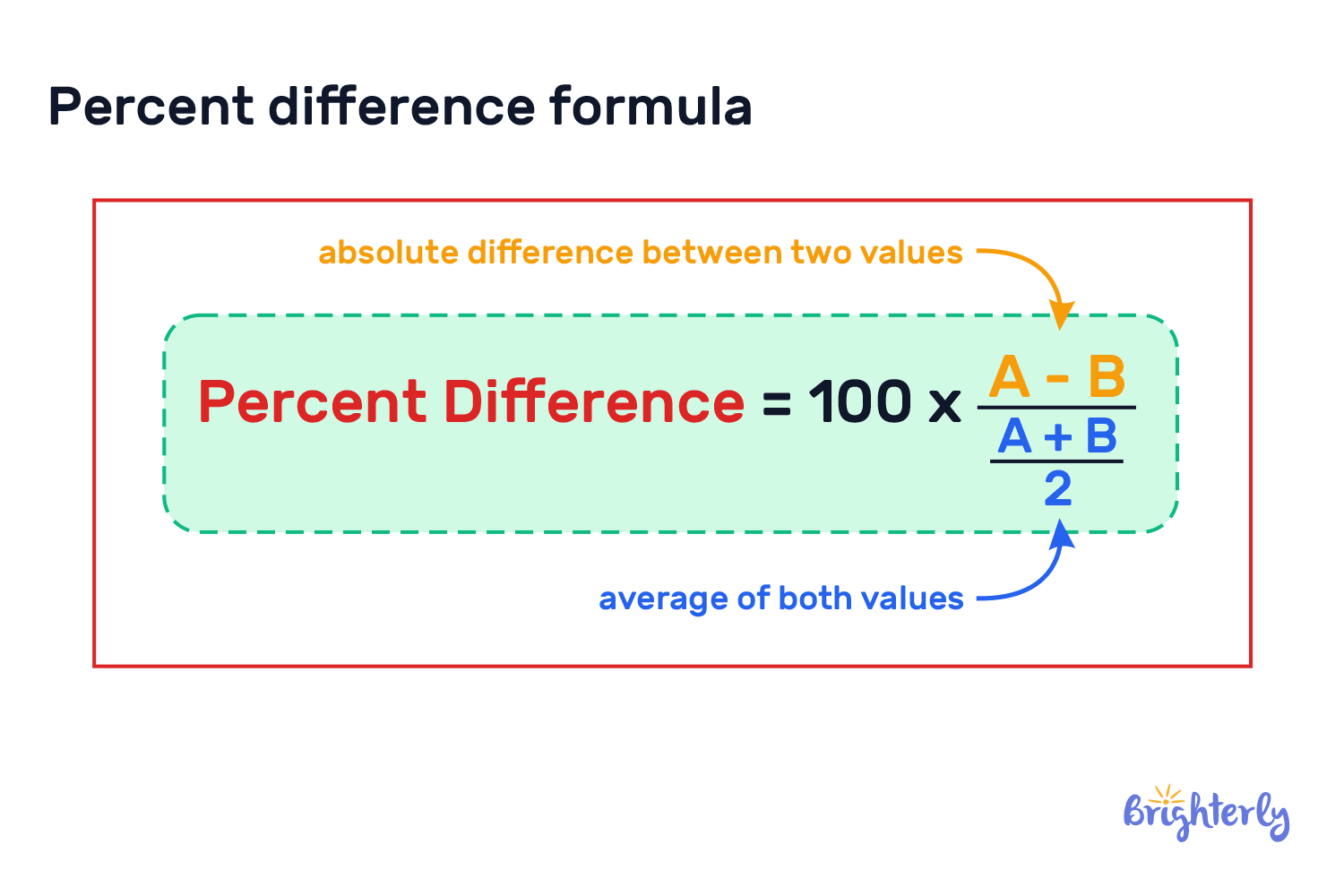
The Core Concept: Understanding Percentages
At its heart, a percentage is a way of expressing a number as a fraction of 100. The word “percent” originates from the Latin “per centum,” meaning “by the hundred.” It’s a standardized way to compare parts of a whole, express change, or represent proportions, making complex ratios easily digestible.
What is a Percentage?
Imagine a pie cut into 100 slices. If you eat 25 slices, you’ve eaten 25 percent of the pie. It’s a relative value that puts any number into context against a baseline of 100. This standardization is incredibly powerful because it allows for direct comparisons even when the original “wholes” are vastly different. For instance, knowing you saved 10% on a $50 purchase is more immediately understandable than knowing you saved $5, especially when comparing it to saving 10% on a $500 purchase ($50).
The Basic Formula Explained
Calculating the percentage of two numbers revolves around a simple yet powerful formula:
Percentage = (Part / Whole) × 100
Let’s break this down:
- Part: This is the specific amount or quantity you are interested in. It’s the portion of the whole you want to express as a percentage.
- Whole: This represents the total amount, the baseline, or the full quantity against which the “part” is being compared.
- 100: Multiplying by 100 converts the resulting decimal or fraction into its percentage equivalent.
Example: If you spent $30 on groceries from a total budget of $200, to find what percentage of your budget went to groceries:
Percentage = ($30 / $200) × 100
Percentage = 0.15 × 100
Percentage = 15%
This foundational formula is the bedrock upon which all more complex percentage calculations are built.
Why Percentages Matter in Finance
In the financial world, percentages are the universal language. They provide a clear, concise, and comparable way to:
- Assess Performance: Whether it’s the growth of an investment portfolio, the decline in a stock’s value, or the efficiency of a marketing campaign.
- Compare Values: Enabling meaningful comparisons between different financial products (e.g., interest rates on loans), varying discounts, or diverse economic indicators.
- Understand Proportions: Helping individuals grasp how much of their income goes to savings, or how much of a company’s revenue translates into profit.
- Predict Trends: Observing percentage changes over time can help forecast future financial movements and inform strategic planning.
Without a firm grasp of percentages, navigating personal and business finance would be akin to trying to read a map without understanding scale.
Practical Applications in Personal Finance
For the individual, mastering percentage calculations isn’t just about passing a math test; it’s about gaining control over one’s financial destiny. From daily spending to long-term wealth building, percentages are constantly at play.
Budgeting and Expense Tracking
One of the most fundamental uses of percentages in personal finance is budgeting. By calculating the percentage of your income allocated to various expense categories, you gain critical insights into your spending habits and can identify areas for adjustment.
Example: If your monthly take-home income is $4,000 and you spend $1,200 on rent, $600 on food, and $200 on transportation:
- Rent: ($1,200 / $4,000) × 100 = 30%
- Food: ($600 / $4,000) × 100 = 15%
- Transportation: ($200 / $4,000) × 100 = 5%
This allows you to benchmark your spending against rules of thumb (like the 50/30/20 rule) and make informed decisions about where to cut back or allocate more funds.
Understanding Discounts and Sales
Every shopper encounters percentages when dealing with sales and discounts. Knowing how to quickly calculate the final price after a percentage off is invaluable for smart shopping.
Example: A shirt costs $50 and is advertised with a “20% off” discount.
- Calculate the discount amount: 20% of $50 = (20/100) × $50 = $10
- Subtract from the original price: $50 – $10 = $40 (final price)
- Alternatively, you’re paying 100% – 20% = 80% of the original price: 0.80 × $50 = $40
Calculating Interest (Savings, Loans, Credit Cards)
Interest rates, whether earned on savings or paid on loans and credit cards, are almost always expressed as percentages. Understanding how these percentages translate into actual dollar amounts is crucial for financial planning.
Example: A savings account offers a 2% annual interest rate on a $1,000 balance.
- Annual interest earned: 2% of $1,000 = (2/100) × $1,000 = $20
For loans or credit cards, calculating the interest portion of a payment involves more complex formulas, but the underlying percentage concept remains central. High-interest credit card debt, for instance, can quickly accumulate if the percentage rate isn’t understood and managed.
Investment Growth and Returns
For investors, percentages are the primary metric for evaluating the performance of their portfolios. Annualized returns, capital gains, and dividend yields are all percentage-based.
Example: You invest $5,000 in a stock that grows to $5,750 over a year.
- Profit = $5,750 – $5,000 = $750
- Percentage return = ($750 / $5,000) × 100 = 15%
Comparing the percentage return of different investments allows for an apples-to-apples comparison, regardless of the initial investment amount.
Tax Calculations

Taxes, from income tax to sales tax, are calculated using percentages. Knowing your tax bracket, calculating sales tax on purchases, or understanding property tax rates all rely on this skill.
Example: If your local sales tax is 7% and you buy an item for $100.
- Sales tax amount = 7% of $100 = (7/100) × $100 = $7
- Total cost = $100 + $7 = $107
Essential for Business Finance and Operations
In the business world, percentages are the language of performance, profitability, and strategic planning. They provide clarity for stakeholders, guide operational decisions, and measure success against objectives.
Profit Margins and Markups
For any business, understanding profit margins is critical for survival and growth. Gross profit margin, operating profit margin, and net profit margin are all expressed as percentages and reveal how efficiently a company converts revenue into profit.
Example (Gross Profit Margin): A company sells goods for $100,000, and the cost of goods sold is $60,000.
- Gross Profit = $100,000 – $60,000 = $40,000
- Gross Profit Margin = ($40,000 / $100,000) × 100 = 40%
This percentage tells the business owner how much profit they make from each dollar of sales before considering operating expenses. Markups are also percentage-based, determining the selling price from the cost.
Sales Growth and Revenue Analysis
Businesses constantly track their growth. Sales growth, year-over-year revenue change, and customer acquisition rates are all typically presented as percentages.
Example: A company’s revenue was $500,000 last year and $600,000 this year.
- Revenue increase = $600,000 – $500,000 = $100,000
- Percentage growth = ($100,000 / $500,000) × 100 = 20%
This metric is vital for evaluating marketing effectiveness, market demand, and overall business momentum.
Debt-to-Equity Ratios and Financial Health
Financial ratios, many of which are expressed as percentages, are used to assess a company’s financial health, liquidity, and solvency. The debt-to-equity ratio, for instance, indicates the proportion of equity and debt used to finance a company’s assets.
Example: A company has $500,000 in debt and $1,000,000 in equity.
- Debt-to-equity ratio = ($500,000 / $1,000,000) = 0.5
- Expressed as a percentage, this is 50%. This tells investors and creditors about the company’s reliance on debt financing.
Employee Compensation and Benefits
Many aspects of employee compensation are percentage-based, including sales commissions, bonus structures, and benefits contributions.
Example: A salesperson earns a 10% commission on sales. If they make $10,000 in sales.
- Commission earned = 10% of $10,000 = (10/100) × $10,000 = $1,000
Understanding these percentages is crucial for both employers (managing payroll costs) and employees (calculating potential earnings).
Beyond Basic Calculations: Common Scenarios and Avoiding Pitfalls
While the basic formula is simple, real-world scenarios often require a deeper understanding of how percentages behave.
Percentage Increase vs. Decrease
Calculating a percentage change requires comparing two different numbers – an old value and a new value.
Formula for Percentage Change = ((New Value – Old Value) / Old Value) × 100
- Percentage Increase: If the new value is greater than the old value, the result will be positive.
- Example: A stock price goes from $100 to $120. Increase = (($120 – $100) / $100) × 100 = 20%
- Percentage Decrease: If the new value is less than the old value, the result will be negative (often presented as a positive decrease).
- Example: A stock price goes from $100 to $80. Decrease = (($80 – $100) / $100) × 100 = -20% (a 20% decrease)
Understanding Percentage Points vs. Percentages
This is a critical distinction, especially in finance and economics. A “percentage point” refers to the absolute difference between two percentages, while a “percentage” change refers to a relative change.
Example: If an interest rate increases from 5% to 6%.
- This is a 1 percentage point increase (6% – 5% = 1%).
- However, it’s a 20% increase in the interest rate itself ( (6-5)/5 ) * 100 = 20%).
Confusing these can lead to significant misinterpretations, particularly in financial news and reports.
The Role of Financial Tools and Spreadsheets
While manual calculation is essential for understanding, modern financial management heavily relies on tools. Spreadsheets (like Excel or Google Sheets) are invaluable for automating percentage calculations. They allow you to:
- Perform complex calculations across large datasets.
- Model different financial scenarios.
- Visualize percentage-based data with charts and graphs.
- Minimize human error in repetitive tasks.
Calculators and online percentage tools also offer quick solutions for everyday needs.
Common Mistakes and How to Avoid Them
- Misidentifying the “Whole” (Base): Always ensure you’re dividing by the correct base number. For percentage change, it’s almost always the original value.
- Incorrect Order of Operations: When dealing with multiple steps, ensure you follow mathematical order (Parentheses, Exponents, Multiplication and Division, Addition and Subtraction).
- Rounding Errors: Rounding too early in a multi-step calculation can lead to inaccuracies. It’s often best to carry more decimal places until the final step.
- Confusing Percentage Points with Percentage Change: As discussed above, this is a common trap that can distort understanding.

Mastering the Skill for Informed Financial Decisions
The ability to calculate and interpret percentages of two numbers transcends basic arithmetic; it’s a cornerstone of financial literacy. From personal budgeting and investment tracking to understanding business performance and economic indicators, percentages provide the context and clarity needed to make sound decisions.
By regularly applying these calculations to your own finances, you’ll not only sharpen your mathematical skills but also develop a more intuitive grasp of financial dynamics. This quantitative literacy empowers you to critically evaluate financial products, negotiate better deals, assess risks, and ultimately, build a more secure and prosperous financial future. Embrace the power of percentages – they are an indispensable tool in your financial mastery toolkit.
aViewFromTheCave is a participant in the Amazon Services LLC Associates Program, an affiliate advertising program designed to provide a means for sites to earn advertising fees by advertising and linking to Amazon.com. Amazon, the Amazon logo, AmazonSupply, and the AmazonSupply logo are trademarks of Amazon.com, Inc. or its affiliates. As an Amazon Associate we earn affiliate commissions from qualifying purchases.